

 EnglishEN
 ItalianoIT
 DeutschDE
 EspañolES
 PortuguêsPT
 РусскийRU
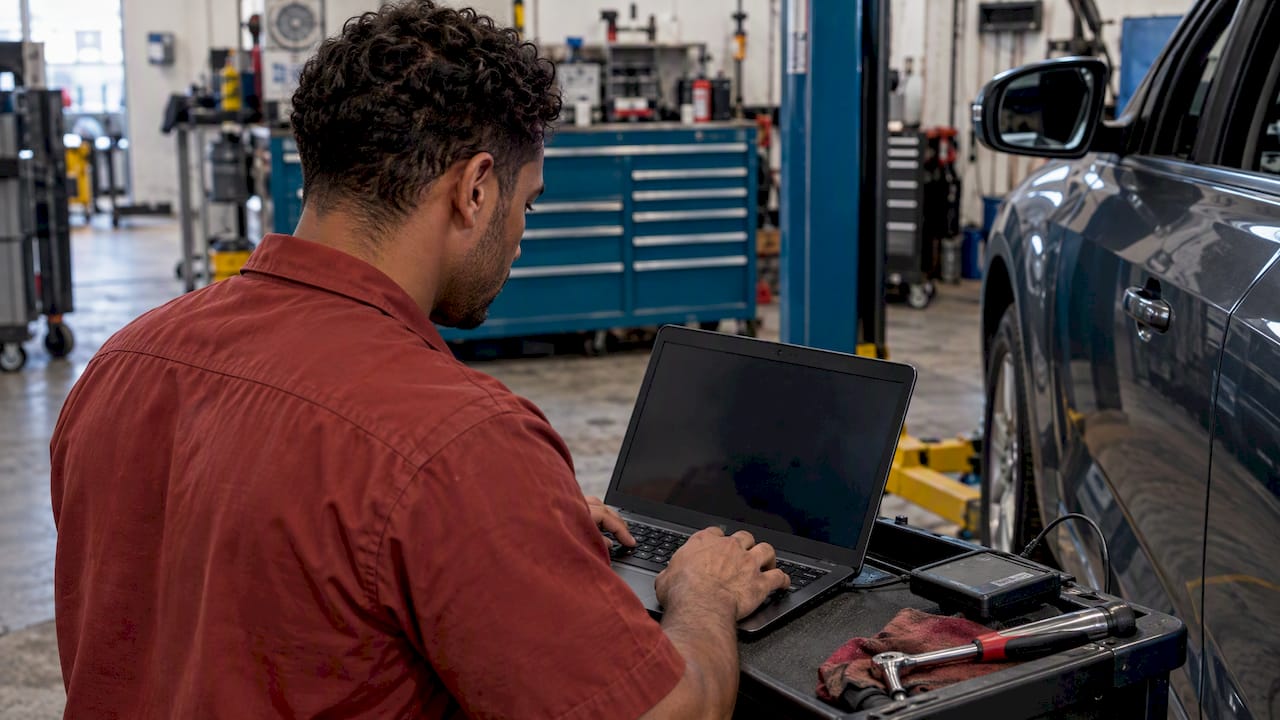
A transmission tune changes supported calibration functions in the transmission controller or powertrain controller. Depending on the gearbox, those functions can include gear selection, clutch control, torque coordination and converter lock-up. The practical goal is defined behavior in a healthy drivetrain, with the hardware and software identified before the file is changed.
Transmission tune: define what the controller can change
A TCU or TCM controls transmission operation, while engine control determines combustion and engine torque. Some vehicles combine these functions within a powertrain controller. Their interaction matters more than whether the software lives in two separate housings.
The retained ECU-versus-TCU overview introduces the distinction. A transmission calibration does not directly change the engine’s combustion maps, but gear selection, shift intervention and converter behavior can affect acceleration and the torque delivered at the wheels.
Available parameters differ between torque-converter automatics, dual-clutch transmissions, automated manuals and CVTs. A converter lock-up table is relevant only where that hardware exists. Launch control, speed limits and driver-selectable modes also require support from the actual vehicle strategy.
Evaluate gear selection and shift behavior
Shift schedules can depend on speed, driver demand, load, temperature and operating mode. Upshift and downshift relationships need enough separation and suitable transition logic to avoid unnecessary hunting. Higher shift RPM is not automatically faster, and lower RPM is not automatically more economical under every load.
Le PCS TCM2800 manual provides an example with speed and throttle-based schedules and separate full-throttle settings. It describes that controller’s configuration, not a universal map layout for factory TCUs.
Pressure, clutch fill and shift duration must be considered together. More pressure does not create unlimited clutch capacity or repair a hydraulic leak. Excessive overlap between engaging and releasing elements can create unwanted loading, while insufficient control can allow flare or prolonged slip.
Converter lock-up also involves operating conditions and sometimes deliberately controlled slip. “Lock earlier” or “remove all slip” is not a complete calibration strategy. For related checks, see the shift-map guide.
Match torque reporting and intervention to the drivetrain
The transmission may use engine-torque information to determine clutch control and request temporary engine intervention during shifts. Identify how the controller represents torque and whether its reported values remain credible after an engine modification.
A stock torque limit does not by itself explain clutch flare, harsh engagement or every power cut. Those symptoms can arise from mechanical wear, fluid conditions, actuator faults, inaccurate torque reporting or calibration issues. Read the faults and operating data before deciding which cause applies.
An engine tune does not automatically require a TCU tune. Equally, a gearbox file is not automatically sufficient when engine torque reporting is inconsistent. Assess the combined behavior, including thermal protection and shift coordination. A short successful test does not establish long-term hardware capacity.
Platform-specific context is available in the ZF 8HP guide, 6HP torque and adaptation guide et Ford 10R80 guide.
Separate a calibration goal from a repair complaint
Define the requested change clearly: reducing unwanted gear hunting, changing a supported mode’s shift schedule or improving coordination with a documented engine configuration. Record when the behavior occurs, including temperature, speed, gear and load.
Check faults, leaks, service history and fluid level using the procedure for the exact transmission. Fluid temperature and specified fluid type can be essential to a valid level check. Appearance alone cannot prove that the gearbox is healthy.
Investigate worn clutches, valve-body problems, solenoids and converter faults as appropriate. A replacement or rebuilt gearbox may require manufacturer programming, coding and basic settings; that does not automatically mean it needs an aftermarket performance file.
Le présent DSG maintenance overview gives service context. Match any maintenance or relearn procedure to the actual DSG variant and applicable manufacturer instructions.
Use the correct adaptation procedure
Adaptation can compensate for production variation and changes in clutch or hydraulic behavior within the system’s design. It cannot restore damaged friction material or make an unsuitable calibration correct.
Le September 2020 GM bulletin 16-NA-019 covers listed 2015–2021 applications with 8L45 and 8L90 transmissions. It distinguishes repairs requiring Service Fast Learn from specific shift concerns where that step is skipped in favor of targeted adaptive learning. Its 2019 version is retained for reference, but the versions should not be blended into a generic procedure.
A reset is not mandatory after every transmission tune. Whether values are retained, cleared by programming or deliberately relearned depends on the operation and platform. Check the current instructions and prerequisites for the specific gearbox.
There is no universal relearn mileage. Do not automatically dismiss new harsh shifts, flare or warnings as normal learning. Determine whether the observed behavior is expected by the applicable procedure or requires diagnosis.
Identify, program and verify the specific file
Record the transmission code, controller part number, software identification, engine configuration and tool protocol. Confirm the supported read and write format, any access requirements and responsibility for checksum handling. An OBD, bench or boot label alone does not establish identical memory coverage.
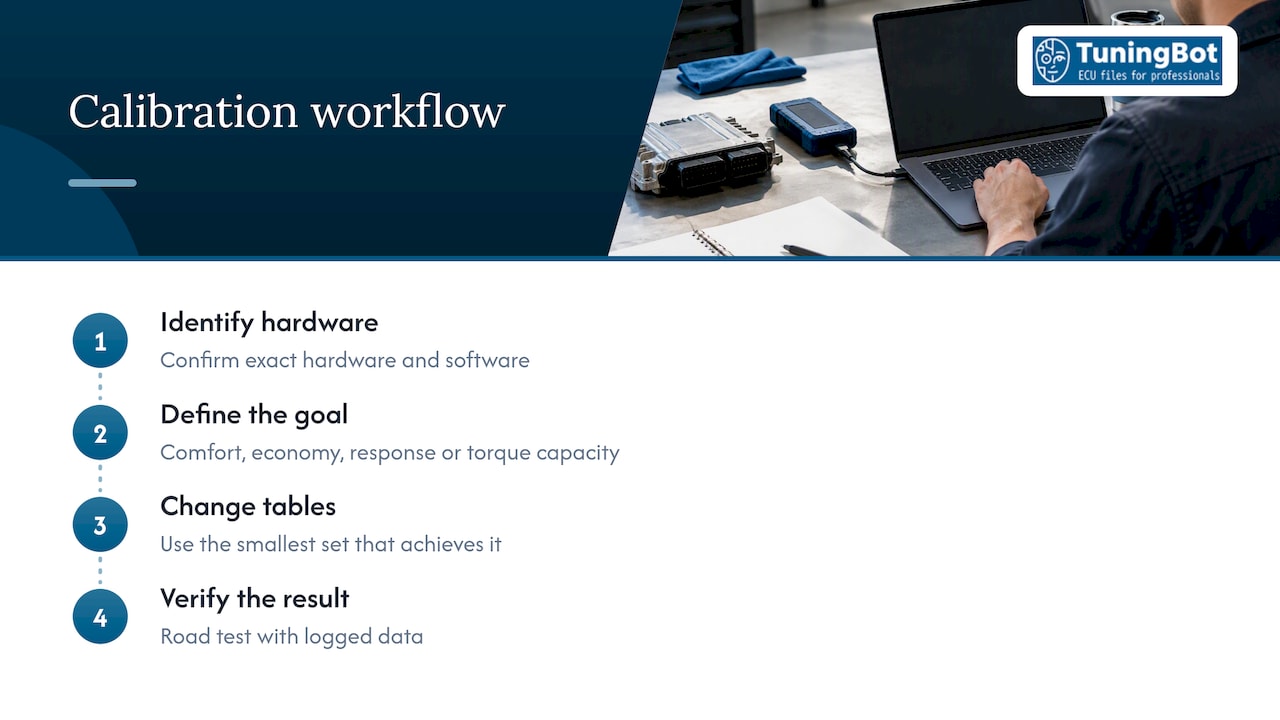
Preserve the pre-work file and diagnostic record. After programming, complete required coding or learning procedures and compare the requested behavior with appropriate logs. Useful channels can include commanded gear, input and output speeds, clutch or converter slip, temperature and torque-intervention status, depending on availability.
Pressure channels may be commands or estimates rather than direct measurements. Interpret them accordingly, and evaluate cold, warm and relevant load conditions without assuming one drive validates the full operating range. Our DSG programming guide explains related workflow distinctions.
The retained Motor1 article provides broader engine-calibration context. Transmission-only changes can still alter engine operating points and emissions behavior; a shift-quality label is not proof of regulatory compliance. The EPA reference below is background, not approval of an individual calibration.
Confirm availability and the agreed scope through the current service information. This guide makes no promise of universal tool compatibility, a fixed delivery time or improved shift quality on a gearbox with an unresolved fault.
Questions fréquemment posées
What does a transmission tune change?
It changes supported transmission-control functions such as shift schedules, clutch control and torque coordination. Converter lock-up applies only where that hardware exists.
Is a TCU tune always required after an engine tune?
No. The decision depends on the torque change, reporting accuracy, supported limits and actual drivetrain behavior.
Should adaptations always be reset after a flash?
No. Whether they are retained, cleared or relearned depends on the gearbox and operation. Follow the applicable programming and service procedure.
Can higher pressure repair worn clutches?
No. A calibration cannot restore damaged friction material or correct an underlying hydraulic fault.
How long does transmission relearning take?
There is no universal distance or duration. Follow the specific procedure and investigate behavior that falls outside its expected conditions.