

 EnglishEN
 ItalianoIT
 DeutschDE
 EspañolES
 PortuguêsPT
 РусскийRU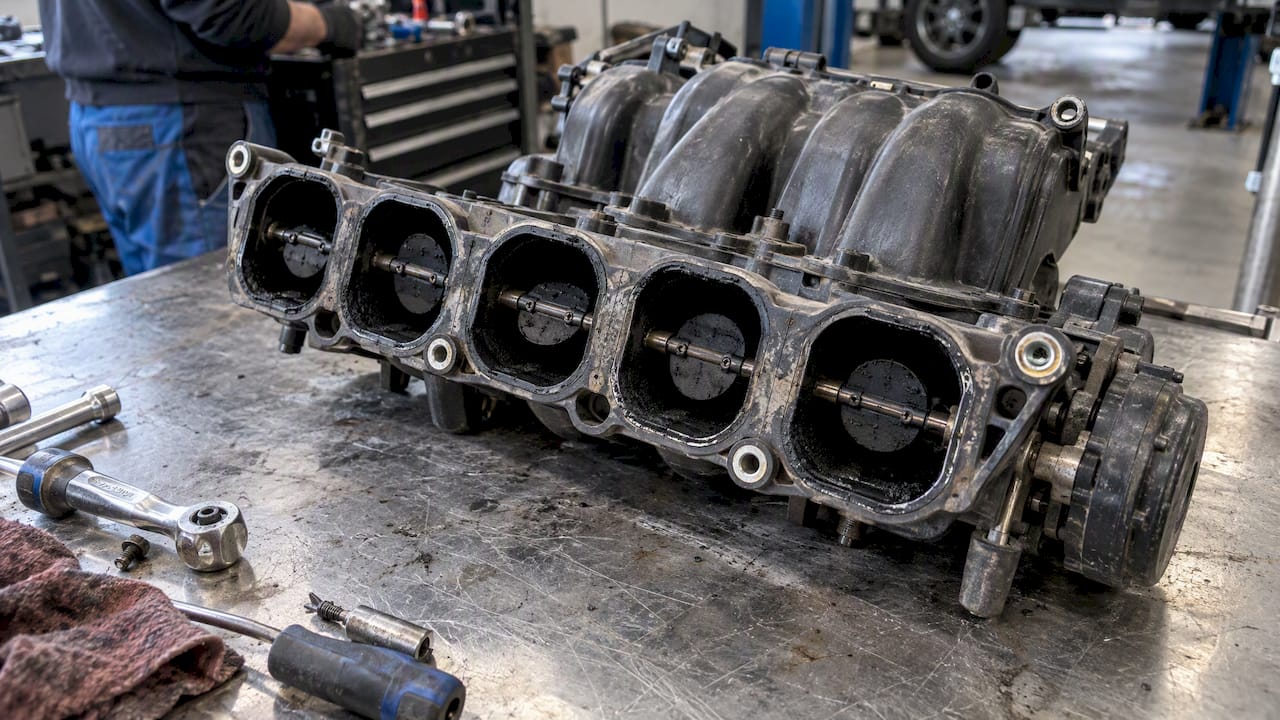
Swirl flap off describes disabling an intake-flap function, but the label does not identify the mechanical work or software changes involved. Before choosing a repair or modification, establish which component is fitted, why it has failed and how the controller monitors it. Removing a warning does not restore the airflow function of a working flap.
Swirl flap off: identify the component before the fault
Swirl flaps influence in-cylinder air motion. Tumble flaps, variable-length intake runners and an intake throttle can have different purposes and mechanisms. A generic intake-runner fault description does not prove that all these components are equivalent.
Motorservice describes intake manifolds that use flap position to balance mixture formation and filling across operating conditions. The exact position schedule depends on the engine and calibration; it should not be reduced to a universal RPM switch.
The SAE diesel-engine study linked below illustrates the interaction between air motion, smoke, carbon monoxide, pumping work and NOx. Those results explain an engineering trade-off in the studied configuration. They do not establish that every engine gains torque or economy when its flaps are removed.
Separate mechanical, electrical and control faults
Record fault codes, their status and freeze-frame data before clearing anything. Identify the engine code, manifold part number and controller software. Rough idle, reduced power or smoke can have causes outside the flap system, so symptoms alone are insufficient.
Inspect accessible linkage, connectors, wiring and any vacuum supply used by the application. Compare commanded and reported position using the manufacturer-supported test. Sensor feedback may represent the actuator shaft rather than directly proving that every flap moved correctly.
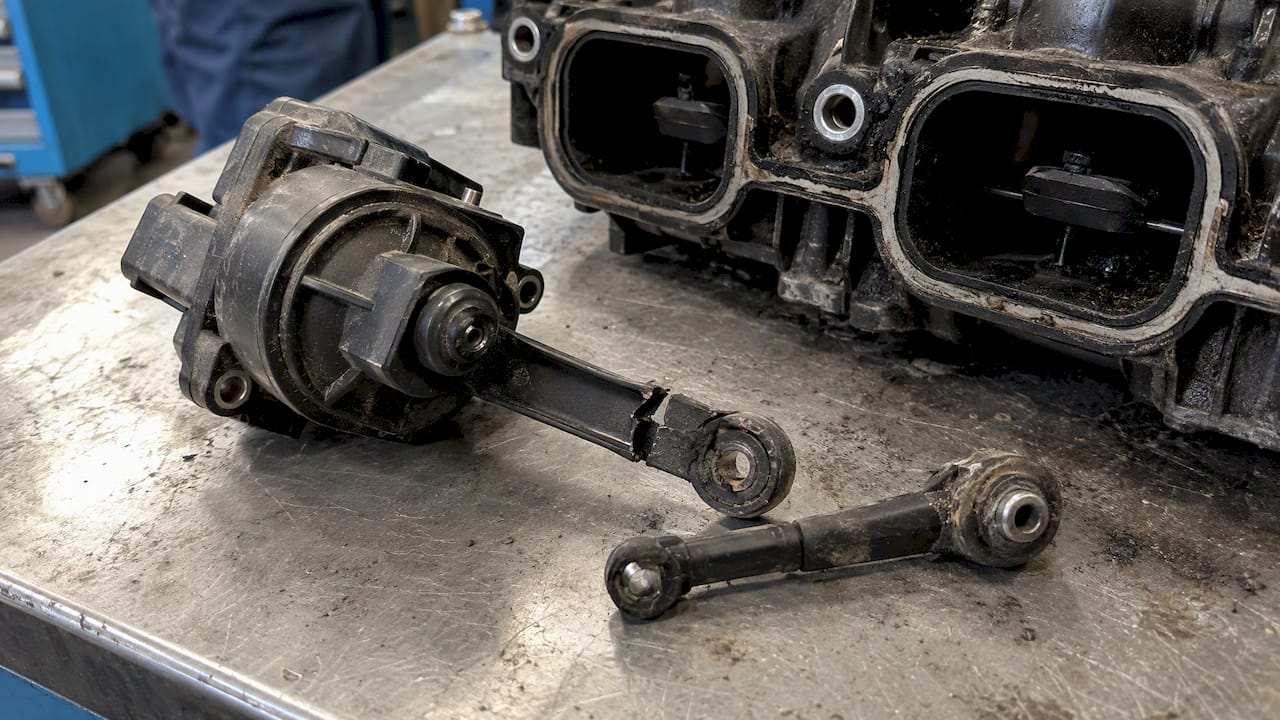
A motor that moves with an implausible position signal does not isolate one cause. Linkage damage, binding, sensor faults, wiring or an incomplete adaptation may need separate checks. Carbon deposits are one possible cause, not a proven explanation for every fault.
Compare repair options with the actual damage
Cleaning may be appropriate for deposits where the manufacturer permits it and the assembly is structurally sound. It will not repair a cracked shaft, worn linkage or failed electrical component. An actuator repair or suitable replacement manifold may restore the intended function.
A broken actuator arm does not mean that full removal is the only option. Parts availability and the extent of damage determine which repairs are feasible. Likewise, a blanking plug, a replacement manifold and a device that holds a flap open are different physical changes; a product name does not describe the installation adequately.
If the manifold is opened, use the engine-specific procedure for sealing, fasteners and contamination control. Account for tools, protective plugs and fragments before reassembly. There is no universal tightening sequence or torque value for all manifolds.
Understand what software can and cannot correct
The controller may monitor position, electrical continuity, movement or airflow plausibility, depending on the application. A hardware change can produce faults or altered operation, but immediate limp mode is not inevitable on every system.
Suppressing a DTC is not the same as changing the actuator command or restoring combustion behavior. A software edit cannot repair a leaking manifold, remove a loose fragment or replace the air motion that the original hardware created.
Assess the actual strategy and surrounding control interactions without assuming that every change requires the same idle, airflow or EGR edits. Match the file to the exact ECU software and establish required checksum handling. A valid checksum does not verify calibration quality or guarantee a successful flash.
Distinguish emissions evidence from a clean fault scan
Where a flap is part of an emissions-related design, disabling its function raises a separate compliance question. In the United States, EPA tampering guidance addresses removal or disabling of emissions-related elements and defeat devices. A software change or a race-use label does not by itself establish an exemption.
EPA’s 2020 policy describes case-specific enforcement discretion based on documented reasonable grounds that emissions are not adversely affected. It is nonbinding guidance, not automatic product approval; emissions-related OBD must also be considered. The absence of warning lights alone is not such evidence.
Un emissions test preparation guide can help explain inspection preparation. Passing a particular inspection, however, is not a blanket determination that every modification is lawful or that emissions remain unchanged under all conditions.
Document the outcome and the scope of the work
After repair, check sealing, relevant actuator operation and any specified adaptation, then repeat the diagnostic assessment under suitable conditions. Compare the result with the original symptom and recorded fault data. Define what has been verified instead of promising smoother idle, more torque or permanent reliability.
A workshop quote should separate diagnosis, parts, manifold work, programming and validation. There is no universal labor duration or file price. Consult the current Liste des prix de TuningBot for listed services and confirm the exact application.
Checksum correction, engineer review, delivery time and revision terms must follow the actual order scope. They should not be described as automatically included in every file, and file delivery should not be presented as vehicle-level emissions certification.
Questions fréquemment posées
Are swirl flaps and tumble flaps the same component?
Not necessarily. They influence different forms of air motion, and intake-runner mechanisms can have other purposes. Identify the actual manifold and control system.
Does a broken actuator require swirl flap removal?
No. Depending on the assembly and damage, actuator, linkage or manifold replacement may restore the intended function.
Does deleting a fault code restore the missing flap function?
No. Removing a diagnostic indication does not restore mechanical movement, sealing or the original airflow behavior.
Does a fault-free scan prove emissions compliance?
No. Diagnostic results, emissions measurements and the regulatory status of a modification are separate assessments.
Sources and further reading
- Comparing the Effect of a Swirl Flap and Asymmetric Inlet Valve Opening on a Light Duty Diesel Engine (SAE)
- engineering analysis from MS Motorservice
- Tampering and Aftermarket Defeat Devices | Clean Air Northeast
- EPA enforcement alerts
- Emissions Test Preparation Guide
- EPA: 2020 vehicle and engine tampering policy