

 EnglishEN
 ItalianoIT
 DeutschDE
 PortuguêsPT
 FrançaisFR
 РусскийRU
Los trabajos de calibración relacionados con el DPF deben abordarse como una tarea de diagnóstico y cumplimiento normativo, y no como un atajo para eludir los fallos de emisiones. En los vehículos que circulan por la vía pública, el filtro de partículas diésel (DPF), el sistema SCR, el sistema EGR y los sistemas de monitorización OBD asociados forman parte de la configuración de emisiones homologada y deben permanecer operativos. Los cambios de software que desactivan estos sistemas pueden infringir la normativa de circulación, invalidar la cobertura del seguro o la garantía y generar graves riesgos medioambientales y mecánicos. Los talleres profesionales deben diagnosticar en primer lugar la causa raíz de los fallos del DPF, reparar el hardware siempre que sea posible y reservar los trabajos de calibración no destinados a la circulación en carretera para aplicaciones legítimas fuera de carretera, de competición, de investigación o de exportación, siempre que esté legalmente permitido.
Diagnóstico antes de cualquier calibración relacionada con el DPF
Una advertencia del DPF, una alta presión diferencial o un fallo repetido en la regeneración no significan automáticamente que el filtro en sí deba ser retirado. La causa subyacente puede ser un sensor de presión defectuoso, mangueras de presión con fugas, lecturas incorrectas de la temperatura de los escapes, inyectores desgastados, fallos en el turbocompresor, flujo excesivo de EGR, problemas en el termostato o una conducción de trayectos cortos.
Una línea base de diagnóstico profesional debe incluir:
- Presión diferencial del DPF: verificado en ralentí y bajo carga según las especificaciones del fabricante.
- Carga de hollín y ceniza: distinguidas correctamente, porque la regeneración elimina el hollín pero no las cenizas acumuladas.
- Sensores de temperatura de los gases de escape: verificado para lecturas plausibles y respuesta correcta durante la regeneración.
- Historial de regeneración: distancia desde la última regeneración, ciclos interrumpidos y carga calculada.
- Corrección de inyectores y calidad de combustión: El exceso de combustible o la mala atomización aumentan rápidamente la producción de hollín.
- Turbocompresor y circuito de aire: Las fugas y los errores de flujo de aire del boost alteran la acumulación de hollín y la regeneración del models.
- Temperatura del motor: un termostato que mantiene el motor demasiado frío puede impedir una regeneración exitosa.
- DTC y estado de preparación: Todos los códigos activos, pendientes e históricos deben registrarse antes de realizar cualquier tarea relacionada con el software.
Para una explicación más amplia sobre la construcción del DPF, la carga de hollín, la acumulación de cenizas y la contrapresión, consulta la descripción general externa de Diésel Directo Estándar.
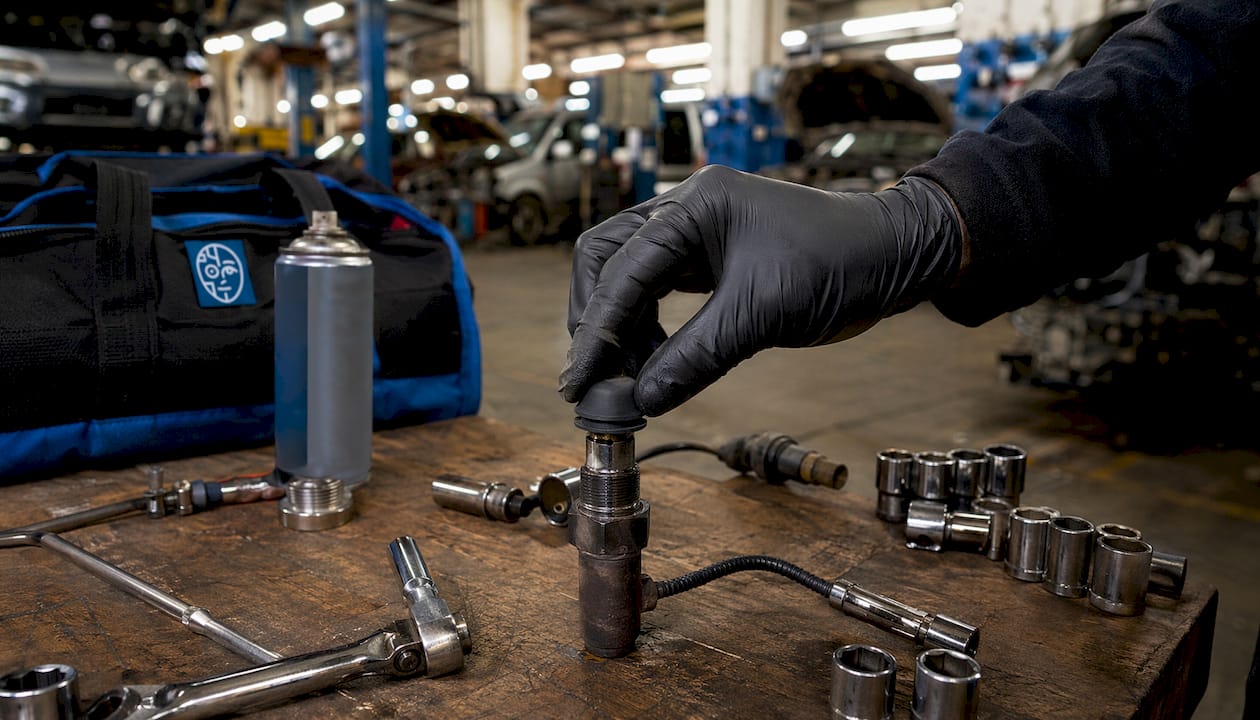
Consejo profesional: Guarda un informe de diagnóstico completo antes de borrar cualquier código de avería. Los datos de «freeze-frame» originales suelen revelar las condiciones de funcionamiento que provocaron la avería del DPF.
Alcance legal y operativo
Para los vehículos de carretera, el hardware de emisiones y los monitores de diagnóstico deben permanecer operativos. Un taller debe documentar claramente el uso previsto del vehículo y rechazar cualquier solicitud que haga que un vehículo de uso en carretera deje de cumplir con la normativa. Cuando una calibración para uso fuera de carretera esté permitida legalmente —por ejemplo, en maquinaria de competición dedicada, equipos industriales estacionarios, plataformas de investigación o vehículos de exportación—, el trabajo sigue requiriendo una cuidadosa identificación de los archivos, copia de seguridad y validación técnica.
Las comprobaciones clave de cumplimiento incluyen:
- uso previsto del vehículo y jurisdicción;
- implicaciones de seguros y garantía;
- requisitos de matriculación e inspección de vehículos;
- conservación del archivo original ECU y del hardware original;
- declaración por escrito del cliente para un uso legítimo que no sea en carreteras, cuando corresponda;
- clara distinción entre los servicios de diagnóstico, reparación y calibración fuera de carretera.
Flujo de trabajo de taller profesional
Un proceso de trabajo seguro comienza con el diagnóstico y la identificación del archivo, no con la retirada del hardware. El archivo ECU debe leerse con el protocolo correcto, el archivo original debe almacenarse de forma segura y la versión del software debe coincidir exactamente antes de plantearse cualquier calibración.
- Comprueba la identidad del vehículo y de la ECU. Anota el número de bastidor (VIN), el número de hardware ECU, el número de software y el ID de calibración actual.
- Complete el diagnóstico mecánico. Resuelva los fallos de sensor, inyector, turbo, temperatura y ruta de aire antes de trabajar en el archivo.
- Lee y haz una copia de seguridad del archivo original ECU. Mantén al menos dos copias verificadas en ubicaciones de almacenamiento separadas.
- Verificar el uso legal y el alcance del servicio. Confirme si el vehículo sigue registrado para su uso en carretera o si es una aplicación legítima fuera de carretera.
- Utiliza el servicio de calibración correcto. Envía el archivo original exacto y el contexto de diagnóstico completo, en lugar de un archivo base genérico.
- Comprueba checksum y la estructura de archivos. El archivo modificado debe coincidir con la variante ECU y superar las comprobaciones binarias de integridad.
- Flash con voltaje estable. Utiliza una unidad de soporte regulada y nunca interrumpa la operación de escritura.
- Realizar diagnósticos posteriores a la escritura. Recheck DTCs, readiness status and live data before releasing the vehicle.
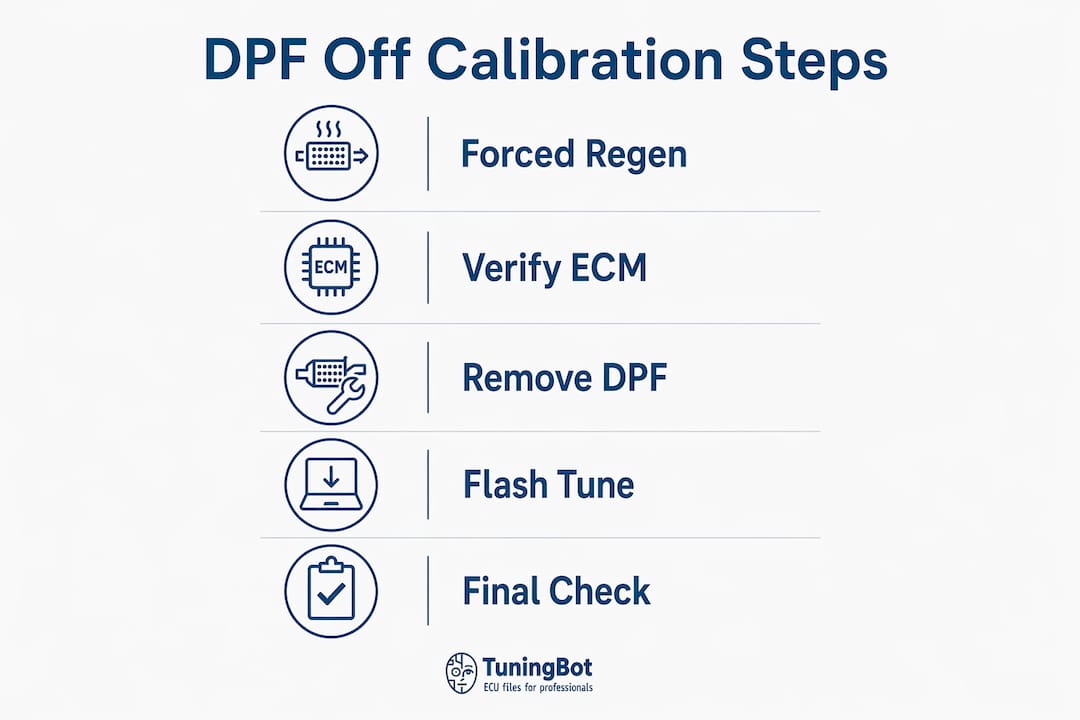
The correct sequence depends on the platform and legal use case. There is no universal instruction to remove the DPF, SCR or EGR system, and no universal torque specification for aftermarket exhaust components. Those values must come from the vehicle or component manufacturer.
Validación, copia de seguridad y recuperación
A successful flash is not the same as a successful job. The workshop should confirm that the ECU communicates normally, the file version is correct and the vehicle operates without new faults. On road vehicles, OBD readiness and emissions-monitor behavior must remain compliant.
Validation should include:
- post-write ECU and network scan;
- comparison of requested and actual boost, rail pressure and airflow;
- plausibility of exhaust temperature and differential-pressure readings;
- verification of regeneration logic where the DPF remains fitted;
- controlled road or dyno logging under safe conditions;
- confirmation that the original file can be restored if required;
- version-controlled storage of every file revision.
Consejo profesional: Never overwrite the original read. Use a naming convention that includes VIN or registration, ECU ID, software version, date and revision number.
Patrones de fallas comunes
The most common workshop failures are caused by incomplete diagnosis, mismatched files and unstable flashing conditions rather than by the ECU tool itself.
- Forced regeneration attempted on an unsafe vehicle: a heavily loaded or damaged filter can overheat. Follow manufacturer limits and do not force regeneration when contraindicated.
- Generic file used on the wrong software version: this can create no-start conditions, checksum faults or corrupted torque and diagnostic logic.
- Mechanical fault hidden by software changes: disabling a DTC does not repair a failed sensor, injector, turbocharger or blocked filter.
- Voltage drop during writing: interrupted flashes may require Bench or Boot recovery.
- No original backup: without the original file, restoring factory behavior becomes significantly harder.
- Road-use legality ignored: a technically functional file can still be unlawful for public-road use.
Puntos clave
| Punto | Detalles |
|---|---|
| Diagnosis comes first | DPF faults often originate from sensors, injectors, temperature control, turbo or driving conditions. |
| Road compliance matters | DPF, SCR, EGR and OBD monitors are part of the approved emissions system on road vehicles. |
| Original files are essential | Always retain verified backups before any ECU write. |
| Generic solutions are risky | The calibration must match the exact ECU hardware and software version. |
| Software cannot repair hardware | Suppressing a fault code does not correct the underlying mechanical problem. |
What professional workshops learn from DPF-related faults
The expensive cases usually begin with an incomplete diagnosis. A vehicle arrives with a DPF warning, the fault is treated as a software problem, and the actual cause—a failed pressure sensor, leaking hose, injector imbalance or low operating temperature—remains untouched. The warning returns because the mechanical condition never changed.
The second recurring mistake is assuming that a forced regeneration is always safe. It is not. Excessive soot loading, oil contamination, damaged substrates or incorrect temperature readings can make a forced regeneration dangerous. Manufacturer procedures and measured data must determine whether regeneration, cleaning or replacement is appropriate.
The strongest workshop workflow keeps diagnosis, legal compliance and calibration separate but coordinated. The customer should understand what has failed, what can be repaired and what services are lawful for the vehicle’s intended use.
— Equipo Técnico de TuningBot
TuningBot’s DPF-related calibration support for workshops
TuningBot supports professional workshops with ECU file analysis, checksum correction and supported DPF-related calibration services for legitimate applications. Every job should include the exact ECU file, complete diagnostic context and a clear statement of intended use.
Antes de hacer un pedido, los talleres pueden:
- comprobar Cobertura del servicio ECU;
- revisar el Lista de Precios Pública;
- consult the dedicated DPF service page and its use restrictions;
- cargar el archivo de la ECU original without purchasing prepaid credits.
TuningBot supports professional tools including Alientech KESS3, AutoTuner, Magic Motorsport, CMD, Dimsport and PCMFlash. For technical background, see the DPF logic and legal-risk guide, el DPF backpressure guide y las Guía de corrección checksum.
PREGUNTAS FRECUENTES
What should be checked before any DPF-related calibration?
Check differential pressure, soot and ash loading, temperature sensors, regeneration history, injector correction, boost leaks, engine temperature, DTCs and ECU identification.
Can software fix a physically blocked DPF?
No. A physically blocked or damaged filter requires diagnosis, cleaning or replacement. Software cannot restore lost substrate capacity or repair a failed sensor.
Is DPF Off legal on a road vehicle?
In many jurisdictions, disabling or removing emissions equipment from a road vehicle is illegal and may invalidate insurance, inspection and warranty coverage. Workshops must verify local law and intended vehicle use.
Is forced regeneration always safe?
No. It must only be performed when the manufacturer’s conditions are met. Excessive loading, damaged filters, oil contamination or faulty sensors can make forced regeneration unsafe.
Why is the original ECU file important?
It provides the recovery path, allows comparison with later revisions and enables restoration of the factory calibration when required.