

 EnglishEN
 ItalianoIT
 EspañolES
 PortuguêsPT
 FrançaisFR
 РусскийRU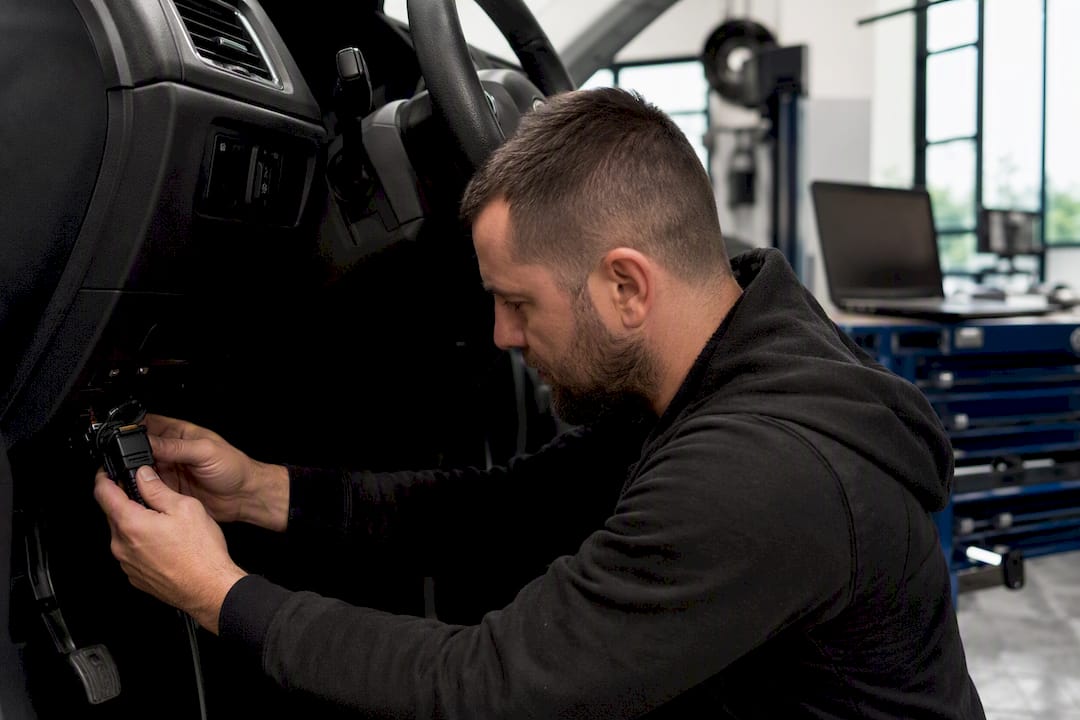
Euro 5 diesel remap guide workflows should start with diagnosis, exact ECU identification and the emissions/aftertreatment condition of the vehicle. Euro 5 diesel calibration is not one universal EDC17 recipe: torque modelling, rail pressure, injection timing, smoke control, boost, DPF, EGR and SCR strategies vary by ECU family and software version. The safe approach is to use verified definitions, the correct read/write protocol and measured data from the actual vehicle.
Bosch EDC17 is common on Euro 5 diesels, but Continental, Delphi and Marelli platforms are also widely used. Map structure and edit order are software-specific, so no single torque→rail→SOI→smoke sequence should be treated as universal.
Before touching a file, run this checklist:
- Confirm the exact ECU hardware/software ID and the read/write protocol supported by the flashing tool.
- Resolve active mechanical, sensor and aftertreatment faults before calibration.
- Preserve the source file supplied by the supported read, virtual or server workflow.
- Log the parameters relevant to the engine and aftertreatment system before making changes.
- Use the checksum/signature/integrity process required by the exact ECU and write tool.
- Perform only the adaptation or relearn procedures required by the specific application after writing.
Pro-Tipp: Never trust a template file for a Euro 5 diesel. A miswritten SID212EVO file can corrupt the torque model, leave AdBlue logic partially removed, and trigger chronic limp modes weeks after the customer drives away happy.
Published power-gain figures vary widely by engine, hardware, fuel and test method. Use vehicle-specific evidence rather than a universal percentage, and treat emissions compliance and durability as separate validation requirements.
Euro 5 Diesel Remap Guide: Key Takeaways
A professional Euro 5 diesel remap guide should combine diagnosis, platform-specific calibration, emissions-system preservation, protocol-aware file handling and measured post-write validation.
| Punkt | Einzelheiten |
|---|---|
| Diagnose before calibrating | Resolve DPF, EGR, SCR, fuel, boost and sensor faults first. |
| Use platform-specific definitions | Do not assume one map order or naming scheme applies to every Euro 5 ECU. |
| Stage labels are informal | Match the calibration to the actual hardware and duty cycle rather than a generic Stage number. |
| Integrity handling is ECU-specific | Checksum, signature and encrypted-file handling depend on the exact tool/protocol. |
| Validate with real data | Use the logging and test method appropriate to the calibration scope. |
| Preserve road-use emissions functions | Do not treat DPF/EGR/SCR disable as ordinary road-use tuning. |
Euro 5 Diesel Emissions Systems and How They Affect Calibration
Euro 5 diesel applications can use DPF, EGR and, on some vehicles, SCR/AdBlue. The exact aftertreatment architecture varies by vehicle and should be diagnosed before tuning.
Fueling, airflow, EGR, exhaust temperature and aftertreatment models interact. A calibration that changes one area can affect soot modelling, regeneration, NOx control or plausibility monitoring elsewhere.
Short-trip duty cycles can make DPF regeneration and aftertreatment temperature management more difficult. Calibration should not be used to hide an unsuitable duty cycle or underlying hardware fault.
Before writing anything, pull these diagnostic data points:
- DPF differential pressure and relevant soot/load data appropriate to the vehicle.
- Exhaust-temperature channels available on the vehicle and relevant to regeneration/thermal protection.
- Regeneration history/frequency where the diagnostic system exposes it.
- Any stored or pending DTCs tied to EGR, SCR, or NOx sensors.
DPF warnings can originate from upstream mechanical or sensor faults, so diagnose the full air, fuel, temperature and aftertreatment system before changing software.
Euro 5 Diesel Remap Guide: Core Calibration Areas
Euro 5 diesel calibrations often involve torque/load, fuel quantity, rail pressure, injection timing, boost/airflow and smoke/limiter strategies, but their names and dependencies differ by ECU family.
- Torque/request and torque-limit strategies identified in the exact ECU definitions.
- Fuel-pressure targets and limits where relevant to the engine and requested output.
- Injection timing/SOI strategies, calibrated from combustion, noise, EGT and emissions constraints.
- Fuel quantity / smoke / lambda limiters tied to available air and aftertreatment constraints.
- Boost/airflow and turbo actuator control appropriate to the turbo system and ECU.
- Engine, gearbox, thermal and protection torque limits where applicable.
Many Bosch EDC17 applications use torque-based control, but the exact torque-to-fuel and monitoring architecture is software-specific. Use validated definitions for the actual ECU.
A Euro 5 diesel remap guide should follow the exact torque/load and fuel-control architecture found in the file. Do not impose a fixed rail-pressure/SOI/smoke sequence on unrelated Euro 5 software.
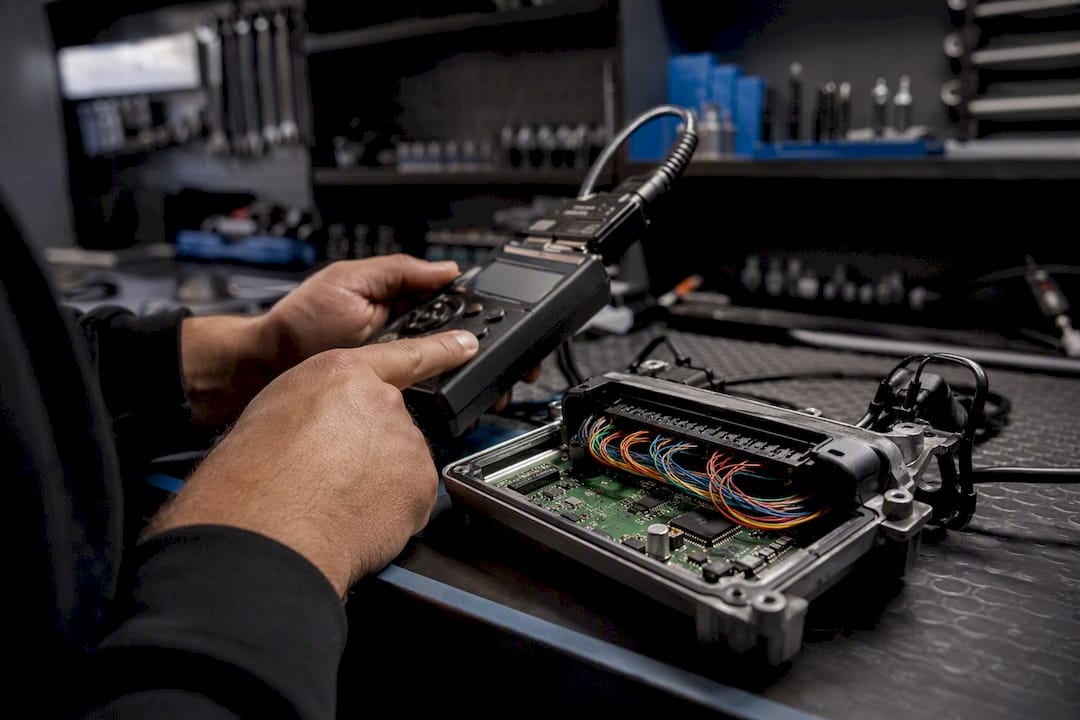
Map names, memory regions and integrity protections vary by software version. Avoid informal cross-platform labels and use the definitions appropriate to the identified ECU.
Pro-Tipp: Never alter a checksum-sensitive or protected memory region without a full binary backup and a clear understanding of how that ECU family validates internal consistency. A corrupted checksum region does not always throw an obvious fault immediately. It can surface as intermittent limp mode weeks later, long after the workshop has moved on to the next job.
Stage 1, Stage 2, and Stage 3 Tuning for Euro 5 Diesels
Stage 1/2/3 are informal industry labels, not technical standards. Define the requested calibration by hardware, fuel, duty cycle and target behavior.
Stage 1 commonly refers to calibration on standard hardware, but the exact scope varies by provider and vehicle. Mechanical health and aftertreatment condition still set the limits.
Stage 2 commonly refers to calibration matched to specified supporting hardware. The required parts are platform-specific and should not be generalized.
Stage 3 is an informal label for more extensive hardware changes and requires engine, turbo, fuel-system and drivetrain validation specific to the build.
Fuel economy response is even more duty-cycle dependent than power, and the honest answer for any given vehicle depends on how the calibration interacts with real-world driving rather than a single universal number.
Risk should be assessed from the actual calibration and hardware, not from the Stage label alone.
- Stage 1: lowest risk to DPF and SCR systems if regeneration strategy is preserved; main risk is over-aggressive smoke limit edits on short-trip vehicles.
- Stage 2: increased soot generation raises DPF loading risk; EGR plausibility checks can trigger if airflow calibration is not rebalanced.
- Stage 3: highest risk across the board, including SCR/AdBlue plausibility faults if NOx output shifts beyond what the dosing strategy expects.
Pro-Tipp: Match the calibration target to the vehicle’s actual duty cycle. A delivery van doing short urban stops needs a conservative, regeneration-friendly Stage 1 file even if the customer is asking for maximum numbers, while a highway-mile daily driver can usually tolerate a more assertive calibration without stressing the aftertreatment system.
Euro 5 Diesel Remap Guide: Reading, Writing and Validation Workflow
A professional remap file depends on correct ECU identification, supported read/write workflow, sound vehicle condition, suitable calibration data and post-write validation.
- Preflight diagnostics. Scan for stored and pending DTCs, confirm battery voltage is stable under load, and record coolant temperature and mileage.
- Source file: preserve the original, virtual, encrypted or server-supplied file used by the supported tool workflow.
- Identify calibration ID and software version. Confirm the file matches the ECU’s actual hardware and software revision rather than assuming based on vehicle year.
- Calibration: follow the actual torque/load/fuel/air architecture of the identified ECU rather than a universal edit order.
- Integrity: use the checksum/signature process required by the exact ECU and write tool.
- Write method: use OBD, Bench, Boot or other access only when the current tool protocol explicitly supports it.
- Adaptations: perform only the reset/relearn procedure required by the specific ECU or hardware change.
- Validation: use diagnostics, logging, controlled road testing and/or dyno work according to the calibration scope.
| Access method | Use when | Main consideration |
|---|---|---|
| OBD | The exact ECU/tool protocol supports the required operation | Vehicle-side communication and power must remain stable |
| Bank | The protocol specifies direct connector access or recovery | Correct pinout, power and ECU identification are essential |
| Boot / low-level access | The tool explicitly supports it for the processor/security state | Higher technical complexity; follow vendor documentation exactly |
| Virtual/server file | The tool provides a matched source file from ECU identification | Not equivalent to a physical full backup, but valid within supported workflows |
Professional workflows should document the source file, ECU ID, calibration revision and integrity/write method so the job can be reproduced and supported.
Preflight checklist, condensed:
- Use the power-support conditions specified by the flashing tool and vehicle.
- Diagnose unresolved DTCs before calibration; do not simply clear evidence of an underlying fault.
- Coolant and oil temperatures within normal operating range.
- Calibration ID confirmed against a known reference.
- Baseline datalogs captured for post-write comparison.
Post-write checklist:
- Use tool-supported post-write verification where available; read-back is not universal.
- Validate the operating regions affected by the calibration under safe, legal conditions.
- Check smoke/lambda/airflow and relevant emissions behavior under load where applicable.
- Confirm no new DPF, EGR, SCR or readiness faults appear after tuning.
Pro-Tipp: Never write to an unknown or unverified ECU without a confirmed full backup and a write method that’s already proven reliable on that exact ECU family. A dropped connection mid-write on an unfamiliar platform is how a routine job turns into an ECU replacement.
Tools, Editors, and Hardware for Professional Remap Work
For a Euro 5 diesel remap guide, tool choice should follow the exact ECU protocol required. KESS3, AutoTuner, Magic Motorsport FLEX, CMD, Dimsport and PCMFlash all have different coverage and licensing models.
WinOLS is one professional calibration editor among several. Its usefulness depends on correct definitions, plugins and operator expertise; checksum handling is not universal.
Programming risk comes from power instability, communication loss, wrong protocol/file type, ECU security state and tool/workflow errors. Use the manufacturer’s supported procedure for each ECU.
Pro-Tipp: Keep a documented, verified toolchain checklist per ECU family, not per vehicle model. Two cars can share an engine but run different EDC17 sub-variants that behave differently under the exact same write procedure.
Euro 5 Diesel Remap Guide: Legal and Emissions Considerations
Road-use software that disables or defeats required DPF, EGR, SCR/AdBlue or diagnostic functions can violate applicable emissions law. Warranty consequences depend on jurisdiction, vehicle and causal relationship to the claim.
For road-use vehicles, calibration should preserve required emissions-control and diagnostic functions while optimizing the permitted torque, drivability and efficiency objectives.
A remap that removes emissions-system logic trades a short-term customer request for long-term legal, warranty, and reputational risk. A calibration tuned to the vehicle’s actual duty cycle delivers real improvement without that exposure.
Maintain ECU/file identification, calibration revision, diagnostics and validation records. Customer consent does not make an otherwise prohibited emissions modification lawful.
Euro 5 Diesel Remap Guide: Validation and Datalogging
A returned or edited file still requires vehicle-side validation appropriate to the calibration scope before release.
Datalog channels to record:
- Fuel-pressure targets and limits where relevant to the engine and requested output.
- Commanded injection quantity.
- Injection timing/SOI strategies, calibrated from combustion, noise, EGT and emissions constraints.
- Boost pressure and VNT vane position.
- Exhaust-temperature channels available on the vehicle and relevant to regeneration/thermal protection.
- DPF differential pressure and relevant soot/load data appropriate to the vehicle.
- SCR dosing status and NOx sensor feedback.
- Torque request versus actual torque delivered.
| Validierungsmethode | Beste Verwendung | What it can reveal |
|---|---|---|
| Diagnostics / live data | Every job | DTCs, pressures, temperatures, readiness and aftertreatment behavior |
| Kontrollierter Straßeneinschnitt | Drivability and duty-cycle validation | Transient response, real-world load and thermal behavior |
| Prüfung auf dem Prüfstand | Jobs requiring controlled load or measured output | Repeatable torque/power and load-specific calibration behavior |
| Fleet / route validation | Commercial duty-cycle tuning | Fuel, thermal and regeneration behavior under representative use |
Unexpected torque intervention, new DTCs, limp mode, smoke, pressure deviations or abnormal temperatures require investigation, but none proves a map fault by itself.
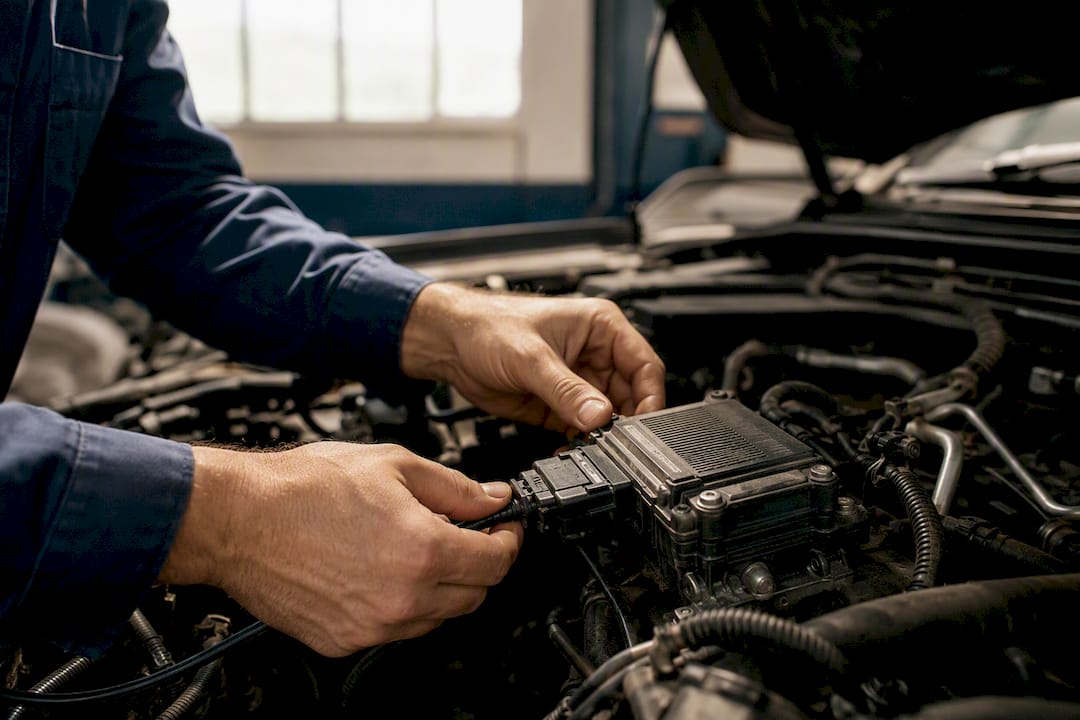
Aftertreatment and diagnostic behavior should remain appropriate for the legal vehicle configuration. Do not accept a performance gain that creates new DPF, EGR, SCR or readiness faults.
Common Post-Remap Faults and a Technician Preflight Checklist
Post-remap faults can come from calibration, programming, mechanical, sensor or aftertreatment issues. Use DTCs and live data to separate them.
Preflight, one more time, condensed for the bay:
- Battery and charging system confirmed stable.
- Calibration ID matched and documented.
- Pending DTCs addressed before the write.
- Coolant and oil temperatures normal.
- Baseline datalogs saved before any edit.
Common faults and where to look first:
- Limp mode: read DTCs and investigate torque monitoring, boost/airflow, fuel pressure, sensors and hardware before blaming a single map.
- Torque cuts: inspect the active engine/gearbox/thermal/protection limiter and measured load/pressure data.
- SCR/AdBlue errors: diagnose NOx sensors, dosing, temperature and system condition before changing calibration.
- Changed DPF behavior: investigate duty cycle, soot/load model inputs, differential pressure, temperatures and hardware condition.
Not every fault after a remap is a file problem. Fuel, air, glow-plug, sensor and intake faults can mimic calibration issues, so confirm mechanical condition first.
How TuningBot Supports Euro 5 Diesel Remap Workflows
TuningBot can provide Euro 5 ECU calibration files where the exact control unit, source-file type and requested service are covered.
Before ordering, check ECU-Service-Abdeckung, überprüfen Sie öffentliche Preisliste and browse ECU-Dienste.
For technical context, see the verified Euro 5 Engine Tuning Guide, Remap File Guide und Remap File Calibration Guide.
Submit a supported source file through Datei tunen without prepaid credits.
This article remains focused on Euro 5 diesel technical workflow so it supports rather than competes with TuningBot’s commercial service pages.
What Experienced Tuners Get Wrong on Euro 5 Diesels
A common mistake is tuning over unresolved vehicle faults or relying on a generic template instead of the actual ECU ID, logs and duty cycle.
The gap between a promised number and a stable, drivable file is where most workshop reputations get made or broken.
Pro-Tipp: Hand the customer a short summary of what changed and what to watch for during handover. It takes five minutes and prevents most of the “it feels different” comeback calls.
How to Use This Euro 5 Diesel Remap Guide in a Workshop
Use this guide as a technical checklist: identify the ECU, diagnose the vehicle, preserve emissions functionality for lawful road use, follow the tool-specific read/write procedure and validate the result from measured data.
When outsourcing calibration, confirm coverage first and submit the source file through Datei tunen.
The workshop remains responsible for vehicle condition, programming conditions, legal use and final validation.
Sources and Further Reading
- Tuners Guild — Diesel Stage 1 tuning discussion — external technical-community reference; map order is not universal.
- Transport Engineer — aftermarket engine tuning overview — external industry overview retained as requested.
- Express Lube Plano — fuel filter maintenance — external maintenance reference retained as requested.
- TuningBot Euro 5 Engine Tuning Guide — verified internal Euro 5 reference.
- TuningBot Remap File Guide — verified internal file reference.
- TuningBot Remap File Calibration Guide — verified internal calibration reference.
- TuningBot ECU Remapping for Professionals — verified internal professional workflow reference.
FAQ
Is It Worth Remapping a Diesel?
It can be worthwhile when the vehicle is healthy, the calibration matches the duty cycle and the required emissions systems remain functional. Results vary by engine and use.
Is a Stage 1 Remap Risky?
Risk cannot be defined by the Stage label alone. Vehicle condition, calibration quality, fuel, temperatures and validation determine the real risk.
What Do I Need for a Stage 2 Diesel Remap?
There is no universal Stage 2 hardware list. Required intercooling, turbo, intake, exhaust or fuel-system changes depend on the exact engine and target output.
What Is the Best Diesel Tuner on the Market?
No single tool is best for every Euro 5 ECU. Choose from the current protocol coverage for the exact control unit and required OBD/Bench/Boot or virtual-read workflow.
How Do I Remap a Diesel ECU Safely?
Diagnose the vehicle first, identify the exact ECU and file type, use verified definitions and the supported programming method, preserve road-use emissions functions and validate the result with appropriate diagnostics and logs.