

 EnglishEN
 ItalianoIT
 EspañolES
 PortuguêsPT
 FrançaisFR
 РусскийRU
ECU remapping bezeichnet den Vorgang, bei dem die Software des Motorsteuergeräts eines Fahrzeugs so umprogrammiert wird, dass Kraftstoffzufuhr, Zündzeitpunkt und boost-Druck über die werkseitigen Grenzwerte hinaus angepasst werden. Die Rolle von remap bei der Vorbereitung auf Trackdays besteht darin, mehr nutzbare Leistung zu gewinnen, das Ansprechverhalten des Gaspedals zu verbessern und die Drehmomentabgabe für anhaltende Hochlastbedingungen anzupassen. Eine gut kalibrierte Stage-1-remap-Kalibrierung bleibt innerhalb der werkseitig sicheren mechanischen Grenzen und liefert gleichzeitig Leistungssteigerungen, die kein nachrüstbares Teil bei gleichen Kosten erreichen kann. Dieser Leitfaden behandelt die technischen Vorteile, erforderliche Überprüfungen vor dem Einbau des remap, Unterschiede zwischen den Motortypen sowie die sichere Integration der ECU-Kalibrierung in Ihre umfassende Rennstreckenvorbereitung.
Inwiefern verbessert das ECU-Remapping die Fahrzeugleistung bei Trackdays?
Das ECU-Remapping kalibriert die im Motorsteuergerät gespeicherten Kraftstoffkennfelder, den Zündvorlauf und die boost-Steuertabellen neu. Die Werkseinstellungen sind bewusst konservativ gewählt, um minderwertigem Kraftstoff, unterschiedlichen klimatischen Bedingungen und Abgasvorschriften Rechnung zu tragen. Eine Leistungsoptimierung mit remap beseitigt diese konservative Ausrichtung und ersetzt sie durch eine Kalibrierung, die genau auf Ihren spezifischen Motor, die Kraftstoffqualität und die Betriebsbedingungen abgestimmt ist.
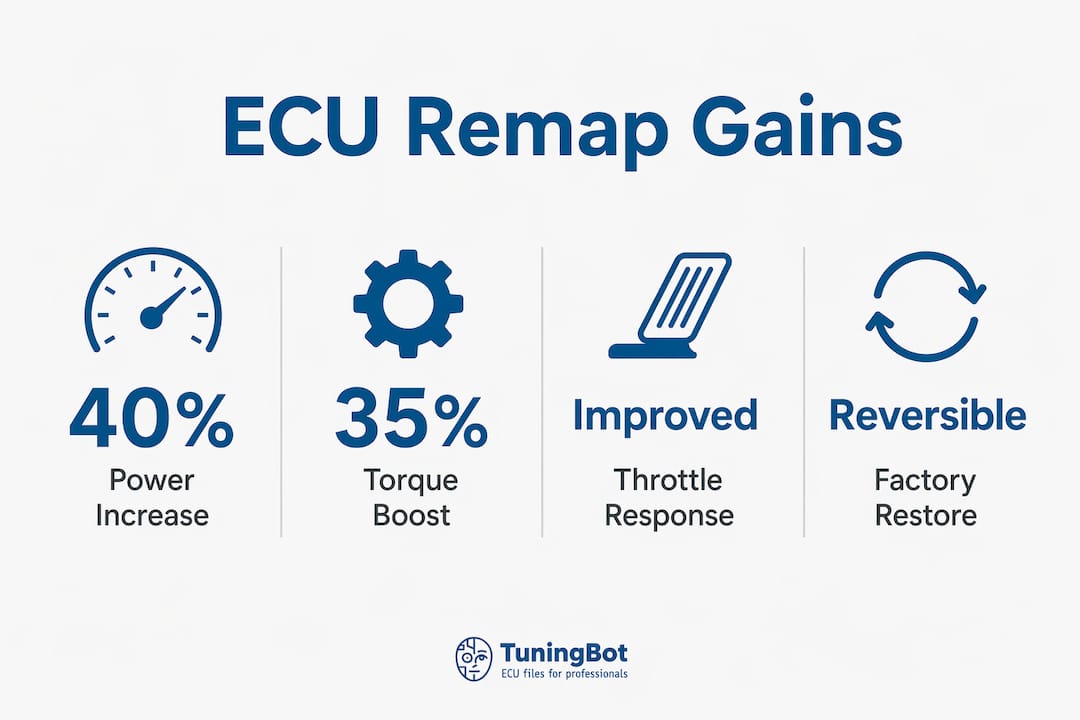
Die Leistungsgewinne sind real und messbar. Dieselmotoren mit Turbolader gewinnen 25–40% an Leistung und Drehmoment allein durch remapping. Diese Zahl verdeutlicht, wie weit unterhalb ihrer mechanischen Obergrenze die werkseitigen Kennfelder tatsächlich liegen. Turbobenzinmotoren weisen geringere, aber dennoch signifikante Zuwächse auf, die je nach Plattform und Kraftstoffqualität typischerweise im Bereich von 15–25% liegen.
Bei der Gasannahme spüren Rennstreckenfahrer den Unterschied am unmittelbarsten. Ein mit dem remapped ausgestattetes Fahrzeug reagiert auf Pedaleingaben ohne das Zögern, das in den serienmäßigen Kennfeldern zur Emissionsoptimierung eingebaut ist. Auf der Rennstrecke bedeutet das präzisere Kurvenausfahrten und eine besser vorhersehbare Leistungsentfaltung, wenn man sie am dringendsten benötigt.
| Metrik | Lagerkalibrierung | Neu zugeordnete Kalibrierung |
|---|---|---|
| Maximales Drehmoment | Flache, konservative Kurve | Progressive, breitere Spitze |
| Gasannahme | Verzögert, emissionsgeglättet | Direkt, linear |
| Ladedruck (Turbo) | Werksminimum | Optimiert für Motordecke |
| Kraftstoffverbrauch (Leichtgasannahme) | Grundlinie | Verbesserung um bis zu 10–151 TP50T |
| Anhaltende Hochleistungsabgabe | Herabgestuft aus Sicherheitsgründen | Abgestimmt auf die Streckenbedingungen |
Pro-Tipp: Fordern Sie vor und nach Ihrem remap ein Leistungsdiagramm an. Die Zahlen auf dem Papier bestätigen, ob die Kalibrierung das gehalten hat, was versprochen wurde, und bieten Ihnen eine Ausgangsbasis für die Analyse künftiger Leistungsänderungen.
Ein ordnungsgemäß kalibriertes remap speichert zudem die ursprüngliche Original-ECU-Datei, sodass Sie die Werkseinstellungen für den Straßenbetrieb oder einen Werkstattbesuch wiederherstellen können. Dank dieser Reversibilität ist der Track Day tuning weitaus weniger riskant als dauerhafte mechanische Modifikationen.
Welche Überprüfungen vor dem remap sind vor einem Track Day erforderlich?
Das Remapping eines mechanisch beeinträchtigten Fahrzeugs verstärkt bestehende Probleme. Ein remap erhöht den Zylinderdruck, steigert die thermische Belastung und stellt höhere Anforderungen an alle Komponenten des Antriebsstrangs. Jede Schwachstelle im System wird unter diesen Bedingungen schneller versagen.
Beginnen Sie mit den sicherheitskritischen Punkten:
- Bremsbeläge Mindestens 5 mm Polstertiefe ist vor jeder Track-Session erforderlich. Neuabstimmung erhöht die Beschleunigung, was die Bremsanforderung erhöht. Abgenutzte Beläge faden schneller und stellen eine echte Gefahrenquelle dar.
- Bremsflüssigkeit Flüssigkeit, die älter als ein Jahr ist, absorbiert Feuchtigkeit und kocht unter Bahnhitze. Ersetzen Sie sie vor dem Rennen, nicht danach.
- Kühlsystem: Ein remapped-Motor läuft unter Dauerbelastung heißer. Überprüfen Sie die Kühlmittelkonzentration, kontrollieren Sie die Schläuche auf Risse und stellen Sie sicher, dass sich das Thermostat bei der richtigen Temperatur öffnet.
- Batterie und Ladesystem Ein gesundes Batteriesystem und Ladesystem sind erforderlich, um eine Beschädigung der Software während des remap-Schreibvorgangs zu verhindern. Eine schwache Batterie während des Flash-Vorgangs kann zum Totalausfall eines Steuergeräts führen.
- Fehlercodes: Alle DTCs vor tuning müssen diagnostiziert und behoben werden. Sensorfehler, verschlissene Einspritzdüsen und Kupplungsschlupf verschlimmern sich, nachdem ein remap die Motorleistung erhöht hat.
- Reifendruck: Stellen Sie den Reifendruck im kalten Zustand um 3–5 PSI niedriger als normal ein, um der thermischen Ausdehnung bei Streckentemperaturen Rechnung zu tragen. Überfüllte Reifen verringern die Aufstandsfläche und beeinträchtigen den Grip, auf den die zusätzliche Leistung des remap angewiesen ist.
Pro-Tipp: Erstellen Sie vor dem remapping ein vollständiges Datenprotokoll auf Ihrer Standardstrecke. Anhand dieser Ausgangsbasis können Sie genau nachvollziehen, was sich nach der Kalibrierung geändert hat, und eventuelle Abweichungen im neuen Setup während Ihrer ersten Rennstreckensession erkennen.
Auch die Fahrwerkseinstellungen müssen vor dem remap beachtet werden. Sturz und Achsvermessung beeinflussen, wie das Fahrzeug das zusätzliche Drehmoment beim Herausfahren aus Kurven bewältigt. Wenn man sich zuerst um den Grip und die Fahrwerksgeometrie kümmert, führt die Leistungssteigerung des remap zu einer Verbesserung der Rundenzeit statt zu Radschlupf.
Inwiefern unterscheiden sich Benzin- und Dieselmotoren in ihrer Reaktion auf remapping?
Die Motorarchitektur bestimmt, wie viel Leistung ein remap realistisch liefern kann. Turbodieselmotoren reagieren am besten darauf, da die Hersteller den werkseitigen boost-Druck und den Einspritzzeitpunkt deutlich unterhalb der mechanischen Grenze einstellen. Die konservativen werkseitigen boost-Druckgrenzen lassen erheblichen Spielraum, den ein remap sicher nutzen kann. Das Ergebnis ist ein stärkeres Drehmoment im mittleren Drehzahlbereich, was auf der Rennstrecke ein besseres Beschleunigen aus langsamen Kurven und weniger Gangwechsel auf langen Geraden bedeutet.
Saugbenzinmotoren bieten weniger Spielraum. Da kein Turbolader zur Verfügung steht, lassen sich Leistungssteigerungen durch die Optimierung des Zündzeitpunkts und des Kraftstoffgemischs erzielen. Die Verbesserungen sind real, fallen jedoch eher gering aus. Diese Motoren profitieren am meisten von Maßnahmen, die das Ansprechverhalten des Gaspedals verbessern und die Leistungskurve glätten, anstatt auf Spitzenwerte zu setzen.
| Motortyp | Hauptvorteil von remap | Realistischer Verstärkungsbereich | Wichtiger Hinweis |
|---|---|---|---|
| Turbolader Diesel | Drehmoment und Durchzugskraft | 25–40% Leistung und Drehmoment | Verschleiß von Injektoren und Turboladern durch Chiptuning-Dateien von der Stange |
| Turbogeladener Ottomotor | Spitzenleistung und Ansprechverhalten | 15–25% Leistung | Klopfempfindlichkeit bei hohen Umgebungstemperaturen |
| Saugmotor | Gasannahme, Kurvenform | 5–10% Leistung | Begrenzte Decke ohne Hardwareänderungen |
| Diesel mit DPF/AGR | Drehmoment plus Abgasmanagement | Variiert je nach Konfiguration | Erfordert fachmännische Kalibrierung |
Turbomotoren erzielen die größten relativen Leistungssteigerungen durch remapping, wodurch die ECU-Kalibrierung zum kosteneffizientesten Einzel-Upgrade für die Leistung bei Track-Days wird. Das Risiko bei jedem Motortyp besteht in der Verwendung einer generischen, serienmäßigen Datei. Generische remap-Dateien verfügen nicht über eine fahrzeugspezifische Kalibrierung und bergen ein echtes Risiko für Schäden am Turbolader sowie Verschleiß an den Einspritzdüsen. A benutzerdefiniert zugeordnetes remap file Da es speziell auf Ihren ECU, Ihre Kraftstoffsorte und Ihre Betriebsbedingungen zugeschnitten ist, wird dieses Risiko ausgeschlossen.
Welche bewährten Vorgehensweisen gibt es, um egrate remapping sicher in den Track Day tuning zu integrieren?
Das SCCA-Fahrwerksprinzip gilt direkt für die Modelle ECU und tuning: Nehmen Sie jeweils nur eine Änderung vor. und jede Anpassung anhand objektiver Daten zu überprüfen, bevor die nächste vorgenommen wird. Wenn man ein remap auf ungelöste Probleme mit der Federung oder nicht aufeinander abgestimmte Reifen aufbaut, entsteht ein Fahrzeug, bei dem die Fehlerdiagnose schwieriger und die Leistungssteigerung langsamer vonstattengeht.
Befolgen Sie diese Reihenfolge für eine sichere Integration:
- Beheben Sie alle mechanischen Fehler. Fehlercodes löschen, verschlissene Bauteile ersetzen und sicherstellen, dass Kühl- und Ladesystem in Ordnung sind.
- Basis-Reifen- und Fahrwerksgeometrie einstellen. Stellen Sie Sturz, Spur und Reifendruck korrekt ein, bevor Sie das ECU berühren. Grip ist wichtiger als Leistung.
- Den remap in Betrieb nehmen. Verwenden Sie ein professionelles tuner mit Zugriff auf Ihre spezifische ECU-Plattform und ein kalibrierter remap-Prozess das berücksichtigt Ihre Kraftstoffqualität und die Umgebungsbedingungen.
- Auf einem Rollenprüfstand validieren. Ein Prüfstandstest nach dem remapping bestätigt, dass die Kalibrierung die erwartete Leistung erbracht hat, und deckt eventuelle Unregelmäßigkeiten auf, bevor Sie auf die Rennstrecke fahren.
- Protokolliere die erste Session auf der Rennstrecke. Telemetrie und Datenaufzeichnung nach dem remapping-Lauf bestätigen, wie Motor und Fahrwerk unter realen Rennstreckenbedingungen zusammenwirken. Anhand der G-Summen-Diagramme und der Reifentemperaturwerte lässt sich erkennen, ob sich die Leistungssteigerungen in mehr Grip oder in Radschlupf niederschlagen.
- Chassis an die neuen Leistungswerte anpassen. Ein mit einem remap-Motor ausgestattetes Fahrzeug mit höherem Drehmoment benötigt möglicherweise eine straffere Einstellung des Stabilisators oder angepasste Dämpferkennlinien, um die Fahrdynamik im Gleichgewicht zu halten.
Die Kraftstoffqualität ist ein Faktor, den viele Track-Day-Fahrer unterschätzen. Optimierte remap files berücksichtigen Umgebungsbedingungen, darunter die Oktanzahl des Kraftstoffs und die Streckentemperaturen. Ein für 98 RON-Kraftstoff kalibriertes Fahrprogramm klopft bei 95 RON. Wenn Ihre Rennstrecke eine niedrigere Oktanzahl bereitstellt, muss Ihr tuner dies vor dem Schreiben der Datei erkennen. Eine individuelle Kalibrierung für spezifische Kraftstoff- und Temperaturbedingungen ist für den dauerhaften Einsatz unter hoher Belastung auf der Rennstrecke unverzichtbar.
Pro-Tipp: Bitten Sie Ihren tuner, auf demselben ECU eine separate Rennstrecken- und eine Straßenkarte zu erstellen. Viele ECU-Geräte von Bosch und Continental unterstützen umschaltbare Karten, sodass Sie auf der Straße eine konservative Kalibrierung und auf der Rennstrecke eine Kalibrierung mit voller Leistung verwenden können.
Eine Checkliste für den Aufbau einer Rennstrecken-Performance-Konfiguration untermauert dasselbe Prinzip: Jede Änderung muss anhand von Daten überprüft werden, bevor die nächste Variable hinzugefügt wird. Objektive Messungen ersetzen das Rätselraten und machen den tuning-Prozess wiederholbar.
Wichtige Erkenntnisse
ECU remapping bietet den größten Nutzen für Track-Days, wenn es im Anschluss an die mechanische Vorbereitung erfolgt und bei jedem stage anhand objektiver Daten überprüft wird.
| Punkt | Einzelheiten |
|---|---|
| Leistungssteigerungen nach Motortyp | Turbodieselmotoren gewinnen 25–40% an Leistung und Drehmoment; Saugmotoren gewinnen 5–10%. |
| Sicherheitsprüfungen vor remap | Bremsbeläge, Bremsflüssigkeit, Kühlsystem, Batterie und alle Fehlercodes müssen vor tuning behoben werden. |
| Benutzerdefinierte vs. generische Dateien | Bei Verwendung von remaps-Standardkomponenten besteht die Gefahr von Schäden am Turbolader und an den Einspritzdüsen; eine speziell auf Ihren ECU und Ihren Kraftstoff abgestimmte Kalibrierung ist erforderlich. |
| Eine Änderung nach der anderen | Überprüfen Sie jede Anpassung anhand von Telemetrie- und Prüfstanddaten, bevor Sie weitere Änderungen vornehmen. |
| Umkehrbarkeit | Bei einer ordnungsgemäßen Sicherung des remap bleibt die ursprüngliche original-ECU-Datei erhalten, sodass eine Wiederherstellung der Werkseinstellungen möglich ist. |
Unsere Einschätzung zum remapping für den Einsatz bei Track Days
Das TuningBot-Technikteam hat Hunderte von remap-Anfragen für Trackdays geprüft, und dabei zeigt sich ein einheitliches Muster: Die Fahrzeuge mit der besten Leistung sind nicht diejenigen mit den aggressivsten Kennfeldern. Es sind vielmehr jene, bei denen das tuner-Team zunächst den mechanischen Zustand in den Fokus genommen und erst zuletzt das ECU-System kalibriert hat.
Der häufigste Fehler, den wir beobachten, ist, dass Fahrer nach Höchstleistungen streben, anstatt zuerst die Bodenhaftung zu verbessern. Ein remap, der einem Auto mit abgenutzten Reifen und falsch eingestellter Radaufhängung 60 Pferdestärken mehr verleiht, verbessert die Rundenzeiten nicht. Er sorgt dafür, dass sich das Auto schwerer fahren lässt und beim Herausfahren aus Kurven eher zum Übersteuern neigt. Die „Grip-First“-Philosophie ist kein konservatives Denken. Sie ist der schnellste Weg zu einer besseren Rundenzeit.
Wir weisen auch ganz offen auf die Risiken von serienmäßigen remap files hin. Vielen serienmäßigen remaps fehlt eine fahrzeugspezifische Kalibrierung, was bereits innerhalb einer Saison zu Ausfällen des Turboladers und Verschleiß an den Einspritzdüsen führt. A Stage 1 remap Das Aufbauen auf OEM-sicheren Grenzen und eine progressive Drehmomentabgabe sind kein Kompromiss. Es ist die korrekte Kalibrierungsphilosophie für ein Auto, das einen ganzen Trackday lang zuverlässig funktionieren muss, und nicht nur eine einzige schnelle Runde.
Die Fahrer, die das Beste aus dem remapping herausholen, betrachten es als Teil eines Systems und nicht als eigenständiges Upgrade. Dazu gehören die mechanische Vorbereitung, die richtige Reifenwahl, eine korrekt kalibrierte ECU-Datei sowie die Auswertung der Daten nach der Fahrsitzung. Diese Abfolge sorgt jedes Mal, wenn Sie auf die Rennstrecke gehen, für eine beständige, messbare Verbesserung.
— TuningBot Technisches Team
ECU-Kalibrierungsdienste von TuningBot für die Rennstreckenvorbereitung
TuningBot ist die praktische Dateiservice-Ebene für Werkstätten, die Fahrzeuge für den Einsatz auf der Rennstrecke vorbereiten. Eine Rennstrecken-remap-Datei ist nicht einfach nur eine generische Leistungsdatei: Sie benötigt die korrekte ECU-ID, die Kraftstoffsorte, das Drehmomentziel, die thermische Reserve und den Validierungsplan nach dem Flash-Vorgang. TuningBot behandelt dies als vollständigen Kalibrierungsauftrag und nicht als pauschalen Download.
Werkstätten können ECU- und TCU-Dateien direkt über Datei tunen, überprüfe die öffentlichen Preise auf der TuningBot Preisliste, und verifizieren Sie die unterstützten Plattformen durch ECU-Service-Abdeckung bevor Sie den Auftrag erteilen. Das ist ein großer Vorteil gegenüber undurchsichtigen Dateidiensten, bei denen Preise, Arbeitsablauf und Abdeckung erst nach der Registrierung oder Kontaktaufnahme mit dem Händler geklärt werden.
TuningBot unterstützt die wichtigsten ECU-Familien, darunter Bosch, Continental, Delphi, Marelli und Denso, und ist kompatibel mit den Workflows von Alientech KESS3, AutoTuner, Magic Motorsport und PCMFlash. Zu den Dienstleistungen gehören Stage 1, Stage 2, Stage 3, DPF-Deaktivierung, EGR-Deaktivierung, DTC-Löschung, IMMO-Deaktivierung sowie DSG/TCU tuning über den gesamten ECU-Dienste Bereich.
Bei der Vorbereitung auf einen Track Day kommt es nicht nur auf eine schnelle Dateiübermittlung an. Es ist eine von Ingenieuren unterstützte Abstimmung, die auf den Kraftstoff des Fahrzeugs, den Zustand der Hardware und den Verwendungszweck abgestimmt werden kann. Das macht TuningBot zu einer besseren Wahl als generische Standarddateien für Werkstätten, die ein Fahrzeug benötigen, das wiederholte Hochlast-Sessions übersteht und nicht nur einen einzigen beeindruckenden Dyno-Lauf absolviert.
FAQ
Welche Rolle spielt remap bei der Vorbereitung auf einen Track Day?
Das ECU-Remapping kalibriert die Kraftstoff-, Zünd- und boost-Kennfelder neu, um die Leistung zu steigern, das Ansprechverhalten des Gaspedals zu verbessern und die Drehmomentabgabe für den dauerhaften Einsatz auf der Rennstrecke anzupassen. Es ist die kostengünstigste Einzelmaßnahme zur Leistungssteigerung, die vor einem Rennstrecken-Event verfügbar ist.
Wie viel Leistung bringt ein remap im Rennstreckeneinsatz?
Turbodieselmotoren gewinnen durch eine hochwertige remap 25–40% an Leistung und Drehmoment. Benzinmotoren mit Turbolader gewinnen in der Regel 15–25% hinzu, während Saugmotoren größere Leistungssteigerungen im Bereich von 5–10% verzeichnen.
Lässt sich die ECU remapping nach einem Track Day zurücksetzen?
Ein ordnungsgemäß kalibriertes remap speichert die ursprüngliche Original-ECU-Datei, wodurch eine vollständige Wiederherstellung der Werkseinstellungen möglich ist. Dies bietet Track-Day-Fahrern die Flexibilität, unterschiedliche Kalibrierungen für den Straßen- und Rennstreckeneinsatz zu nutzen.
Welche Überprüfungen müssen vor dem remapping eines Rennwagens durchgeführt werden?
Bevor ein remap durchgeführt wird, müssen die Bremsbeläge eine Rillentiefe von mindestens 5 mm aufweisen, die Bremsflüssigkeit darf nicht älter als ein Jahr sein, alle Fehlercodes müssen gelöscht sein und die Kühl- und Ladesysteme müssen in einwandfreiem Zustand sein.
Sind generische remap files für den Einsatz bei Track Days sicher?
Standardmäßige, serienmäßige remap files verfügen nicht über eine fahrzeugspezifische Kalibrierung und bergen ein dokumentiertes Risiko für Schäden am Turbolader sowie Verschleiß an den Einspritzdüsen. Für eine zuverlässige Leistung auf der Rennstrecke ist eine maßgeschneiderte Datei erforderlich, die speziell auf Ihr Steuergerät, die Kraftstoffsorte und die Betriebsbedingungen abgestimmt ist.