

 ItalianoIT
 DeutschDE
 EspañolES
 PortuguêsPT
 FrançaisFR
 РусскийRU
TuningFiles.com alternatives should be evaluated by exact ECU and TCU coverage, revision support, pricing, turnaround, compatibility with the workshop’s tools and the quality of technical assistance. Marketing claims about dyno testing, delivery speed or platform depth are not always directly comparable, so every supplier should be checked against the exact ECU family and service required.
Which TuningFiles.com alternatives should professional workshops consider?
Professional ECU tuners evaluating alternatives to TuningFiles.com should compare file quality, ECU and TCU coverage, revision support, pricing, delivery workflow, data handling and compatibility with their existing tools. The Standard Diesel Direct article on file delivery speed is retained as an external reference.
| Provider | Primary positioning | What to verify | Pricing | Support |
|---|---|---|---|---|
| TuningFiles.com | Established online ECU file supplier | Exact ECU/TCU coverage, revision policy and current turnaround | Check current terms | Check current support channels |
| Dyno Chip Tuning Files | Online file supplier with dyno-focused marketing | Evidence for the exact engine and ECU platform ordered | Check current terms | Verify engineer access and revisions |
| Viezu | UK-based tuning and dealer-network provider | Coverage, account requirements and regional support | Check current commercial terms | Verify account and technical support scope |
| MaxxECU | Standalone ECU ecosystem | Not a direct replacement for a general online remap supplier | Hardware-based | Manufacturer and community support |
| TuningBot | Online ECU and TCU calibration file service | Exact service coverage and required original-file data | Public per-file pricing; no prepaid credits | Direct engineer support |
Delivery time is one of the criteria worth checking when comparing suppliers. As an additional external reference, see the Standard Diesel Direct article on file delivery speed and supplier alternatives. Its claims should still be evaluated against the provider’s current terms and the exact ECU service required.
Key factors to verify before ordering from any supplier:
- File testing methodology: dyno-verified results versus software-only calibration
- ECU brand and hardware tool compatibility with your workshop setup
- Post-delivery technical support availability
- Pricing structure: per-file versus subscription, with no hidden fees
- Delivery turnaround relative to your workshop’s scheduling demands
- Data security practices for uploaded ECU files
Pro Tip: Before purchasing from any provider, confirm they have documented experience with your specific engine platform. A supplier with a strong catalog for VAG group vehicles may have limited depth on JDM or North American domestic ECUs.
How does tuningfiles.com compare to its alternatives in technical depth?
The differences between tuningfiles.com and its main alternatives become clearest when you examine file testing rigor and support structure side by side.
File testing and quality assurance
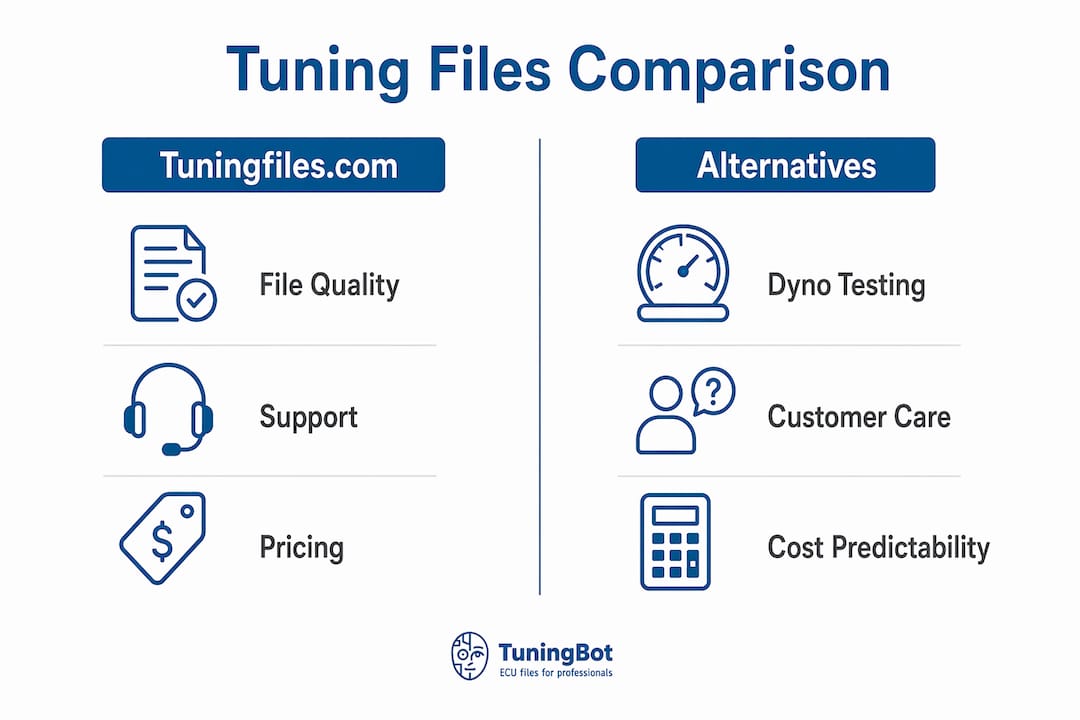
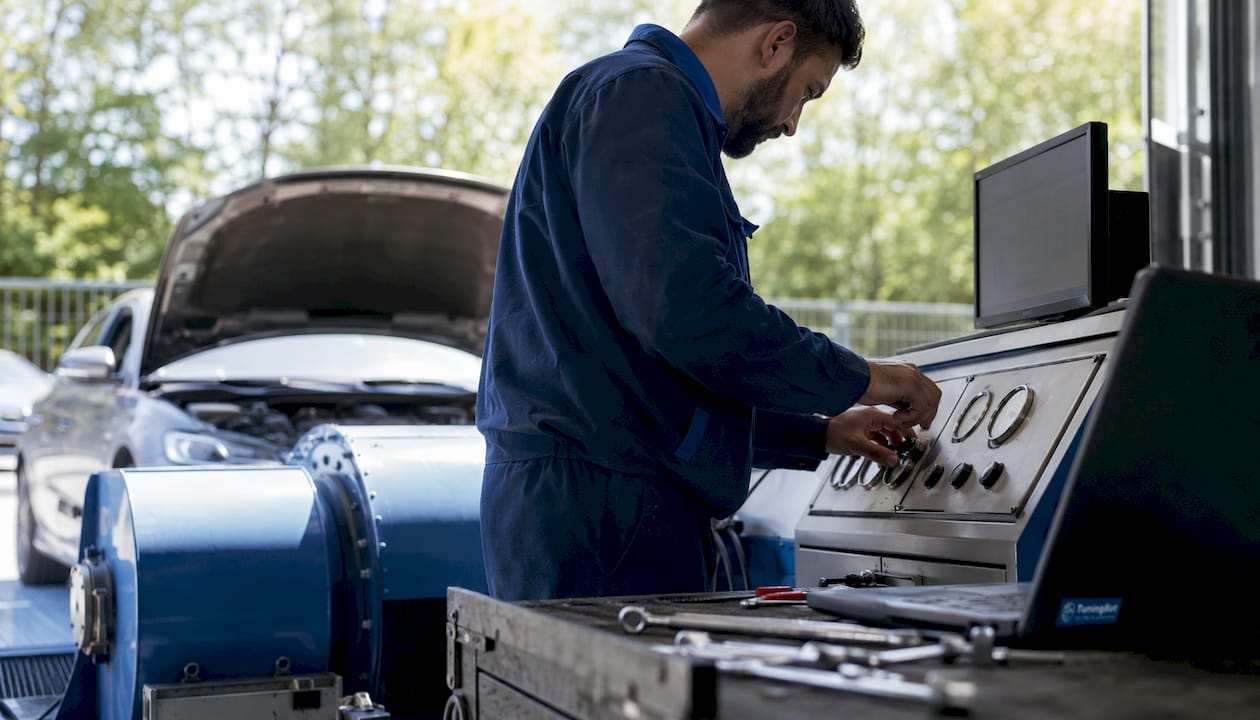
Some providers publicly emphasize dyno testing or engineering review, but workshops should confirm what validation applies to the exact engine, ECU software version and service ordered.
Customer support and responsiveness
Support quality varies by provider, region, account type and workload. Verify whether revisions are included, how engineer contact works and what information is required for corrections.

Pricing and cost predictability
Pricing structures can change and may differ by account type, region or volume. Compare current written terms, including revisions, urgent delivery, subscriptions and minimum purchases.
Strengths and weaknesses at a glance
- Dyno Chip Tuning Files: Strong dyno-test credibility; European vehicle focus may limit depth on some US-market platforms
- Viezu: High file quality and account support; subscription model suits high-volume shops but adds fixed overhead
- MaxxECU: Best suited to shops already using MaxxECU hardware; less relevant as a general file supplier
- TuningBot: Broad ECU coverage, no registration required, fast delivery via automated upload; global platform with US-accessible service
How do you choose a reliable ECU tuning file supplier?
Selecting a supplier is a technical procurement decision, not a price comparison. The criteria below reflect what professional workshops actually use to vet providers.
- File quality verification: Ask whether files are dyno-tested or engineer-reviewed, and whether the provider can supply documentation
- ECU and tool compatibility: Confirm the supplier supports your hardware, whether that is Alientech KESS3, AutoTuner, Magic Motorsport, CMD, Dimsport, or PCMFlash
- Engine platform depth: A broad catalog is less valuable than deep, validated coverage of the platforms your workshop handles regularly
- Support structure: Determine whether post-delivery support is available and how quickly engineers respond to technical queries
- Pricing transparency: Per-file costs should be listed without hidden fees; bulk or subscription options should be clearly defined
- Delivery speed: Automated upload platforms reduce turnaround time significantly compared to manual order workflows
- Data security: Reputable suppliers use encrypted file transfers and secure payment processing to protect customer ECU data and intellectual property
Pro Tip: Cross-check community feedback on forums such as MHH Auto and relevant Reddit communities before committing to a new supplier. Professional recommendations from tuners working on similar platforms carry more weight than general marketing claims.
Calibration quality is important, but reliability also depends on mechanical condition, fuel quality, flashing procedure, requested output and post-flash validation.
How to integrate tuning files from alternative suppliers into your workflow
Switching or adding a new file supplier requires a structured integration process to avoid errors during flashing.
- Verify file compatibility first: Confirm the file matches the exact ECU hardware number, software version, and variant before loading anything
- Create a full ECU backup: Read and store the original file before writing any new calibration; this is non-negotiable
- Validate checksum corrections: Files sourced externally must have correct checksums before flashing; use your tuning tool’s built-in validation or a dedicated checksum tool
- Use compatible hardware: Alientech KESS3, AutoTuner, and PCMFlash each handle specific ECU families; match the tool to the ECU before proceeding
- Flash in a controlled environment: Stable power supply and a complete vehicle health check reduce the risk of interrupted writes
- Verify post-flash behavior: Log key parameters after flashing to confirm the calibration is performing within expected ranges
Pro Tip: When integrating files from a new supplier for the first time, run the first job on a non-critical vehicle or a workshop test unit. This validates the supplier’s file format and your tool compatibility before a customer vehicle is on the lift.
Secure file storage is equally important. Workshops handling customer ECU data should maintain encrypted local or cloud storage, consistent with the security practices that reputable online suppliers apply on their end. Protecting intellectual property and customer data is a professional obligation, not a secondary concern.
Top tuning file suppliers serving US workshops in 2026
US workshops should verify support for the exact GM, Ford, Stellantis, Asian and European platforms they service. Broad brand labels do not confirm support for every ECU family.
TuningBot operates globally and supports ECU brands common across US-market vehicles, including Bosch, Continental, Delphi, and Denso. The platform’s no-registration, no-prepaid-credit model is well-suited to US workshops that prefer pay-per-use flexibility over subscription commitments. Viezu and Dyno Chip Tuning Files are UK-based operations with strong European coverage; US workshops using them should verify platform-specific depth before ordering. For shops already invested in the Stage 1 tuning workflow, supplier compatibility with that workflow’s tool chain is the primary filter.
Community feedback can reveal recurring issues, but anonymous forum reports should be weighed against current documentation and direct testing.
What the TuningBot Technical Team recommends
Price should not be the only selection criterion. Workshops should evaluate file quality, revisions, support and total job risk rather than assuming price alone predicts quality.
Post-delivery support matters when logs, drivability or fault behavior require a revision. Confirm whether revisions are included and how quickly technical questions are handled.
Compatibility should be verified at ECU hardware and software level, not only by brand name. Request confirmation for the exact ECU ID and access method before ordering.
How TuningBot fits into a professional workshop workflow
TuningBot is an online ECU and TCU calibration file service for workshops that already own compatible read/write hardware. The workshop reads the original file, submits the ECU identification and requested service, then receives the calibrated file for writing and validation.
Before ordering, workshops can check ECU and TCU Service Coverage, review the public Price List and browse the available ECU services.
The original file can be submitted through Tune Your File without prepaid credits. The workshop remains responsible for diagnosis, backup, stable flashing conditions and post-write testing.
FAQ
What makes a tuning file supplier reliable for professional workshops?
A reliable supplier provides clear coverage, transparent terms, revision support and competent technical assistance. Validation claims should be checked for the exact platform.
Does TuningBot require registration or prepaid credits to order files?
TuningBot allows direct file submission without prepaid credit packages. Check the current order process and pricing on the platform.
How do Dyno Chip Tuning Files and Viezu handle quality assurance?
Both providers have publicly emphasized dyno-based development. Confirm what testing or engineering review applies to the exact file ordered.
What tuning tools are compatible with files from these suppliers?
Compatibility depends on the ECU, file format, Master or Slave configuration and supplier workflow. Confirm the exact tool and protocol before ordering.
How should workshops protect customer data when ordering tuning files online?
Use authenticated transfer channels, strong account security, controlled local storage and clear retention procedures.
Key Takeaways
A reliable TuningFiles.com alternative should be selected from verified coverage, file quality, revision support, transparent terms and compatibility with the workshop workflow.
| Point | Details |
|---|---|
| Verify the exact ECU | Brand-level coverage does not confirm every hardware and software version. |
| Ask how revisions work | Correction handling matters as much as initial turnaround. |
| Do not assume every file is dyno-tested | General dyno capability does not prove individual validation. |
| Compare current commercial terms | Pricing and subscriptions can change. |
| Validate every new supplier | Use a familiar platform, retain the original file and review logs after writing. |
| TuningBot is a file service | It complements the workshop’s hardware and does not replace diagnostics or flashing tools. |