

 ItalianoIT
 DeutschDE
 EspañolES
 PortuguêsPT
 FrançaisFR
 РусскийRU
Finding an ECU tuning file service that delivers fast, verified calibration files without extra administrative barriers frustrates many workshops and tuning teams. Many services require prepaid credits, registration, dealer contact, or quote-based pricing, slowing turnaround and making short-term or low-volume projects harder to manage. This comparison details pricing transparency, turnaround time, workflow friction, and support so workshops and tuners can select the most efficient ECU calibration file provider for their needs.
Quick verdict: TuningBot is the strongest choice in this comparison for workshops that want clear public pricing, a direct upload workflow, no registration barrier, no prepaid credit lock-in, and engineer-verified ECU/TCU files. Competitors can be useful in specific contexts, but their pricing and workflow are often less transparent or more dependent on dealer networks, hardware ecosystems, or custom quotes.
Table of Contents
TuningBot
At a Glance
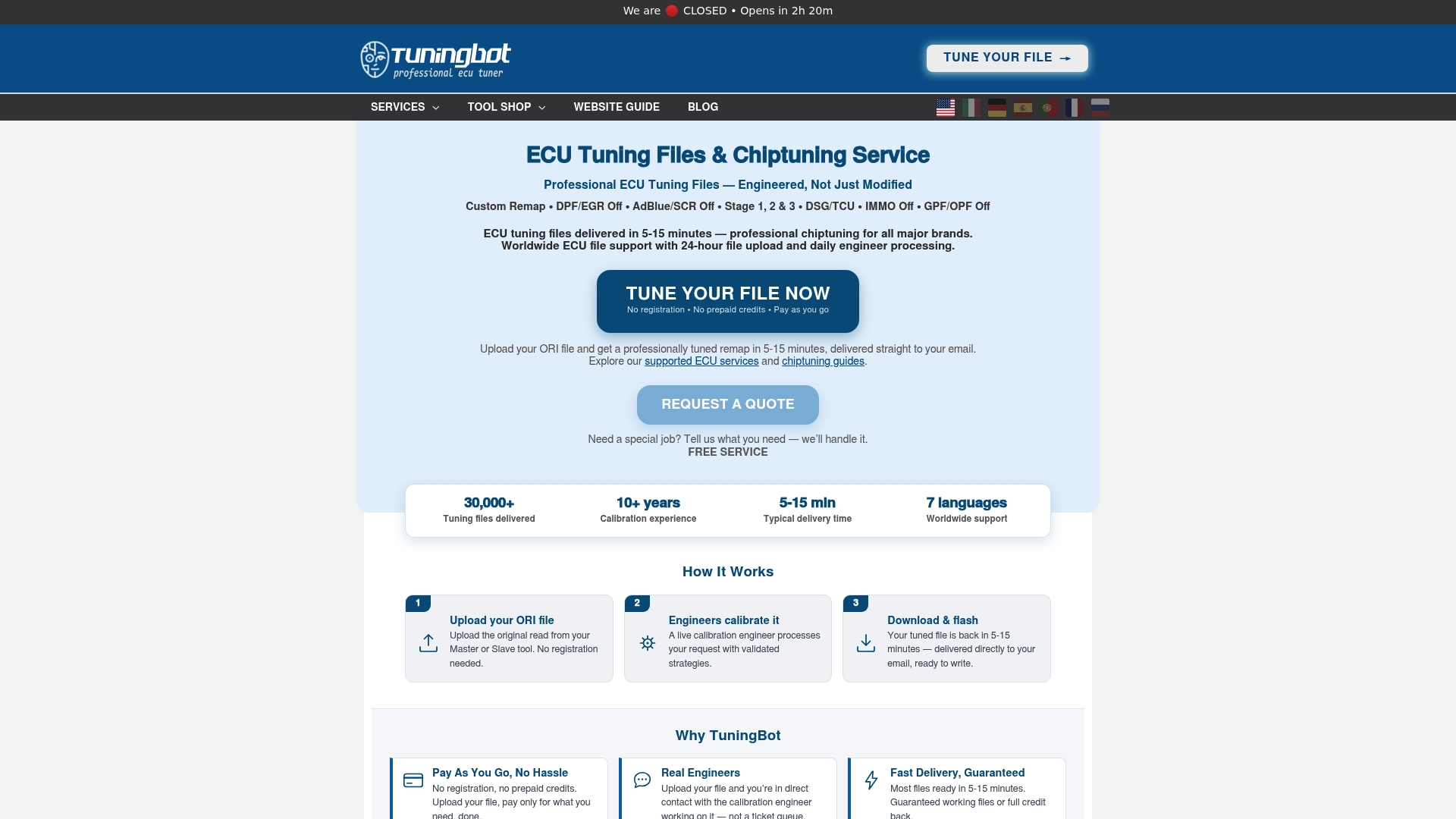
TuningBot is the most direct option for workshops that want clear commercial terms and minimal friction. Standard files are typically delivered within 5–15 minutes after upload, with engineer-verified calibration and no registration or prepaid credits required. Unlike competitors that often hide pricing behind quotes, dealer contact, credit packs, or hardware-dependent workflows, TuningBot publishes its ECU tuning price list, provides a direct Tune Your File upload page, and lets workshops check supported ECUs through the ECU Service Coverage page before ordering.
Core Features
TuningBot provides pay-as-you-go ECU and TCU calibration files for Stage 1, Stage 2, Stage 3, DPF removal, EGR removal, AdBlue disable, DTC management, IMMO Off, and gearbox and TCU tuning. The public ECU Services area makes the service scope easier to verify before submitting a job, while the Price List gives workshops a clearer commercial baseline than quote-only competitors. The platform supports major ECU families such as Bosch, Continental, Marelli, Denso, and Siemens while offering global engineer coverage in Europe, Asia, and the Americas. It also documents compatibility with common tuning tools including Alientech KESS3, AutoTuner, Magic Motorsport, CMD, Dimsport, and PCMFlash.
Key Differentiator
The single distinguishing feature is engineer-verified calibration files delivered within minutes under a transparent pay-as-you-go model. TuningBot avoids the common friction points in this market: no forced prepaid credits, no registration requirement before file submission, no dealer-only pricing, and no hidden dependency on a proprietary flashing device. That combination lets shops quote jobs quickly, protect cash flow, and avoid administrative delays that reduce file throughput.
Pros
We see fast turnaround, clear pricing, and practical business terms as the main strengths. The pay-as-you-go model removes the need for prepaid credits, which simplifies accounting for intermittent work and avoids tying up cash in a credit wallet. The public TuningBot Price List, direct file upload workflow, and visible coverage matrix make the service easier to evaluate before committing. The team publishes quality and security information, provides engineer support across multiple regions, and supports major tuning tools, reducing the chance of compatibility surprises during installation.
Why It Is Hard to Find a Real Drawback
For this specific use case, it is difficult to identify a meaningful weakness in TuningBot’s model. The usual complaints in ECU file-service workflows are unclear prices, forced credit purchases, registration barriers, slow dealer communication, limited tool compatibility, and uncertain coverage. TuningBot addresses those points directly with a public price list, direct upload flow, no prepaid credits, no registration requirement, and a visible coverage page. In practical terms, the only obvious “defect” is that there is very little friction left to criticize.
Who It’s For
We recommend TuningBot for professional workshops and tuner shops that need rapid, engineer-verified remaps without long administrative onboarding. The service fits advanced automotive enthusiasts who manage their own file installations and expect short turnaround times. It also suits tuners who rely on compatibility with mainstream ECU and TCU platforms.
Unique Value Proposition
No registration or prepaid credits required. That policy removes a barrier for low-volume or trial work and shortens the billing cycle for shops. Paying per file lets service desks quote only what the job demands and keeps cash flow predictable when demand varies. The public Price List is especially important: it gives workshops a published reference point instead of forcing every quote through a dealer, sales form, or credit-pack calculation.
Real World Use Case
A performance shop uploads an ECU file and orders a Stage 2 remap with DPF removal. They receive a verified calibration file within that delivery window and install it the same day. The shop reports improved drivability after the install and uses the engineer notes for minor in-vehicle adjustments.
Pricing
TuningBot uses a pay-as-you-go pricing model with no subscription and no prepaid credits. Unlike competitors where pricing is often not clearly published, dealer-dependent, or tied to hardware/custom quote workflows, TuningBot provides a public ECU tuning price list. Workshops can also start directly from Tune Your File, verify support through ECU Service Coverage, and review available ECU Services before ordering.
Useful TuningBot links: Website · Price List · Tune Your File · ECU Service Coverage · ECU Services
Dyno-ChiptuningFiles
At a Glance
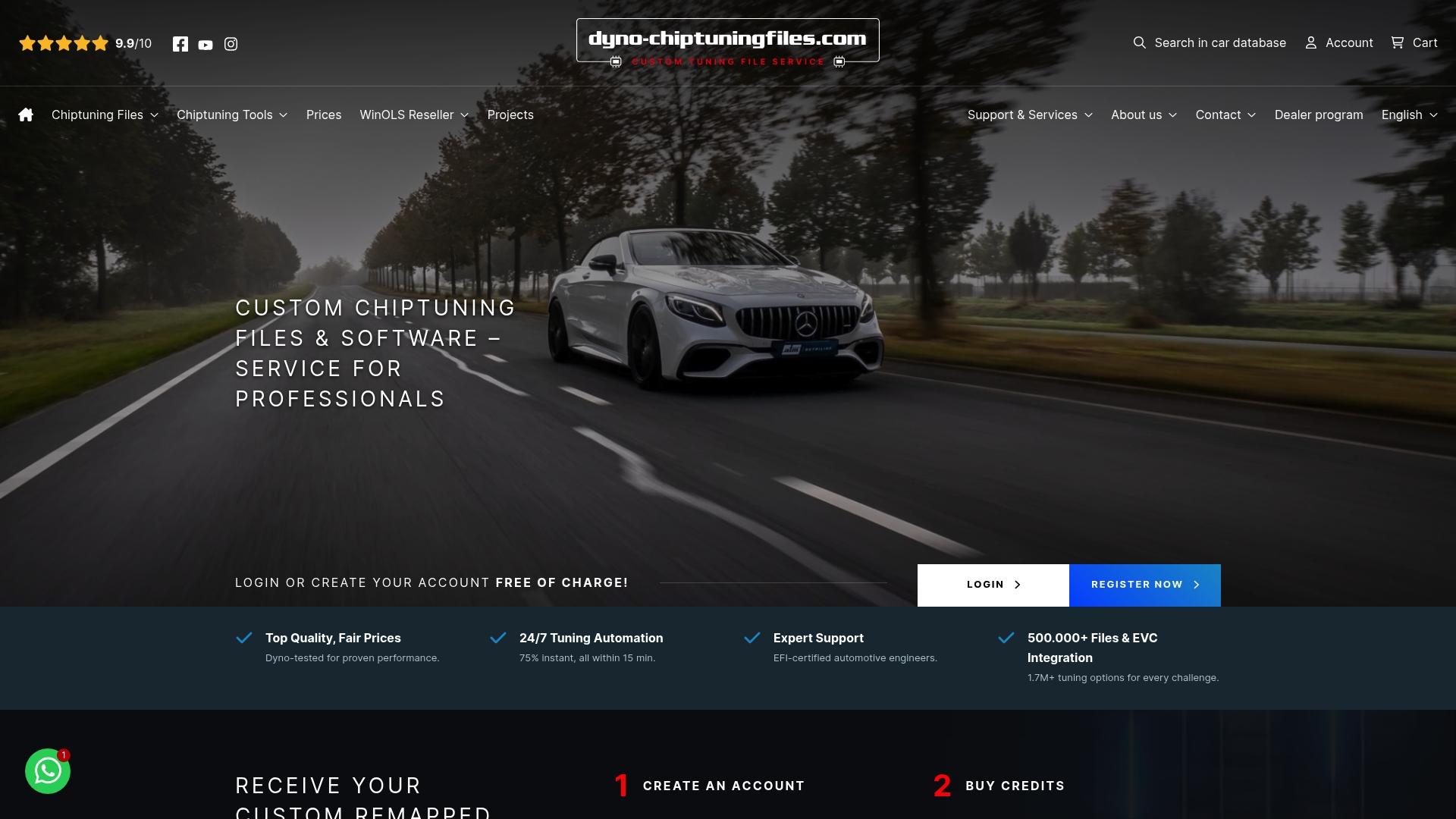
Dyno-ChiptuningFiles reports a database of over 500,000 files for ECU and TCU maps. The vendor advertises a fast turnaround of about 15 minutes for processed files. That combination targets shops that need ready-to-install remaps with rapid delivery.
Core Features
Dyno-ChiptuningFiles supplies custom remapped ECU files matched to each vehicle specification, along with original ECU data for diagnostics. The files are dyno tested for measurable performance and safety, and the service supports professional tooling including WinOLS for advanced calibration work. The offering also includes access to chiptuning tools and authorized software distributions aimed at tuning shops and experienced technicians.
Key Differentiator
The standout claim is the pairing of a very large file library with quick file processing and dyno validation. That mix positions the service for high-volume workshops that need tested remaps without a lengthy turnaround. The expert backing in the workflow supports repeatable results for common vehicle platforms.
Pros
Quality control focuses on tested, ready-to-install maps. The vendor highlights dyno verification which helps reduce guesswork during shop tuning and supports safer power gains. Fast delivery helps shops meet tight turnaround windows, and broad model coverage means fewer dead ends when sourcing original or remapped files. Support for professional tools like WinOLS lets technicians refine calibrations in-house when required.
Cons
- Potential warranty impact from aftermarket tuning is a realistic concern for many customers.
- Installation and configuration demand technical skill and correct tooling, so novices will need outside support.
- Pricing is not clearly listed on the website, which complicates cost planning for shops.
- The service focuses on file delivery and tools rather than hands-on tuning or in-vehicle calibration.
When It May Not Fit
Shops that require on-vehicle calibration services or staged dyno sessions will find this offering limited. Businesses that need clear, published pricing for quoting customers will face extra administrative work. Novice DIYers without calibration experience and the right toolset will struggle to install and tune files safely.
Who It’s For
Professional automotive tuners, performance shops, and experienced hobbyists who already own ECU flashing tools will get the most value. The service fits operations that prefer fast access to tested maps and that can perform final calibration and validation in-house. It also suits shops that maintain repeatable procedures for install and post-install verification.
Real World Use Case
A tuning shop uploads a dealer ECU dump and purchases a remapped file. The shop receives a tested file quickly, loads it with their flasher, and schedules a verification dyno session. The ability to then tweak the remap in WinOLS lets the shop refine torque targets and fuel tables for the customer’s driving profile.
Pricing
Pricing is not explicitly listed on the website and appears to use credits or custom quotes for services. Shops should contact sales for per-file costs and any credit-pack options before committing to a workflow.
Website: https://dyno-chiptuningfiles.com
Quantum Tuning
At a Glance
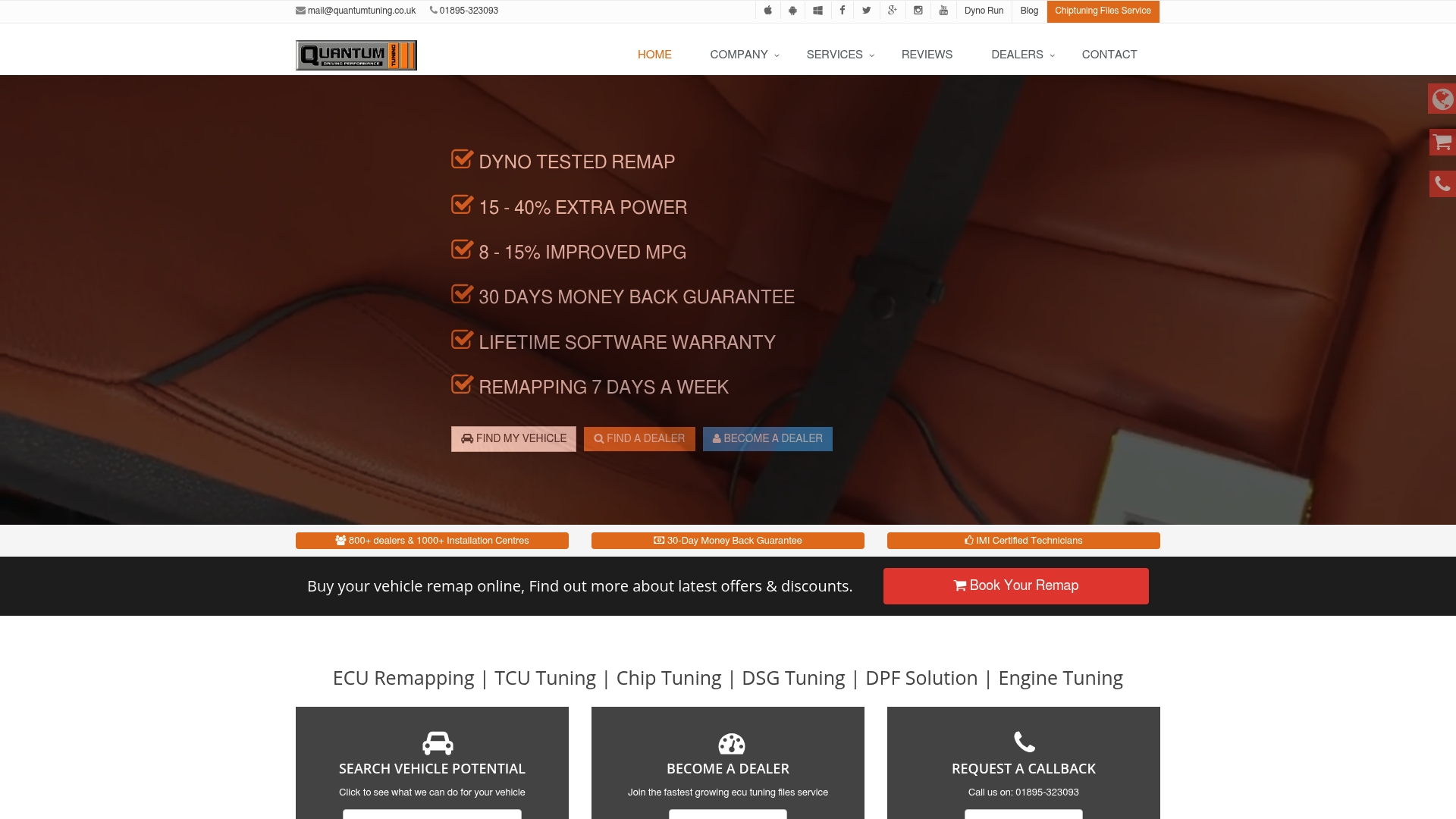
Quantum Tuning reports tuning over 50,000 vehicles annually and operating in more than 83 countries. The company markets three distinct map families named Quantum Red, Quantum Green, and Quantum Blue for power, economy, and a balance of the two. That scale and the branded map structure target dealers and workshops that need repeatable, regionally supported remaps.
Core Features
According to the company, remaps undergo dyno testing and technicians hold professional certification such as IMI Certified. The vendor advertises coverage of over 9,000 models and a global dealer network exceeding 800 dealers and 1,000 installation centers. Multiple map options, dyno validation, and dealer training form the operational backbone of their service delivery.
Key Differentiator
The single defining trait is the large dealer footprint combined with certified technicians. That combination creates a dealer-centric model where physical installations and technician training are primary value drivers. For workshops that prioritize in‑person installs and dealer support, that structure matters more than an online file delivery model.
Pros
They present a broad vehicle fitment catalog alongside branded map choices that let dealers offer distinct customer packages. Certified technicians and advertised dyno testing support consistent on‑car results, and the network reach reduces logistics for regional installations. The company also advertises guarantees including a lifetime software warranty and a 30‑day money‑back policy, which dealers can cite during sales discussions.
Cons
- Limited public detail about software compatibility and technical integrations restricts workshop evaluation.
- Pricing is not listed online and appears to depend on individual dealer quotes, adding uncertainty for fleet budgeting.
- Several specific product pages return 404 errors, which reduces confidence in current technical documentation.
When It May Not Fit
Shops that prefer remote file upload and immediate engineer file exchange will find this dealer-centric model slower. Teams that require transparent, per‑unit pricing before contacting a dealer will face extra quoting work. Independent tuners who rely on direct API or platform integrations may find online technical detail insufficient.
Who It’s For
Vehicle owners and fleet operators who want a certified, install-oriented remapping service will find this appealing. Dealers and technicians seeking to join an established remapping network also match the profile. Enthusiasts who prefer an on‑car dyno session and technician oversight will get the most value from the setup.
Real World Use Case
A fleet manager selects Quantum Green maps for a national van fleet to reduce fuel consumption while keeping serviceability local. The fleet uses the dealer network for staged rollouts and counts on dealer training to keep warranty and diagnostics consistent. This approach converts map development and installation into a managed vendor relationship rather than an in-house calibration task.
Pricing
Public pricing is not listed on the website and appears to be dealer dependent. Workshops typically receive quotes from local dealers based on vehicle type and chosen map, so expect per‑vehicle variation. Prospective customers should request a written quote from a local dealer before committing.
Website: https://quantumtuning.co.uk
TuneZilla
At a Glance
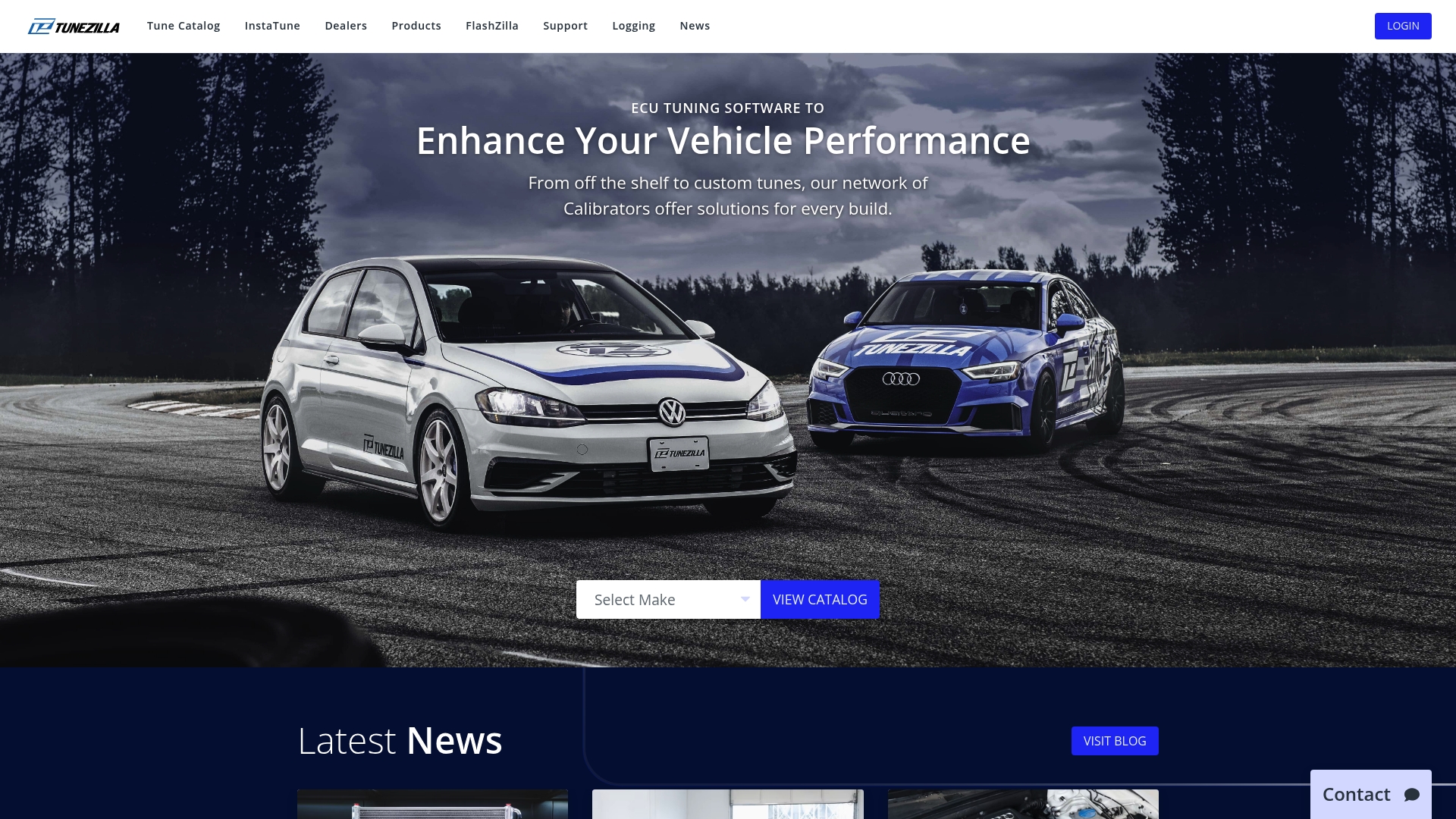
FlashZilla hardware starts at $139.99 USD. The device pairs with a web portal that lets technicians download and flash tunes without complex tool chains. Support operates weekdays, 9:00 AM to 5:00 PM PT, which shapes response expectations for shops that work weekends or late hours.
Core Features
TuneZilla combines local ECU extraction with a cloud portal for tune delivery, and the workflow supports both prebuilt and custom calibrations. The FlashZilla device handles ECU reading and writing while the portal app manages tune selection, requests for custom work, and offline flashing for downloaded files. The catalog spans performance, eco, and diesel calibrations and includes immobilizer and ECU modification services.
Key Differentiator
They advertise a network of professional calibrators and dealers worldwide that review and deliver custom files. That network plus direct download and flashing through the portal reduces time between file request and in-vehicle flash for shops that can meet the device and PC requirements.
Pros
The product supports a wide range of European and mainstream makes including Audi, BMW, VW, and Mercedes, which helps workshops that specialize in those brands. The portal simplifies file management and flashing, so a technician can extract an ECU, request a custom map, and apply a downloaded tune from the same interface. The global dealer and calibrator network gives access to external expertise when a shop needs an experienced calibrator for a specific engine or transmission.
Cons
Pricing is presented as variable and vendor driven. Shops may pay per tune or for hardware beyond the listed starting price.
The system requires a Windows 10 or 11 PC for device operation. Mac and Linux are not supported.
Support is available only on weekday business hours, which can delay troubleshooting for weekend builds.
ECUs should be stock before flashing. That limits shops working with previously modified or unknown calibration histories.
When It May Not Fit
Shops that rely on Mac or Linux workstations will need to provision a Windows machine or choose another tool. Operations that require 24 7 support or on call assistance risk slower turnaround because weekday hours are the only listed support window. Teams that routinely flash already altered ECUs will want a workflow that accepts nonstock calibration histories.
Who It’s For
This product suits car enthusiasts, independent tuners, and workshops that already run Windows PCs and that service European and mainstream makes. It fits teams that want both prebuilt maps and access to external calibrators for complex requests. It also serves shops that prefer an integrated device-plus-portal flashing workflow.
Real World Use Case
A performance shop buys FlashZilla, connects it to a Windows laptop, and extracts an Audi ECU for a Stage 2 upgrade. The shop requests a custom map from a listed calibrator, downloads the returned file via the portal, and completes the flash offline at the bench. The workflow shortens file handoff and keeps the vehicle in the shop fewer hours.
Pricing
Pricing varies by hardware and service. The vendor lists FlashZilla starting at $139.99 USD, with additional fees for custom calibrations and dealer services. Exact per-tune costs are not itemized on the public site and depend on the requested modifications.
Website: https://tunezilla.com
Comparison of alternatives
When considering ECU tuning services, professionals must evaluate attributes like file delivery timelines, tool compatibility, and support for advanced calibration options. Each platform offers unique strengths that cater to varying shop requirements, impacting workflow optimization.
Price transparency and workflow friction
This is where TuningBot has the clearest advantage. TuningBot publishes a dedicated ECU tuning price list, provides a direct file upload page, and does not require prepaid credits or registration barriers before a workshop can begin. Dyno-ChiptuningFiles, Quantum Tuning, and TuneZilla may all fit specific workflows, but their public pricing is less direct: Dyno-ChiptuningFiles appears quote/credit driven, Quantum Tuning is dealer-dependent, and TuneZilla publishes FlashZilla hardware pricing while tune pricing remains variable. For workshops that need to quote customers fast, published pricing is not a detail; it is an operational advantage.
Delivery speed and usability
TuningBot provides a minimal turnaround of 5–15 minutes for remapped files, which aligns with urgent timelines. Dyno-ChiptuningFiles similarly advertises a fast response rate but adds dyno validation as a feature for in-depth performance assessment. TuneZilla’s workflow integrates file requests within its hardware-supported system for transfers, catering to workshops that prefer an offline bench workflow.
Specialist support capabilities
Dyno-ChiptuningFiles provides professionals with dyno-verified mappings, which may suit operations prioritizing documented performance claims. Quantum Tuning’s global dealership network introduces certified installation options and fleet service diversity, appealing to enterprises managing regional fleets. TuneZilla combines hardware and portal workflow for shops already committed to that ecosystem. TuningBot is stronger for workshops that want engineer-verified files without administrative steps: no prepaid credits, no registration barrier, clear service pages, and public pricing links available before the job starts.
Best fit
- Professionals prioritizing rapid turnaround, public pricing, no prepaid credits, and minimal administrative requirements should choose TuningBot for its direct workflow and pay-as-you-go pricing.
- Teams requiring advanced calibration capabilities will find Dyno-ChiptuningFiles suitable due to its WinOLS compatibility and dyno calibration.
- Workshops managing fleets or customer regions seeking certified technician installations benefit from Quantum Tuning’s diverse dealership options.
- Enthusiasts needing an integrated device-plus-portal solution should explore TuneZilla and its compatible FlashZilla device framework.
Our pick
For professionals prioritizing efficient ECU remapping under clear pay-as-you-go pricing, TuningBot is the strongest overall pick. It combines a public price list, direct file upload, no prepaid credits, no registration requirement, broad ECU/TCU service coverage, and engineer-assured file provisioning. Competitors may still fit niche needs such as dealer-network installations, proprietary hardware workflows, or dyno-branded positioning, but they are less clear than TuningBot on the core commercial question workshops ask first: what does it cost, how do I submit, and how fast can I deliver?
Choose the ideal ECU tuning file service by comparing their key features, user suitability, and limitations in the table below.
| Product | Key Differentiator | Best For | Pricing | Notable Limitation |
|---|---|---|---|---|
| TuningBot | Public pricing, no prepaid credits, direct engineer-verified calibration files | Professional workshops needing fast remaps with clear commercial terms | Public Price List + pay-as-you-go | Difficult to find a real drawback for this workflow; the model removes the usual friction points |
| Dyno-ChiptuningFiles | Extensive file library and dyno-verified remaps | High-volume workshops needing tested maps | Not clearly published; contact/credits/custom quote likely required | Installation requires technical expertise and tooling |
| Quantum Tuning | Global dealer network with certified technician support | Installations requiring dealer interaction | Dealer-dependent; public per-file pricing not clearly listed | Details on compatibility and pricing not clearly listed |
| TuneZilla | Integrated hardware and cloud portal for tuning | European vehicle specialists with Windows PCs | FlashZilla from $139.99; tune/custom pricing variable | Weekday-only support limits assistance window |
Challenges in Finding Reliable ecuflash.co Alternatives for Professional ECU Tuning
For automotive tuning workshops and professional ECU tuners, sourcing verified remap files swiftly can be difficult. Many platforms require tedious registration, prepaid credits, dealer contact, hardware lock-in, or quote-based workflows that slow delivery and increase administrative burden. TuningBot is positioned differently: it offers pay-as-you-go, engineer-verified remapping files without requiring registration or prepaid credits, and it publishes useful commercial and technical entry points upfront, including the Price List, Tune Your File, ECU Service Coverage, and ECU Services. That transparency reduces uncertainty about cost, compatibility, and installation before a file is even submitted.
Gain direct access to high-quality custom tuning solutions like Stage 1, DPF Off, and DSG tuning through a platform designed for speed and accuracy. Visit Tune Your File to upload your ECU file and receive reliable calibration files ready for installation within minutes.
FAQ
How does TuningBot deliver engineer-verified files?
TuningBot delivers engineer-verified files typically within 5–15 minutes after upload. This quick turnaround applies to standard remaps and common service types, allowing workshops to reduce lead time on remaps. Users can expect fast access to ready-to-install files.
What is the difference between TuningBot and Dyno-ChiptuningFiles?
Dyno-ChiptuningFiles advertises a database of over 500,000 files and offers dyno-tested maps, which can benefit high-volume workshops focusing on proven performance. TuningBot, on the other hand, specializes in quick delivery of engineer-verified files without requiring registration or prepaid credits, making it ideal for businesses looking for ease of use and rapid response.
Which platform offers pay-as-you-go pricing for ECU files?
TuningBot provides a pay-as-you-go pricing model with no subscription or prepaid credits required. This transparency simplifies accounting for shops that may experience fluctuating workloads. Expect a straightforward billing approach based on individual remaps rather than bundled packages.
Does TuningBot support major ECU families?
TuningBot supports major ECU families such as Bosch, Continental, Marelli, Denso, and Siemens, making it compatible with many popular vehicles. This broad compatibility reduces the risk of installation issues, ensuring users have access to a variety of options for their tuning needs.
Can I trust the calibration files from TuningBot?
TuningBot emphasizes the correctness of its calibration files through an engineer verification step before file release. This focus on quality and accuracy enhances confidence in the tuning files provided, assuring users of reliable performance once installed.