

 EnglishEN
 ItalianoIT
 DeutschDE
 EspañolES
 PortuguêsPT
 FrançaisFR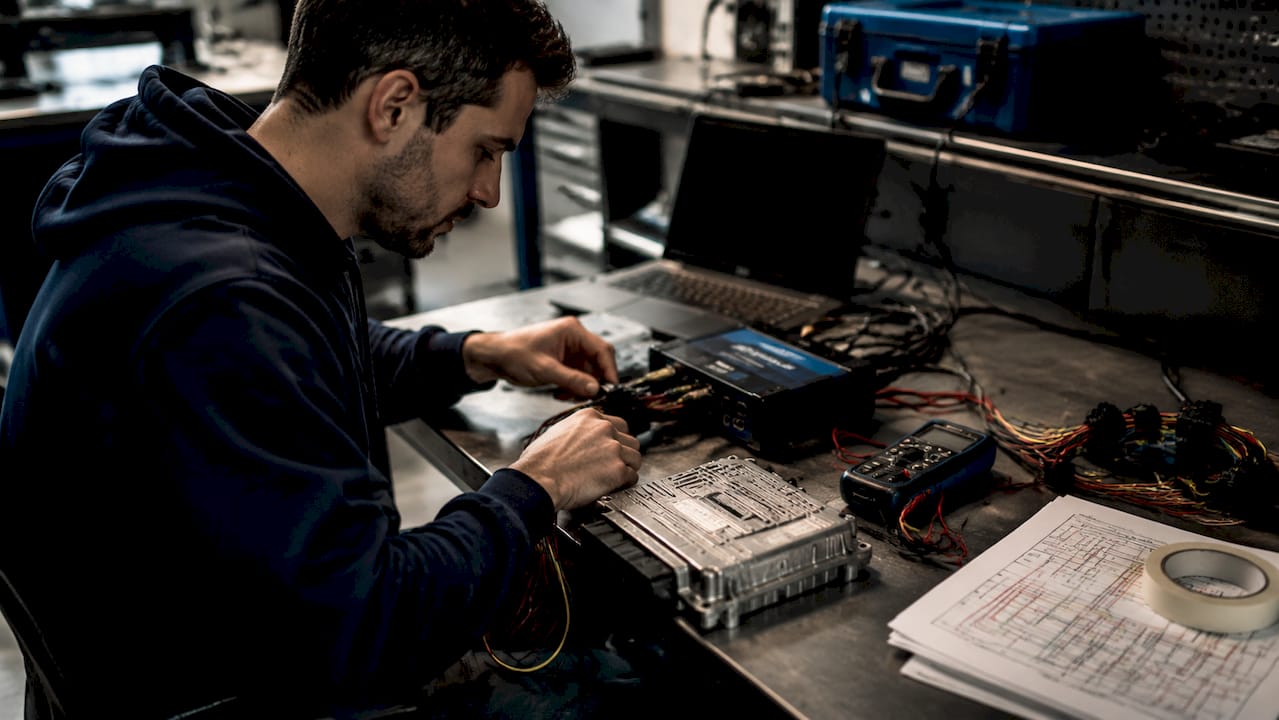
Стенд tuning — это процесс физического извлечения блока управления (ECU) из автомобиля и его подключения непосредственно к специализированному стендовому оборудованию для remapping и калибровки вне электрической системы автомобиля. Данный метод даёт тюнерам прямой доступ ко всей памяти ЭБУ, bypass обходя ограничения порта OBD, которые производители всё чаще вводят с помощью модулей Secure Gateway и зашифрованной прошивки. Поскольку уровень защиты ЭБУ значительно повысился в моделях, выпущенных после 2018 и 2020 годов, стендовая калибровка tuning стала стандартным методом профессиональной калибровки ЭБУ на заблокированных, редких или поврежденных блоках. TuningBot поддерживает этот рабочий процесс для всех основных марок ЭБУ, включая Bosch, Continental, Marelli, Delphi и Denso.
Что такое стенд tuning и как он устроен с технической точки зрения?
Стенд tuning подключает ЭБУ напрямую к программному устройству через собственные контакты разъема ЭБУ, при этом устройство питается от стабилизированного внешнего источника питания, а не от бортовой сети 12 В автомобиля. Корпус ЭБУ остается герметичным на протяжении всего процесса. В этом заключается ключевое отличие стенда tuning от устройства tuning для boot: Плата tuning подключается к контактам ЭБУ без вскрытия корпуса, тогда как метод tuning является более инвазивным и применяется только к электронным блокам управления, к которым метод bench mode не может получить доступ из-за чрезвычайных требований производителя ecurity.
Процесс обработки на верстаке tuning в профессиональных мастерских осуществляется в строго определённой последовательности:
- Снятие ЭБУ. ЭБУ расположен, отключен от проводки автомобиля и снят. Этот этап требует знаний о расположении креплений ЭБУ и типах разъемов, специфичных для данного автомобиля.
- Соединение скамейки. ЭБУ подключается к настольному программатору с помощью жгута проводов с соответствующей распиновкой. Такие устройства, как Alientech KESS3, AutoTuner, Magic Motorsport и CMD, поддерживают протокол bench mode с использованием специальных жгутов проводов.
- Подключение источника питания. Регулируемый лабораторный блок питания напряжением 12 В подключен к выводам питания и заземления ЭБУ. Это заменяет аккумулятор автомобиля и обеспечивает стабильное, контролируемое напряжение.
- Коммуникация и чтение. Инструмент программирования устанавливает связь с ЭБУ и выполняет полное чтение памяти, захватывая полную прошивку, включая защищенные области калибровки.
- Калибровка и запись. Тюнер модифицирует файл калибровки и записывает его обратно в ЭБУ. Перед записью в память производится корректировка контрольной суммы.
- Переустановка ЭБУ. ЭБУ повторно подключается к жгуту проводки автомобиля и устанавливается. Затем автомобиль тестируется для подтверждения правильной работы.
Услуга Технологический процесс «full bench tuning» обычно требует от 2 до 8 часов, в зависимости от доступности ЭБУ и сложности автомобиля. Этот временной диапазон отражает трудозатраты на снятие и установку, а не саму работу по калибровке.
Совет: Перед тем как что-либо изменять, всегда дважды считывайте данные из ЭБУ. Сравнение двух одинаковых считываний позволяет убедиться в целостности связи и исключить возможность частичных ошибок в данных ещё до записи первого байта.
В чём преимущества стенда tuning по сравнению с методами OBD?
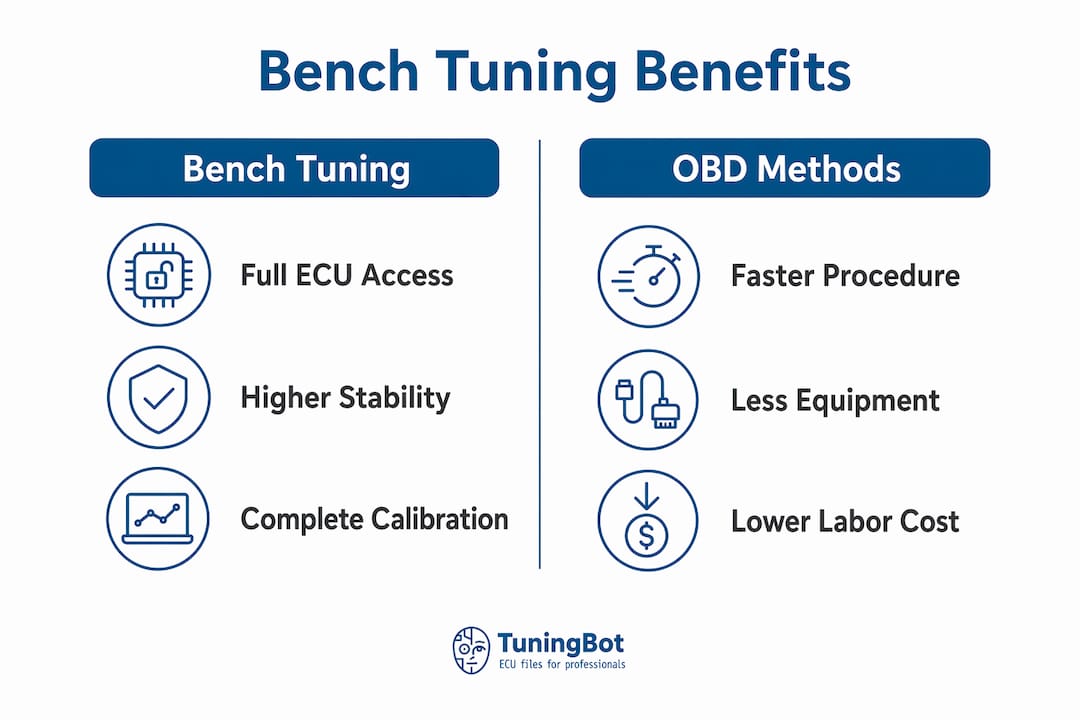
Профессионалы выбирают стенд tuning не только ради того, чтобы просто обойти блокировку порта OBD. Данный метод обеспечивает принципиально более стабильную и полноценную рабочую среду, чем любой подход, основанный на использовании OBD.
Основные преимущества:
- Полный доступ к памяти. Bench mode обеспечивает чтение всей памяти для резервного копирования и восстановления ЭБУ, включая защищенные области, к которым OBD-сканеры не могут получить доступ. Это основа безопасной работы с программным обеспечением ЭБУ.
- Электрическая стабильность. Имитация рабочего стенда устраняет колебания напряжения аккумулятора, которые приводят к сбоям при записи данных OBD. Регулируемый источник питания поддерживает постоянное напряжение в течение всего цикла чтения и записи.
- Возможность восстановления ЭБУ. Блокированный или поврежденный ЭБУ не может взаимодействовать через OBD. Единственным способом его восстановления является подключение к стенду, что делает стенд tuning незаменимым для любой мастерской, занимающейся устранением сбоев при перепрошивке.
- Совместимость заблокированного ЭБУ. Метод «Bench tuning» является стандартным способом действий в случае, если порт OBD заблокирован или недоступен, что часто встречается на автомобилях, выпущенных в период с 2018 по 2020 год.
- Универсальное покрытие транспортного средства. Диагностический прибор Bench tuning обеспечивает совместимость с редкими моделями автомобилей, устаревшими платформами и блоками управления с поврежденными данными, которые не могут быть прочитаны с помощью OBD-диагностических приборов.
Компромиссы вполне реальны. Диагностика по схеме tuning требует большего объема трудозатрат, более значительных инвестиций в оборудование и больше времени на каждое задание. Стоимость, как правило, колеблется от 400 до 1 000 фунтов стерлингов в зависимости от сложности автомобиля и доступности блока управления двигателем (ECU), в то время как метод OBD remapping отличается более низкой стоимостью и более быстрым выполнением работ. Для автосервисов это означает, что метод tuning позиционируется как услуга премиум-класса, а не как стандартный метод remap.
Совет: Профессионалы ценят bench mode не за более высокую выходную мощность, а за стабильность и полноту. Резервная копия всей памяти, созданная до начала любой процедуры модификации — это ваша страховка от любых последующих ошибок калибровки.
Какое оборудование и какие правила техники безопасности необходимо соблюдать при работе со станком tuning?
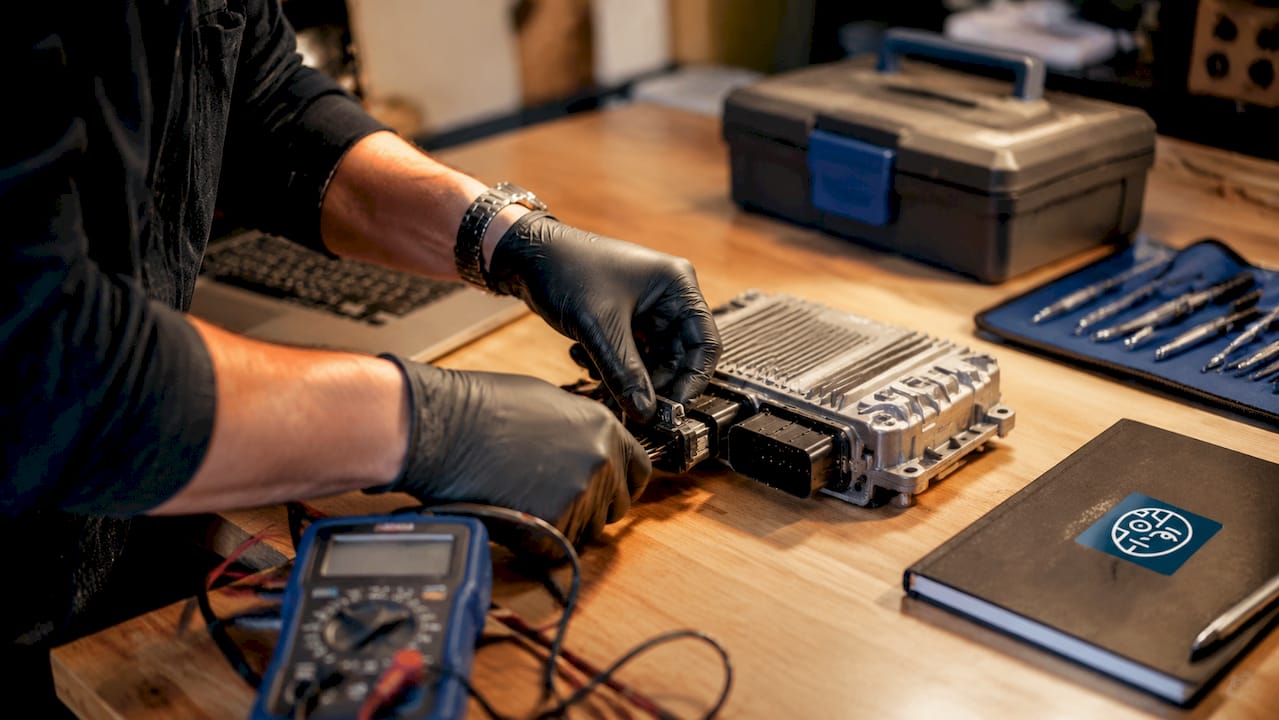
Эффективность стендовых испытаний tuning зависит от качества оборудования и организованности рабочего процесса. Некачественное оборудование является основной причиной повреждения блока управления двигателем (ECU) во время стендовых испытаний, а не сам метод испытаний.
Основное оборудование для профессиональной установки на верстаке включает:
- Регулируемый лабораторный блок питания 12В. Это не подлежит обсуждению. Аккумуляторы автомобиля выдают нестабильное напряжение под нагрузкой. Лабораторный блок питания поддерживает фиксированное напряжение и ограничение тока, защищая ЭБУ от скачков во время связи.
- Правильная распиновка жгута. Для каждого блока управления model требуется специальный жгут проводов, соответствующий его схеме разводки. Использование неподходящего жгута может привести к короткому замыканию и необратимому повреждению блока управления.
- Инструмент для программирования стендов. Такие диагприборы, как Alientech KESS3, AutoTuner и CMD, поддерживают режим bench mode с проверенными протоколами ЭБУ. Диагприбор должен поддерживать конкретную модификацию ЭБУ, с которой ведется работа.
- Документация по распиновке. Рабочие процессы на профессиональном стенде tuning основываются на проверенных схемах распиновки, которые являются основополагающим условием для предотвращения повреждений и обеспечения успешного обмена данными с ЭБУ и его перепрошивки.
- Защита от ЭСП. Электростатический разряд может повредить компоненты ЭБУ. Антистатический коврик и браслет являются стандартным оборудованием в любой профессиональной мастерской.
Риски, связанные с работой на испытательном стенде tuning, обусловлены неправильным использованием распиновки или некачественными источниками питания, а не самим методом испытаний на стенде. Мастерские, в которых используются стабилизированные источники питания и соблюдаются четко задокументированные процедуры, проводят испытания на стенде более безопасно и надежно, чем те, которые полагаются на импровизированные установки. Для тех, кто создает свой первый стенд для bench-тюнинга, Руководство по программированию ЭБУ TuningBot подробно рассматривает выбор инструментов, стандарты подключения и устранение неполадок.
Стандартизированные протоколы проведения лабораторных работ имеют такое же значение, как и само оборудование. Каждая сессия на рабочем столе должна проходить в соответствии с письменной процедурой: проверка распиновки, подтверждение настроек источника питания, дваждые проверки, создание резервной копии исходного файла, изменение, проверка checksum, запись и тестирование. Отклонение от этой последовательности приводит к ошибкам.
Какие распространенные заблуждения существуют в отношении скамьи tuning?
Ряд укоренившихся мифов приводит к тому, что тюнерам либо без необходимости избегает стенда tuning, либо подходит к нему с ложной уверенностью. Прямое развенчание этих мифов позволяет сформировать реалистичные ожидания.
- Миф: Для замены tuning необходимо вскрыть корпус ЭБУ. Это неверно. Модуль tuning подключается к контактам внешнего разъема ЭБУ. Вскрытие корпуса относится к методу «загрузки» tuning, который представляет собой отдельную и более инвазивную процедуру.
- Миф: Стенд tuning более опасен, чем OBD tuning. Специалисты-инструкторы подтверждают, что испытательный стенд tuning сам по себе не представляет опасности. Риски возникают вследствие неисправностей оборудования и нарушений протоколов. Условия эксплуатации на испытательном стенде, как правило, безопаснее, чем в собственной электрической сети транспортного средства.
- Миф: Физический ущерб является риском, специфичным для скамейки. Основной физический риск возникает при снятии и установке ЭБУ, а не во время самой работы на стенде. Аккуратное обращение с разъемами и крепежными элементами устраняет большую часть этого риска.
- Миф: Стойка tuning предназначена только для специалистов. Работа с приборным стендом tuning требует обучения и соответствующего оборудования, но это навык, которому можно научиться. Многие мастерские расширяют свои возможности за счет внедрения приборного стенда как естественного продолжения работы с системой OBD tuning.
- Миф: OBD tuning всегда быстрее и в целом дешевле. OBD tuning позволяет быстрее выполнять сеансы диагностики, однако сбой при записи данных через OBD в заблокированном ЭБУ может обойтись гораздо дороже в плане времени, затраченного на устранение неисправности, чем стоила бы изначально сессия на стенде.
Расширение протоколов ECU безопасности вынуждает сообщество tuning перейти к использованию методов диагностики на стенде в качестве необходимого шага в развитии. Мастерские, которые рассматривают диагностику tuning на стенде как необязательную, столкнутся с сокращением спектра обслуживаемых автомобилей по мере появления новых моделей models с полностью ограниченным доступом к системе OBD.
Как стенд tuning применяется в современных средах автомобильного tuning?
Стендовые работы по tuning — это не нишевая технология. Это одна из основных категорий услуг в любой профессиональной мастерской по tuning, обслуживающей широкий спектр автомобилей. С каждым годом расширяется круг ситуаций, в которых стендовые работы по tuning являются правильным или единственным методом.
| Сценарий | Почему необходим стенд tuning |
|---|---|
| Заблокированный порт OBD (модели models, выпущенные после 2020 года) | Модули Secure Gateway полностью блокируют связь по OBD |
| Повреждена или испорчена прошивка ЭБУ | Связь OBD недоступна, единственным путем восстановления является стенд. |
| Экзотические или малосерийные автомобили | Протоколы OBD часто не поддерживаются; доступ через стенд универсален |
| Полное клонирование или резервное копирование ЭБУ | OBD-замеры частичные; с стенда обеспечивается полный захват прошивки |
| Разблокировка зашитого ЭБУ | Услуги по разблокировке на стенде позволяют активировать функцию tuning на устройствах, которые в противном случае были бы недоступны |
Услуги по разблокировке на стенде расширяют эти возможности. Специализированные компании предлагают процедуры разблокировки блоков управления (ECU) на стенде для устройств, заблокированных с помощью современного шифрования, что обеспечивает совместимость со стандартным программным обеспечением tuning после завершения разблокировки. Для получения таких услуг часто требуется отправить блок управления (ECU) поставщику. Алгоритм работы блока управления Marelli tuning Ярким примером этого служит следующее: блоки управления Marelli в автомобилях, выпущенных после 2020 года, зачастую требуют использования протокола bench mode для доступа к данным калибровки, недоступным через OBD.
Стенд tuning также напрямую интегрирован с рабочими процессами коррекции и проверки файлов checksum. После считывания данных со стенда необработанный двоичный файл подлежит проверке checksum, прежде чем какие-либо изменения калибровки будут записаны обратно. Пропуск этого этапа приводит к созданию файла, который будет отклонен блоком управления двигателем (ECU) или вызовет появление кодов неисправностей при запуске. Для автосервисов, стремящихся выработать повторяемый процесс стендовых испытаний tuning, сочетание доступа к стенду с надёжным онлайн-сервис файлов tuning значительно сокращает сроки проведения работ по калибровке.
Услуга Подход ABT tuning показывает, как на семинарах, ориентированных на повышение эффективности, интегрируются методы работы на стенде в стандартный рабочий процесс для автомобилей, у которых доступ к системе OBD ограничен или ненадежен.
Ключевые выводы
Bench tuning — это надежный способ обеспечить полный доступ к памяти ЭБУ, восстановление ЭБУ и калибровку на заблокированных автомобилях или моделях, выпущенных после 2020 года, в которых протокол OBD tuning заблокирован или работает нестабильно.
| Точка | Детали |
|---|---|
| Определение скамьи tuning | ЭБУ снимается с автомобиля и подключается к стендовому оборудованию через контакты разъема remapping. |
| Полный доступ к памяти | Диагностический прибор Bench mode считывает полную прошивку ЭБУ, включая защищенные области, недоступные для OBD. |
| Электрическая стабильность | Регулируемый лабораторный блок питания на 12 В устраняет колебания напряжения, вызывающие сбои при записи в ЭБУ. |
| Баланс между временем и стоимостью | Симуляция на стенде требует 2–8 часов, по сравнению с 1–3 часами для OBD, что делает эту услугу более дорогой для мастерских. |
| Оборудование — фактор риска | Неправильная распиновка и некачественные источники питания приводят к выходу из строя ECU, а не сам метод тестирования на измерительном стенде. |
Реальность, с которой большинство мастерских сталкиваются слишком поздно: скамейка tuning
Исходя из нашего опыта работы с тюнерами на широком спектре платформ ECU, самой большой ошибкой, которую допускают мастерские, является использование стендового tuning в качестве крайней меры. Сначала они пытаются выполнить диагностику по OBD на заблокированном ECU, запись не удаётся, ECU переходит в режим восстановления, и теперь стендовая диагностика tuning становится вынужденной мерой, а не запланированной. Такая последовательность действий отнимает больше времени и сопряжена с большим риском, чем сразу переходить к стендовой диагностике на любом автомобиле, где доступ к OBD сомнительный.
Второй урок заключается в том, что на качестве оборудования не стоит экономить. Некачественный блок питания, выдающий нестабильное напряжение, приведет к выходу из строя модулей ECU. Несоответствующий разводке жгут проводов вызовет короткое замыкание. Это не теоретические риски. Это самые распространенные причины повреждения модулей ECU, с которыми мы сталкиваемся при восстановлении устройств. Инвестиции в качественный стабилизированный источник питания и проверенную библиотеку жгутов окупаются уже после того, как вам не придётся заменять первый модуль ECU.
Производители не сбавляют темпы в области внедрения технологий ECU и безопасности. Шлюзовые модули безопасный, зашифрованные загрузчики и токены безопасности с периодической сменой являются стандартным оборудованием автомобилей 2026 года выпуска, оснащенных системой model. Bench tuning — это не просто обходной путь для этих систем. Это структурированный ответ отрасли на их появление. Сервисные центры, которые уже сейчас создают возможности для работы с Bench, будут готовы обслуживать автомобили, которые будут доминировать на рынке в течение следующего десятилетия. Те же, кто этого не сделает, столкнутся с тем, что количество автомобилей, за обслуживание которых они смогут выставлять счета, будет сокращаться из года в год.
— Техническая команда TuningBot
Профессиональные ресурсы TuningBot для блока управления remapping, предназначенные для стендовых испытаний tuning
TuningBot предоставляет файлы ECU и remapping профессионального уровня, а также поддержку в настройке для мастерских, использующих настольные рабочие процессы tuning. Платформа поддерживает все основные бренды ECU, включая Bosch, Continental, Marelli, Delphi и Denso, и совместима со станционными инструментами tuning, такими как Alientech KESS3, AutoTuner, Magic Motorsport, CMD и PCMFlash.
Участники семинаров могут загружать файлы ECU с отметками для чтения непосредственно в Чип-тюнинг файла без регистрации и без предварительной оплаты. Файлы калибруются настоящими инженерами, возвращаются в кратчайшие сроки и подбираются с учетом семейства ECU, метода считывания, версии программного обеспечения и заказанной услуги. Публичный прайс-лист четко указывает цены до начала работы, в то время как Покрытие сервисов ЭБУ помогает убедиться в работоспособности поддерживаемых решений перед демонтажем ECU. Для мастерских, предлагающих расширение стола tuning в качестве услуги премиум-класса, Услуги ЭБУ обзор и руководство по организации семинаров model Как оценивать, позиционировать и масштабировать слесарные/верстачные работы (bench work), не превращая каждый заказ в индивидуальные переговоры:**1. Позиционирование (Устранение неопределенности)** * **Переход от «услуг на заказ» к «продуктовым пакетам»:** Перестаньте продавать «время и материалы». Упакуйте свою работу в стандартизированные предложения с четким описанием результатов. * **Четкие границы объема (Scope of Work):** Опубликуйте фиксированные тарифы для стандартных операций (например, «Базовая подготовка поверхности», «Сборка модуля типа А»). * **Критерии «За пределами стандарта»:** Четко зафиксируйте, что считается стандартной работой, а что требует доплаты. Если клиент выходит за эти рамки, это автоматически классифицируется как «индивидуальная доработка» с почасовой ставкой, не подлежащей обсуждению.**2. Ценообразование (Устранение торга)** * **Цены на основе ценности, а не затрат:** Оценивайте результат для клиента и сложность процесса, а не количество потраченных часов. * **Матрица фиксированных цен:** Создайте внутренний прайс-лист на основе параметров (размер, сложность, материалы, допуски). Показывайте клиентам только готовые тарифные сетки или калькулятор. * **Правило «Никаких скидок за объем без предоплаты»:** Установите жесткую политику: «Наши цены отражают уровень качества и надежности. Торг не предусмотрен». Если клиент просит скидку, предложите убрать часть функционала, но не снижайте цену за ту же работу. * **Премия за срочность:** За срочные заказы бейте наценку 50–100%. Это либо отсекает хаотичные запросы, либо приносит сверхприбыль.**3. Масштабирование (Систематизация процессов)** * **Стандартизация рабочих процессов (SOP):** Опишите каждый этап верстачных работ по шагам. Любой квалифицированный исполнитель должен выполнять операцию одинаково. * **Модульность:** Разбейте крупные проекты на стандартные повторяющиеся блоки. Сборка уникального изделия должна состоять на 80% из стандартных модулей и только на 20% из уникальной подгонки. * **Автоматизация приема заказов:** Внедрите цифровую форму заявки, где клиент сам выбирает параметры, загружает чертежи/ТЗ и видит предварительную смету или фиксированную цену до созвона с вами. * **Делегирование продаж:** Передайте первичную фильтрацию клиентов помощникам или используйте жесткий опросник. Переговоры должны вестись только с теми, кто уже согласен с вашими ценовыми рамками.
Для лабораторных рабочих процессов это имеет важное значение: зачастую основные затраты связаны с доступом к оборудованию ECU, его демонтажем, настройкой и рисками, связанными с восстановлением. Четко организованный процесс работы с файлами позволяет лаборатории сохранять контроль над физическим выполнением задания, в то время как TuningBot быстро и прозрачно обрабатывает этап калибровки.
ЧАСТО ЗАДАВАЕМЫЕ ВОПРОСЫ
Что такое скамейка tuning, если объяснить простыми словами?
«Bench tuning» — это процесс извлечения модуля ECU из автомобиля и подключения его к внешнему программному оборудованию для считывания, модификации и записи данных калибровки. Это обеспечивает прямой доступ к полной памяти ECU без использования порта OBD автомобиля.
Стойка tuning — это то же самое, что и бут tuning?
№. Тестовая плата tuning подключается к контактам внешнего разъема ECU при закрытом корпусе. Для тестовой платы tuning требуется вскрытие корпуса ECU для доступа к внутренним тестовым точкам; она предназначена для моделей ECU, к которым не может подключиться bench mode.
В каких случаях требуется скамейка tuning?
Стенд tuning необходим в случаях, когда порт OBD заблокирован или перекрыт модулем Secure Gateway, когда в блоке управления (ECU) повреждена или вышла из строя флэш-память, а также когда для безопасного проведения работ по калибровке требуется полное считывание и резервное копирование памяти.
Сколько времени занимает тренировка на тренажере tuning?
Полный цикл работ на стенде tuning, включающий демонтаж, калибровку и повторную установку ЭБУ, обычно занимает 2–8 часов в зависимости от сложности автомобиля и доступности ЭБУ.
Какие инструменты необходимы для верстака tuning?
Для работы с приборным стендом tuning требуется лабораторный источник питания с регулируемым напряжением 12 В, программное обеспечение для программирования, совместимое с данным стендом (например, Alientech KESS3 или AutoTuner), жгут проводов с правильной распиновкой для конкретной модели ECU, а также проверенная документация по распиновке обслуживаемого устройства.