

 EnglishEN
 ItalianoIT
 DeutschDE
 EspañolES
 PortuguêsPT
 FrançaisFR
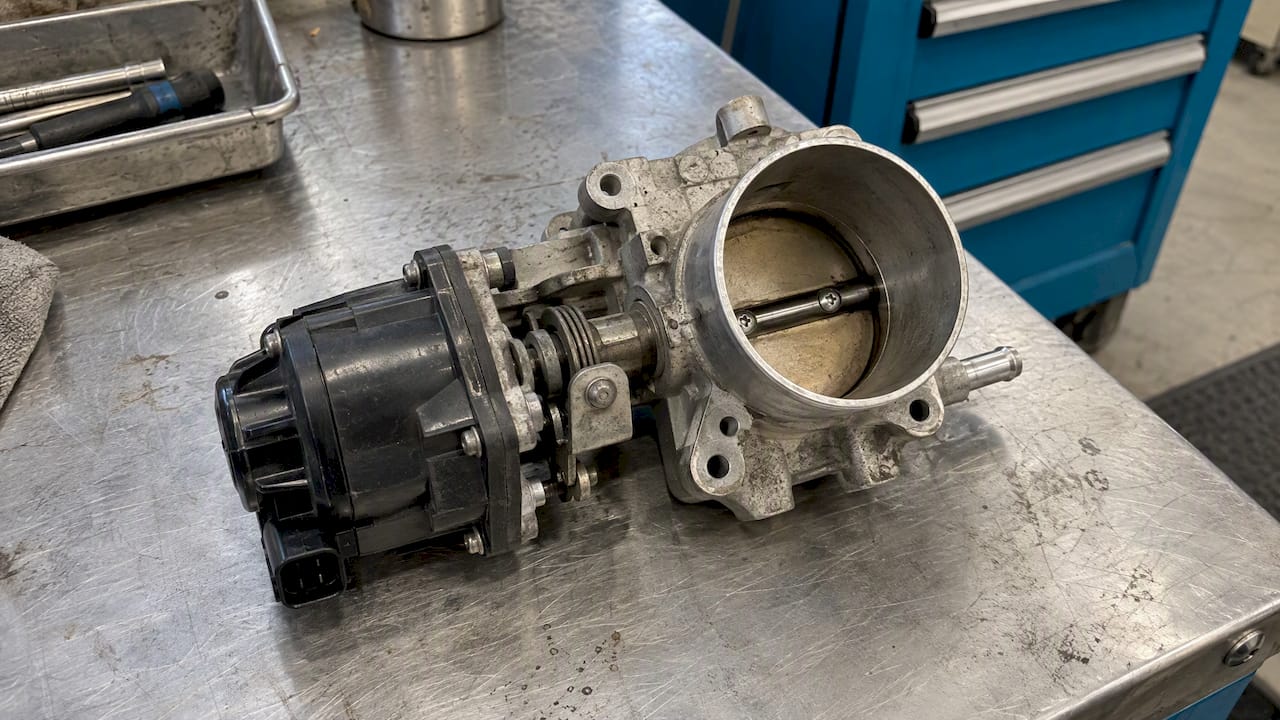
TVA off tuning is a service label for changes related to a throttle valve actuator. The label alone does not identify the component, the software changes or the vehicle’s behavior afterward. Start by establishing which actuator is involved, what it does on that engine and why a fault or modification request has arisen.
TVA off tuning: identify the actuator first
A petrol engine’s main electronic throttle, a diesel intake regulating flap and an intake-manifold swirl mechanism are not interchangeable components. Their diagnostic descriptions can sound similar, but their effect on airflow and engine control differs. Use the vehicle’s component identification and wiring information rather than an abbreviated service name.
On many petrol engines, the throttle participates directly in air-charge and torque control, including idle and transient operation. Some engines use additional mechanisms such as variable valve lift, so the throttle’s role cannot be inferred from fuel type alone. Removing a primary throttle is not a routine substitute for repairing it.
On diesel engines, torque is commonly controlled primarily through fuel quantity, while an intake flap can support EGR pressure conditions, shutdown behavior or thermal-management strategies. The functions present depend on the engine and emissions system. “Diesels are unthrottled” is too broad to describe all operating modes.
Map the functions that depend on the flap
Motorservice’s regulating-throttle diagnostic note explains EGR assistance and shutdown control on its example application. Its commercial-vehicle component overview also identifies a role in particulate-filter regeneration. These examples establish possible dependencies, not a universal function list.
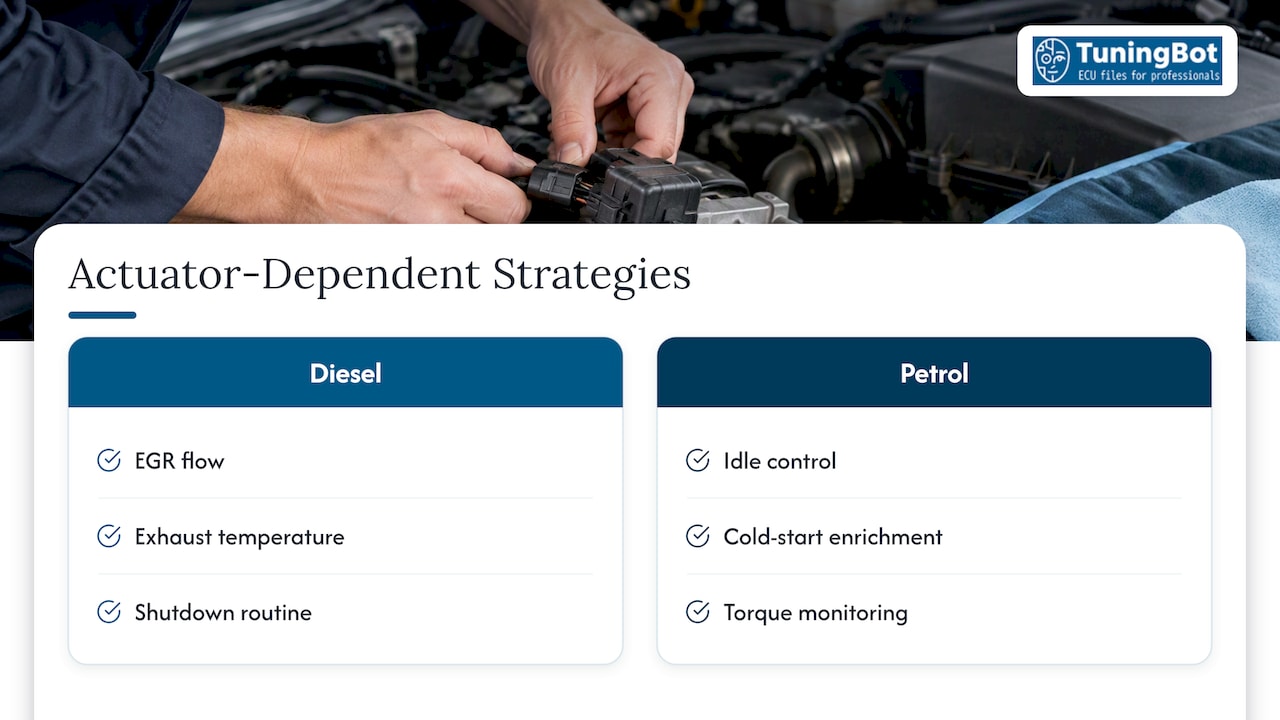
Distinguish commanded motor operation, position feedback, plausibility checks and the higher-level strategies using the actuator. A valve stuck mechanically can still restrict airflow when its electrical command or diagnostic reporting is changed. Unplugged, removed, jammed and correctly replaced hardware are different states.
A swirl flap controls airflow distribution in a different way from a main throttle or regulating flap. Shared terminology does not justify treating their channels or diagnostic tables as equivalent.
Diagnose the fault before selecting a remedy
Save the fault codes, status and freeze-frame information before clearing them. Confirm the reporting module and manufacturer-specific meaning. The VAG 00282 actuator entry is a reference for that code, not a diagnosis for every TVA-related complaint.
Use the applicable test procedure to assess supplies, grounds, connectors, command and feedback. Determine whether an actuator test actually produces the expected movement and position response. An audible motor or a cleared warning lamp alone does not establish correct mechanical operation.
Consider contamination, damaged gears, electrical faults and a shared supply problem according to the evidence. Cleaning is not a universal remedy: some actuator failures require replacement, and unsuitable cleaning or handling can damage the unit. Follow component-specific instructions for repair and adaptation.
If the component is replaced, perform the supported learning or adaptation process when required. Do not clear all adaptations after every flash as a general rule. Some learned values are unrelated to the repair, and resetting them can change the conditions being evaluated.
Separate diagnostic suppression from functional changes
Suppressing a diagnostic code does not demonstrate that the actuator’s control logic has changed. Disabling an output does not establish that dependent EGR, shutdown, torque or thermal functions remain coherent. The exact effect must be assessed in the identified software.
Услуга DTC table guide distinguishes diagnostic scope from the underlying fault. A file described as TVA off should not be assumed to preserve all unrelated monitoring merely because no codes return. Likewise, torque monitoring should not be treated as an automatic companion deletion.
Assess repair, replacement and supported configuration options before changing the expected hardware arrangement. On an engineered conversion, document how the required airflow and torque-control functions will be provided and validated. A software change cannot make a missing mechanical function operate.
Identify the ECU, file format and hardware state
Record the ECU hardware and software identifiers, vehicle and engine details, transmission, current symptoms and modification history. Describe precisely whether the actuator is fitted, disconnected, obstructed or replaced. That information is more useful than a generic request to remove a warning light.
Keep the pre-work read and identify its coverage. An OBD calibration read, a virtual file and a backup are different artifacts. Bench or boot access does not guarantee that every memory region is included. Required files depend on the controller, tool protocol and proposed work.
Наш AutoTuner file-compatibility guide covers relevant workflow distinctions. Confirm master/slave constraints and the supported input format for the exact tool. Checksum processing must also be assigned explicitly; it is not evidence that the hardware arrangement or calibration is correct.
Verify operating behavior and applicable requirements
After a supported repair or configuration change, assess the functions relevant to that engine: starting, idle, pedal response where applicable, shutdown and the dependent emissions or thermal strategies. Use the manufacturer’s required test conditions. An empty fault list immediately after clearing cannot prove that all monitors have completed.
Document which checks were performed and what remains untested. Do not infer that every warning is resolved, that performance will improve or that all protections remain unchanged from the service name alone.
The retained Car Code Finder legal overview is secondary reading. The EPA’s 2020 tampering policy is enforcement guidance, not approval for a particular modification. An “off-road” or export label does not by itself establish an exemption.
The European Commission’s 24 April 2025 roadworthiness announcement described proposed changes. That announcement should not be cited as proof that all the proposed inspection requirements are already in force. Assess the rules applicable to the actual vehicle and jurisdiction.
For further context, see emissions compliance and supporting evidence. Confirm any service scope and terms from the current service information, without assuming a guaranteed turnaround, included checksum work or universal compatibility.
Часто задаваемые вопросы
Does TVA mean the same component on every engine?
No. The name may refer to different throttle or regulating actuators. Identify the actual component and its functions from the vehicle documentation.
Will suppressing a TVA code repair a stuck valve?
No. Diagnostic suppression does not remove a mechanical blockage or restore actuator movement. Diagnose the hardware and electrical system.
Are diesel intake flaps unrelated to engine control?
No. Depending on the engine, they can support EGR, shutdown or thermal strategies. Their role must be assessed on the specific application.
Should all adaptations be cleared after programming?
No universal reset rule applies. Perform only the adaptation or learning procedure required by the supported repair and tool workflow.
Does TVA off guarantee that no warning light returns?
No. The service label does not specify all software effects, and other faults or incomplete diagnostic tests may remain. Verify the actual operating behavior.
Related TuningBot reading
- DTC Codes Database – 17,000+ Fault Codes
- ECU File Checksum Correction: профессиональное руководство
- NOx off: 7 ключевых проверок SCR и AdBlue
- Файлы AdBlue off: идентификация и проверка совместимости
- Перепрошивка автомобиля: Увеличение мощности
- Чип-тюнинг для профессионалов: Руководство по техникам
- EGR Delete (EGR Off): профессиональный гайд