

 EnglishEN
 ItalianoIT
 DeutschDE
 EspañolES
 PortuguêsPT
 FrançaisFR
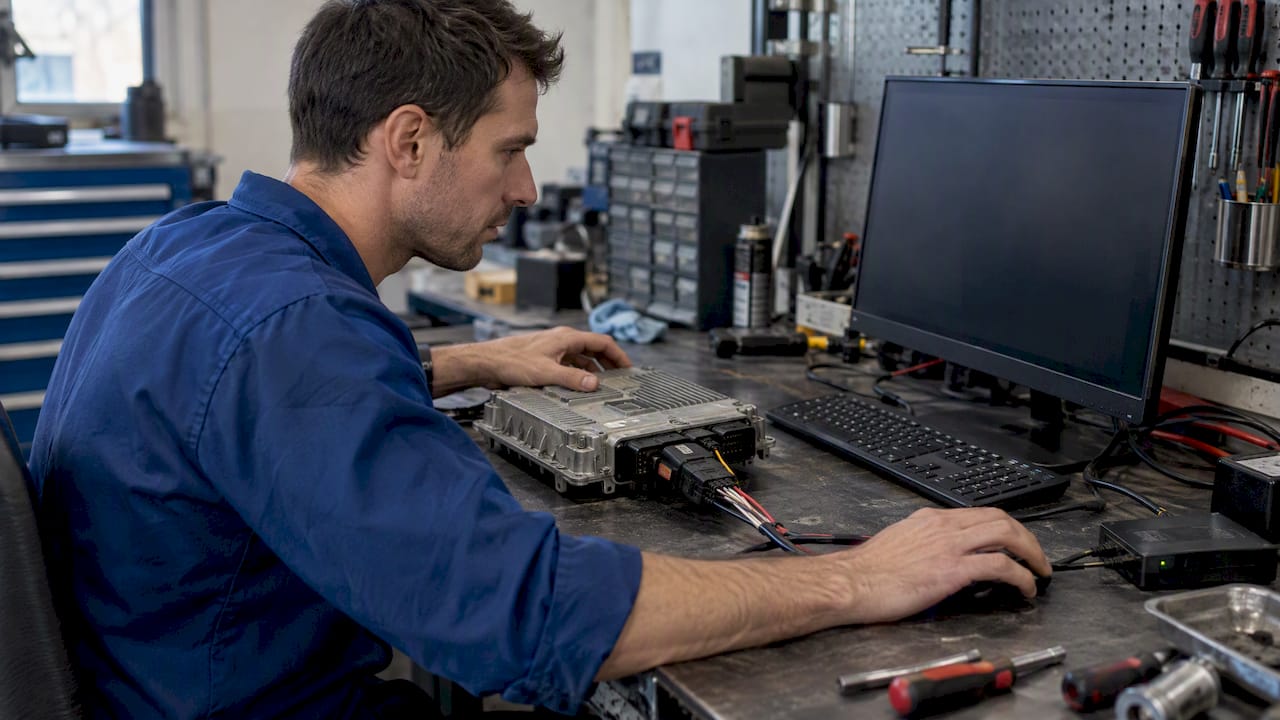
AdBlue off files are modified software images affecting SCR-related functions. Their names do not establish compatibility, complete backup coverage or the effect on every control module. Before assessing a file, identify the actual software, read format and existing diagnostic state. Matching a vehicle badge or a single identifier is not sufficient evidence.
AdBlue off files: treat identification as a combined check
Record ECU family, hardware number, software identifiers and the read tool’s metadata. Include the vehicle application and relevant repair or update history. Some systems distribute SCR functions across multiple controllers; do not assume one engine ECU image contains everything.
A calibration ID is useful evidence, but files with matching visible identifiers can differ after previous edits or updates. Compare provenance, format and relevant software content. A label can be outdated, while an identification string inside a file can remain unchanged after modification.
Услуга ECU identification guide explains the role of these records. No one identifier should replace a complete compatibility assessment.
Understand what the read actually contains
OBD, bench and boot describe access methods, not guarantees of complete memory coverage. Depending on the controller and tool, the result may contain calibration regions, program flash, multiple memory areas or a supplied virtual reference.
A supported calibration-only read is not inherently defective. Conversely, calling a file full does not prove that EEPROM, coding, security data or other modules are included. Use the tool’s documented requirements for the proposed operation.
Keep the original acquisition unchanged and record its origin. A virtual stock file may be useful for a supported workflow, but it is not necessarily a capture of the vehicle’s existing modifications. A recovery plan must reflect the data and access actually available.
Keep SCR diagnosis separate from file selection
Save faults, status, freeze-frame information and relevant measured values before programming. Depending on the system, useful evidence can include sensor status, exhaust temperature, dosing command, pressure and inducement information. A displayed value needs operating context and validity information.
Bosch’s Denoxtronic brochure describes equipment for checking supply, pressure, leakage and dosing performance. These tests address the physical SCR system. They do not validate an unrelated ECU binary or prove that a software modification is compatible.
A pump, heater, wiring or sensor fault may require repair. A warning disappearing after a software change does not show that the underlying component recovered or that NOx conversion is correct.
Do not equate a ready-made file with a verified match
A prepared file and a custom edit both require compatibility and scope checks. Neither label guarantees quality. Confirm the exact source image, intended changes, supported file format and the programming tool’s requirements.
Checksum handling is a separate question. A stock file does not normally need correction merely because it exists; edits may require a supported integrity process. Determine who performs it and at which stage, rather than assuming it is included in every service.
Encrypted or tool-specific packages can have additional restrictions. Our AutoTuner file compatibility guide provides related workflow context. Matching a nominal ECU family does not make every package interchangeable.
Separate programming success from system validation
After supported programming, verify communication and identifiers, inspect faults and compare relevant behavior with the baseline. File-integrity checks and a successful write establish limited facts; they do not prove that nothing else changed or that every operating mode was tested.
Stable idle is not an SCR efficiency test. Altered diagnostic reporting can also change what a scan tool shows, so a clean scan alone cannot validate emissions performance. Define the test coverage and record any unresolved conditions.
Use the manufacturer’s repair and commissioning procedure where adaptation, priming or inducement recovery is required. Do not treat a generic reset or counter value as a universal completion criterion.
Keep regulatory and commercial claims accurate
EPA guidance addresses software and devices that defeat emissions-related functions, including SCR and associated diagnostics. An off-road statement, matching calibration ID or successful flash does not by itself establish compliance for a particular application.
A workshop record should distinguish identification, programming, physical repair and emissions evidence. None should be implied merely because a file was delivered. For related diagnostic context, see the NOx and SCR guide.
Consult the current Прайс-лист TuningBot for availability and terms. This article does not promise included checksum correction, engineer review, fixed prices, delivery times or guaranteed restoration.
Часто задаваемые вопросы
Is a matching calibration ID enough to select a file?
No. Check hardware, software content and provenance, format, existing modifications and tool support as well.
Does a bench or boot read always provide a complete recovery backup?
No. Memory coverage depends on the controller and tool. Establish which regions and data were actually acquired.
Does a successful flash prove that the SCR system is repaired?
No. Programming success, component condition and emissions performance require separate assessments.