

 EnglishEN
 ItalianoIT
 DeutschDE
 EspañolES
 FrançaisFR
 РусскийRU
O ECU remapping é definido como o processo de modificar a calibração da unidade de controle eletrônico de um veículo para alterar o fornecimento de combustível, a pressão boost, o tempo de injeção e o torque de saída além dos padrões de fábrica. O papel do remap na gestão de frotas é direto: ele reduz o consumo de combustível, diminui a frequência de manutenção e prolonga a vida útil dos componentes do sistema de transmissão. Um remap econômico visa a eficiência em vez da potência máxima, tornando-o a ferramenta correta para operadores comerciais que utilizam vans a diesel, caminhões e veículos comerciais leves em rotas de alta quilometragem. Gestores de frota que tratam o remapping como um serviço técnico pontual, em vez de uma estratégia de gestão contínua, deixam consistentemente de aproveitar economias mensuráveis.
Como a ECU remapping reduz os custos operacionais na gestão de frotas?
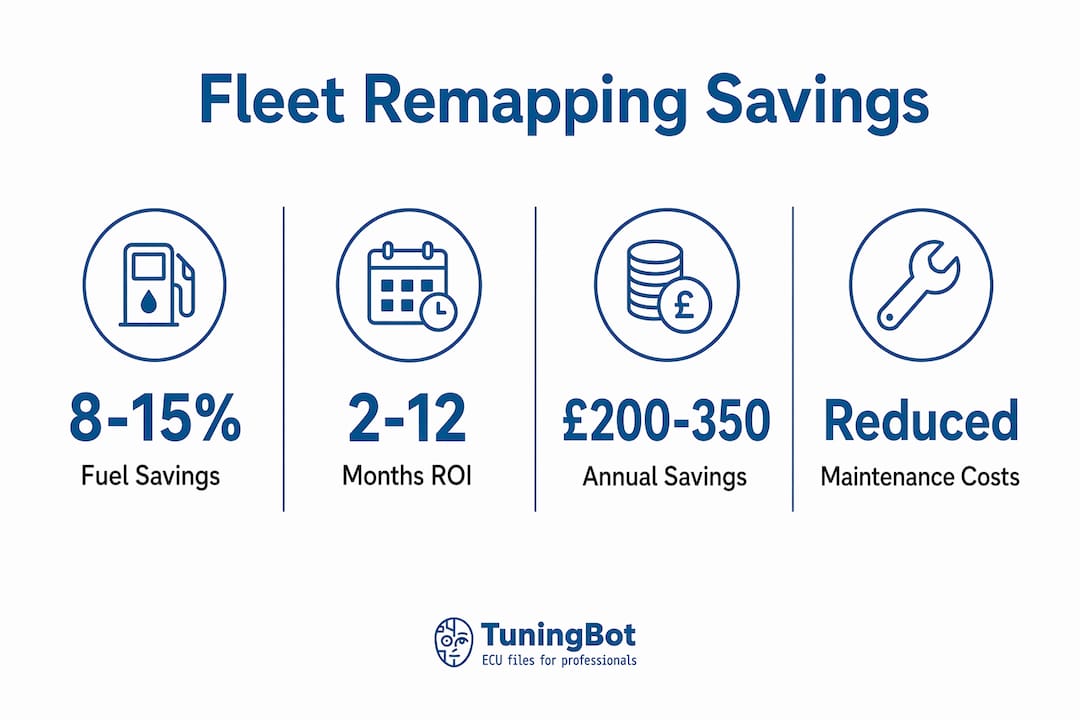
O combustível é o maior custo variável na maioria das frotas comerciais. Uma estratégia de economia de combustível bem ecu executada remap pode melhorar a eficiência de combustível de 5% a 15%, com a maior economia de 8–15% alcançada em trajetos em rodovias e de 5–10% em condução mista urbana e em rodovias. Essa variação não é teórica. Ela reflete a variação real, com base no peso da carga, no declive do trajeto e no comportamento do motorista.
Os operadores de frotas geralmente recuperam o investimento no remapping em um prazo de 2 a 12 meses, com economia anual de combustível de £200 a £350 por veículo comercial leve, dependendo do uso. Para uma frota de cinco veículos, isso significa uma economia anual de £1.000 a £1.750, sem considerar a redução nos custos de manutenção. O prazo de retorno sobre o investimento (ROI) diminui significativamente para veículos com alta quilometragem que circulam em rotas com grande uso de rodovias.
Os custos de manutenção também diminuem após um serviço de qualidade remap. Profissional remapping melhora o torque em baixas rotações e otimiza o tempo de injeção, o que reduz os ciclos de regeneração do Filtro de Partículas Diesel e diminui a emissão de fuligem. Menos regenerações do DPF significam menor estresse térmico no filtro, intervalos de serviço mais longos e menor frequência de substituição de peças. Para frotas que operam veículos a diesel Euro 5 e Euro 6, isso representa uma redução material de custos.
A tabela abaixo resume cenários de economia de custos em diferentes tamanhos de frota e tipos de veículos.
| Tamanho da frota | Tipo de veículo | Economia anual estimada de combustível | Período típico de ROI |
|---|---|---|---|
| 5 veículos | Vans de carga leve | £1.000–£1.750 | 2–6 meses |
| 10 veículos | Veículos comerciais leves e pesados mistos | £2.000–£4.000 | 3–9 meses |
| 20 veículos | Caminhões a diesel pesados | £5.000–£9.000 | 6–12 meses |
| 50 veículos | Frota logística completa | £12.000–£22.000 | 6–12 meses |
Dica de Mestre: Priorize a utilização de veículos remapping em rotas fixas de rodovias. A economia de combustível é maior e mais previsível nesses ciclos de operação, o que facilita a justificativa do retorno sobre o investimento (ROI) internamente.
Quais são as vantagens técnicas do remapping, além da economia de combustível para as frotas?
A linha remapping se concentra na otimização do torque em faixas de rotação baixas a médias, em vez de aumentos na potência máxima. Essa diferença é importante para os operadores comerciais. remapping voltado para frotas O priori prioriza a eficiência e a confiabilidade do motor para atender às cargas de trabalho dos veículos comerciais e às longas jornadas operacionais, e não o perfil de entrega de potência que o tuning de alto desempenho visa.
O resultado prático é que os motoristas podem dirigir em marchas mais altas sob carga sem forçar o motor. Dados da indústria confirmam que torque em baixas rotações aprimorado permite o uso de marchas mais altas, diminuindo a fadiga do motorista e melhorando a economia de combustível em veículos carregados. A aceleração mais suave também reduz a frequência das trocas de marcha, o que diminui o desgaste da embreagem ao longo do tempo.
Benefícios operacionais secundários incluem:
- Ciclos de regeneração do DPF reduzidos, estendendo a vida útil do filtro
- Menor estresse da válvula EGR devido a ciclos de combustão mais limpos
- Menor desgaste do turbocompressor graças a um fornecimento mais consistente de boost
- Resposta do acelerador aprimorada, reduzindo a compensação excessiva do motorista na aceleração
- Vida útil estendida da caixa de câmbio com menos trocas de marcha de alto torque em baixas rotações
- Menor desgaste dos freios em descidas onde a frenagem do motor melhora com a calibração do torque
Vale a pena destacar claramente o contraste entre a configuração tuning e a frota remapping. A configuração tuning visa potências máximas e mapas de aceleração agressivos, adequados para uma direção dinâmica. A versão para frotas remapping visa torque em faixas médias, economia de combustível e durabilidade dos componentes, adequados para veículos comerciais carregados que operam de 10 a 14 horas por dia. Misturar essas abordagens gera resultados insatisfatórios para os operadores de frotas. Você precisa de uma calibração desenvolvida especificamente para o ciclo de operação do seu veículo, e não de um mapa de potência genérico.
Quais são os riscos e considerações de conformidade que os gerentes de frota devem entender?
O remapeamento acarreta riscos reais que os gestores de frotas devem considerar antes da implantação. Os riscos potenciais incluem a perda da garantia, complicações com o seguro e questões de conformidade legal para veículos com mais de 3,5 toneladas. A omissão dessa informação às seguradoras pode invalidar os pedidos de indenização, o que representa um risco que nenhum operador comercial pode arcar.
Principais fatores de conformidade e risco a serem considerados antes de realizar a inspeção remapping em qualquer veículo da frota:
- Status da garantia: Confirme se o veículo ainda está coberto pela garantia do fabricante. A reprogramação da ECU geralmente anula a cobertura da garantia do trem de força.
- Divulgação de seguro: Notifique sua seguradora antes de remapping. A omissão de uma modificação pode invalidar totalmente sua apólice.
- Condições da licença do operador: Veículos pesados com mais de 3,5 toneladas estão sujeitos às normas relativas à licença de operador. Verifique se o remapping não viola as condições da sua licença.
- Conformidade de emissões: Os dispositivos Economy remaps instalados em veículos Euro 6 não devem alterar parâmetros relacionados às emissões de forma que violem a homologação. Trabalhe apenas com calibradores que compreendam os limites de conformidade com a norma Euro 6.
- Pré-verificação de saúde do veículo: É necessário que o veículo não apresente falhas mecânicas antes do remapping. Válvulas EGR entupidas ou vazamentos no boost prejudicam os resultados do remap e aceleram a falha dos componentes.
A verificação de condições do veículo antes do remap não é opcional. Falhas comuns, como válvulas EGR entupidas ou vazamentos no boost, devem ser resolvidas antes do início da calibração. O remapeamento de um veículo com problemas mecânicos não corrige a falha subjacente. Pelo contrário, ela a agrava.
Dica de Mestre: Integre os dados telemáticos do egr ao seu programa remap. Os sistemas telemáticos fornecem valores de referência de consumo de combustível anteriores e posteriores ao remap para cada veículo, o que permite medir a economia real e identificar precocemente quaisquer problemas relacionados ao comportamento dos motoristas.
Como implementar com sucesso estratégias remapping em uma frota comercial?
Um programa remap em toda a frota requer um planejamento estruturado para garantir resultados consistentes. A implementação ad hoc do remapping em veículos individuais, sem uma estrutura de implantação, gera resultados desiguais e dificulta a medição do ROI em toda a frota.
- Avaliar adequação da frota. Nem todos os veículos se beneficiam da mesma forma. Priorize veículos a diesel com alta quilometragem em rotas com grande prevalência de rodovias. Veículos com menos de 50.000 milhas e histórico de manutenção impecável apresentam os resultados mais consistentes.
- Verificações completas de saúde mecânica. Os veículos devem passar por uma verificação mecânica antes do remapping. Corrija primeiro quaisquer falhas relacionadas ao EGR, boost ou DPF. Essa etapa protege tanto o resultado do remap quanto o veículo.
- Utilize os serviços móveis remapping. Os serviços Mobile remapping reduzem o tempo de inatividade ao permitir a calibração no local, evitando o transporte de veículos para oficinas. Para frotas com 10 ou mais veículos, a prestação de serviços sequenciais no local é a única abordagem prática.
- Personalizar calibração por tipo de veículo. Um furgão a diesel de 3,5 toneladas que realiza entregas urbanas precisa de um mapa de calibração diferente de um caminhão de 7,5 toneladas em rotas logísticas em rodovias. Mapas genéricos produzem resultados genéricos.
- Treinar os maquinistas sobre os benefícios e as limitações do remap. O uso indevido do recurso remap por parte do motorista, como buscar torque de forma agressiva, pode anular totalmente a economia de combustível. Isso é conhecido como efeito rebote. Os motoristas que compreendem que o remap melhora a eficiência com aceleração constante, e não com aceleração agressiva, conseguem manter a economia de combustível proporcionada pelo remap.
- Integrate remapping com monitoramento telemático. O ECU remapping funciona melhor em conjunto com um sistema de gerenciamento de motoristas baseado em telemática. O treinamento de motoristas reduz os acidentes e o desgaste dos veículos, prolongando os benefícios operacionais do remap ao longo do tempo.
Para gestores de frotas que trabalham com prestadores de serviços de manutenção terceirizados, coordenar os cronogramas do remap com os intervalos de manutenção existentes em um parceiro de manutenção de frota reduz o tempo total de inatividade dos veículos e mantém a calibração alinhada com as condições mecânicas. Combinar o remapping com as visitas de manutenção programadas é a forma mais econômica de implementar o model em frotas de qualquer tamanho.
Principais Conclusões
O ECU remapping reduz os custos operacionais da frota de maneira mais eficaz quando combinado com verificações de integridade pré-remap, treinamento de motoristas e monitoramento telemático.
| Ponto | Detalhes |
|---|---|
| A economia de combustível depende da rota | Os modelos Economy remaps proporcionam uma economia de 8–15% em trajetos em rodovias e de 5–10% em condução mista. |
| O ROI é rápido para veículos com alta quilometragem | A maioria das frotas recupera os custos do remapping em um período de 2 a 12 meses por veículo. |
| A frota remapping difere da frota tuning | A calibração da frota visa o torque e a eficiência em baixas rotações, não a potência máxima. |
| As verificações de integridade pré-remap são obrigatórias | Falhas mecânicas como válvulas EGR entupidas devem ser resolvidas antes que a calibração comece. |
| O comportamento do motorista determina a economia a longo prazo | O efeito rebote elimina a economia de combustível quando os motoristas fazem mau uso do torque adicional. |
O que o setor entende errado sobre a frota remapping
Com base em nosso trabalho de calibração de arquivos de ECU para operadoras comerciais em diversas plataformas de veículos, um padrão se destaca de forma consistente. Os gestores de frotas concentram-se quase que exclusivamente no próprio remap e não investem o suficiente nos dois fatores que determinam se ele realmente gera economia: as condições básicas do veículo e a gestão do comportamento do motorista.
A aplicação de um remap em um veículo com um DPF parcialmente entupido ou com uma mangueira do boost com vazamento não gera a economia de combustível prevista. Isso gera um problema de diagnóstico que acarreta custos elevados. A calibração não pode compensar deficiências mecânicas. Ela amplifica o que o motor já está fazendo, o que significa que um motor comprometido tem um desempenho pior com o remap, e não melhor.
O efeito rebote também é subestimado. Os motoristas que percebem a melhoria na entrega de torque costumam aproveitá-la. Eles aceleram com mais força, trocam de marcha mais tarde e entram nas curvas com maior velocidade. O consumo de combustível volta aos níveis anteriores ao remap em poucas semanas. O treinamento de motoristas não é um complemento opcional ao programa remap. É o mecanismo que garante a economia.
O futuro da frota remapping aponta para o gerenciamento de calibração baseado em nuvem e o ajuste de parâmetros assistido por IA. Essas ferramentas permitirão que os operadores de frota atualizem os mapas de calibração remotamente à medida que as condições dos veículos mudarem ao longo do tempo, em vez de tratar um único remap como uma solução permanente. Os operadores que incorporarem o remapping ao seu ciclo contínuo de gestão de frotas, em vez de tratá-lo como um evento pontual, observarão ganhos de eficiência crescentes ano após ano.
— Equipe Técnica do TuningBot
O remap profissional da ECU da TuningBot para operadores de frotas
Gerentes de frota e oficinas precisam de calibrações econômicas projetadas em torno do ciclo de trabalho real de cada veículo, perfil de carga e condição mecânica, não de arquivos de potência genéricos.
O TuningBot fornece arquivos de ECU e TCU calibrados profissionalmente para veículos a diesel comerciais em plataformas Bosch, Continental, Delphi, Denso, Marelli e outras plataformas principais. Oficinas podem verificar o compatível com ECU e cobertura de serviços, consulte o Lista de preços pública, e enviar um arquivo stock diretamente por Remapeie seu arquivo. Não são necessários pacotes de crédito pré-pagos, e suporte técnico real de engenharia está disponível para calibrações focadas em economia de combustível, torque em baixa e média rotação, dirigibilidade e operação confiável sob cargas de trabalho comerciais.
Para oficinas que planejam um fluxo de trabalho de frota repetível, revisem o Serviços completos ECU e TCU e o Guia profissional da ECU remapping antes de implantar as calibrações em vários veículos.
PERGUNTAS FREQUENTES
Qual é o papel do remap na gestão de frotas?
A ECU remapping ajusta o fornecimento de combustível, o tempo de injeção e o torque de saída para melhorar a eficiência de combustível e reduzir os custos de manutenção em uma frota comercial. Os modelos Economy remaps proporcionam uma economia de combustível de 5 a 15%, dependendo do tipo de rota e da carga do veículo.
Quanto tempo leva para recuperar o custo de um veículo da frota remapping?
Os operadores de frotas geralmente recuperam o investimento no remapping em um prazo de 2 a 12 meses por veículo, com economia anual de combustível de £200 a £350 por veículo comercial leve, dependendo da quilometragem e do tipo de rota.
O remapping invalida a garantia do fabricante para veículos comerciais?
A reprogramação geralmente invalida a cobertura da garantia do trem de força. Os gestores de frotas devem verificar a situação da garantia e notificar sua seguradora antes de remapping qualquer veículo da frota.
O que é o efeito rebote na frota remapping?
O efeito rebote ocorre quando os motoristas utilizam o torque aprimorado de um remap para acelerar com mais intensidade, em vez de manter uma aceleração constante, o que anula a economia de combustível para a qual o remap foi projetado. O treinamento dos motoristas e o monitoramento telemático evitam esse resultado.
Todos os veículos a diesel da frota podem ser adaptados ao sistema remap?
A maioria dos veículos comerciais a diesel modernos equipados com unidades de controle eletrônico (ECUs) pode ser remapped, mas os veículos devem passar por uma verificação mecânica prévia. Falhas como válvulas EGR entupidas ou boost vazamentos devem ser sanadas antes do início da calibração, a fim de evitar o desgaste acelerado dos componentes.