

 EnglishEN
 ItalianoIT
 DeutschDE
 EspañolES
 FrançaisFR
 РусскийRU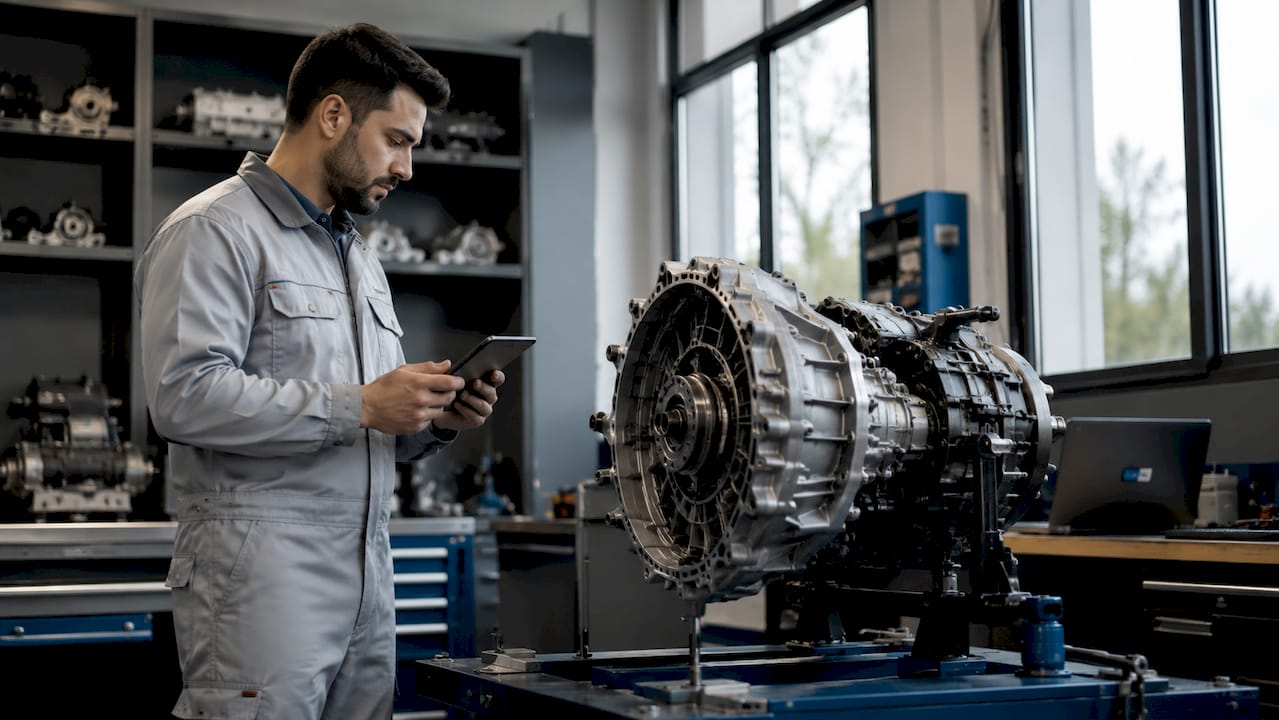
O DSG tuning consiste na recalibração do software da Unidade de Controle da Transmissão (TCU) utilizado nas caixas de câmbio de dupla embreagem do Grupo Volkswagen. Uma TCU remap profissional altera a velocidade de mudança de marcha, a pressão da embreagem, os limites de torque, os pontos de mudança de marcha e a lógica do controle de arrancada, para que a transmissão possa gerenciar a potência real do motor. Isso é especialmente importante nas unidades DQ250, DQ381 e DSG relacionadas, instaladas em veículos de alto desempenho das marcas Volkswagen, Audi, SEAT e Škoda. O objetivo não é simplesmente uma mudança de marcha mais rápida: é alinhar a ECU e a TCU como um único trem de força calibrado, ao mesmo tempo em que protege os conjuntos de embreagem e a caixa de câmbio contra deslizamento e aquecimento desnecessários.
O que é o DSG tuning e como ele melhora a velocidade de mudança de marcha?
Programação DSG original de fábrica equilibra mudanças suaves e economia de combustível, o que significa que o software do OEM restringe deliberadamente o desempenho. A TCU usa pontos de troca conservadores, baixa pressão de aperto da embreagem e limites de torque definidos muito abaixo do que o hardware pode suportar. Uma sintonia (reprogramação) da DSG substitui esses parâmetros conservadores por valores calibrados que correspondem ao potencial real de desempenho do veículo.
O DSG tuning profissional é capaz de produzir mudanças de marcha visivelmente mais rápidas e imediatas, especialmente nos modos Sport e manual modes. A melhoria exata depende da caixa de câmbio, da versão do software, do estado da embreagem e da estratégia de calibração.
Uma DQ250 calibrada frequentemente consegue gerenciar substancialmente mais torque do que o software original permite, mas o limite seguro depende da condição da embreagem, da temperatura do óleo, do peso do veículo e do formato da curva de torque.
As principais alterações técnicas em um remapeamento de câmbio DSG incluem:
- Recalibração do ponto de troca de marcha: O TCU está programado para antecipar as demandas de torque e realizar as mudanças de marcha na faixa de potência ideal do motor, em vez de em limites conservadores de RPM.
- Aumento da pressão de aperto da embreagem: Uma maior força de aperto evita a patinação da embreagem sob cargas de torque elevadas, protegendo a transmissão e permitindo um acoplamento mais rápido e firme.
- Ajustes do limite de RPM: Nos modos Sport e Drive mode, os limites de RPM são aumentados para manter o motor na faixa de potência por mais tempo antes da mudança para uma marcha superior.
- Mapeamento de solicitação de torque: O modelo de torque da TCU foi atualizado para aceitar referências de torque mais altas da ECU sem acionar códigos de falha de proteção.
Dica de Mestre: Sempre verifique o estado do óleo da caixa de câmbio e a faixa de temperatura do fluido antes de interpretar reclamações sobre a qualidade das mudanças de marcha. O fluido Degraded reproduz sintomas de uma TCU mal ajustada e prejudicará qualquer resultado do remap.
Como funciona um remapeamento de câmbio DSG em uma oficina profissional?
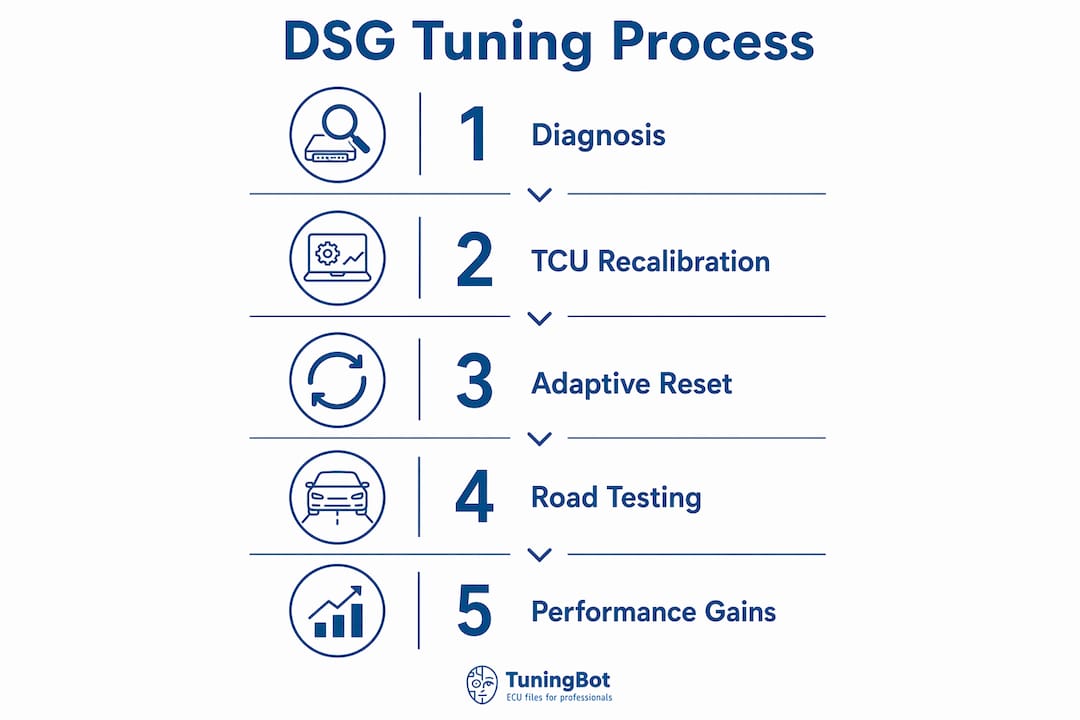
Um profissional especializado em DSG remap segue um fluxo de trabalho definido. Pular qualquer etapa pode causar danos à transmissão ou resultar em um arquivo de ajuste instável. Um serviço de DSG remap realizado na oficina geralmente leva cerca de 90 minutos, desde a varredura de diagnóstico até a aprovação do teste de estrada.
O procedimento padrão funciona da seguinte forma:
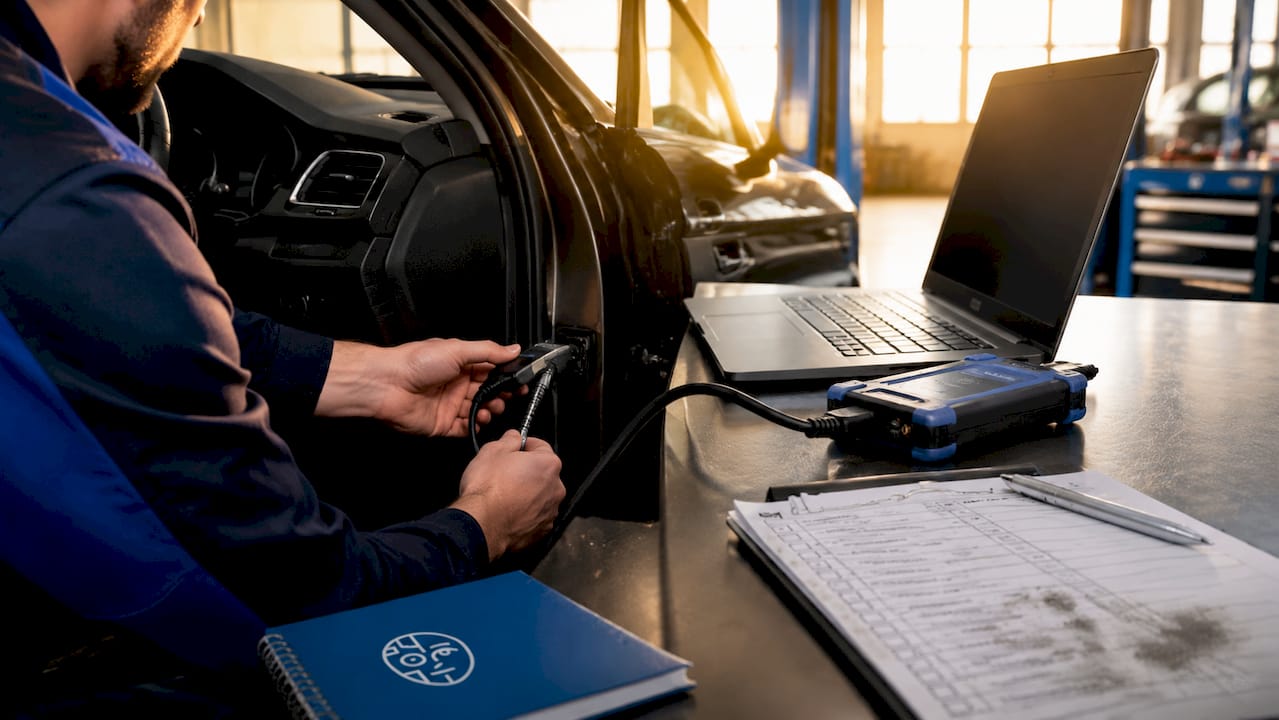
- Verificação de saúde de pré-ajuste. O técnico conecta uma ferramenta de diagnóstico para ler os dados de desgaste da embreagem, os registros de temperatura do óleo e quaisquer códigos de falha armazenados. O software não pode compensar o desgaste das peças mecânicas; portanto, uma caixa de câmbio com conjuntos de embreagem degr deve passar por manutenção antes de prosseguir com o tuning.
- Backup do arquivo TCU original. O arquivo de configuração original é lido e salvo antes de qualquer modification. Esse backup serve como ponto de recuperação caso ocorra uma falha na gravação do flash ou o cliente solicite o retorno às configurações de fábrica.
- Gravação de arquivo de calibração personalizada. O arquivo da TCU calibrado é gravado no controlador da transmissão usando uma ferramenta suportada, como Alientech KESS3, AutoTuner ou PCMFlash. A plataforma da TuningBot aceita uploads diretos de arquivos dessas ferramentas, sem a necessidade de créditos pré-pagos.
- Redefinição adaptativa. Após a regravação, a memória adaptativa da TCU é limpa. Isso força a transmissão a reaprender os pontos de engate da embreagem com a nova calibração, em vez de aplicar valores adaptativos antigos a novos parâmetros.
- Teste de estrada com registro de dados em tempo real. O técnico conduz o veículo sob carga enquanto registra os dados da TCU em tempo real. O tempo de troca de marchas, o deslizamento da embreagem e a entrega de torque são verificados em relação à calibração alvo antes de o serviço ser aprovado.
Dica de Mestre: Monitore a temperatura do óleo durante o teste de estrada. Um DSG funcionando acima do seu limite térmico durante o ciclo de aprendizado adaptativo produzirá um comportamento de mudança inconsistente que parece um erro de calibração, mas na verdade é um problema de arrefecimento.
Para oficinas que estão construindo seus Etapa 1: fluxo de trabalho tuning, a integração da TCU remap na sessão padrão de ajuste do motor evita as reclamações mais comuns após o ajuste.
Por que a sincronização entre a TCU e a ECU é importante?
A ECU e a TCU se comunicam continuamente sobre as solicitações de torque durante cada mudança de marcha. Quando um motor é ajustado para maior potência, mas a TCU mantém seus limites de torque originais, a transmissão limita ativamente a potência que o motor está tentando fornecer. Limites de torque incompatíveis causam mudanças de marcha bruscas, atrasos e códigos de falha que anulam totalmente os benefícios do remap da ECU.
As falhas específicas modes decorrentes de uma TCU não sincronizada incluem:
- Intervenção de torque: O TCU envia uma solicitação de redução de torque para a ECU no meio da troca de marchas, cortando a potência exatamente no momento em que o motorista espera aceleração.
- Geração de código de falha: A TCU registra códigos DTC quando recebe sinais de torque fora de sua faixa calibrada, o que, em alguns casos, aciona o modo de emergência limp mode.
- Sobrecarga da embreagem: Sem mapas atualizados de pressão de aperto, o conjunto de embreagem original absorve o torque excessivo na forma de calor e deslizamento, em vez de transferi-lo limpidamente para o sistema de transmissão.
- Procura de equipamentos A lógica de mudança do TCU, calibrada para a potência original do motor, seleciona marchas incorretas sob a nova curva de torque, causando trocas ascendentes e descendentes repetidas em condução normal.
Em muitas configurações de Stage 1 e Stage 2, recomenda-se fortemente o uso do DSG tuning, pois a TCU original pode limitar o torque ou aplicar intervenções que reduzam o benefício do motor remap. A necessidade deve ser confirmada com base no tipo de câmbio, nos limites de torque originais e nos dados registrados de potência do motor. Para Atualizações de hardware do Stage 2, a sincronização da ECU e da TCU deve ser avaliada como um único projeto.
Os ganhos de confiabilidade são tão significativos quanto os ganhos de desempenho. Um TCU calibrado para corresponder à potência real do motor protege os conjuntos de embreagem contra estresse térmico, reduz o desgaste nos anéis sincronizadores e elimina os ciclos de códigos de falha que fazem os clientes retornarem à oficina com reclamações não relacionadas à reprogramação em si.
Quais são os benefícios reais de uma sintonia profissional de DSG?
Um ajuste de qualidade no DSG aprimora tanto a condução em pista quanto no dia a dia, melhorando a qualidade das mudanças de marcha e a capacidade de resposta da transmissão em todas as condições de direção modes. As melhorias não se limitam ao desempenho com o acelerador totalmente aberto. Elas se manifestam em cada mudança de marcha que o motorista realiza.
Os benefícios mais consistentemente relatados em aplicações profissionais do DSG tuning incluem:
- Trocas de marcha mais precisas: Mudanças mais firmes e rápidas eliminam a sensação de acoplamento suave e prolongada da programação original do DSG e produzem uma conexão mais direta entre a aceleração e a resposta do acelerador.
- launch control aprimorado: Em plataformas nas quais o launch control é suportado por hardware, uma TCU otimizada é ativada e gerencia o sistema de forma mais agressiva, reduzindo significativamente o tempo de 0 a 60.
- Redução da oscilação de marchas no trânsito: O comportamento a baixa velocidade refinado e a lógica de arrastamento atualizada impedem que a transmissão mude de marcha desnecessariamente em condições de anda e para.
- Integridade do modo manual: A sintonia elimina as reduções automáticas de marchas que anulam a entrada do motorista pelas borboletas, de modo que a transmissão permanece na marcha selecionada até que o motorista comande uma mudança.
- Comportamento consistente do Sport mode: Os pontos de mudança de marcha e os limites de rotação do Sport mode foram recalibrados para manter as marchas por mais tempo e responder mais rapidamente, fazendo com que a experiência de direção corresponda ao que o nome modo sugere.
Um ajuste no DSG não serve apenas para tornar um carro rápido ainda mais rápido. Ele torna um carro para o dia a dia mais previsível, mais ágil e mais consistente em todas as condições de direção. É essa consistência que diferencia uma TCU remap profissional de uma transmissão original que tenta lidar com um motor ajustado.
Para oficinas que estejam avaliando como o DSG tuning se integra às atualizações do sistema de escape e de admissão, abordagens de melhoria de desempenho que complementam o TCU remapping produzem os resultados mais coesos no trem de força. O TuningBot’s proteção da caixa de câmbio e embreagem a base de conhecimento cobre em detalhes os limites de tolerância de torque para unidades DSG comuns, incluindo a DQ250 e a DQ381.
Principais Conclusões
O DSG tuning é uma recalibração de software da TCU que aumenta a capacidade de torque, agiliza a velocidade de mudança de marcha e deve ser sincronizada com a ECU para proporcionar ganhos confiáveis de desempenho.
| Ponto | Detalhes |
|---|---|
| A recalibração do TCU é o processo central | O DSG tuning reescreve os pontos de mudança de marcha, a pressão da embreagem e os limites de torque na Unidade de Controle da Transmissão. |
| A velocidade de troca de marcha melhora visivelmente | A resposta das trocas de marcha pode melhorar significativamente, dependendo da plataforma da caixa de câmbio, da condição da embreagem e da calibração. |
| A capacidade de torque aumenta sem alteração de hardware | Os limites de torque podem ser elevados dentro da capacidade mecânica real da caixa de câmbio e do conjunto de embreagem. |
| A ECU e a TCU devem estar sincronizadas | Mapas incompatíveis causam intervenção de torque, códigos de falha e desgaste da embreagem que anulam os ganhos da preparação do motor. |
| O diagnóstico pré-ajuste é obrigatório | Antes de qualquer substituição da TCU remap, é necessário realizar uma verificação do estado de desgaste da embreagem e da temperatura do óleo, a fim de proteger a transmissão. |
Argumentos a favor de considerar o DSG tuning como prática padrão, e não como uma solução de último recurso
Com base em nossa experiência na TuningBot no processamento de arquivos de TCU em uma ampla variedade de plataformas, o erro mais comum cometido pelas oficinas é tratar o ajuste do DSG como opcional após um ajuste remap no motor. Um arquivo de ECU de Stage 1 é instalado no carro, o cliente sai satisfeito, e a TCU luta silenciosamente contra a nova curva de torque pelas próximas 10.000 milhas. Quando o desgaste da embreagem surge como reclamação, a causa principal já existe há meses.
A análise de integridade pré-ajuste é onde reside a maior parte do valor diagnóstico real. Vemos arquivos enviados para o DSG tuning em que os dados de desgaste da embreagem mostram claramente que a caixa de câmbio precisa, antes de tudo, de uma manutenção. Carregar uma nova calibração em uma transmissão desgastada não resolve o problema mecânico. Isso apenas o agrava.
O outro equívoco que encontramos regularmente é que uma reprogramação do câmbio DSG é relevante apenas para uso em pista. As melhorias na dirigibilidade diária, especificamente a redução na osculação de marchas e a eliminação de reduções automáticas indesejadas, importam muito mais para o cliente médio do que um tempo de 0 a 100 km/h mais rápido. Definir expectativas realistas em torno desses benefícios é o que constrói a credibilidade da oficina a longo prazo.
Escolha oficinas e prestadores de serviços de arquivamento que exijam um relatório de verificação de integridade antes da entrega de um arquivo TCU. Essa exigência não é burocracia. É o padrão mínimo para uma transmissão responsável tuning.
— Equipe Técnica do TuningBot
Serviços de arquivos DSG, TCU e ECU da TuningBot para oficinas profissionais
O TuningBot apoia oficinas profissionais que precisam de calibrações combinadas de ECU e TCU para veículos equipados com DSG. A oficina mantém o controle de diagnósticos, leitura, gravação e testes de estrada, enquanto o TuningBot fornece o arquivo calibrado e o suporte de engenheiros necessário para alinhar o torque do motor ao comportamento da transmissão.
Antes de fazer o pedido, as oficinas podem verificar a Cobertura de Serviço ECU e TCU, revise Lista de preços pública e navegue pelo dedicado Manutenção do DSG tuning.
Os arquivos podem ser enviados através do Remapeie seu arquivo sem comprar créditos pré-pagos. O TuningBot funciona com Alientech KESS3, AutoTuner, Magic Motorsport, CMD, Dimsport e PCMFlash.
Para um contexto técnico mais amplo, consulte o Guia de aplicações do TCU tuning e o Guia profissional da ECU remapping.
PERGUNTAS FREQUENTES
O que é o DSG tuning, em termos simples?
O DSG tuning é uma recalibração por software da Unidade de Controle da Transmissão que agiliza a velocidade das mudanças de marcha, aumenta os limites de torque e alinha o comportamento da transmissão com a potência real do motor. Ele não requer modificações de hardware para proporcionar ganhos mensuráveis de desempenho.
Em que medida o DSG tuning melhora a velocidade de mudança de marcha?
Uma boa calibração do DSG torna as mudanças de marcha visivelmente mais rápidas e imediatas, especialmente nos modos Sport e manual modes. A melhoria exata varia de acordo com a transmissão, a versão do software, o estado da embreagem e a meta de calibração.
Vale a pena instalar o DSG tuning depois de um motor remap com modificação de Stage 1?
Isso costuma ser fortemente recomendado, pois a TCU original pode manter limites de torque e lógica de mudança de marcha projetados para a potência original do motor. A decisão correta depende do tipo de câmbio, do torque do motor remapped e de indícios de intervenção da TCU.
Quanto tempo leva a manutenção de uma DSG remap em uma oficina?
Uma sessão completa inclui diagnósticos, identificação ou leitura de arquivos, gravação (flashing), reinicialização de adaptações e testes de estrada. O tempo total varia conforme a ferramenta, o protocolo e a condição do veículo.
O DSG tuning pode danificar a transmissão?
Um ajuste do DSG realizado em uma caixa de câmbio em boas condições mecânicas, após uma avaliação prévia do estado de conservação, apresenta risco mínimo. O ajuste de uma transmissão com conjuntos de embreagem desgastados ou fluido degraded acelerará os danos já existentes, independentemente da qualidade da calibração.