

 EnglishEN
 DeutschDE
 EspañolES
 PortuguêsPT
 FrançaisFR
 РусскийRU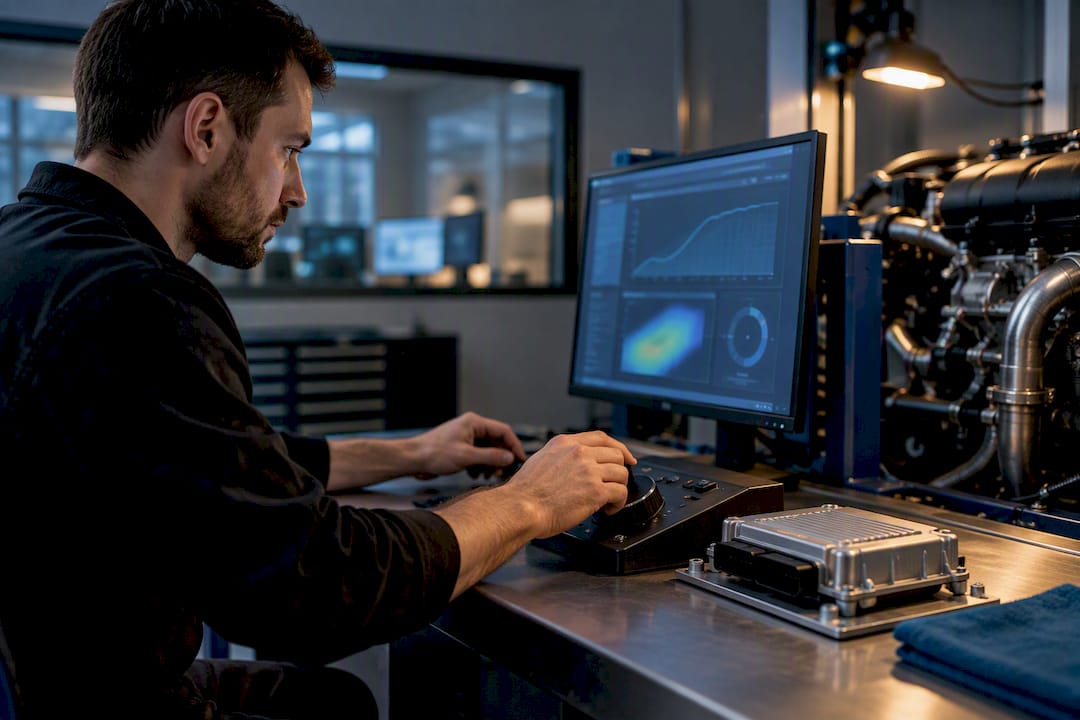
An RPM limiter increase changes the engine-speed range permitted by the control system. It does not increase the mechanical speed capability of the engine. There is no generally safe addition of 500 or 1,000 RPM: the decision needs evidence for the particular engine, components, condition and intended use.
RPM limiter increase: establish the reason first
Determine whether extending engine speed would improve the intended operating range. If output has already fallen away, additional RPM may offer little benefit. Shift behavior depends on the torque curve, transmission ratios and the use case, not simply the highest available number.
Separate the engine limiter from the transmission’s shift request and from temporary limits associated with temperature, launch or faults. Their existence and priority vary by ECU and TCU. Raising one parameter does not prove that the desired operating range will be available.
Evaluate the engine as a complete assembly
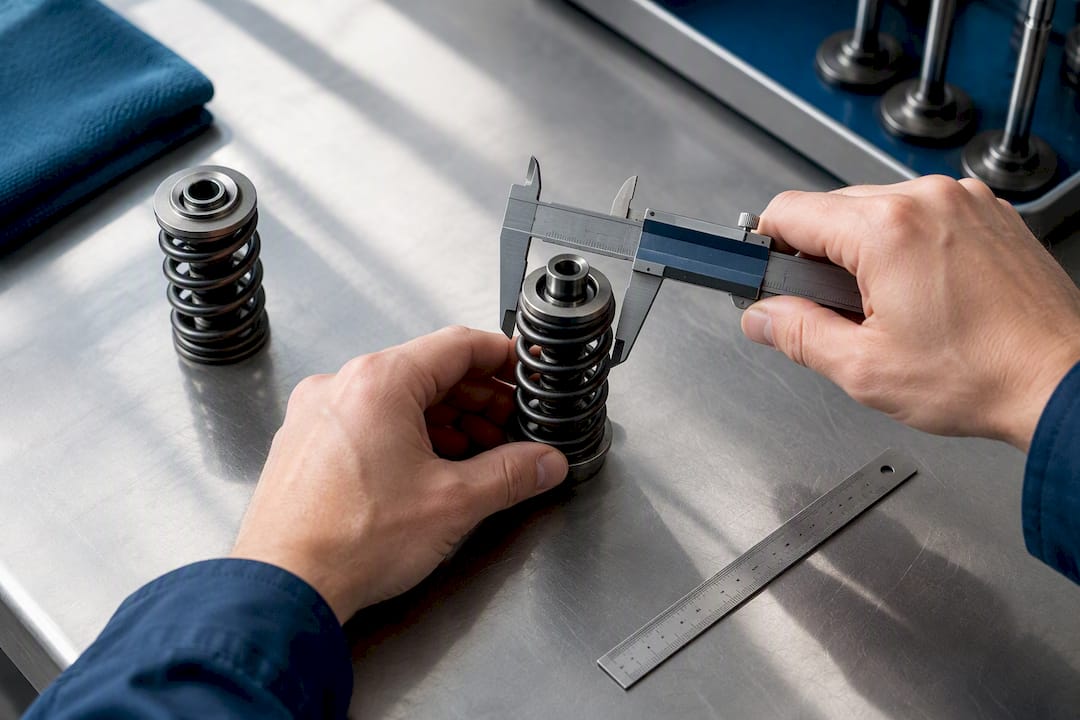
Valve control depends on the cam profile, spring characteristics, installed geometry, moving mass and the rest of the valvetrain. Stronger springs are not a universal fix and may increase loads elsewhere. Coil-bind clearance, spring pressures and component compatibility must follow the relevant design and supplier specifications.
Review the rotating and reciprocating assembly, bearings, balance, torsional behavior, lubrication and oil control. Mean piston speed can describe part of the operating condition, but it is not a standalone safe-RPM limit. Component history and sustained use matter as well as a brief peak speed.
A mechanical inspection can identify faults; it cannot certify an unknown assembly for an arbitrary higher limit. Specialized valvetrain testing is an engineering tool, not a mandatory workshop procedure available for every engine. Choose the assessment from the actual build and the evidence required.
Check delivery time and control at the proposed speed
The available time per engine cycle decreases as RPM rises. Evaluate injector delivery, injection timing/window, fuel-pressure control and ignition-system capability for the engine strategy. Existing hardware may or may not have sufficient margin; upgrades should follow the measured requirement.
Check the usable RPM range of calibration axes, sensor processing and relevant models. A table extending to a number is not proof that the engine has been characterized there. Do not add ignition advance automatically, and do not disable protection functions simply because they intervene.
Evaluate coolant and oil behavior under the intended duty. A larger cooler, a different oil pump or a colder thermostat is not an obligatory or sufficient upgrade for every limiter change.
Understand the intervention and its limits
ECUs may reduce torque through throttle control, fuel cut, ignition intervention or combinations. MaxxECU and ProEFI document different configurable implementations; their settings are examples of those products, not values to copy into unrelated factory software.
The configured onset, control band and actual peak RPM can differ during rapid acceleration. Review overshoot and recovery rather than treating the table value as a physical barrier. Harsh or sustained limiter operation can also impose undesirable loads and thermal effects.
A limiter that reduces engine torque cannot reliably prevent a mechanically forced overspeed caused by selecting an unsuitable lower gear. Engine and transmission behavior must therefore be evaluated together, including any supported downshift protection.
Define a bounded test and stop criteria
Preserve the baseline file and record component details, the reason for the proposed limit and the documented operating envelope. Follow the supported programming procedure, with integrity handling appropriate to the protocol.
Use a controlled test plan that progresses only while the measurements remain acceptable. Review available RPM, pressure, lambda, ignition, temperature, misfire and intervention channels, with transmission behavior where relevant. Do not use repeated high-RPM runs to investigate an unresolved mechanical symptom.
- Stop for abnormal noise, unexpected pressure loss, misfire or other signs of distress.
- Associate each log with the exact calibration and test conditions.
- Inspect unexplained deviations before extending the operating range.
- Document untested conditions and maintenance requirements for the build.
A successful dyno run demonstrates behavior under those test conditions. It does not guarantee fatigue life or establish that an arbitrary increase is safe on other engines.
Domande frequenti
Is an extra 500–1,000 RPM safe on a stock engine?
There is no universal safe increment. It depends on the specific assembly, its condition and the validated operating envelope.
Will a higher limiter always increase power?
No. Power may already be falling before the original limit. Evaluate the usable torque curve and the purpose of extending RPM.
Can the limiter prevent every over-rev?
No. Reducing engine torque cannot reliably stop an overspeed mechanically forced through the transmission by an unsuitable downshift.
References and further reading
Manufacturer documentation applies to the named product, firmware and application. General articles and forum discussions are background reading, not universal settings or proof of compatibility.