

 EnglishEN
 DeutschDE
 EspañolES
 PortuguêsPT
 FrançaisFR
 РусскийRU
Denso ECU tuning depends on the exact ECU family, processor, OEM application, software version and read/write protocol. Denso is not one universal tuning architecture, and OBD, Bench, Boot, serial or virtual-read support varies widely between Toyota, Lexus and other applications. A professional workflow begins with exact ECU identification, the access method supported by the flashing tool, a mechanically healthy vehicle and a source file appropriate to that protocol.
Quick access method reference:
- OBD: use only where the current tool protocol explicitly supports identification, read and/or write for the exact ECU.
- Bench: use where direct connector access is specified by the tool or recovery workflow.
- Boot / serial / JTAG: processor-specific service methods for supported units; not a universal ‘last resort’.
- Virtual or server read: a matched source-file workflow, not the same thing as a physical full backup.
For U.S. workshops, ECU calibration can affect warranty and emissions compliance depending on what is changed. Performance tuning is not categorically illegal, but software or hardware that tampers with required emissions controls or constitutes a defeat device can violate the Clean Air Act.
Denso ECU Tuning: Key Takeaways
Denso ECU tuning should be based on exact ECU identification and current tool support rather than generic processor-family assumptions. Read type, security procedure, checksum handling and editable calibration areas all vary by software and OEM application.
| Punto | Dettagli |
|---|---|
| Exact ECU ID comes first | Confirm hardware, software, processor and OEM application before selecting a protocol. |
| OBD coverage is not universal | Use OBD only when the current tool protocol explicitly supports the unit and operation. |
| Full backup is not always available | Some workflows use virtual, partial or encrypted source files rather than a full physical dump. |
| Integrity handling is tool-specific | Checksum, signature and file validation depend on the exact ECU and write method. |
| Emissions law still applies | Do not treat emissions-related software changes as automatically lawful because they are reversible. |
| Blog intent stays technical | This guide supports TuningBot service pages instead of competing for transactional service keywords. |
Denso ECU Tuning: Families, IDs and Access Methods
Denso ECUs span multiple processor families and OEM implementations. Processor generation can help identify a unit, but protocol support must still be confirmed from the exact hardware/software ID.
Published tool coverage changes frequently, so use the manufacturer’s current protocol database rather than a static article table as the final authority.
Recent tool updates have expanded support for some Toyota/Lexus Denso Gen3 variants, including R7F701202-based applications. Exact OBD, Bench, virtual-read and normal-read capability remains protocol-specific.
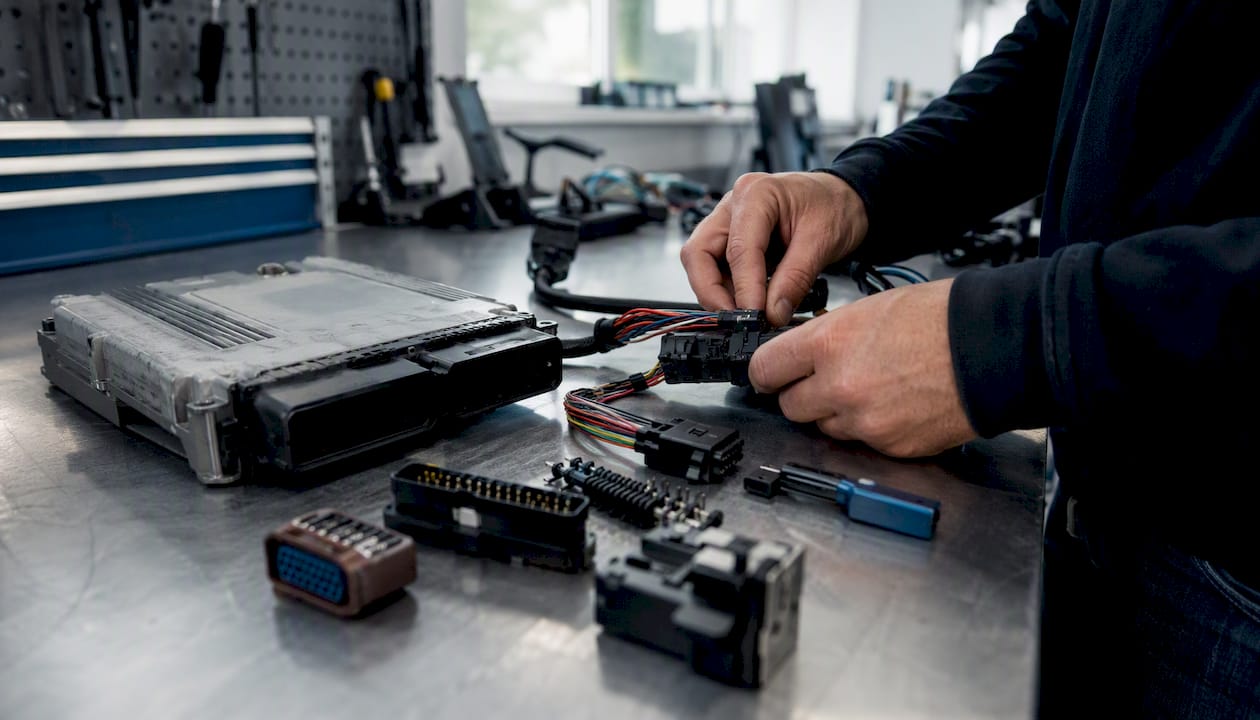
Some newer Denso variants require different source-file or direct-access workflows depending on tool support and security state. Treat any requirement for a server-supplied original, Bench read or unlock as protocol-specific rather than a processor-wide rule.
What flashing methods does Denso ECU remapping actually use?
The access method is determined by the ECU and tool protocol, not simply by a preference for more or less ‘safety’. OBD, Bench and low-level service modes each have different risks and capabilities.
OBD-level flashing
- Follow the tool’s vehicle-specific ignition, voltage-support and communication prerequisites.
- Use the read or server/virtual-file operation specified by the exact protocol; virtual and physical reads serve different purposes.
- Confirm the ECU ID matches the expected MCU before proceeding.
- Write only with a protocol explicitly supported for the identified ECU and file type.
Vantaggi: No disassembly, fastest turnaround, lower risk of physical damage.
Contro: VR does not capture the full flash; recovery options are limited if a write is interrupted mid-process.
Bench read/write
- Bench may be used when the tool protocol specifies direct access; a secure gateway does not automatically make Bench the only legal or technical option.
- Bench can provide deeper or different access on supported ECUs, but ‘normal read’ and backup capability are tool-specific.
- Direct Bench workflows require the connection, power supply and pinout documented for the exact ECU.
- The linked OBDII365 article reports specific AutoTuner timing and workflow claims for R7F701202; treat them as tool/version-specific, not universal.
Vantaggi: Full dump available, recovery mode accessible, no gateway interference.
Contro: Requires ECU removal, bench harness, and longer total job time.
Boot/serial/JTAG
- Boot, serial or JTAG may be available for supported processors when the tool protocol specifically calls for low-level access or recovery.
- Low-level access can require ECU opening or processor-specific connections; follow the tool vendor’s exact documentation.
- Low-level work requires correct pinout, regulated power and appropriate ESD/bench practices.
Vantaggi: Access to ECUs that cannot be reached by any other method.
Contro: Highest risk, requires specialized hardware, voids any remaining warranty on the ECU unit itself.
Which tools support Denso ECUs and what does each cover?
Denso ECU tuning coverage is spread across several professional tool ecosystems. Check the exact ECU and operation in the current protocol list before booking a job.
Key operational notes for professional tuners:
- Server files, subscriptions and source-file requirements vary by tool and protocol; verify current vendor terms.
- BitEdit provides Toyota Denso-focused editing plugins for supported file families; plugin coverage does not imply universal Denso support.
- PCMFlash support is module- and ECU-specific; confirm the exact module, interface and read/write mode.
- Alientech KESS3 coverage is protocol-specific; confirm the exact Denso ECU and OBD/Bench operation in current documentation.
What can you actually change on a Denso ECU?
Accessible calibration areas depend on the exact Denso software and the definitions available to the editor. Do not assume a plugin or map list for one Toyota/Lexus ECU applies to another family.
Typical accessible maps and calibration domains:
- Fuel delivery: injector scaling, fuel enrichment tables, lambda targets, idle fueling
- Ignition/advance: spark timing maps, knock retard thresholds, advance limits by load/RPM
- Torque management: torque request tables, torque limiter maps, driver demand curves
- Boost control (turbocharged variants): boost target maps, wastegate duty, overboost limits
- Throttle control: pedal mapping, throttle response curves
- Emissions-related calibration areas exist on some diesel applications, but road-use modifications must comply with applicable emissions law.
- Transmission shift tables (where applicable): shift points, torque converter lockup maps
- Speed limiters and rev limiters
Common tuning goals by stage:
- Stage 1: an informal label usually describing calibration on standard hardware; exact scope varies by provider and ECU.
- Stage 2: an informal label usually describing calibration matched to specified supporting hardware.
- Emissions-related work: requires separate legal/compliance review in addition to calibration engineering.
Consiglio Pro: On modern Denso ECUs with torque-based management, editing the torque request and torque limiter tables directly often produces more consistent and safer gains than adjusting fueling maps alone. The ECU’s internal torque model arbitrates between fuel, ignition, and throttle, so working within that model rather than against it reduces the risk of conflicting corrections across the calibration.
Denso ECU Tuning: Professional Workshop Workflow
A Denso ECU tuning workflow reduces avoidable errors: diagnose the vehicle, identify the ECU, follow the supported read/write method, preserve the source file and validate after programming.
- Pre-check: diagnose active faults, confirm mechanical health and use the regulated power support required by the vehicle/tool.
- ECU identification: record exact hardware/software IDs and processor information before protocol selection.
- Select access method: use the OBD, Bench, Boot, virtual or server workflow specified for the exact ECU.
- Read/source file: preserve the available source file and job metadata; not every protocol supplies a full physical dump.
- Verify source-file identity and use the integrity checks appropriate to the tool/file workflow.
- Calibration edits: use verified definitions and validate changes against engine hardware, logs and the requested objective.
- Integrity handling: use the checksum/signature process required by the exact ECU and write tool.
- Write: follow the tool’s supported write method and do not generalize timing estimates from another protocol or software version.
- Post-write verification: confirm ECU communication, DTC status and any tool-supported verification or read-back procedure.
- Validation: log the parameters relevant to the calibration under safe, legal and controlled operating conditions.
Consiglio Pro: Always retain the original backup file in a named, dated folder tied to the vehicle’s VIN. If a customer returns six months later with a complaint or a failed emissions test, that original file is your only recovery option without a bench serial read.
How do you avoid bricking, IMMO issues, and checksum errors?
Programming problems can result from power instability, protocol mismatch, security state, file mismatch, hardware faults or interrupted communication. Diagnosis should start with the tool log and exact failure point.
Common failure modes:
- Interrupted write: preserve the tool state/log and follow the ECU-specific recovery procedure; recovery method varies by protocol.
- Immobilizer/security faults: do not alter security data unless the supported service and legal workflow explicitly requires it.
- Integrity error: a checksum/signature mismatch can be rejected by the tool or ECU; use the supported correction workflow.
- Protocol mismatch: selecting the wrong ECU or file type can cause communication, write or recovery problems.
- Gateway/security restrictions: use authorized tool procedures; do not assume a gateway should simply be disabled or bypassed.
Immediate steps if a write fails:
- Follow the tool’s recovery prompt; whether power should remain on or be cycled is protocol-specific.
- Use the flashing tool’s documented recovery procedure and preserve logs.
- Escalate to the next supported access/recovery method only if the tool documentation specifies it.
- If supported recovery paths fail, escalate to the tool vendor or qualified ECU repair specialist rather than improvising low-level access.
Il I/O Terminal Denso Plugin supports full EEPROM read/write and virgin reset functions over K-line/CAN for supported ECU types, which can be a practical recovery path for certain locked or corrupted units.
When should you use a professional remap service for Denso work?
Outsourcing can be appropriate when the workshop lacks reliable definitions, tool coverage or calibration experience for the exact Denso variant.
Outsource when:
- The exact ECU requires a read/write or recovery method the workshop does not own or understand.
- The application requires an authorized security/gateway workflow not available in the workshop’s current tool setup.
- The selected tool workflow requires a server/source file the workshop cannot obtain through its licensed account.
- The calibration objective requires expertise or compliance review beyond the workshop’s in-house scope.
- The workshop lacks the time or reference data needed to develop and validate the calibration internally.
What to provide when uploading a Denso file:
- The source file produced or accepted by the selected tool workflow.
- Vehicle make, model, year, and engine code
- ECU part number and software version (from the ECU ID read)
- Requested calibration objective and intended legal use.
- All relevant engine, fuel, intake, exhaust and drivetrain hardware changes.
TuningBot provides multiple ECU calibration services where coverage is available. Exact Denso compatibility and requested service should be confirmed from the ECU ID and source file before ordering.
U.S. legal, warranty, and best-practice notes for Denso tuning
For U.S. workshops, Denso ECU tuning should be separated into calibration engineering and legal compliance. Customer consent and a stock backup are useful records, but they do not determine whether an emissions-related modification is lawful.
U.S.-specific considerations:
- Warranty: ECU calibration can affect related warranty claims, but it does not automatically void an entire vehicle warranty.
- EPA / Clean Air Act: road-use modifications that tamper with required emissions controls or constitute defeat devices can violate federal law.
- California / CARB: applicable aftermarket calibrations may require a valid CARB Executive Order or another lawful compliance pathway.
- State requirements: inspection, readiness, registration and tampering rules vary by jurisdiction.
Best-practice checklist for U.S. shops:
- Document the job scope and customer instructions, but do not treat consent as a substitute for legal compliance.
- Retain source files and job records according to workshop policy, customer agreements and applicable requirements.
- Recommend hardware only where the requested output and measured system limits justify it; unrelated AWD pump upgrades should not be presented as a generic ECU-tuning requirement.
- Verify the legal/compliance status of the requested service for the actual vehicle and intended use.
- For DPF/EGR-related work, review the DPF calibration workflow guide for compliance context before proceeding.
The TuningBot Technical Team’s perspective on Denso ECU work
Tool support for Denso platforms has expanded significantly, but access depth still varies by ECU generation, OEM and security implementation. Bosch, Continental and Denso should not be compared as though they share one standard map depth.
A common procedural problem is using a read type or write method that does not match the exact protocol. Follow the tool instructions rather than assuming a Bench normal read is always superior to a supported OBD or virtual workflow.
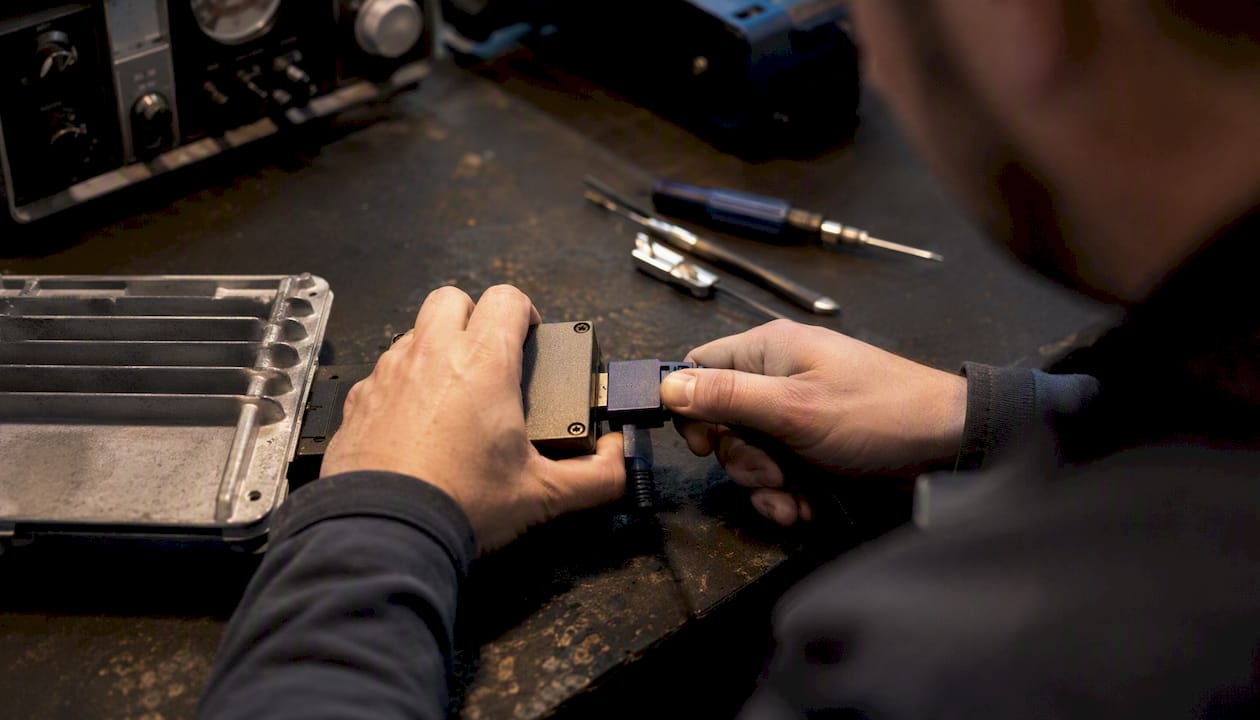
For complex Denso jobs, a file service can assist with calibration where the ECU and file type are supported. The workshop remains responsible for correct identification, programming and post-write validation.
How TuningBot Supports Denso ECU Tuning Workflows
TuningBot can provide Denso ECU calibration files where the exact ECU, source-file type and requested service are covered. This guide remains focused on technical Denso workflow rather than transactional service keywords.
Prima di ordinare, le officine possono verificare Copertura dei servizi ECU, rivedi il Listino Prezzi Pubblico and browse Servizi di modifica.
The source file can be submitted through Rimappa il tuo file without prepaid credits.
For related technical workflow, see the verified Engine ECU Programming Guide, Remap File Calibration Guide e ECU File Writing Guide.
The workshop remains responsible for vehicle diagnosis, exact ECU identification, programming conditions, legal compliance and final validation.
Sources and Further Reading
- OBDII365 — AutoTuner Toyota Denso Gen3 article — external tool/reseller reference; timings and coverage are version-specific.
- ECUtools — BitEdit Toyota Denso Petrol 4 — external editing-plugin reference.
- ChipTuningShop — I/O Terminal Denso Plugin — external tool reference retained as requested.
- EPA — external U.S. regulatory reference.
- Haldex Parts — pump upgrade article — external drivetrain-hardware article retained as requested; not a Denso calibration source.
- TuningBot Engine ECU Programming Guide — internal programming workflow reference.
- TuningBot Remap File Calibration Guide — internal calibration reference.
- TuningBot ECU File Writing Guide — internal flashing/integrity reference.
FAQ
Can Denso ECUs be tuned via OBD without removing the unit?
Some Denso ECUs support OBD identification, virtual read, read and/or write, while others require different access. Confirm the exact ECU and operation in the current flashing-tool protocol.
How much horsepower does a Denso ECU remap typically add?
There is no universal gain. Results depend on the engine, hardware, fuel, factory calibration and tuning objective.
Is ECU tuning legal in the United States?
ECU tuning is not categorically illegal in the United States. Specific emissions-related modifications can violate the Clean Air Act or state rules if they tamper with required emissions controls.
Is Denso OEM-quality hardware comparable to other ECU brands?
Denso is a major OEM supplier. Tuning difficulty is determined more by the exact architecture, security, protocol and available definitions than by a simple hardware-quality comparison.
Which tool is best for professional Denso ECU tuning?
No single tool is best for every Denso ECU. Choose from the current protocol coverage for the exact ECU, vehicle and required OBD/Bench/Boot or source-file operation.