

 EnglishEN
 ItalianoIT
 DeutschDE
 PortuguêsPT
 FrançaisFR
 РусскийRU
La optimización de los mapas del turbo tuning es el proceso de calibración de los mapas de la ECU que controlan la presión del boost, el suministro de combustible y el tiempo de encendido, con el fin de adaptarlos a la dinámica real del flujo de aire y a los objetivos de rendimiento de un motor turboalimentado. El término estándar del sector para referirse a este trabajo es «calibración de la ECU», y abarca todas las tablas a las que recurre la ECU para gestionar un sistema de sobrealimentación. Sin una calibración adecuada, Un turbo mejorado causa condiciones de mezcla pobre y un rendimiento inferior al esperado, ya que los ajustes predeterminados de la ECU de fábrica no tienen en cuenta la nueva dinámica del flujo de aire. Esta guía aborda los componentes fundamentales de los mapas, las herramientas necesarias, un flujo de trabajo paso a paso para el tuning y las técnicas avanzadas de automatización que utilizan los profesionales de los tuners en 2026.
¿Cuáles son los componentes fundamentales de la optimización del mapa del turbo tuning?
Tres tipos de tablas constituyen la base de cualquier calibración de una ECU turbo: la tabla de presión boost, la tabla de ciclo de trabajo de la válvula de descarga y la tabla de suministro de combustible. Cada tabla utiliza las revoluciones por minuto (RPM) y la carga del motor como ejes principales. La ECU lee estos ejes simultáneamente y selecciona el valor de salida correcto para cada condición de funcionamiento.
Tablas de presión de refuerzo y mapas de ciclo de trabajo de la válvula de descarga regula de forma crítica el funcionamiento de la válvula boost, la respuesta del sistema y la seguridad del motor. La tabla de presión de la válvula boost establece la presión objetivo del colector en cada régimen de revoluciones y punto de carga. El mapa del ciclo de trabajo de la válvula de descarga indica a la ECU con qué intensidad debe accionar el actuador de la válvula de descarga para alcanzar ese objetivo. Por encima de ambos se sitúa una tabla limitadora del boost que actúa como límite de seguridad, reduciendo el boost si se supera el objetivo.
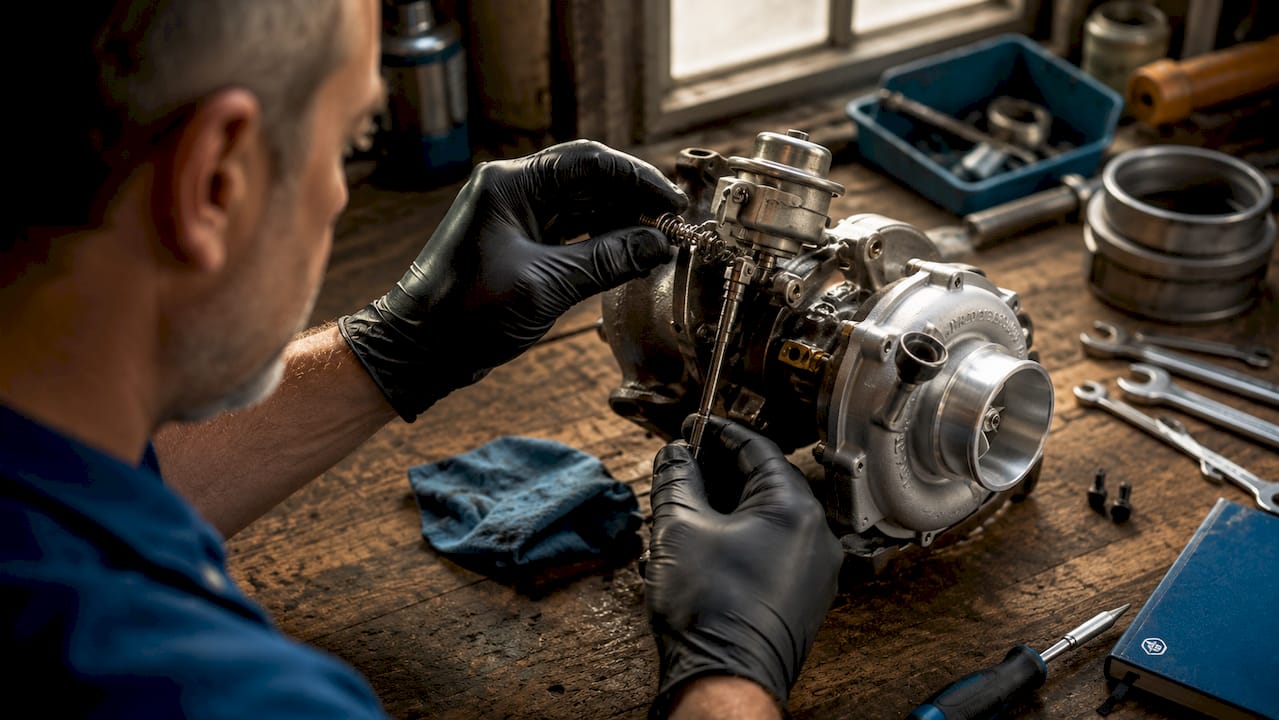
Los mapas de impulso y los mapas de combustible deben coordinarse para mantener una banda de potencia uniforme. Cuando aumenta la presión del boost, aumenta la masa de aire que entra en cada cilindro. El mapa de combustible debe ajustar el suministro de combustible para que se adapte con precisión a esa masa de aire. Un desajuste provoca o bien una mezcla pobre, lo que conlleva riesgo de detonación, o bien una mezcla rica, lo que supone un desperdicio de combustible y una reducción de la potencia.
Los mapas de sincronización del encendido completan el panorama. Las presiones más altas en los cilindros, debidas al aumento del boost, comprimen la mezcla de aire y combustible de forma más agresiva, lo que aumenta el riesgo de detonación. El mapa de encendido debe retrasar el tiempo de encendido a alta carga y con un boost elevado para garantizar una combustión segura. Los preparadores que mejoran el turbo sin ajustar el mapa de encendido suelen encontrarse con detonaciones ya en la primera prueba en el banco de potencia.
| Tipo de mapa | Entradas primarias | Efecto primario |
|---|---|---|
| Tabla de presión de sobrealimentación | RPM, carga del motor | Establece la presión del colector objetivo |
| Ciclo de trabajo de la válvula de descarga | RPM, carga del motor | Controla el actuador para que alcance el objetivo boost |
| Mapa de entrega de combustible | RPM, carga, sensor MAP | Escala el ancho de pulso del inyector a flujo de aire |
| Mapa de tiempo de encendido | RPM, carga, sensor de detonación | Evita la detonación bajo alta presión en el cilindro |
| Limitador de impulso | Presión de sobrealimentación | Recortes de boost por encima de un límite máximo seguro |
¿Qué herramientas y requisitos previos necesitas para un ajuste eficaz del mapa de la ECU?
Para realizar un trabajo eficaz con los mapas de turbo es necesario que el software, el hardware y los datos de diagnóstico funcionen de forma coordinada. En cuanto al software, se necesita una plataforma de edición de ECU capaz de leer y escribir la variante específica de la ECU del vehículo. TuningBot admite la edición de archivos para ECU de Bosch, Continental, Delphi, Marelli, Denso, Siemens, Keihin y ZF, lo que cubre la gran mayoría de las plataformas con turbocompresor que se encuentran en los talleres profesionales.
Los requisitos de hardware son innegociables. Un dinamómetro de chasis te ofrece condiciones de carga controladas y repetibles, de modo que puedas realizar cambios en los mapas y medir el resultado sin las variables propias de la carretera. Un sensor de O₂ de banda ancha proporciona datos en tiempo real sobre la relación aire-combustible, lo que constituye el principal control de seguridad durante cualquier ajuste de la inyección de combustible. Un sistema de detección de detonaciones, ya sea integrado en el flujo de datos de la ECU o un dispositivo de audio independiente, te avisa inmediatamente si el avance del encendido es demasiado agresivo.
Los conocimientos previos son tan importantes como el equipamiento. Es necesario saber leer un mapa del compresor para comprender en qué rango de funcionamiento el turbocompresor opera de forma eficiente con diferentes valores de boost y objetivos de caudal. También es necesario interpretar con precisión los registros de la relación aire-combustible (AFR) y los datos del sensor de detonación. Una interpretación errónea de un solo dato puede provocar una condición de mezcla pobre destructiva o una pérdida de potencia innecesaria debido a un retraso excesivo en la sincronización.
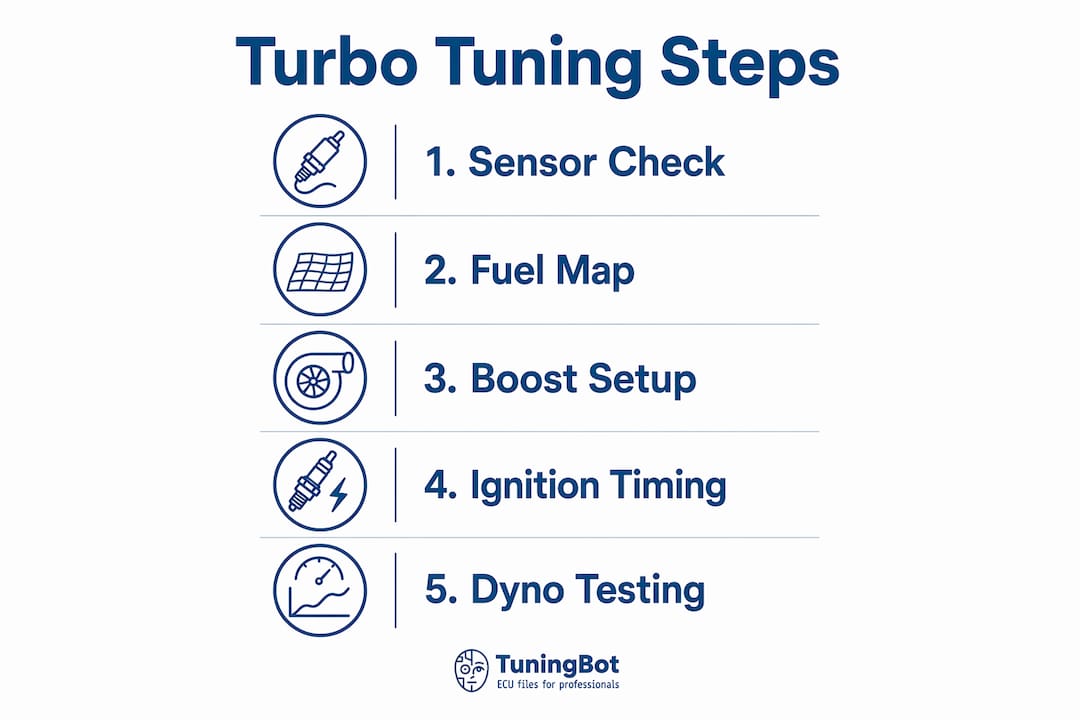
Consejo profesional: Antes de cualquier sesión de tuning, comprueba el estado de todos los sensores que utiliza la ECU para el control boost: el sensor MAP, el sensor de temperatura del aire de admisión y el sensor de posición del acelerador. Un sensor MAP defectuoso alterará todas las lecturas de las tablas boost y generará resultados que no se podrán replicar.
| Categoría de herramienta | Función | Requerido para mapas turbo |
|---|---|---|
| Software de edición de ECU | Leer, editar y escribir archivos ECU | Sí |
| Dinamómetro de chasis | Prueba de carga controlada | Sí |
| Sensor de oxígeno de banda ancha | Monitorización de la relación aire-combustible (AFR) en tiempo real | Sí |
| Sistema de detección de detonaciones | Identificación de detonación | Sí |
| Interfaz de registro de datos | Registrar parámetros de la ECU durante las pasadas | Sí |
Cómo optimizar mapas de turbo paso a paso para un mejor rendimiento
Un flujo de trabajo estructurado previene daños y produce resultados repetibles. Los flujos de trabajo profesionales tuning comienzan de forma prudente ajustando el ciclo de trabajo de la válvula de descarga y el tiempo de encendido antes de ir perfeccionando progresivamente los mapas a medida que aumenta la carga. Saltarse pasos o pasar directamente a la configuración tuning de alta carga sin una referencia verificada es la causa más habitual de daños en el motor durante la calibración del turbo.
Sigue esta secuencia para cualquier calibración de mapa turbo:
- Crear un mapa de referencia. Lee el archivo de la ECU de serie y registra una prueba completa en el banco de potencia antes de realizar ningún cambio. Esto te servirá de referencia para la relación aire-combustible (AFR), el sensor boost y la sincronización en cada punto de carga.
- Verificar el hardware de soporte. Las modificaciones en la bomba de combustible y los inyectores requieren un ajuste correspondiente de la ECU antes de modificar los parámetros del boost. Asegúrate de que se registren el tamaño de los inyectores, la presión del combustible y el caudal de la bomba, y de que coincidan con los valores de ajuste de los inyectores de la ECU.
- Establece objetivos conservadores de boost. Reduce los valores del mapa del ciclo de funcionamiento de la válvula de descarga entre 10 y 15% con respecto al valor final previsto. Esto permite que el motor alcance la potencia de forma segura mientras compruebas la inyección de combustible.
- Ajusta el mapa de combustible primero. Con carga baja y acelerador parcial, comprueba que la relación aire-combustible (AFR) se mantenga dentro del intervalo objetivo. En este stage, es más seguro que la mezcla sea rica que pobre. Corrige cualquier celda que presente picos de mezcla pobre antes de aumentar el boost.
- Aumenta boost en stages. Aumenta el ciclo de trabajo de la válvula de descarga de forma gradual, registrando cada prueba. Presta atención a los picos de boost por encima del valor objetivo, ya que indican que es necesario ajustar el PID del bucle de control de la válvula de descarga.
- Refinar el tiempo de encendido. Con el boost y el suministro de combustible estabilizados, aumenta la sincronización en pequeños incrementos en cada punto de carga. Detente inmediatamente si se activa el sensor de detonación. El objetivo es alcanzar la sincronización máxima del par de frenado sin que se produzca detonación.
- Validar en todo el rango de RPM. Pon en marcha el motor desde el ralentí hasta el límite de revoluciones a plena aceleración. Comprueba que la relación aire-combustible (AFR), el boost y la sincronización coincidan con los valores objetivo en cada punto del mapa.
Consejo profesional: Registre la temperatura del refrigerante y la temperatura del aire de admisión en cada pasada del dinamómetro. El "heat soak" entre pasadas cambia significativamente el umbral de detonación. Un valor de sincronización que es seguro en un motor frío puede provocar detonación en uno recalentado.
La coordinación entre el boost y los mapas de combustible durante este proceso es donde la mayoría de los tuners dedican más tiempo. Una rampa del boost que llega más rápido de lo que el mapa de combustible puede compensar produce una condición momentánea de mezcla pobre en el punto de máximo inicio del boost. Reducir la velocidad de la rampa del ciclo de trabajo de la válvula de descarga en el rango medio de revoluciones suele resolver este problema sin necesidad de grandes cambios en el mapa de combustible.
¿Qué técnicas avanzadas mejoran la optimización del boost y la respuesta del turbo?
Los algoritmos de control predictivo boost representan el avance más significativo en la calibración de las ECU de turbocompresores durante la última década. En lugar de reaccionar ante un error boost una vez que se produce, un algoritmo predictivo lee la posición del acelerador, la marcha seleccionada y la presión ambiental para preajustar la válvula de descarga antes de que comience el evento boost. El control predictivo boost, combinado con un retraso dinámico de la sincronización durante la aceleración inicial, reduce el retraso del turbo y mejora la respuesta del acelerador entre un 10 y un 15%. Esa mejora es cuantificable en un banco de pruebas y se nota inmediatamente en la sensación del conductor.
La cartografía multidimensional tiene en cuenta la relación de aceleración, la selección de marcha, la presión ambiental y la temperatura para ofrecer una respuesta más precisa del boost y de la inyección de combustible en todas las condiciones. Un mapa 4D añade un tercer eje además de las revoluciones por minuto y la carga, normalmente la temperatura del aire ambiente o la presión barométrica. Esto es especialmente importante para los vehículos que circulan en una amplia gama de altitudes o climas.
Los marcos de calibración automatizada llevan esto más allá. Un marco automatizado validado por la SAE exploró aproximadamente un millón de candidatos de calibración en aproximadamente 36 horas mediante cálculo paralelo en un ordenador portátil estándar. Esa velocidad permite generar un mapa preliminar casi óptimo antes incluso de que un tuner llegue al banco de pruebas. La función del tuner pasa de ser un ajuste manual celda por celda a la verificación y el perfeccionamiento de un punto de partida ya optimizado.
Las simulaciones de gemelos digitales con redes neuronales van un paso más allá al crear un motor virtual model que predice cómo afectarán los cambios en el mapa al rendimiento antes de realizar cualquier prueba física. También puedes consultar Consideraciones específicas del modelo tuning para tracción total (AWD) cuando la optimización boost interactúa con los sistemas de distribución del par, lo que añade otra capa de complejidad a la calibración.
Ventajas y riesgos clave de métodos avanzados:
- Ventaja: Los algoritmos predictivos orithms reducen el retraso del turbo sin sacrificar los objetivos máximos de boost.
- Ventaja: Los marcos automatizados reducen el tiempo de calibración preliminar de días a horas.
- Ventaja: Las simulaciones de gemelos digitales reducen el número de ciclos de pruebas destructivas.
- Riesgo Los mapas automatizados agresivos pueden exceder los límites de los componentes si las restricciones de hardware no están codificadas en el framework.
- Riesgo Los mapas multidimensionales requieren más entradas de sensores y un sensor defectuoso corrompe más del mapa simultáneamente.
Consejo profesional: Cuando utilices los resultados de la calibración automática, establece siempre límites estrictos para la presión boost y el avance del encendido antes de la primera prueba física en el banco de pruebas. El algoritmo algorithm optimiza en función de los objetivos de rendimiento, no de la durabilidad de los componentes. Los límites de tu hardware deben ser las condiciones límite.
Puntos Clave
La optimización de los mapas del Turbo tuning requiere una calibración coordinada de los mapas de presión, suministro de combustible y sincronización del encendido del boost, con el apoyo del hardware adecuado y un flujo de trabajo estructurado y basado en datos.
| Punto | Detalles |
|---|---|
| La coordinación del mapa es innegociable | Los mapas de sobrealimentación, combustible y encendido deben calibrarse juntos para evitar condiciones de mezcla pobre y detonación. |
| La verificación de hardware viene primero | Comprueba el estado de los inyectores, el estado de los sensores y la capacidad del sistema de combustible antes de ajustar cualquier valor de referencia del boost. |
| Una progresión conservadora previene daños | Comienza por debajo de los valores finales de boost y ve aumentando los valores de stage, mientras registras los datos de AFR y de detonación en cada prueba. |
| Los algoritmos predictivos orithms reducen el retraso | Las estrategias de control dinámicas boost mejoran la respuesta del acelerador en un 10–15% en comparación con los mapas estáticos. |
| La automatización acelera, no reemplaza, la pericia. | Los marcos automatizados generan mapas iniciales casi óptimos, pero un tuner debe verificarlos e imponer los límites del hardware. |
Lo que hemos aprendido de años de trabajo de calibración de turbos
El error más habitual que observamos en la calibración de la ECU de un motor turbo es considerar el mapa de combustible como algo secundario. Los preparadores se centran en los valores objetivo de boost y en el avance del encendido, y luego se preguntan por qué el motor funciona de forma irregular a aceleración parcial. El mapa de inyección determina la conductibilidad en todos los puntos de carga por debajo del acelerador a fondo, y un mapa de inyección mal calibrado provoca caídas de potencia, vacilaciones y temperaturas elevadas en el escape que acortan la vida útil de los componentes.
El segundo mito persistente es que una mejora del turbo «bolt-on» aporta potencia por sí sola. La calibración Ignoring tras las mejoras de hardware conduce directamente a detonaciones, mezclas pobres y una conducción deficiente. La ECU de fábrica desconoce las características de caudal del nuevo turbo. Por defecto, optará por una inyección y una sincronización conservadoras que no aprovechan toda la potencia disponible, al tiempo que mantiene el motor funcionando fuera de los parámetros seguros para el nuevo hardware.
Abogamos por tratar la calibración del turbo como un sistema, no como una serie de ajustes aislados. La presión de sobrealimentación, el combustible y la ignición interactúan en cada punto de funcionamiento. Cambiar uno sin revisar los otros produce resultados impredecibles. El registro de datos iterativo en toda la gama de RPM y carga es el único método confiable. Las herramientas de automatización avanzada aceleran el proceso, pero no reemplazan el juicio necesario para interpretar los datos de detonación, leer un mapa del compresor o reconocer cuándo la lectura de un sensor está corrupta.
Los tuners que obtienen los resultados más consistentes son aquellos que registran todo, modifican una variable cada vez y consideran cada prueba en el banco de potencia como un ejercicio de recopilación de datos, más que como una búsqueda de potencia.
— Equipo Técnico de TuningBot
Flujo de trabajo profesional de calibración de ECUs turboalimentadas de TuningBot
TuningBot ofrece a los talleres una forma directa de convertir una lectura de la ECU de un turbo en un archivo calibrado y compatible con checksum, sin barreras de registro, créditos prepagados ni precios poco claros. En el caso de las plataformas de gasolina y diésel con turbocompresor, el archivo debe coordinar los parámetros boost, el ciclo de trabajo de la válvula de descarga, el suministro de combustible, el tiempo de encendido, la monitorización del par y los limitadores de seguridad como un único sistema. Ahí es precisamente donde cobra importancia el soporte de archivos revisados por ingenieros.
Los talleres pueden cargar el archivo original de la ECU a través de Reprograma tu archivo, verificar disponibilidad del servicio en Cobertura del servicio ECU, revisar las operaciones admitidas en Servicios ECU, y verificar costos en el público Lista de precios de ECU Tuning. Esto importa porque el trabajo del mapa turbo no es el lugar para citas vagas, sistemas de crédito ocultos o archivos genéricos.
TuningBot es compatible con las principales familias de ECU de Bosch, Continental, Delphi, Marelli, Denso, Siemens, Keihin, ZF y otras marcas, y funciona con herramientas profesionales como Alientech KESS3, AutoTuner, Magic Motorsport, CMD, Dimsport y PCMFlash. Los servicios incluyen las etapas 1, 2 y 3; el remap para turbos grandes; la calibración del limitador de par; la optimización del control del boost; la corrección del checksum; la gestión de códigos de avería (DTC); el tuning para DSG/TCU; y otros servicios relacionados con las ECU.
Para talleres que construyen o refinan flujos de trabajo de calibración de turbo, el Guía técnica de la ECU remapping de 2026 aborda los métodos actuales para la edición de mapas boost, la gestión de checksum y la verificación de archivos en todas las plataformas compatibles. TuningBot también ofrece Corrección del archivo ECU checksum como servicio independiente, lo cual es un paso obligatorio tras cualquier modificación del mapa para evitar que la ECU rechace el archivo modificado.
PREGUNTAS FRECUENTES
¿En qué consiste la optimización del mapa del turbo tuning?
La optimización del mapa del Turbo tuning es el proceso de calibración de la ECU que consiste en ajustar las tablas de presión, suministro de combustible y sincronización del encendido del boost para adaptarlas al caudal de aire real y a los requisitos de rendimiento de un motor turboalimentado. Es el término estándar para referirse a lo que realiza los tuners tras cualquier mejora del turbocompresor o «modificación».
¿Por qué una mejora de turbo requiere reprogramación de la ECU?
Una calibración de ECU de fábrica se basa en las características de flujo del turbocompresor de fábrica. Un turbocompresor mejorado mueve más aire y, sin recalibración, la ECU hace funcionar el motor pobremente y no alcanza el potencial de potencia del nuevo turbocompresor.
¿Cuál es el orden correcto para ajustar los mapas de la ECU del turbo?
Empieza por comprobar el mapa de combustible a baja carga; a continuación, establece unos valores objetivo conservadores para boost y, después, ajusta el ángulo de encendido en pequeños incrementos. Registra siempre los datos de AFR y de detonación en cada prueba antes de aumentar la carga o el valor de boost.
¿Cómo reduce el retraso del turbo el control predictivo boost?
El control predictivo del boost lee la posición del acelerador y la marcha seleccionada para preposicionar la válvula de descarga antes de que comience el evento del boost. Este enfoque, combinado con un retraso dinámico de la sincronización durante la aceleración inicial, mejora la respuesta del acelerador en un 10–15% en comparación con las estrategias de mapas estáticos.
¿Pueden las herramientas de calibración automatizadas sustituir a un tuner profesional?
Los marcos automatizados pueden generar mapas preliminares casi óptimos al analizar rápidamente un gran número de candidatos de calibración, tal y como ha validado la investigación de la SAE. Sin embargo, un profesional tuner debe seguir verificando los límites del hardware, interpretando los datos de los sensores y validando los resultados en un banco de pruebas antes de que el mapa se utilice en un vehículo.