

 EnglishEN
 ItalianoIT
 EspañolES
 PortuguêsPT
 FrançaisFR
 РусскийRU
Arten von Peugeot Citroën ECU-Remapping erklärt
Unter „ECU remapping“ für Fahrzeuge der Marken Peugeot und Citroën versteht man den Vorgang des Auslesens, der modifizierung und des Neuprogrammierens der Kalibrierungsdaten des Motorsteuergeräts, um die Leistung, den Kraftstoffverbrauch oder das Emissionsverhalten zu verändern. Die verschiedenen Arten des Peugeot-Citroën-ECU-remapping unterscheiden sich in erster Linie hinsichtlich der Zugriffsmethode, des Arbeitsablaufs und der ECU-Kompatibilität und weniger durch die Leistungskennfelder selbst. Unabhängig davon, ob Sie einen Peugeot 308 mit einer Bosch MD1CS003 oder einen Citroën C5 Aircross mit einer Continental SID212 fahren – der von Ihnen gewählte Zugriffsweg bestimmt die Bearbeitungszeit, das Risikoniveau und die Vollständigkeit der extrahierten Daten. Tools wie Alientech KESS3, AutoTuner und PSA-Rechner legen fest, was in jeder stage-Phase des Prozesses möglich ist.
1. Typen der Peugeot-Citroën-Steuergeräte remapping: bench mode
Bei der Methode „Bench mode remapping“ wird das Steuergerät aus dem Fahrzeug ausgebaut und über seinen Kabelbaum direkt an ein tuning-Tool angeschlossen, wodurch der OBD-Anschluss vollständig umgangen wird. Diese Methode ermöglicht dem tuner direkten Zugriff auf die Speicherchips des Steuergeräts und liefert somit vollständigere und zuverlässigere Auslesedaten als OBD-basierte Verfahren. Bei Fahrzeugen der PSA-Gruppe ist bench mode die bevorzugte Methode für neuere Steuergerätefamilien, bei denen der OBD-Zugriff eingeschränkt ist.
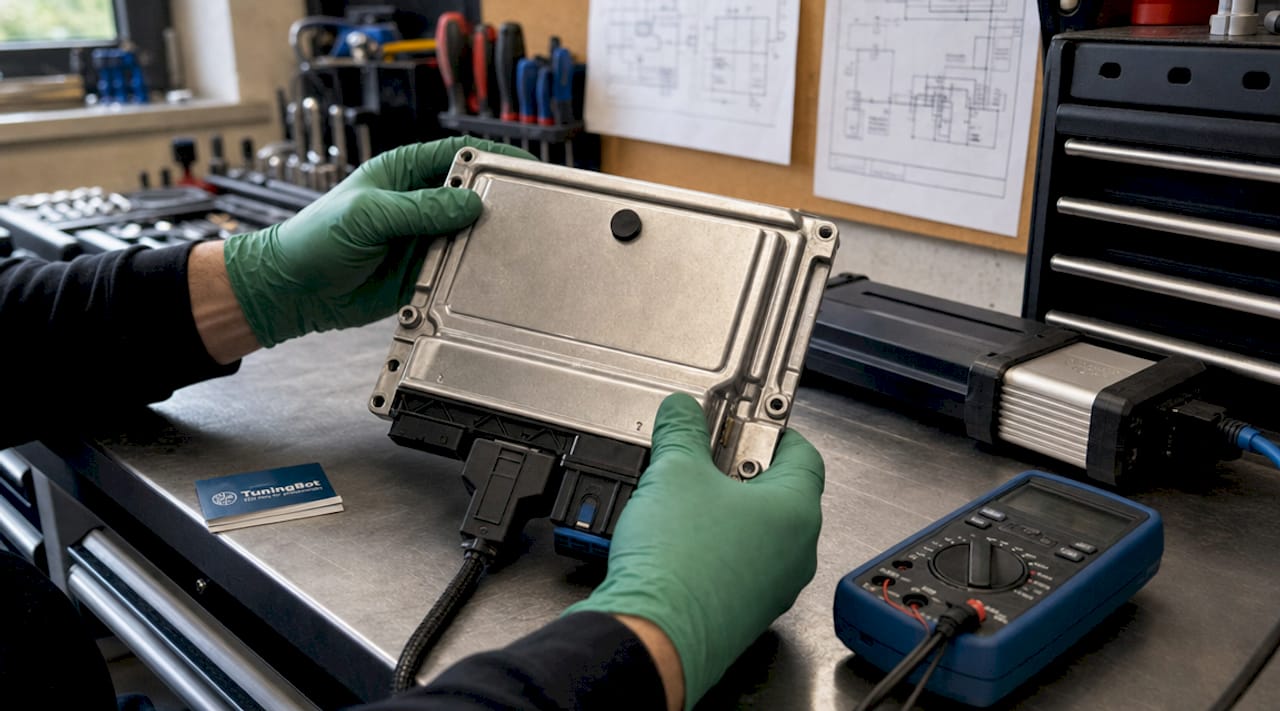
Das Bosch-Steuergerät MD1CS003, das in 1,5-BlueHDI-Motoren von Peugeot und Citroën verbaut ist, ist ein eindeutiges Beispiel für ein Steuergerät, das vom „Bench-mode“ abhängig ist. Gemäß dem von AutoTuner dokumentierten Arbeitsablauf erfordert dieses Steuergerät Entsperrung per Post Bevor Lese-/Schreibvorgänge an der Werkbank erfolgen können, mit einer Lesezeit von etwa 2 Minuten und einer Schreibzeit von 1 Minute nach dem Entsperren. Dieser Einsende-Schritt verschiebt den Auftrag von taggleichen auf mehrtägige Bearbeitung, was ein kritischer Planungsfaktor für jede Werkstatt ist.
Zu den wichtigsten Voraussetzungen für einen erfolgreichen Test des remap auf PSA-Steuergeräten gehören:
- Stabile, geregelte Stromversorgung des Steuergeräts während des gesamten Lese-/Schreibvorgangs
- Korrekte Steuergerätesteckerbelegungen, abgestimmt auf die spezifische Hardwarevariante
- Protokollauswahl basierend auf Steuergerätefamilie und Hardwareversion
- Checksum-Korrektur wird vor dem Zurückschreiben auf die modifizierte Datei angewendet
- Eine verifizierte Sicherungskopie der Originaldatei, die vor einer etwaigen Änderung gespeichert wurde
Pro-Tipp: Erstellen und speichern Sie vor jedem Schreibvorgang auf dem Prüfstand stets eine Sicherungskopie der Original-ECU auf einem separaten Laufwerk. Ein fehlgeschlagener Schreibvorgang ohne Sicherungskopie auf einem Bosch MD1CS003 kann dazu führen, dass die ECU unbrauchbar wird und eine Wiederherstellung auf Händler-Ebene erforderlich ist.
2. OBD remapping für Fahrzeuge der Marken Peugeot und Citroën
OBD remapping verbindet das tuning-Tool direkt mit dem 16-poligen Diagnoseanschluss des Fahrzeugs, ohne dass das Steuergerät ausgebaut werden muss. Dies ist die schnellste Zugriffsmethode und erfordert keine Demontage, was sie zur ersten Wahl für Werkstätten macht, die Wert auf Durchsatz legen. Der Nachteil ist jedoch, dass OBD-Auslesungen bei PSA-Steuergeräten oft unvollständig sind und Bootloader-Bereiche fehlen, die bench mode vollständig erfasst.
Der technische Prozess basiert auf der UDS-Kommunikation (Unified Diagnostic Services) und dem Austausch von Startschlüsseln nach dem SecurityAccess-Verfahren. OBD und Bench-Auslesen Dies hängt von genauen Protokollkenntnissen und korrekten Sicherheit-Authentifizierungssequenzen ab; ein fehlgeschlagener Seed-Key-Austausch führt dazu, dass die Sitzung abgebrochen wird, ohne dass Daten geschrieben werden. Aus diesem Grund benötigt tuners bei der Arbeit mit Steuergeräten von Peugeot und Citroën eine aktuelle und steuergerätespezifische Tool-Firmware.
Praktische Hinweise zu OBD remapping bei PSA-Fahrzeugen:
- Kompatible Steuergeräte: Continental SID208, SID209 und ausgewählte Bosch MEV17-Varianten unterstützen zuverlässige OBD-Auslesungen
- Geschwindigkeitsvorteil Da die ECU nicht ausgebaut werden muss, kann ein vollständiger Lese-modify-Schreib-Zyklus innerhalb eines einzigen Werkstattbesuchs abgeschlossen werden
- Anforderungen für Sicherheit: UDS SecurityAccess muss erfolgreich bestanden werden, bevor Lese- oder Schreibbefehle akzeptiert werden.
- Datenvollständigkeit OBD-Dumps schließen häufig Bootloader-Sektoren aus, was die Tiefe der Kalibrierung einschränkt
- Risikoprofil: Geringeres physikalisches Risiko als bei bench mode, jedoch erhöhen unvollständige Dumps die Wahrscheinlichkeit von checksum-Fehlpaarungen beim Write-Back.
Die Vollständigkeit der extrahierten Steuergerätedaten Dies hängt stark von der Extraktionsmethode ab, und bei OBD-Auslesungen können Bootloader-Bereiche fehlen, was die Möglichkeit eines sicheren Überschreibens beeinträchtigt. Für die Stage-1-Leistungssteigerung tuning bei einem Peugeot 208 GTi oder Citroën DS3 reicht der OBD-Zugriff in der Regel aus. Für umfangreichere Kalibrierungsarbeiten oder das Deaktivieren der Wegfahrsperre (IMMO Off) reicht er jedoch nicht aus.
3. Sicherheit: PIN-Ermittlung und Entsperren der Wegfahrsperre
Die Sicherheit-PIN-Extraktion ist eine Voraussetzung für die ECU-Codierung, die module-Virginisierung und das Deaktivieren der Wegfahrsperre (IMMO Off) bei Fahrzeugen der PSA-Gruppe. Ohne die korrekte PIN lehnt das Steuergerät jede Softwareanpassung außerhalb seines gekoppelten Wegfahrsperrennetzwerks ab. Dies ist kein tuning-Schritt im herkömmlichen Sinne. Es handelt sich um einen Sicherheit-bypass-Schritt, der tuning an gesperrten oder ausgetauschten Steuergeräten ermöglicht.
Die PSA Calculator Software übernimmt diese Funktion für Bosch-, Siemens- und Delphi-Steuergeräte im gesamten Peugeot- und Citroën-Sortiment. Das Werkzeug stellt Sicherheit-Codes wieder her und ermöglicht die Anpassung von Steuergeräten ohne Eingreifen des Händlers, einschließlich PIN-Extraktion, Steuergerät-Codierung und vollständiger module-Zurücksetzung auf Werkseinstellungen. Dies ist insbesondere dann relevant, wenn ein gebrauchtes Steuergerät in ein Spenderfahrzeug eingebaut wird oder wenn ein Steuergerät außerhalb des Händlernetzwerks ausgetauscht wurde.
Unterstützte Operationen mit dem PSA-Rechner sind:
- Wiederherstellung des PIN-Codes über BSI (Body Systems Interface) modules
- ECU-Kodierung zur Anpassung an das Wegfahrsperrenprofil eines neuen Fahrzeugs
- Modul-Jungfräulichkeit zum Zurücksetzen einer ECU in einen ungepaarten Zustand
- IMMO Aus für Rennstrecken- oder Wettkampfzwecke, wo die Wegfahrsperrenfunktion nicht benötigt wird
- Unterstützung für ECU-Familien von Bosch, Siemens und Delphi über mehrere PSA-model-Modelljahre hinweg
Pro-Tipp: Durch das Zurücksetzen einer Steuereinheit vor dem Einbau in ein Neufahrzeug entfällt bei den meisten Peugeot- und Citroën-Modellen aus der Zeit vor 2020 die Notwendigkeit einer Codierung durch den Händler. Dies spart sowohl Zeit als auch Kosten bei der Beschaffung von Ersatz-Steuereinheiten aus dem Altfahrzeugbestand.
4. Boot-mode-Extraktion für den erweiterten Zugriff auf das Steuergerät
Die Boot-mode-Extraktion erfordert physischen Zugriff auf bestimmte Pins auf der Leiterplatte des Steuergeräts, was in der Regel durch das Löten temporärer Verbindungen an die Boot-Schnittstelle des Prozessors erreicht wird. Diese Methode umgeht alle Sicherheitsmaßnahmen auf Softwareebene und liest den Speicher des Steuergeräts direkt auf Hardwareebene aus. Es handelt sich um die invasivste aller remapping-Zugriffsarten und birgt bei unsachgemäßer Durchführung das höchste Risiko einer Beschädigung des Steuergeräts.
Bei PSA-Steuergeräten mit aktiven Software-Sperren oder beschädigter Firmware ist boot mode oft der einzige gangbare Weg zur Wiederherstellung. Für den Boot-Vorgang über Boot mode ist physischer Lötzugang zum Steuergerät erforderlich, während JTAG zwar ein vollständiges Auslesen des Flash-Speichers ermöglicht, jedoch möglicherweise passwortgeschützt ist. Dieser Unterschied ist von Bedeutung, da eine passwortgeschützte JTAG-Schnittstelle den Zugriff weiterhin blockiert, während boot mode auf Hardware-Ebene nicht von einer Software-Authentifizierung abhängig ist.
Der Boot mode eignet sich für folgende Szenarien:
- Die ECU hat eine beschädigte oder ausgefallene OBD/Bench-Kommunikationsschnittstelle
- Die Software-Ebene Sicherheit verhindert, dass andere Zugriffsmethoden erfolgreich ausgeführt werden können
- Ein vollständiger Speicherabbild einschließlich Bootloader ist für eine kundenspezifische Kalibrierung erforderlich
- Das Steuergerät wird für eine individuelle Basiskarte von Grund auf vorbereitet
Diese Methode wird nicht für Standard-Steuergeräte des Typs tuning von Peugeot oder für routinemäßige Arbeiten an Citroën-Motoren des Typs remap empfohlen. Sie gehört in den Werkzeugkasten von Fachleuten, die sich mit beschädigten, gesperrten oder stark „modifizierten“ Steuergeräten befassen.
5. JTAG und Debug-Schnittstelle remapping
JTAG (Joint Test Action Group) ist eine Hardware-Debug-Schnittstelle, die in die meisten modernen ECU-Prozessoren integriert ist, darunter auch die Infineon-TriCore-Chips, die in den Bosch-EDC17- und MD1-Familien verwendet werden, die in PSA-Fahrzeugen zum Einsatz kommen. Für den Zugriff auf JTAG müssen die richtigen Testpads auf der ECU-Leiterplatte identifiziert und eine kompatible Debug-Sonde angeschlossen werden. Ist der Zugriff möglich, ermöglicht JTAG ein vollständiges Auslesen des Speichers einschließlich aller Flash-Sektoren und des Bootloader-Bereichs.
Die Einschränkung besteht darin, dass viele Serien-Steuergeräte werkseitig mit aktiviertem JTAG-Passwortschutz ausgeliefert werden. Eine passwortgeschützte JTAG-Schnittstelle blockiert den Lesezugriff vollständig, wodurch diese Methode als primärer tuning-Ansatz unzuverlässig ist, es sei denn, das Passwort ist bekannt oder die Steuergerätefamilie ist als entsperrt dokumentiert. Bei Peugeot und Citroën tuners eignet sich JTAG eher als forensisches oder Wiederherstellungswerkzeug denn als Standard-remapping-Workflow.
Im Vergleich zu boot mode ist JTAG weniger invasiv, da kein direktes Löten an die Prozessor-Pins erforderlich ist. Allerdings sind dafür fundiertere Elektronikkenntnisse erforderlich, um die richtigen Testpunkte zu identifizieren und die Debug-Sonde korrekt zu konfigurieren. Werkstätten ohne spezielle Elektronikkompetenz sollten sowohl boot mode als auch JTAG eher als Fachaufträge an Spezialisten weiterleiten, anstatt diese Arbeiten intern durchzuführen.
6. Vergleich der ECU-Typen remapping von Peugeot Citroën
Typen-Remapping für PSA-Steuergeräte Sie unterscheiden sich hauptsächlich hinsichtlich der Zugriffsmethode und des Sicherheit-Workflows und weniger hinsichtlich der gelieferten Endleistungsdiagramme. Die Wahl der falschen Methode für ein bestimmtes Steuergerät kann zu unvollständigen Daten, fehlgeschlagenen Schreibvorgängen oder unnötigen Ausfallzeiten des Fahrzeugs führen. Die folgende Tabelle fasst die vier wichtigsten Zugriffstypen in den für Werkstätten und tuners relevantesten Bereichen zusammen.
| Methode | Invasivität | Vollständigkeit lesen | Sicherheit-Anforderung | Standardmäßige Bearbeitungszeit |
|---|---|---|---|---|
| OBD | Keine | Teilweise (kein Bootloader) | UDS Seed-Schlüssel-Austausch | Am selben Tag |
| Bench mode | Niedrig (ECU-Entfernung) | Voll (mit Entsperrung) | Per Post einsenden zur Entsperrung einiger Steuergeräte | 1 bis 3 Tage |
| Boot mode | Hoch (Lötarbeiten erforderlich) | Vollständig | Keine (Hardware-Ebene) | Variable |
| JTAG | Medium (Leiterplatten-Sonde) | Voll (falls freigeschaltet) | Passwort kann den Zugriff blockieren | Variable |
Der KESS3 bench mode für SID212 bietet einen klaren betrieblichen Vorteil, da er die Durchführung von remapping-Vorgängen in der Werkstatt ermöglicht, ohne dass das Steuergerät eingeschickt werden muss, was sowohl die Kosten als auch die Ausfallzeiten des Fahrzeugs reduziert. Dies ist die Richtung, in die sich die Branche bewegt: die Erweiterung der Protokollunterstützung auf dem Prüfstand, um Steuergeräte abzudecken, für die bisher eine Freischaltung per Einsendung oder invasive Methoden erforderlich waren. TuningBot’s ECU-Service-Abdeckung hilft Werkstätten, unterstützte PSA-ECU-Familien, Services und Kompatibilität zu prüfen, bevor eine Datei gesendet wird.
Für die meisten Werkstätten, die Standard-Leistungsupgrades für Peugeot-Steuergeräte (tuning) oder Citroën-Steuergeräte durchführen, deckt OBD (remapping) die Arbeiten der Stage 1 effizient ab. Für neuere Steuergeräte mit eingeschränktem OBD-Zugriff ist der Einsatz des Bench mode erforderlich. „Boot mode“ und JTAG sind für die Wiederherstellung, maßgeschneiderte Konfigurationen oder Steuergeräte mit aktiven „Sicherheit“-Sperren reserviert.
Pro-Tipp: Wenn Ihre Werkstatt eine hohe Anzahl von PSA-Fahrzeugen bearbeitet, eliminiert die Investition in KESS3 mit den aktuellen Bench-Protokollen den Engpass des Einsendens für die meisten Bosch- und Continental-ECU-Familien. Die eingesparte Zeit über einen Monat hinweg rechtfertigt die Kosten für die Protokoll-Lizenz.
Das Wichtigste in Kürze
Der Hauptunterschied zwischen den verschiedenen Typen der Peugeot-Citroën-Steuergeräte remapping liegt in der Zugriffsmethode und nicht in der Kalibrierungsdatei. Die Wahl der richtigen Methode ist entscheidend sowohl für die Vollständigkeit der Daten als auch für die Bearbeitungszeit in der Werkstatt.
| Punkt | Einzelheiten |
|---|---|
| Die Bench mode ist am vollständigsten | Durch vollständige ECU-Auslesungen über bench mode werden Bootloader-Bereiche erfasst, die bei OBD-Verfahren übersehen werden. |
| OBD ist am schnellsten für Stage 1 | OBD remapping ist für Standard-Power-tuning geeignet, bei denen kein Zugriff auf den Bootloader erforderlich ist. |
| PIN-Extraktion schaltet Anpassungen frei | Der PSA Rechner ermöglicht IMMO Off und ECU Kodierung ohne Händlerintervention. |
| Boot mode und JTAG sind Spezialwerkzeuge | Reservieren Sie invasive Methoden nur für ECU-Projekte, die gesperrt, beschädigt oder Sonderanfertigungen sind. |
| Werkzeugunterstützung definiert, was möglich ist | KESS3 Bankprotokolle für SID212 und MD1CS003 erweitern die Werkstattkapazitäten im Jahr 2026. |
Warum die Wahl der Zugangsmethode wichtiger ist, als die meisten tuners-Nutzer zugeben
Ich habe erlebt, dass Werkstätten stundenlang versucht haben, einen fehlgeschlagenen Schreibvorgang bei einem Citroën C5 Aircross zu beheben, nur um dann festzustellen, dass die eigentliche Ursache ein unvollständiger OBD-Dump war, bei dem der Bootloader-Sektor fehlte. Die Kalibrierungsdatei war korrekt. Das Tool funktionierte. Die Methode war für dieses Steuergerät jedoch falsch. Genau in dieser Unterscheidung zwischen den Zugriffstypen liegen die meisten tuning-Fehler begründet, und sie wird in allgemeinen Anleitungen zum Programmieren von Steuergerät-Chips tuning, die alle remapping als gleichwertig behandeln, durchweg zu wenig betont.
Der Trend im Jahr 2026 ist klar: Werkzeughersteller erweitern ihre Bench-Protokolle gezielt, um die Abhängigkeit von Einsende-Entsperrdiensten zu reduzieren. Die Bench-Unterstützung des KESS3 für SID212 ist ein Beispiel dafür. Dies ist wichtig, weil ECU-Protokolle interpretieren und Daten korrekt lesen Es geht nicht nur darum, die richtige Datei zu haben. Es geht darum, einen vollständigen, verifizierten Lesevorgang zu haben, der ein sicheres und korrektes Zurückschreiben unterstützt. Partielle OBD-Dumps schaffen Haftungsrisiken für Werkstätten, die ihre Einschränkungen nicht im Voraus dokumentieren.
Für Autobesitzer, die einen Peugeot-Hochleistungsmotor tuning oder einen Citroën-Motor remap suchen, lautet der praktische Rat: Fragen Sie Ihren tuner, welche Zugriffsmethode er verwendet und warum. Ein tuner, der diese Frage nicht klar beantworten kann, arbeitet eindeutig nicht auf dem Niveau, das Ihr Steuergerät erfordert. Die besten tuners betrachten die Auswahl der Zugriffsmethode als erste technische Entscheidung und nicht als nachträglichen Einfall.
— TuningBot Technisches Team
Wie TuningBot die Peugeot- und Citroën-Steuergeräte remapping unterstützt
TuningBot bietet professionelle ECU-Dateien vom Typ tuning für Fahrzeuge der Marken Peugeot und Citroën aller gängigen remapping-Typen, einschließlich Stage 1, Stage 2, DPF Off, EGR Off, IMMO Off sowie DSG/TCU tuning. Die Plattform unterstützt die Steuergerätefamilien von Bosch, Continental, Delphi und Siemens, mit Dateiuploads direkt online verarbeitet ohne Registrierung oder Prepaid-Guthaben. TuningBot's ECU-Tuning-Dateidienst ist kompatibel mit Alientech KESS3, AutoTuner, Magic Motorsport und anderen führenden Tools, die bei PSA-Fahrzeugen mit dem Steuergerät tuning zum Einsatz kommen. Für Werkstätten, die ihre PSA-Protokollabdeckung im Jahr 2026 erweitern möchten, bietet TuningBot kalibrierte Dateien mit echter technischer Unterstützung und kurzen Bearbeitungszeiten.
FAQ
Welcher Typ des Steuergeräts remapping wird bei Peugeot-Fahrzeugen am häufigsten verwendet?
OBD remapping ist die gängigste Methode für die Standard-Peugeot-Steuergeräte der Baureihe tuning, da hierfür kein Ausbau des Steuergeräts erforderlich ist und der Vorgang innerhalb eines einzigen Werkstattbesuchs abgeschlossen werden kann. Bench mode kommt zum Einsatz, wenn die Steuergerätefamilie den OBD-Zugriff einschränkt oder ein vollständiges Auslesen des Speichers erfordert.
Führt die Verwendung von bench mode oder remapping zum Erlöschen der Peugeot- oder Citroën-Garantie?
Jede Änderung an den ECU-Kalibrierungsdaten, unabhängig von der Art des Zugriffs, kann zum Erlöschen der Herstellergarantie führen, wenn sie bei einer Wartung durch einen Vertragshändler festgestellt wird. Tuner sollten ihre Kunden darauf hinweisen, sich dieses Risikos bewusst zu sein, bevor sie mit einer Änderung vom Typ remap fortfahren.
Wozu dient der PSA-Rechner in der ECU remapping?
Der PSA Calculator extrahiert Wegfahrsperren-PINs und führt die ECU-Codierung sowie die Rückversetzung in den Auslieferungszustand für Peugeot- und Citroën-Module durch, wobei Steuergeräte von Bosch, Siemens und Delphi abgedeckt werden, ohne dass ein Zugriff auf Händlerebene erforderlich ist.
Wann ist boot mode bzw. remapping für Citroën-Steuergeräte erforderlich?
Der Boot mode ist erforderlich, wenn Zugriffsmethoden auf Softwareebene aufgrund einer beschädigten Firmware oder aktiver Sicherheit-Sperren versagen oder wenn für maßgeschneiderte Kalibrierungsarbeiten ein vollständiger Speicherauszug einschließlich des Bootloaders benötigt wird.
Welche Werkzeuge unterstützen bench mode und remapping für PSA-Steuergeräte im Jahr 2026?
Sowohl Alientech KESS3 als auch AutoTuner unterstützen bench mode-Protokolle für PSA-Steuergerätefamilien, darunter das Bosch MD1CS003 und das Continental SID212, wobei KESS3 als bemerkenswerte Protokollerweiterung für das Jahr 2026 die Unterstützung des SID212 im Labormodus hinzufügt.