

 EnglishEN
 ItalianoIT
 EspañolES
 PortuguêsPT
 FrançaisFR
 РусскийRU
Die ECU remapping ist eine der technisch anspruchsvollsten und lohnendsten Dienstleistungen, die ein Kfz-Fachmann anbieten kann, doch sie ist nach wie vor von Vorurteilen umgeben, die viele tuners-Anwender zur Vorsicht mahnen. Die Vorstellung, dass die Änderung der Werkskalibrierung automatisch zu Motorschäden führt, ist schlichtweg falsch, wenn die Arbeiten nach einem strukturierten, fahrzeugspezifischen Verfahren durchgeführt werden. Dieser Leitfaden behandelt, was die ECU remapping tatsächlich beinhaltet, wie der Prozess bei verschiedenen Tuning-Varianten stage abläuft, welche Leistungssteigerungen realistisch sind und wie man die richtige Dienstleistung oder das richtige Werkzeug für zuverlässige Ergebnisse auswählt. Ganz gleich, ob Sie als Enthusiast Ihre Optionen recherchieren oder als Werkstattbetreiber Ihren Arbeitsablauf optimieren möchten – die hier aufgeführten Details sind genau auf Sie zugeschnitten.
Inhaltsverzeichnis
- Das Wichtigste in Kürze
- Was ist ECU remapping und warum ist sie wichtig?
- So funktioniert die ECU remapping: Prozess und stages
- Vorteile und Risiken von ECU remapping
- Die Wahl des richtigen ECU remapping-Service
- ECU-remapping-Technologie im Jahr 2026
- Meine Einschätzung zum professionellen ECU-Remapping
- Erschließen Sie noch mehr Möglichkeiten mit den remapping-Dateidiensten von TuningBot
- FAQ
Das Wichtigste in Kürze
| Punkt | Einzelheiten |
|---|---|
| Werkseinstellungen lassen Raum für Wachstum | Hersteller kalibrieren konservativ für Emissionen und Zuverlässigkeit, nicht für Spitzenleistung. |
| Die Auswahl der Bühne hängt von der Hardware ab | Für die Auswahl von Stage 1, 2 oder 3 muss das remap an die tatsächlichen Modifikationen des Fahrzeugs angepasst werden. |
| Professional tuning ist sicher | Das Steuergerät tuning steigert die Leistung, wenn es innerhalb der fahrzeugspezifischen Grenzwerte eingesetzt wird und nicht gegen diese verstößt. |
| Dateispezifität ist nicht verhandelbar | Serienmäßige remap-Modelle ohne individuelle Anpassung können die Zuverlässigkeit und langfristige Lebensdauer des Motors beeinträchtigen. |
| Werkzeug- und Steuergerätekompatibilität ist wichtig | Das genaue Auslesen und Flashen von Steuergerätedaten erfordert die richtige Hardware und einen verifizierten Sensorstatus. |
Was ist ECU remapping und warum ist sie wichtig?
Das Steuergerät (ECU) ist das Software-Gehirn, das steuert, wie Ihr Motor in jedem Moment funktioniert. Moderne Fahrzeuge enthalten 80 bis über 100 Steuergeräte Koordinierung von Funktionen, die von der Kraftstoffeinspritzung und dem Zündzeitpunkt bis hin zum Ladedruck des Turbos boost und den Drehmomentgrenzwerten reichen. Wenn man diese Größenordnung versteht, wird klar, warum bereits eine dieser Einheiten (remapping) messbare Veränderungen in der Fahrleistung eines Fahrzeugs bewirkt.
ECU remapping bedeutet, die vorhandene Software-Kennlinie aus dem Steuergerät auszulesen, bestimmte Kalibrierungsparameter innerhalb dieser Kennlinie anzupassen und die überarbeitete Datei wieder in das Steuergerät zu schreiben. Ziel ist es, Werte anzupassen, die der Hersteller konservativ festgelegt hat, um Variablen zu berücksichtigen, auf die er keinen Einfluss hatte: Kraftstoffqualität in verschiedenen Märkten, extreme Temperaturbereiche, gesetzliche Emissionsvorgaben und die Planung von Wartungsintervallen. Keine dieser Einschränkungen gilt in gleichem Maße für jedes Fahrzeug in jedem Kontext – und genau hier schafft remapping einen echten Mehrwert.
Zu den wichtigsten ECU-Parametern, die remapping abdeckt, gehören:
- Einspritzzeitpunkt und -dauer für Verbrennungseffizienz
- Zündzeitpunktkennfelder um die Leistung ohne Detonation zu maximieren
- Druckvorgaben für den Turbolader boost und Wastegate-Regelung
- Drosselklappenansprechkennlinien für ein schärferes oder progressiveres Pedalgefühl
- Drehmomentbegrenzung vom Hersteller zum Schutz des Antriebsstrangs auferlegt
- Drehzahlbegrenzer und Vmax-Einstellungen wo rechtlich und mechanisch angemessen
- EGR- und DPF-Strategien für Fahrzeuge, für die eine Typgenehmigung für Abgaskomponenten erforderlich ist
Pro-Tipp: Bevor Sie einen remap durchführen, überprüfen Sie die ECU-ID anhand der Datei, die Sie flashen möchten. Die Übereinstimmung der ECU-ID korrekt verhindert das Flashen von nicht übereinstimmenden Kalibrierungsdaten, was eine der am leichtesten vermeidbaren Ursachen für Probleme nach dem remap-Vorgang ist.
So funktioniert die ECU remapping: Prozess und stages
Um zu verstehen, wie man eine ECU nach dem remap-Verfahren kalibriert, muss man den physikalischen Vorgang von den Kalibrierungsentscheidungen trennen. Beide Aspekte sind gleichermaßen wichtig, und Fehler in einem der beiden Bereiche führen zu schlechten Ergebnissen.
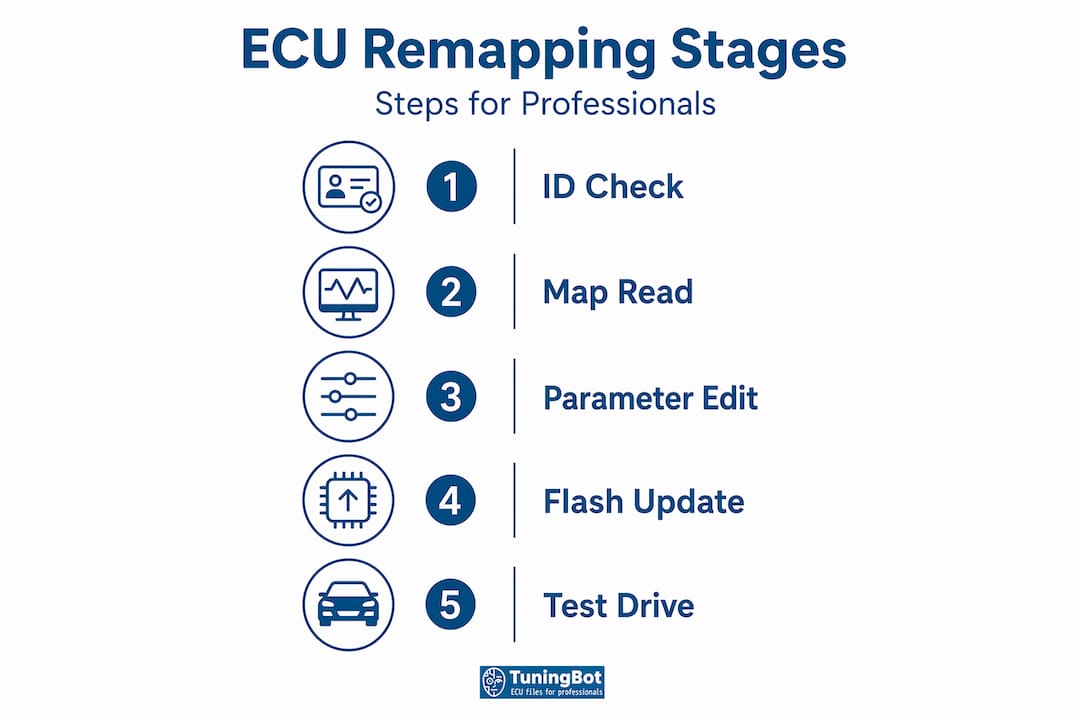
Der Standard-Workflow remapping umfasst folgende Schritte:
- Prüfung vor remap — Überprüfen Sie den Zustand des Motors, suchen Sie nach aktiven Fehlercodes (DTCs) und kontrollieren Sie den Zustand der Sensoren, Einspritzdüsen und des Turboladers. Wird ein remap an einem Fahrzeug mit einem defekten MAP-Sensor oder verschlissenen Einspritzdüsen eingesetzt, liefert er bestenfalls ungenaue Ergebnisse.
- ECU-Auslese — Verbindung über OBD-Anschluss oder direkte Verbindung auf der Werkbank mit einem Werkzeug wie Alientech KESS3, AutoTuner, oder PCMFlash. Lesen Sie die vollständige ECU-Binärdatei, einschließlich der Kalibrierungszone und geschützter Speicherbereiche.
- Datei modification — Öffnen Sie die Binärdatei in der ECU-Software remapping, identifizieren Sie die Kalibrierungstabellen und passen Sie die Zielparameter an. Hier entscheidet das Fachwissen im Bereich tuner über die Qualität des Ergebnisses.
- Checksum-Korrektur — Nach jeder Modifikation muss die Datei checksum neu berechnet und validiert werden. Für eine ordnungsgemäße Firmware-Analyse ist die Überprüfung der CRC32-Werte checksums erforderlich. nach Kalibrierungsänderungen zur Wahrung der Integrität des Steuergeräts.
- Datei flashen — Schreiben Sie die modifizierte Datei über dieselbe Schnittstelle, die zum Auslesen verwendet wurde, zurück in das Steuergerät.
- Nach-Flash-Test — Fahrversuch oder Rollenprüfstandprüfung zur Überprüfung des reibungslosen Motorbetriebs, des Fehlens von Fehlercodes und der erfüllten Leistungsziele.
Bühnenunterschiede erklärt
| Bühne | Hardware-Anforderung | Typische Leistungssteigerung | Häufige Modifikationen |
|---|---|---|---|
| Stage 1 | Lagerhardware | Anstieg bei 15–30% | Boost-, Kraftstoff- und Zündkennfelder |
| Stage 2 | Verbesserte Ansaugung/Auspuff | Anstieg von 25–45% | Stage 1 plus Drehmomentbegrenzer, Luftmassenmesser Skalierung |
| Stage 3 | Turbo-/Injektor-Upgrades | 50%+ Erhöhung | Vollständige Kalibrierungsüberarbeitung, Kraftstoffstrategie umstellen |
Der remapping-Prozess umfasst das Einlesen der ursprünglichen ECU-Kennfelddaten (original), die Anpassung von Parametern wie Kraftstoffkennfeld und boost-Steuerung, das Hochladen des neuen Kennfelds sowie die Überprüfung der gleichmäßigen Motorleistung. Insbesondere die Arbeiten der Stage 3 erfordern die Neugestaltung großer Teile der Kalibrierung von Grund auf, um sie an die verbesserte Hardware anzupassen – eine Aufgabe, die sich grundlegend von einer Stage-1-Anpassung und einer Zündzeitpunktkorrektur unterscheidet.

Für Fachleute, die mit Bosch-Steuergeräten arbeiten, erfordern die remapping-Schritte zusätzliche Fachkenntnisse. Die Bosch-Steuergeräte MED17 und EDC17 nutzen die Tricore-Architektur mit einem segmentierten 32-Bit-Adressraum, in dem Kalibrierungszonen durch Entropieanalyse und binäre Visualisierung identifiziert werden. Tools wie Ghidra ermöglichen eine genaue Abbildung der Speicherbereiche vor der Kalibrierung, was für eine sichere und präzise Anpassung bei diesen Steuergerätefamilien entscheidend ist.
Pro-Tipp: Bei der Arbeit an komplexen Steuergeräten wie dem Bosch MED17 ist es ratsam, vor der Bearbeitung eine Binärvisualisierung zu verwenden, um sicherzustellen, dass Sie die richtige Kalibrierungszone anvisieren. Eine falsche Identifizierung eines Kalibrierungsbereichs als Code-Speicher wird die Datei beschädigen.
Vorteile und Risiken von ECU remapping
Die Leistungsvorteile der ECU remapping sind umfassend dokumentiert. Durch das Remapping werden die Begrenzungen des Steuergeräts angepasst, um Leistung, Drehmoment und Beschleunigung zu verbessern. in Fahrzeugen der Oberklasse, und diese Vorteile verstärken sich noch, wenn das Fahrzeug bereits über die entsprechende Hardware verfügt. Über die reine Leistung hinaus verbessern richtig kalibrierte remaps das Ansprechverhalten des Gaspedals, verringern das Turboloch und verbessern bei einigen Dieselanwendungen die Kraftstoffeffizienz im Teillastbereich durch die Optimierung des Verbrennungszeitpunkts.
Häufige Vorteile, die Fachleute nach der Einführung von remap beobachten:
- Gesteigerte Spitzenleistung und Drehmoment
- Verbesserte Kraftstoffeffizienz im Teillastbereich bei Dieselmotoren
- Schärferes und lineareres Ansprechverhalten des Gaspedals
- Entfernung von herstellerseitig eingebauten Geschwindigkeitsbegrenzern, wo gesetzlich zulässig
- Bessere Leistung bei ausgeschalteter AGR und reduzierte Kohlenstoffablagerungen bei entsprechenden Fahrzeugen
Die Risiken bei der ECU remapping sind real, sie sind jedoch fast ausschließlich auf eine mangelhafte Ausführung zurückzuführen und nicht auf den Prozess selbst. Ausfälle des Steuergeräts tuning resultieren in der Regel aus der Überschreitung der Hardware-Grenzen eines Fahrzeugs und nicht aus dem tuning-Prozess selbst. Ein Motor mit verschlissenen Kolbenringen oder ein Turbolader, der außerhalb seines effizienten Betriebsbereichs läuft, verträgt keine zusätzliche boost, unabhängig davon, wie genau die Kalibrierung ist.
“Billige remap-Geräte weisen oft die Sicherheitsparameter eines bypass auf und erhöhen das Risiko von Motorschäden; bei professionellen tuning-Geräten muss vor dem remapping die Fahrzeugverkabelung und die Sensoren überprüft werden.” – „Remapping eines Autos: Ein umfassender Leitfaden“
Anzeichen für einen defekten oder unsicheren remap sind unter anderem anhaltende Fehlzündungen unter Last, übermäßiger Abgasrauch nach tuning, neue DTCs, die nach einem Flash ohne hardwareseitige Ursache auftreten, sowie ungewöhnliche Kraftstofftrimmwerte. Jeder dieser Punkte rechtfertigt eine sofortige Überprüfung der Kalibrierungsdatei. Die Durchführung einer umfassenden Fahrzeugzustandsprüfung, einschließlich einer Überprüfung der Verkabelung und der Sensorkalibrierung, bevor man sich an das Steuergerät wagt, ist gängige Praxis. Die Checkliste für den Kauf eines Ersatzmotors von Engine Zone umreißt die Arten von mechanischen Prüfpunkten, die gleichermaßen für die Vorbereitung vor dem remap gelten, insbesondere bei Fahrzeugen mit hoher Laufleistung.
Die Wahl des richtigen ECU remapping-Service
Für Werkstätten, die remapping-Optionen prüfen, ist der Unterschied zwischen einer professionellen Datei und einem generischen Download von der Stange erheblich. Tuning-Dateien müssen fahrzeugspezifisch sein. Standardmäßige remap-Dateien ohne individuelle Anpassung bergen das Risiko von Motorschäden und einer verminderten Zuverlässigkeit, da sie Produktionsschwankungen bei der Kraftstoffzufuhr, Sensorabweichungen oder regionale Unterschiede in der Kraftstoffqualität nicht berücksichtigen können.
Die besten remapping-Dienstleistungen für Werkstätten bieten einen festgelegten map file-Upload-Prozess für Steuergeräte: Das tuner liest die ursprüngliche ECU-Binärdatei aus dem Fahrzeug aus, lädt diese spezifische Datei auf die Serviceplattform hoch und erhält eine kalibrierte Datei, die auf der Grundlage der tatsächlichen Fahrzeugdaten und nicht anhand einer generischen Basiskarte erstellt wurde. Dieser Arbeitsablauf stellt sicher, dass die remap den aktuellen Zustand des Fahrzeugs berücksichtigt und nicht eine idealisierte Werksspezifikation.
Bei der Bewertung einer Dienstleistung sind folgende Kriterien zu berücksichtigen:
- Unterstützt der Dienst Ihre ECU-Hardware? Bosch, Continental, Delphi, Marelli, Denso, Siemens und ZF erfordern alle spezifische Werkzeugkompatibilität.
- Ist die Lieferzeit von Dateien mit Ihrem Werkstattablauf vereinbar?
- Bietet der Service echten Ingenieur-Support für technische Fragen?
- Werden EGR-Aus-Funktionen (remapping), DPF-Aus-Funktionen und andere emissionsbezogene Funktionen unterstützt?
Zur Abdeckung und zum Workflow-Kontext, sehen Sie sich die TuningBot Solutions Upgrade und der Leitfaden zu Wie ein professionelles tuner-Gerät ECU-Daten ausliest. Korrekte Messwerte, Überprüfungsschritte, Sensorprüfungen und die Kontrolle der Speicherintegrität (integr) unterscheiden konsistente Werkstattergebnisse von unvorhersehbaren Ergebnissen.
Pro-Tipp: Bei Dieselfahrzeugen, bei denen eine vollständige Deaktivierung der EGR-Funktion (remapping) erforderlich ist, muss vor dem Flashen einer EGR-Deaktivierungsdatei stets sichergestellt werden, dass das physische EGR-Ventil entweder ausgebaut oder mechanisch blockiert ist. Eine Software-Deaktivierung bei einem intakten und funktionsfähigen EGR-Ventil führt zu widersprüchlichen Rückkopplungen im Regelkreis, wodurch Fehlercodes ausgelöst werden.
ECU-remapping-Technologie im Jahr 2026
Die remapping-Branche im Jahr 2026 zeichnet sich durch eine erweiterte ECU-Abdeckung sowie schnellere und sicherere Auslesemethoden aus. Die bedeutendste Entwicklung für Werkstätten ist die zunehmende Unterstützung des „Bench Flashing“ für verschiedene Steuergerätefamilien, für die bisher invasive Auslesemethoden erforderlich waren. Dies verringert das Risiko einer Beschädigung der Steuergeräte während des Lese-/Schreibzyklus und erweitert das Spektrum an Fahrzeugen, die eine Werkstatt ohne zusätzliche Spezialausrüstung warten kann.
Die neuen tuning-Lösungen für 2026 erweitern die Abdeckung und Integration des remapping-Steuergeräts auf weitere Steuergeräte- und TCU-Varianten, sodass Werkstätten nun Kalibrierungsdienstleistungen für Fahrzeugmodelle anbieten können, deren Abstimmung noch vor zwölf Monaten wirtschaftlich nicht rentabel war. Die ECU-remapping-Software ist zudem im Umgang mit verschlüsselten Steuergeräten ausgereifter geworden und verfügt nun über verbesserte Protokolle zum Entsperren und Patchen geschützter Kalibrierungsbereiche auf neueren Plattformen.
Reverse-Engineering-Tools erweitern weiterhin die fachliche Tiefe im Bereich remapping, insbesondere für die Steuergerätefamilien von Bosch und Continental, bei denen die werkseitige Verschlüsselung den Zugriff auf Kalibrierungsfunktionen bisher eingeschränkt hat. Fachleute, die in das Verständnis der Steuergerätearchitektur auf Binärebene investieren, verschaffen sich einen erheblichen technischen Vorteil, und die dafür erforderlichen Werkzeuge sind im Jahr 2026 leichter zugänglich als jemals zuvor.
Meine Einschätzung zum professionellen ECU-Remapping
Ich habe erlebt, wie tuning-Projekte schiefgelaufen sind, und in fast allen Fällen lag die eigentliche Ursache nicht im remap selbst. Es war die Entscheidung, die Vorbereitungsarbeiten zu überspringen. Fahrzeuge mit defekten Einspritzdüsen, unbehobenen Sensorfehlern oder überfälligen Wartungsintervallen reagieren nicht gut auf zusätzliche Kalibrierungsanforderungen, unabhängig davon, wie genau die Datei ist.
Was ich an ECU remapping aus fachlicher Sicht besonders wertschätze, ist, dass dieses System die Vorbereitung stärker belohnt als jeder andere Service in einer Werkstatt. Ein gut vorbereitetes Fahrzeug, das anhand fahrzeugspezifischer Daten korrekt ausgelesen und abgestimmt wurde, liefert konsistente und wiederholbare Ergebnisse. Die tuners-Techniker, die sich einen guten Ruf aufbauen, sind nicht diejenigen mit dem aggressivsten Kalibrierungsstil. Es sind diejenigen, die die ECU remap als letzten Schritt eines disziplinierten Prozesses betrachten und nicht als Abkürzung dorthin.
Zuverlässigkeit des Steuergeräts tuning ist ein Konzept, das Sie sorgfältig lesen sollten, wenn Sie einen remapping-Service aufbauen. Die Erwartung, dass tuning garantierte Ergebnisse liefert, ist ein Mythos, den die Branche noch nicht vollständig ausgeräumt hat, und wenn man gegenüber Kunden ehrlich ist, was Kalibrierung leisten kann und was nicht, schafft dies weitaus mehr langfristiges Vertrauen als übertriebene Versprechungen.
— TuningBot Technisches Team
Erschließen Sie noch mehr Möglichkeiten mit den remapping-Dateidiensten von TuningBot
TuningBot wurde speziell für Werkstätten und professionelle Tuner entwickelt, die zuverlässige, fahrzeugspezifische ECU-Kalibrierungsdateien ohne administrativen Aufwand benötigen. Es ist keine Registrierung erforderlich. Es gibt keine im Voraus bezahlten Guthabenpakete. Sie laden die Original-ECU-Binärdatei hoch, geben Ihre Serviceanforderungen an und erhalten eine professionell kalibrierte Datei, die durch echten technischen Support unterstützt wird.
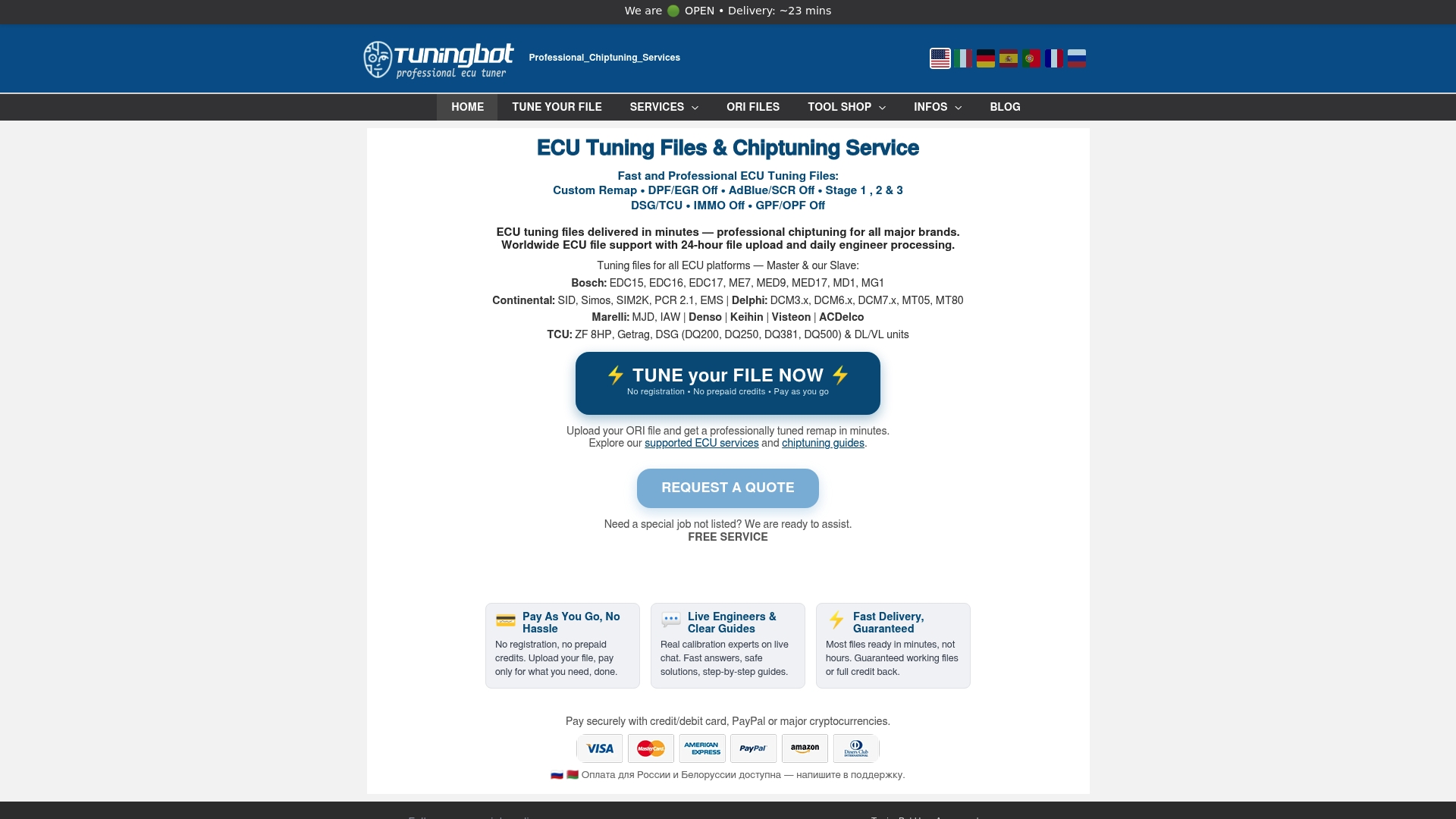
Die Plattform deckt die ECU- und TCU-Familien von Bosch, Continental, Delphi, Marelli, Denso, Siemens, Keihin und ZF abdeckt und Unterstützung für die Stages 1 bis 3, EGR-Deaktivierung, DPF-Deaktivierung, AdBlue/SCR-Deaktivierung, IMMO-Deaktivierung, DSG/TCU tuning und vieles mehr bietet. Das Upgrade der 2026-Lösungen bietet eine erweiterte Abdeckung und neue Funktionen, die mehr Fahrzeugmodelle als je zuvor für die Kalibrierung zugänglich machen. Um das gesamte Spektrum zu erkunden, ECU tuning-Dateidienste, prüfe ECU-Service-Abdeckung und reichen Sie Ihre Datei über Datei tunen.
FAQ
Was ist ECU-Remapping?
ECU remapping bezeichnet den Vorgang, bei dem die Softwarekalibrierung eines Motorsteuergeräts ausgelesen wird, um Parameter wie den Einspritzzeitpunkt, den Einspritzdruck und die Drehmomentgrenzwerte anzupassen und anschließend die aktualisierte Datei wieder auf das Steuergerät zu flashen, um die Leistung und Effizienz des Fahrzeugs zu verbessern.
Wie viel kostet ein ECU remap?
Die Kosten für die ECU remap variieren je nach Fahrzeugtyp, Tuning stage, und dem Dienstleister und liegen in der Regel zwischen $200 und $800 für ein Stage-1-remap-Tuning in einer professionellen Werkstatt, wobei die Preise für Stage-2- und Stage-3-Dateien aufgrund der höheren Komplexität der Kalibrierung höher sind.
Ist das ECU-Remapping für meinen Motor geeignet?
Eine professionelle ECU-remapping-Maßnahme ist unbedenklich, wenn sie an einem mechanisch einwandfreien Fahrzeug innerhalb der Hardware-Grenzen durchgeführt wird. Mythen über Schäden durch die ECU-tuning-Maßnahme sind in erster Linie auf mangelhafte Ausführung oder auf die Anwendung von remap-Maßnahmen an Fahrzeugen mit bereits bestehenden mechanischen Problemen zurückzuführen.
Wie läuft der Upload-Vorgang für die ECU remap file ab?
Der Vorgang umfasst das Auslesen der ursprünglichen ECU-Binärdatei aus dem Fahrzeug mithilfe eines kompatiblen Tools, das Hochladen dieser Datei auf eine remapping-Serviceplattform sowie den Erhalt einer kalibrierten Ersatzdatei, die auf der Grundlage der tatsächlichen Fahrzeugdaten erstellt wurde.
Was sind die Schritte zur Bosch-Steuergerät-remapping-Programmierung für Fachleute?
Die Schritte für das Bosch-ECU-Remapping umfassen das Einlesen der vollständigen Binärdatei des Steuergeräts über OBD oder eine Prüfstandsschnittstelle, die Identifizierung von Kalibrierungszonen mittels Entropieanalyse oder Binärvisualisierung, die Anpassung der Zielparameter, die Validierung des CRC32 checksum sowie das erneute Flashen der verifizierten Datei auf das Steuergerät.