

 ItalianoIT
 DeutschDE
 EspañolES
 PortuguêsPT
 FrançaisFR
 РусскийRU
VAG Group ECU tuning is defined as the software recalibration of engine control units across Volkswagen, Audi, SEAT, and Škoda vehicles, classified into Stage 1, Stage 2, and Stage 3 tiers based on calibration depth and hardware requirements. Each stage represents a distinct level of modification, from a pure software remap to a full hardware and software overhaul. Workshops and enthusiasts using tools like AutoTuner, CMD Flash, and Alientech KESS3 need to understand these distinctions before touching a VAG ECU file. The types of VAG Group ECU tuning you choose directly determine power output, component stress, and long-term reliability.
1. What distinguishes Stage 1, Stage 2, and Stage 3 VAG ECU tuning?
Stage 1 is a software-only remap that adjusts boost targets, ignition timing, fuel mapping, and knock control without any hardware changes. The ECU file is rewritten to push parameters closer to the engine’s actual mechanical limits, which the manufacturer deliberately left conservative. No intercooler, exhaust, or intake modification is required. This makes Stage 1 the most accessible VAG tuning option for daily drivers and workshops handling high volumes.
Stage 2 builds directly on Stage 1 by pairing the software remap with supporting hardware upgrades. A larger intercooler, a high-flow exhaust, and an upgraded intake are standard Stage 2 additions on VAG platforms like the EA888 and EA113 engines. The ECU calibration is then written to take full advantage of those hardware changes. Without the hardware, the Stage 2 file produces no additional benefit over Stage 1.
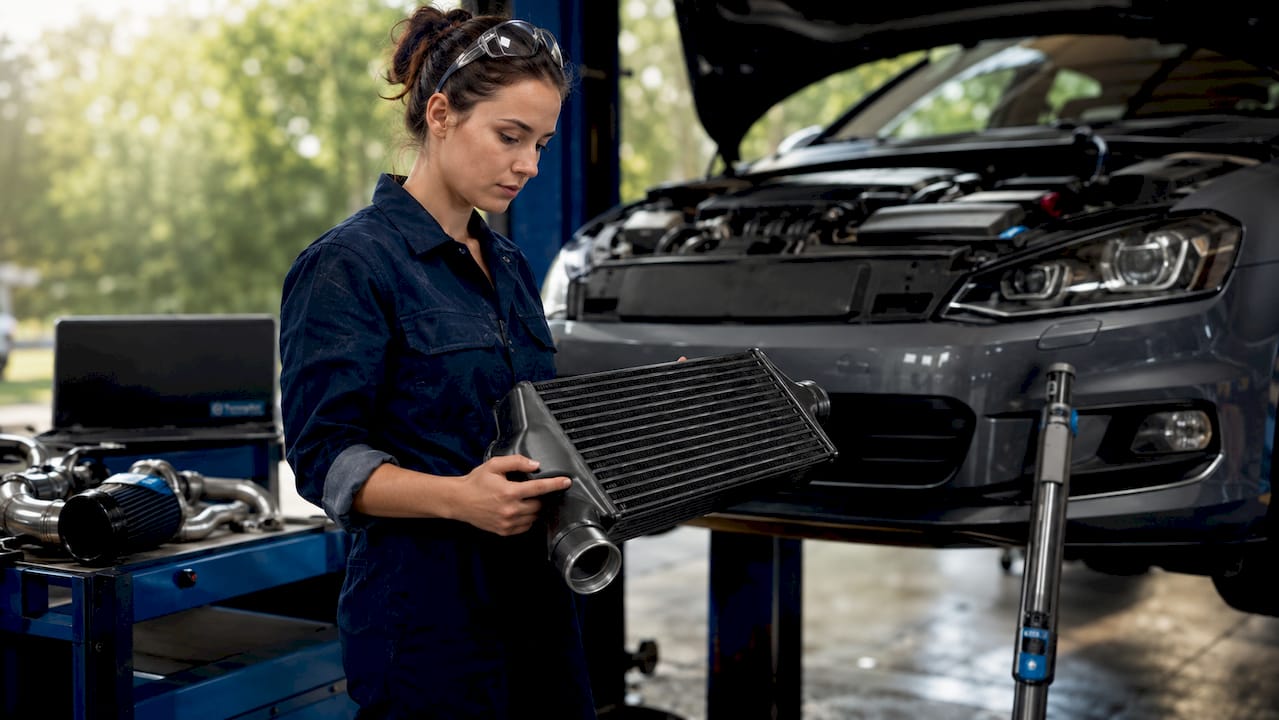
Stage 3 requires extensive hardware changes and aggressive software recalibration. Upgraded turbochargers, fueling systems, and drivetrain components are typical prerequisites. The ECU file at this level manages parameters far outside OEM boundaries, placing significant stress on the engine, transmission, and cooling system. Stage 3 is suited to dedicated performance builds, not street vehicles used daily.
| Stage | Hardware required | Calibration depth | Typical use case |
|---|---|---|---|
| Stage 1 | None | Moderate | Daily driver, stock hardware |
| Stage 2 | Intercooler, exhaust, intake | High | Performance street build |
| Stage 3 | Turbo, fueling, drivetrain | Aggressive | Track and competition builds |
Pro Tip: Always confirm the vehicle’s hardware list before selecting a stage. Writing a Stage 2 file onto a stock hardware car produces no extra power and can trigger fault codes.
2. Which ECU tuning access methods are used in VAG tuning?
The three primary ECU access methods for VAG vehicles are OBD tuning, bench tuning, and boot mode tuning. Each method determines how deeply a tuner can read and write the ECU, and the right choice depends on the ECU type and its security architecture.
OBD tuning connects directly to the vehicle’s OBD-II port without removing the ECU. It is the fastest method and works well for Stage 1 remaps on most Bosch and Continental ECUs found across the VAG range. The limitation is that OBD access is restricted on newer ECUs with advanced security protocols.
Bench tuning requires ECU removal and direct connection to a flash tool on a workbench. This method gives the tuner full read and write access to the ECU memory, making it suitable for Stage 2 and Stage 3 work where complete calibration control is needed. Bench tuning also reduces the risk of communication errors that can occur through the OBD port.
Boot mode tuning is the most advanced method, requiring the ECU case to be opened for direct connection to the processor or memory chip. This bypasses all ECU security restrictions. Boot mode is used when OBD and bench methods are blocked by the ECU’s security layer, which is increasingly common on newer VAG platforms.
Key considerations when selecting an access method:
- OBD: fast, no ECU removal, limited to ECUs without high-security restrictions
- Bench: ECU removed, full memory access, required for deep Stage 2 and Stage 3 calibrations
- Boot mode: ECU opened, processor-level access, used when other methods are blocked
- Method choice depends on ECU security, not just convenience
Pro Tip: Verify the ECU hardware number and software version before selecting your tool and method. Using the AutoTuner OBD, bench, and boot guide helps confirm which access mode applies to each VAG ECU variant.
3. How do emissions system deletes relate to VAG ECU tuning?
Emissions deletes are software modifications that disable specific emissions control systems through ECU file edits. On VAG vehicles, the two most common are EGR delete and AdBlue delete, both of which are handled entirely at the software level without physical component removal.
EGR delete modifies the ECU file to stop the engine management system from interacting with the EGR valve, clearing related fault codes in the process. This is often requested on high-mileage diesel VAG engines where EGR valve failure is a recurring issue. The software edit prevents the ECU from commanding EGR operation, effectively disabling the system without touching the hardware.
AdBlue delete removes the AdBlue fluid requirement by disabling the SCR system through ECU calibration changes. Legality depends entirely on how the vehicle is used. On public roads in the UK and across most of Europe, both EGR and AdBlue deletes are illegal for registered road vehicles. On off-road machinery, agricultural equipment, and dedicated motorsport vehicles, these modifications are generally permitted.
Workshops handling emissions delete requests should note the following:
- EGR delete: software-only, resolves recurring fault codes, illegal on UK public roads
- AdBlue delete: disables SCR and NOx reduction, lawful on non-road vehicles
- Insurance implications: emissions deletes can void standard vehicle insurance policies
- Track and off-road calibrations carry separate legal and compliance considerations
- Full EGR delete professional guidance covers compliance requirements in detail
4. How to choose the right VAG ECU tuning type for your vehicle and goals
Selecting the correct tuning type starts with an honest assessment of the vehicle’s current hardware condition and the owner’s performance goals. A worn engine with high mileage is not a good candidate for Stage 2 or Stage 3 calibration, regardless of the desired power output.
For workshops advising clients, the decision tree is straightforward. Stock hardware with a reliable engine points to Stage 1. A vehicle already fitted with an upgraded intercooler and exhaust is ready for Stage 2 calibration. A dedicated track or competition build with turbo and fueling upgrades warrants Stage 3. Stage labels represent calibration depth tied directly to hardware upgrades and component stress, so mismatching the two creates reliability problems.
The access method follows from the stage choice. Stage 1 on most VAG platforms is achievable via OBD. Stage 2 and Stage 3 work typically requires bench access or boot mode, depending on the ECU security level. Correct ECU identification is the first step before any method is selected. Wrong ECU identification wastes time, risks file errors, and can damage the ECU.
A practical selection framework for workshops:
- Confirm ECU hardware number and software version before any work begins
- Assess current hardware: intercooler, exhaust, intake, fueling, and drivetrain condition
- Match the stage to the hardware already installed, not the hardware the customer plans to install
- Select the access method based on ECU security constraints, not convenience
- For VAG petrol builds, review the petrol remapping stage guide for platform-specific gain expectations
Pro Tip: Budget-focused clients get the best return from Stage 1 on a well-maintained stock car. Performance-focused clients should complete all hardware upgrades before the ECU file is written, not after.
5. DSG and TCU tuning as a complement to ECU remapping
DSG and TCU tuning is a separate but closely related calibration type that modifies the transmission control unit rather than the engine ECU. On VAG Group vehicles equipped with the DQ250 or DQ381 DSG gearbox, TCU calibration adjusts shift speed, clutch pressure, torque limits, and launch control parameters.
TCU tuning becomes particularly relevant at Stage 2 and Stage 3, where the stock transmission calibration becomes a bottleneck. The DQ250 gearbox, for example, has OEM torque limits that restrict the transmission’s ability to handle Stage 2 power levels without slipping. A TCU remap raises those limits to match the engine output. The BorgWarner DSG clutch repair kit is a common hardware pairing for workshops doing Stage 2 DSG work on VW and Audi platforms.
TCU tuning is handled through the same OBD, bench, and boot access methods as ECU tuning. The ZF and Bosch TCU units found in VAG vehicles each have their own security protocols, so method selection follows the same logic as engine ECU work. TuningBot supports TCU remapping across major VAG transmission units, with dedicated TCU remapping guidance available for workshops.
6. Pop and bang, Vmax removal, and other specialty VAG tuning types
Beyond the three main stages, several specialty calibration types are commonly requested on VAG Group vehicles. Pop and bang (also called anti-lag or crackle map) modifies ignition timing and fuel delivery on overrun to produce exhaust pops. Vmax removal deletes the factory speed limiter from the ECU file. DTC removal clears specific fault codes that would otherwise trigger the check engine light after hardware modifications.
These specialty types are not standalone tunes. They are additions written into an existing Stage 1, Stage 2, or Stage 3 file. A pop and bang map applied to a stock Stage 1 file is common on VAG hot hatches like the Golf GTI and Audi S3. Vmax removal is most relevant on German-market VAG vehicles with a 155 mph factory limiter. DTC removal is standard practice after any emissions delete or sensor bypass.
IMMO Off is another VAG-specific calibration type used in engine swap scenarios or when the immobilizer system has failed. It removes the immobilizer function from the ECU file, allowing the engine to start without the original key transponder. This is a workshop-level operation requiring verified ECU identification and careful file handling.
Key takeaways
VAG Group ECU tuning is most effective when the calibration stage is matched precisely to the vehicle’s installed hardware and the access method is chosen based on ECU security constraints, not convenience.
| Point | Details |
|---|---|
| Stage selection follows hardware | Choose Stage 1 for stock cars, Stage 2 after hardware upgrades, Stage 3 for full performance builds. |
| Access method depends on ECU security | OBD works for most Stage 1 work; bench and boot mode are needed for deeper calibrations. |
| ECU identification comes first | Verify ECU hardware number and software version before selecting any tuning method or file. |
| Emissions deletes carry legal risk | EGR and AdBlue deletes are illegal on UK public roads but permitted on off-road and motorsport vehicles. |
| TCU tuning completes the package | DSG calibration is required at Stage 2 and above to prevent transmission torque limiting. |
What I’ve learned from years of VAG ECU work
The most common mistake I see in workshops is skipping ECU identification and going straight to the flash. Experienced tuners verify ECU version and condition before deciding whether to read first or write directly. That single step prevents the majority of failed flashes and bricked ECUs. It takes two minutes and saves hours of recovery work.
The second pattern I keep seeing is clients requesting Stage 2 files before their hardware is actually installed. The file gets written, the car feels no different, and the workshop gets blamed. The fix is simple: hardware first, calibration second, always. This is not a preference. It is the correct sequence.
On the software side, the tools have improved significantly. AutoTuner’s boot mode coverage for newer VAG platforms like the MED17 and EDC17 has expanded the range of vehicles that workshops can handle in-house without sending ECUs out. That shift has changed the economics of VAG tuning for smaller operations. Workshops that invest in boot mode capability now handle jobs that previously required specialist subcontracting.
For enthusiasts, the most underrated VAG tuning option remains a well-calibrated Stage 1 on a healthy engine. The gains are real, the risk is minimal, and the daily driving experience improves noticeably. Stage 3 gets the attention, but Stage 1 is where the volume and the value actually live.
TuningBot’s VAG Group ECU tuning solutions
TuningBot delivers professional ECU and TCU remapping files for the full range of VAG Group vehicles, covering Stage 1, Stage 2, Stage 3, DSG tuning, EGR Off, AdBlue Off, DTC removal, IMMO Off, and specialty calibrations including pop and bang and Vmax removal.
The platform supports all major VAG ECU hardware including Bosch MED17, EDC17, and Continental Simos units, with file delivery via Alientech KESS3, AutoTuner, Magic Motorsport, CMD, and PCMFlash. No registration or prepaid credits are required. Workshops upload the ECU file directly and receive a calibrated file with real engineer support. The 2026 ECU tuning solutions page lists the latest supported VAG integrations and updated calibration options. For workshops building out their VAG tuning service, the full ECU remapping service covers every stage and specialty type across the VAG platform range.
FAQ
What are the main types of VAG Group ECU tuning?
The main types are Stage 1 (software-only remap), Stage 2 (remap with supporting hardware upgrades), and Stage 3 (aggressive recalibration with major hardware changes). Specialty types like DSG tuning, EGR delete, and pop and bang are added to these base stages.
What is the difference between OBD, bench, and boot mode tuning?
OBD tuning uses the vehicle’s OBD-II port without ECU removal, bench tuning requires ECU removal for direct memory access, and boot mode opens the ECU case for processor-level access when other methods are blocked by security restrictions.
Is Stage 1 tuning safe for a stock VAG engine?
Stage 1 is calibrated to work within the engine’s existing hardware limits and is considered safe for stock VAG engines in good mechanical condition. The remap adjusts boost, timing, and fuel parameters without exceeding the hardware’s designed tolerances.
Are EGR and AdBlue deletes legal on VAG vehicles?
EGR and AdBlue deletes are illegal on vehicles used on public roads in the UK and most of Europe. They are permitted on off-road, agricultural, and dedicated motorsport vehicles that are not registered for road use.
Why does ECU identification matter before tuning a VAG vehicle?
Wrong ECU identification can result in the wrong file being written, wasted time, or ECU damage. Verifying the ECU hardware number and software version before selecting a tuning method and file is the standard practice for professional workshops.