

 EnglishEN
 ItalianoIT
 DeutschDE
 EspañolES
 PortuguêsPT
 FrançaisFR
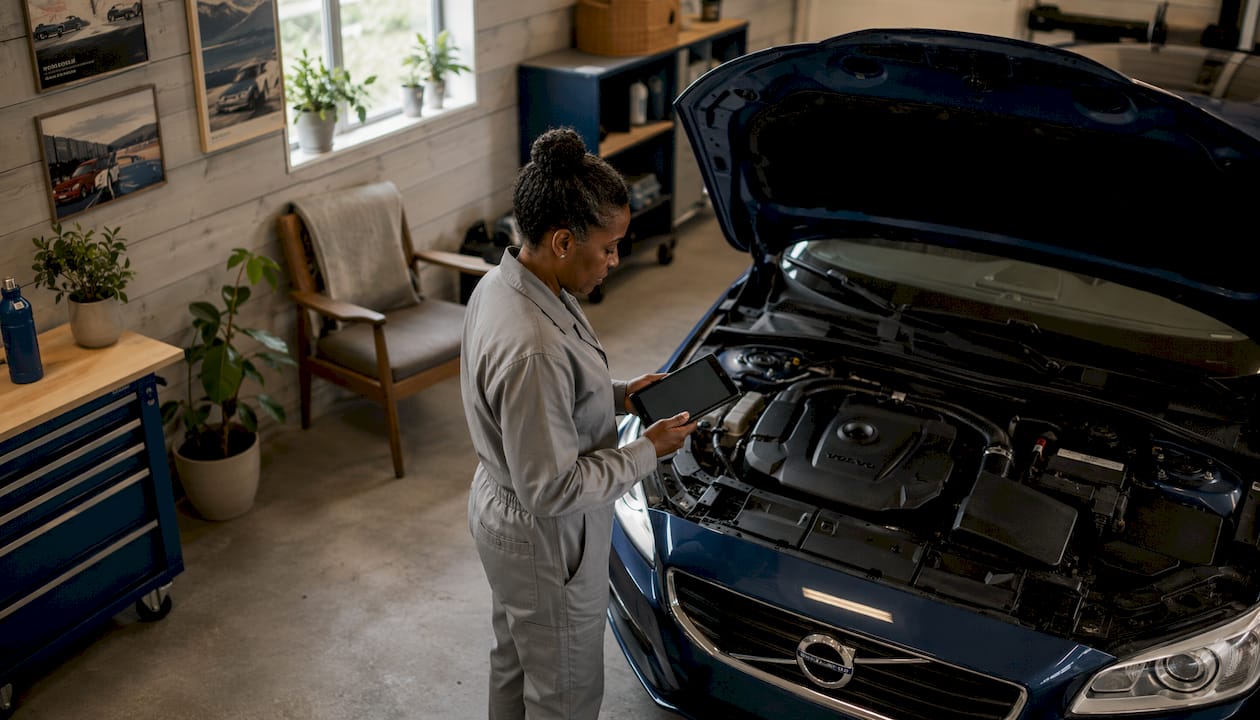
Скандинавский автомобиль remapping Для автомобилей Volvo и Saab это может включать перепрошивку по OBD, доступ к стенду или загрузочному модулю, подключение по пиггибэку modules, удаленную калибровку e-tuning и TCU. Выбор правильного метода зависит от конкретного блока управления (ECU или TCU), года выпуска, двигателя, коробки передач, уровня сложности и предполагаемого использования. Обозначения этапов не стандартизированы в отрасли, поэтому мастерским следует ориентироваться на фактические аппаратные требования, требуемый крутящий момент, соответствие нормам выбросов и проверку, а не только на само обозначение.
- Прошивка OBD/ECU: чтение или запись через диагностический разъем, если это поддерживают ЭБУ и протокол.
- Доступ через Bench/BDM/Boot: прямой доступ к ЭБУ используется, когда OBD недоступен, ограничен или не подходит; точный метод зависит от процессора и поколения аппаратного обеспечения.
- Piggyback modules: внешние устройства, которые изменяют сигналы выбранных датчиков или исполнительных механизмов без предоставления полного доступа к калибровке ЭБУ.
- E-tuning и удаленные файлы: процессы удаленной калибровки, которые могут включать чтение ЭБУ, журналы и циклы ревизий.
- TCU remapping: калибровка коробки передач для поддерживаемых автоматических, с двумя сцеплениями и Geartronic блоков.
- Метки этапов 1–3+: коммерческие категории, точное значение которых зависит от тюнера и платформы.
Каковы основные типы скандинавских транспортных средств remapping?
Для автомобилей Volvo и Saab семейство ЭКЮ и версия программного обеспечения имеют большее значение, чем просто название бренда. Платформы Bosch, Continental, Denso, Trionic и другие могут требовать различных методов доступа через OBD, на столе (Bench), в режиме загрузчика (Boot) или на уровне процессора.
К распространенным методам доступа относятся OBD, Bench, BDM/JTAG, а также Boot или сервисный режим Bench mode. Эти термины не являются взаимозаменяемыми: каждый из них обозначает отдельный способ подключения или стратегию доступа к процессору.
| Метод | Как это работает | Когда он используется | Основное ограничение | Требуется проверка |
|---|---|---|---|---|
| Прошивка через OBD | Чтение/запись через диагностический порт (где поддерживается) | Поддерживаемые ЭБУ со стабильным доступом в автомобиле | Доступно не на каждом ЭБУ или версии программного обеспечения | Сканирование кодов неисправностей (DTC), логи и проверки после записи |
| Доступ к скамье | ЭБУ, подключенный за пределами автомобиля через предназначенные для этого контакты или разъемы | Ограниченный доступ к OBD, восстановительные или сервисные операции | Требуется снятие ЭБУ и правильная распиновка | Полное резервное копирование, идентификация и план восстановления |
| BDM / JTAG / Boot | Доступ на низкоуровневом уровне через специфические для процессора служебные функции или отладочные функции modes | Более старые ЭБУ, защищенные блоки или восстановительные работы | Строго специфично для аппаратного обеспечения и не взаимозаменяемо | Проверено: полное чтение и процедура, специфичная для инструмента |
| Piggyback module | Изменяет выбранные сигналы без перезаписи базовой калибровки | Ограниченное, обратимое вмешательство | Не удается скоординировать полный крутящий момент и защиту model | Журналы и мониторинг неисправностей |
| Электронная настройка | Удаленная калибровка с обходом файлов и опциональными ревизиями логов данных | Владельцы или мастерские без местного специалиста | Quality depends on data, platform knowledge and customer procedure | Structured logs and revision review |
| TCU remap | Changes supported transmission torque, shift and pressure strategies | When engine torque and gearbox calibration need coordination | Coverage and safe limits vary by transmission | Transmission diagnostics and road or dyno validation |
Совет: Always request a verified backup file with checksum confirmation before any flash begins. Tools like Alientech KESS3, PCMFlash, and Magic Motorsport each handle checksum verification differently; confirm with your tuner which tool they use and how the backup is stored and labeled before the session starts.
OBD/ECU flash
OBD flashing avoids ECU removal where supported, but it is not automatically safer or fully reversible. Flash counters, dealer records, learned values or protected sectors may remain different after the original calibration is restored.
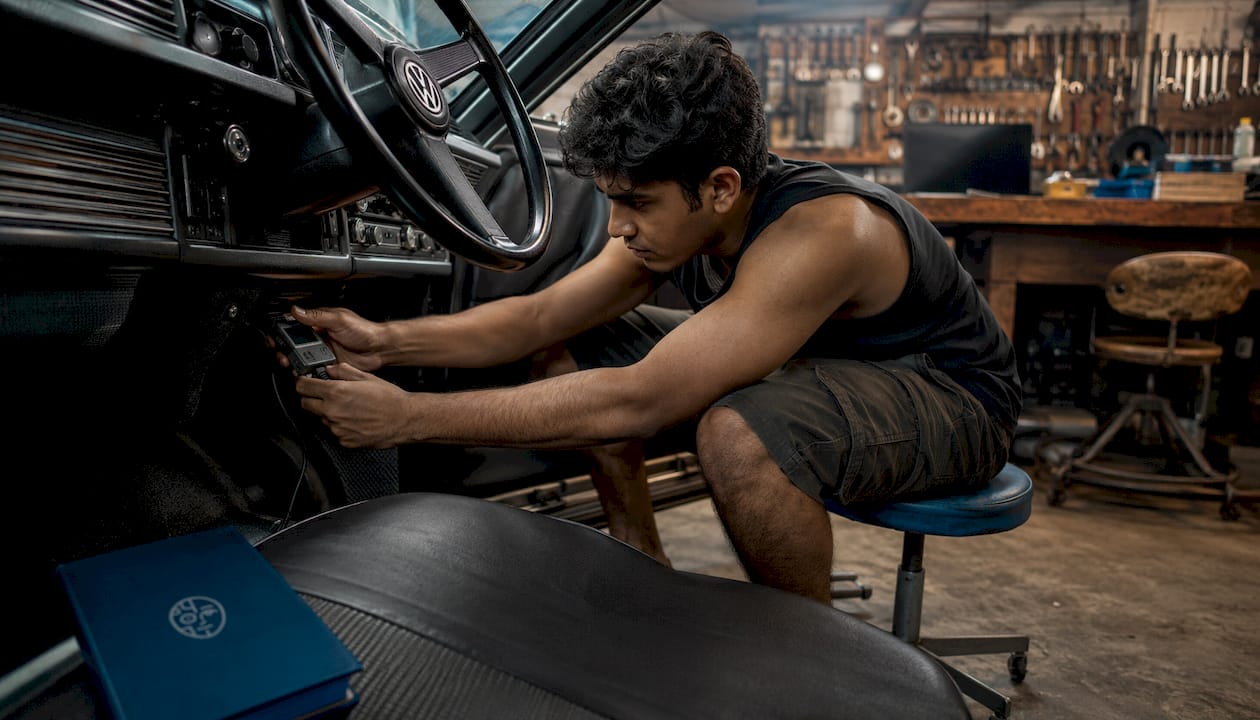
Bench, BDM, and boot-mode flashing
When OBD access is unavailable or unsuitable, the ECU may require Bench, Boot, BDM, JTAG or another service method. The correct procedure depends on the processor and ECU generation; not every Saab or Volvo unit requires the same access mode.

Piggyback and chip modules
Piggyback modules alter selected signals or commands without providing complete control of the ECU’s torque, air, fuel and protection strategies. Their suitability depends on the engine and quality of implementation.
E-tuning and mail-order calibration files
E-tuning has become a widely used option where professional calibrators create remote files and refine them by reviewing customer datalogs. The workflow requires the owner to have an OBD flash tool, perform datalogging runs under specified conditions, and submit the logs for analysis. Revision cycles follow until the calibration is confirmed safe and consistent. For Scandinavian vehicle owners in areas without a local specialist, this is often the most practical route to a quality calibration.
TCU and DSG transmission remapping
TCU remapping can adjust supported shift, torque and pressure strategies. It is relevant only where the exact transmission is supported and the engine and gearbox torque models need coordinated calibration.
Stage definitions
Stage 1 is software-only on stock hardware; Stage 2 adds supporting hardware changes such as a sport exhaust, high-flow intake, or larger intercooler; Stage 3 and above involve significant mechanical modifications and fully bespoke mapping. Each stage shift raises the validation requirement, the cost, and the risk profile. For most street-driven Scandinavian vehicles in the U.S., Stage 1 or a modest Stage 2 covers the realistic performance envelope without compromising long-term reliability.
Как скандинавские автомобили меняют подход «remapping»
A conservative calibration approach is sensible on Volvo and Saab platforms, but it should be based on actual engine, transmission and thermal limits rather than assumptions about a universal Swedish engineering philosophy.
Volvo-specific considerations
Volvo turbocharged engines can offer software headroom, but safe output varies by engine generation, turbocharger, fueling, transmission and condition. Layered torque control means the calibrator must coordinate driver demand, torque limits, boost, fuel and protection strategies.
Some Volvo calibrations are developed or validated on a dynamometer, while others use road logs or remote revisions. A provider’s general dyno capability does not prove that every delivered file has been individually dyno-tested.
Saab-specific considerations
Saab Trionic and Simtec generations have platform-specific reading and writing requirements. Some support OBD or dedicated service tools, while others may need Bench or low-level access. Exact ECU identification is essential before choosing a method.
- Confirm the exact ECU type and variant before selecting a flashing method
- Confirm tool and protocol support for the exact Saab Trionic or Simtec ECU before reading or writing.
- Some Volvo Bosch ECUs may require Bench, service or Boot access depending on hardware and software revision.
- DPF and AdBlue/SCR systems on both brands interact with fueling calibration; modifications to these systems carry EPA compliance implications in the U.S.
- After tuning, verify that torque reporting and stability-control interaction remain plausible and fault-free.
Совет: For turbocharged Volvo petrol engines, target midrange torque improvements in the 2,000–4,500 rpm band rather than peak power figures. This approach aligns with the OEM’s own engineering priorities and produces a more driveable result on U.S. roads without stressing the stock turbo actuator or intercooler.
Как выбрать подходящий метод remap с учетом поставленной цели и состояния автомобиля
Matching a remap method to your specific goals starts with defining constraints before contacting a tuner. The decision flow below moves from lowest risk to highest, with each step adding complexity and cost.
- Define your primary goal. Economy and daily drivability favor Stage 1 OBD. Towing capacity improvement benefits from a TCU remap paired with a Stage 1 ECU file. Maximum performance requires Stage 2 or above with supporting hardware.
- Assess emissions compliance requirements. U.S. owners must consider EPA regulations and state-level emissions testing. Any modification to DPF, EGR, or AdBlue/SCR systems carries legal risk and should be evaluated against your state’s inspection requirements before proceeding.
- Collect vehicle data. Before contacting any tuner, gather the exact model year, engine code, ECU type and part number, current mileage, any existing hardware modifications, fuel grade used, and recent service history including error codes.
- Choose an appropriate validation method. Dyno testing, controlled road logging and remote revisions each have strengths and limitations.
- Ask the tuner the right questions. Request their rollback procedure, how backup files are stored and checksummed, whether they require datalogging runs, what tool they use (Alientech KESS3, PCMFlash, Magic Motorsport, or equivalent), and whether they offer a revision cycle or money-back policy.
- Screen for red flags. Avoid universal files, unsupported power promises, missing backups and refusal to review diagnostic data or logs.
- Match stage to hardware condition. A high-mileage engine with worn injectors or a compromised turbo actuator is not a candidate for Stage 2. Confirm hardware condition before committing to any calibration above Stage 1.
Vehicle data checklist before contacting a tuner
- Exact model, year, and trim level
- Engine code and displacement
- ECU part number and software version (readable via OBD scan tool)
- Transmission type (manual, automatic, DSG/Geartronic)
- Current and recent fault codes
- Fuel grade used regularly
- Any existing modifications (intake, exhaust, intercooler, injectors)
- Mileage and recent service records
Динамометрический стенд против дорожных испытаний, tuning против e-tuning: какой метод проверки подтверждает безопасность remap?
Validation method determines how confidently a calibration can be declared safe and repeatable. Each approach has a defined role, and the best outcomes typically combine more than one.
A load-bearing dyno can provide controlled operating points and repeatable measurements, but no single validation method proves a calibration safe by itself. Logs, diagnostics, mechanical checks and real-world verification remain necessary.
Road logging captures real-world airflow, cooling and transmission behavior, but testing must be legal, controlled and safe. It should not involve dangerous full-load runs on public roads.
| Метод валидации | Main advantage | Основное ограничение | Наилучшее применение |
|---|---|---|---|
| Load-bearing dyno | Controlled load and repeatable measurements | Cooling and road conditions may differ from real use | Calibration development and repeatable comparison |
| Inertia dyno | Quick power and torque sweeps | Less steady-state control | Before/after measurement and broad validation |
| Controlled road logging | Real vehicle airflow, cooling and transmission behavior | Safety, legal and repeatability limits | Part-throttle and real-world confirmation |
| E-tuning | Remote access to specialist calibration | Depends heavily on log quality and customer procedure | Supported platforms with structured revisions |
- Obtain and verify the stock backup file with checksum before any calibration begins.
- Perform a pre-tune datalog to establish baseline AFR, knock counts, and boost behavior.
- Run cold-start and fully warmed-up sessions to capture thermal behavior.
- Verify fuel grade matches the calibration’s octane assumption.
- After file installation, confirm no new fault codes are present before road or dyno validation runs.
- For e-tuning, submit datalogs from at least two separate driving sessions covering both part-throttle and full-throttle conditions.
- Retain all pre- and post-tune datalogs as documentation of the calibration process.
Затраты, сроки, а также влияние на гарантию и выбросы в США
Cost and turnaround vary by ECU access, workshop labor, hardware changes, dyno time and number of revisions. Fixed time estimates should not be treated as universal.
- Stage 1 OBD flash: Entry-level cost tier; typically completed in a single appointment
- E-tune with datalogging: Low to moderate cost; timeline spans several days to weeks depending on revision cycles
- Bench/BDM session: Moderate cost; one to two day turnaround for ECU removal, flash, and reinstall
- Stage 2 with dyno: Moderate to high cost; multi-day project including hardware installation and dyno time
- Stage 3+ bespoke build: High cost; extended timeline with multiple dyno sessions and iterative calibration
Warranty implications
In the U.S., warranty treatment depends on the failed component, warranty terms and whether the modification contributed to the failure. The Magnuson-Moss Warranty Act does not guarantee coverage for damage linked to a remap, and owners should seek qualified legal advice for disputes.
Соответствие нормам выбросов
U.S. federal law generally prohibits tampering with emissions-control devices or selling products that defeat them for road use. State rules and inspection procedures add further requirements.
- Confirm your state’s emissions testing requirements before scheduling any remap.
- Verify that the calibration file preserves all OBD readiness monitors.
- Maintain emissions-compliant hardware, software and readiness status on road vehicles.
- For fleet or commercial vehicles, consult with a compliance specialist before proceeding with any aftertreatment modification.
Ключевые выводы
For Volvo and Saab owners, the most appropriate starting point depends on the exact ECU, vehicle condition and goals. Where supported, a conservative software calibration with proper logging is often less invasive than hardware-intensive modifications.
| Точка | Детали |
|---|---|
| Identify the exact ECU and TCU | Access and calibration method vary by hardware, software and transmission generation. |
| Метки этапов не являются стандартами | Verify actual hardware requirements and calibration scope. |
| OBD is not always available | Bench, Boot or other service access may be required on some units. |
| Validation requires more than one number | Use diagnostics, logs and appropriate dyno or road confirmation. |
| Original-file restoration has limits | Flash counters and dealer-visible history may remain. |
| Emissions compliance must be preserved | Road vehicles should retain compliant hardware, software and readiness status. |
Обоснование консервативной калибровки на скандинавских платформах
A common mistake is applying generic torque targets without understanding the exact engine, ECU and transmission limits. Calibration should be based on measured behavior and platform-specific knowledge.
The more productive approach is to map midrange torque delivery precisely, verify behavior across the full thermal range, and leave the factory safety systems intact. A well-executed Stage 1 on a Volvo T5 that delivers consistent, smooth torque from 2,000 rpm through 4,500 rpm is a better outcome than a high peak number that the ECU’s own torque management clips in third gear. Tuners who understand this are the ones worth working with. Ask them what their torque targets are at 3,000 rpm, not just at peak, and their answer will tell you quickly whether they have worked on these platforms before.
For older Saab platforms, ECU age, power supply, connector condition and recovery options matter. A verified original read and correct tool procedure are essential, but Bench access is not automatically required for every Trionic ECU.
Поддержка файлов ЭБУ и АКПП TuningBot для Volvo и Saab
TuningBot supports professional workshops working with Volvo and Saab ECU and TCU files where the exact platform and requested service are covered. The workshop must provide the correct original file, ECU identification, vehicle information and relevant diagnostic context.
Перед заказом мастерские могут проверить Объем сервисного обслуживания ECU и TCU, обзор Публичный прайс-лист и просматривайте доступные Услуги ЭБУ.
Файл original можно отправить через Чип-тюнинг файла without prepaid credits. TuningBot supports workflows using Alientech KESS3, PCMFlash, Magic Motorsport and other professional tools where the format and ECU are supported.
The workshop remains responsible for diagnostics, original-file backup, legal compliance, stable writing conditions and post-flash validation.
Выбранные источники и дополнительная литература
- Carwow: Engine Remapping Explained
- HP Academy: Dyno vs Road Tuning vs E-Tune
- TuningBot: ECU Remapping for Professionals
- TuningBot: TCU Remapping Guide
- TuningBot: Dyno Tuning Guide
ЧАСТО ЗАДАВАЕМЫЕ ВОПРОСЫ
Какие существуют типы автомобилей remapping?
Common methods include OBD, Bench, Boot, BDM/JTAG where applicable, piggyback modules, remote e-tuning and TCU calibration. Stage labels vary by tuner and are not universal technical standards.
Что лучше для Volvo или Saab: remapping 1-го или 2-го этапа?
Stage 1 is often the logical starting point for a healthy standard vehicle, but the decision depends on the exact ECU, transmission, hardware and goals. Stage 2 should only be calibrated around verified supporting modifications.
Существует ли модель remap 4-го этапа?
Stage 4 is not a standardized category. Some tuners use it informally for highly modified builds, but the label alone does not define the hardware or calibration.
Как убедиться, что remap является безопасным и обратимым?
Retain a verified original file, identify the ECU correctly, review diagnostics and logs, and confirm the recovery procedure. Restoring the original software may not erase flash counters or dealer-visible history.
Приведет ли установка remapping на автомобиль Volvo или Saab к аннулированию гарантии в США?
A remap may affect warranty coverage, particularly where it contributes to a failure. Restoring the original file does not guarantee that previous programming is undetectable.