

 EnglishEN
 ItalianoIT
 DeutschDE
 EspañolES
 FrançaisFR
 РусскийRU
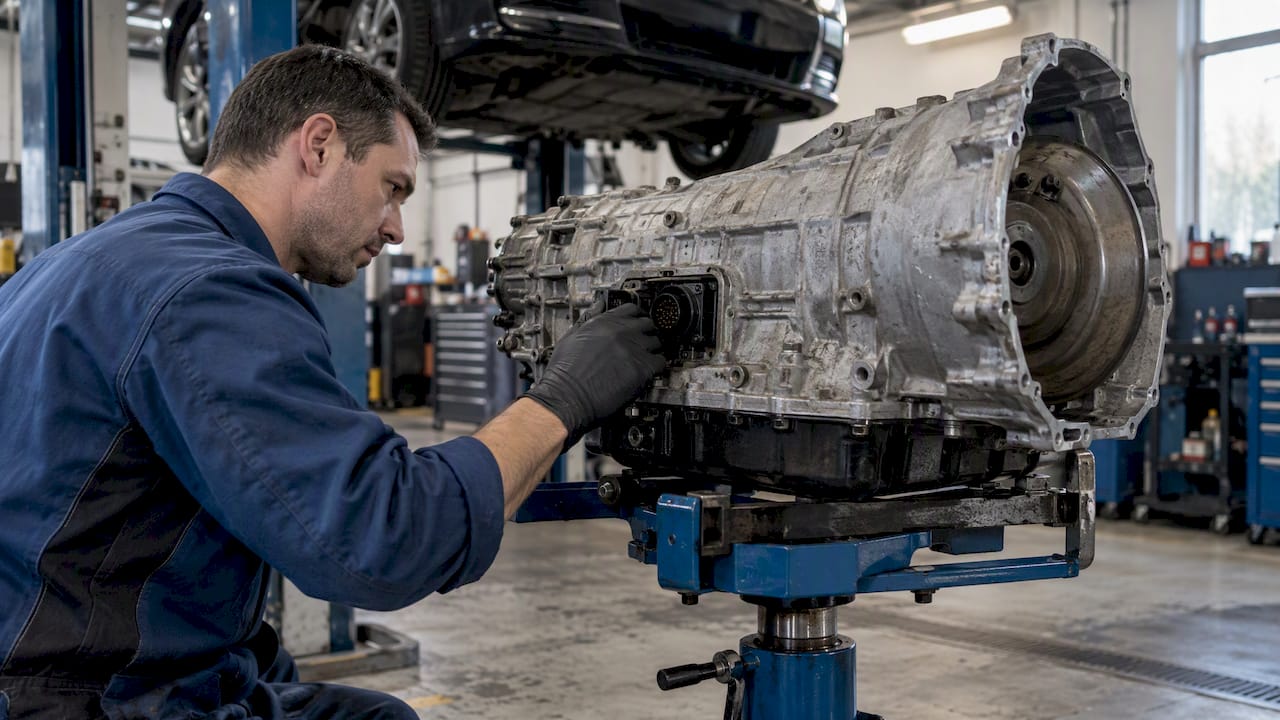
6HP tuning concerns the control strategy of a specific ZF six-speed automatic transmission. The correct assessment depends on its variant, software, condition and engine torque delivery. A family-wide torque ceiling, pressure increase or temperature threshold cannot establish what is appropriate for an individual vehicle.
6HP tuning starts with the exact transmission
Record the transmission identification, TCU hardware and software, vehicle application and engine calibration history. A model badge or the general 6HP name is insufficient to select a file or establish mechanical capacity.
Published ratings describe particular designs and operating assumptions. They are not guaranteed tuned limits for an aged or modified unit. Check the actual specification, service history and fault state rather than treating a generic rating table as permission to exceed it.
Mercedes-Benz 7G-Tronic is a different transmission family. The linked background article is useful for that separate subject; its figures and file layout must not be applied to a ZF 6HP.
Keep engine torque reporting meaningful
Engine and transmission controllers exchange information used for torque management and shift control. Misrepresenting engine torque to avoid a limiter can distort the inputs on which transmission control depends. Review the engine and TCU strategies together when the torque model has been changed.
This does not mean that every engine tune automatically needs a TCU tune or a pressure increase. Establish whether the existing calibration remains suitable for the requested operation. Torque reduction during a shift can be part of the intended control process, not a defect to remove.
The linked diesel engine torque explainer provides background. Fuel type alone does not determine clutch loading: torque at the transmission input, its duration, converter behavior and the shift event all matter.
Separate pressure, shift scheduling and converter control
Clutch application involves hydraulic control, fill behavior and torque transfer through the shift. A blanket line-pressure increase cannot repair worn friction elements, hydraulic leakage or a faulty mechatronic assembly. Commanded pressure is not necessarily a direct measurement of actual clutch pressure.
Shift schedules should reflect the usable engine operating range and driving conditions. A higher upshift RPM is not automatically faster, and a shorter shift is not universally better. Evaluate flare, harshness and torque coordination rather than choosing the most aggressive setting.
Converter lockup changes slip, heat generation and vibration transmission. Earlier lockup may have benefits in one operating region and produce shudder or objectionable vibration in another. There is no universal lockup schedule for the family.
Use the correct fluid and application-specific limits
ZF’s LifeguardFluid 6 data sheet explicitly lists exceptions within the 6HP family that require LifeguardFluid 8, and directs users to the applicable lubricant approvals. Therefore, the 6HP label alone is insufficient to select oil. Use the correct filling procedure and specification for the unit.
The same data sheet recommends oil changes at 150,000 km and notes that high temperatures, heavy loads or unknown history can justify shorter intervals. That is not a promise of trouble-free operation to that distance or a universal minimum interval.
Do not reuse 126°C or 141°C as guaranteed intervention thresholds for every 6HP. Confirm the applicable control strategy and sensor information. Compare temperature behavior under relevant conditions, and investigate cooling or hydraulic faults before attributing overheating solely to software.
Do not reset adaptations automatically
Adaptations compensate for aspects of clutch and hydraulic behavior; they are not simply a record of an owner’s driving style. xAutomotive explains that xHP flashing does not automatically reset these values. Follow the supported procedure for the particular repair or software operation.
A reset is not a cure for slip or harsh shifts and may create additional work if performed without a reason. If a specified relearn is required, use its conditions and prerequisites. Do not assume that a few arbitrary drive cycles establish correct adaptation.
Validate operation and define the service scope
Keep the original diagnostic state and compare the result after justified work. Assess engagement, upshifts, downshifts and converter behavior across the relevant temperatures and loads. Available logs may include input/output speeds, selected gear, slip, torque requests and adaptation information.
Investigate new faults rather than suppressing them as a normal part of tuning. A generic DTC definition or a code from another manufacturer is not a transmission-specific diagnostic procedure.
Confirm exact file and tool support, required checksum handling and restoration options. Current services are listed on the Tabela de preços do TuningBot; this article does not promise fixed turnaround, included corrections or a universal torque capability.
Perguntas frequentes
Does every engine tune require a 6HP TCU tune?
No. Assess the actual torque delivery, reporting, transmission condition and suitability of the existing control strategy.
Should adaptations be reset after every flash?
No. Follow the procedure for the specific tool, transmission and work performed. A reset is not a universal programming step.
Does every 6HP use LifeguardFluid 6?
No. ZF lists exceptions within the family. Confirm the approved fluid for the exact transmission.