

 EnglishEN
 DeutschDE
 EspañolES
 PortuguêsPT
 FrançaisFR
 РусскийRU
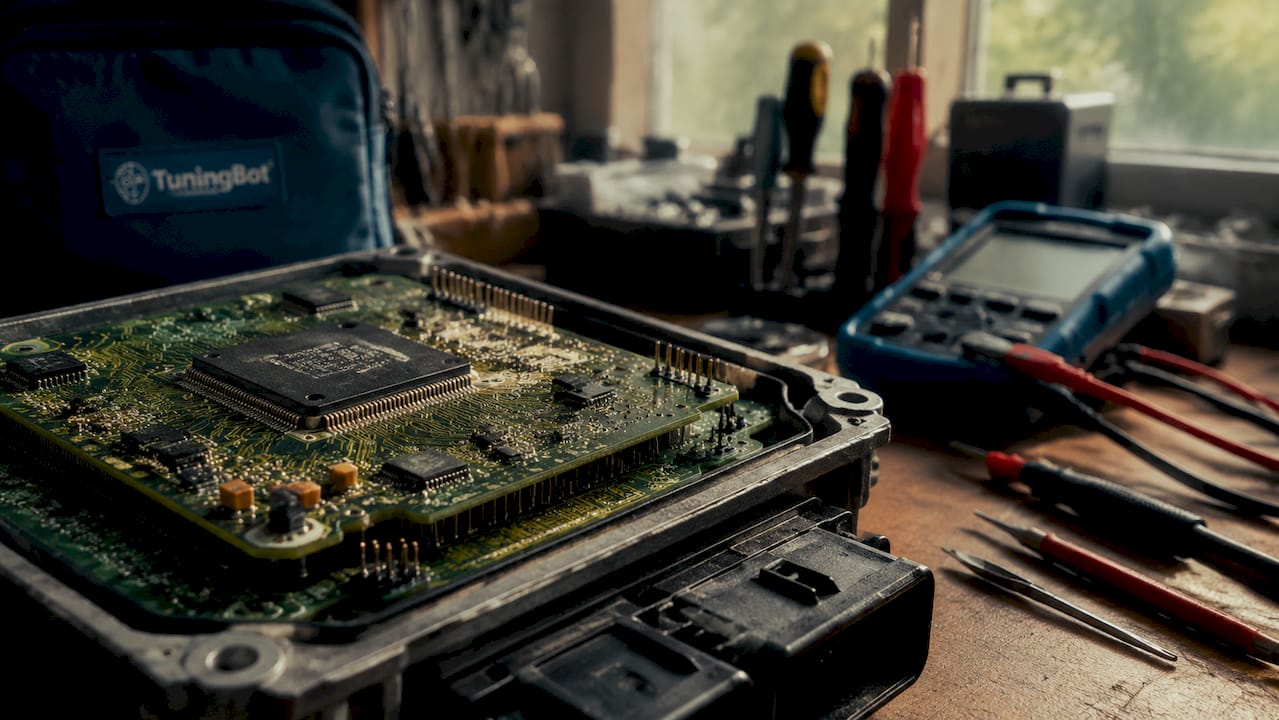
Il microchip all'interno di una centralina (ECU) è un microcontrollore integrato specializzato che esegue tutta la logica di gestione del motore elaborando i dati provenienti dai sensori e comandando gli attuatori in tempo reale. I professionisti del settore chiamano questo componente “microcontrollore della centralina” e comprendere il funzionamento del microchip all’interno dell’architettura della centralina significa comprendere l’intera base di controllo di un motore moderno. Architetture come le serie TriCore e AURIX di Infineon definiscono il modo in cui questo chip legge i dati relativi al flusso d’aria, calcola l’erogazione di carburante e attiva le bobine di accensione nel giro di pochi millisecondi. Per qualsiasi tecnico o ingegnere che lavori con le centraline Bosch, Continental o Denso, questo chip rappresenta il punto di partenza per ogni decisione relativa alla calibrazione.
Che cos'è il microchip all'interno di una ECU e come è costruito?
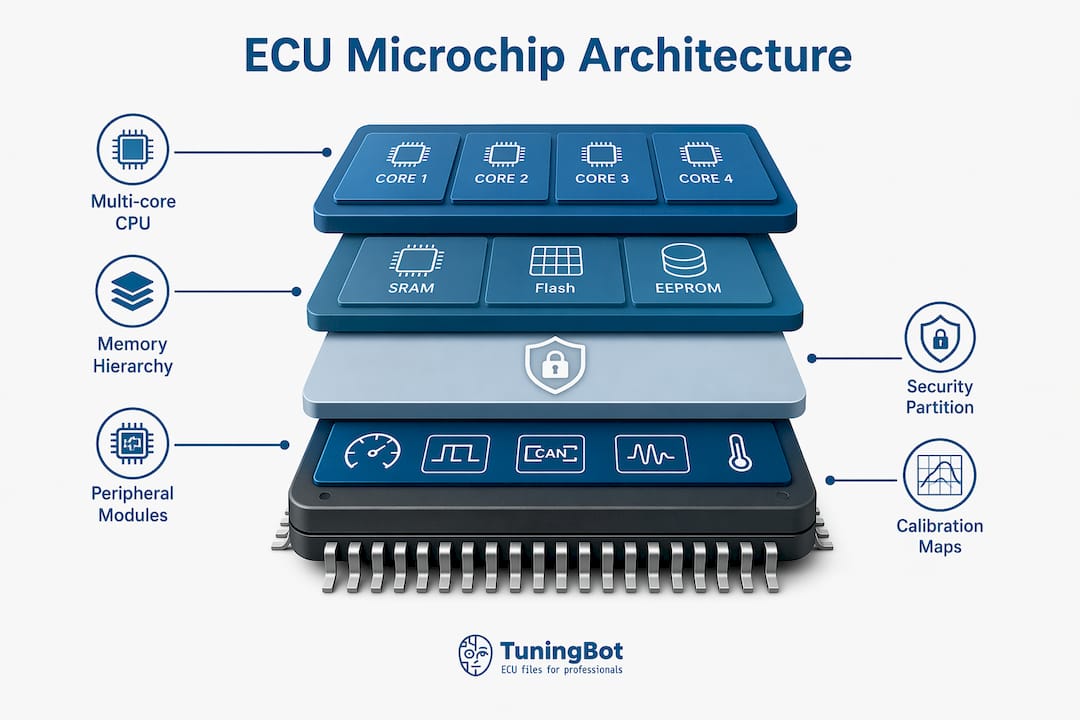
Il microcontrollore della centralina non è un processore a scopo singolo. È un circuito multi-core integrated con core separati dedicati alla logica applicativa, alla gestione degli interrupt in tempo reale e all'elaborazione dei segnali digitali. La serie Infineon AURIX è l'esempio più chiaro di questo design nelle ECU di produzione odierne. Ogni core gestisce un carico di lavoro distinto in modo che un interrupt di temporizzazione non entri in competizione con un calcolo di calibrazione in background.
L'architettura di memoria all'interno del chip segue una rigida gerarchia. La memoria Flash interna contiene il firmware, le mappe di calibrazione e le chiavi sicurezza. L'EEPROM contiene i valori adattivi che vengono aggiornati durante la guida normale. La RAM fornisce lo spazio di lavoro per i calcoli in tempo reale. Questi tre tipi di memoria operano in sinergia affinché la centralina possa memorizzare e recuperare dati di calibrazione senza penalità di latenza durante il funzionamento del motore.
Le periferiche modules completano il quadro. Il chip integra convertitori analogico-digitali (ADC), uscite a modulazione di larghezza di impulso (PWM), timer e controller di comunicazione per i protocolli CAN, LIN, SPI e UART. Il set di istruzioni TriCore utilizza istruzioni a 16 e 32 bit ottimizzate per la densità del codice, il che consente di far rientrare il complesso software di gestione del motore nella limitata capacità Flash del chip.
La tabella seguente confronta le principali caratteristiche hardware presenti nei microcontrollori ECU automobilistici:
| Caratteristica | Specifiche tipiche |
|---|---|
| Architettura della CPU | Multi-core (applicativo, real-time, core DSP) |
| Memoria flash | 4 MB–16 MB, partizionata per firmware e calibrazione |
| RAM | 256 KB–1 MB per il calcolo in tempo reale |
| Interfacce di comunicazione | CAN, LIN, SPI, UART, FlexRay |
| Risoluzione ADC | 10-bit a 12-bit, canali multipli |
| Temperatura di funzionamento | -40°C a +150°C |
Consiglio Pro: Quando si legge un file binario della centralina con strumenti come Alientech KESS3 o AutoTuner, la struttura delle partizioni della memoria Flash riflette direttamente l’architettura del chip. Identificare l’area del bootloader, quella della mappa di calibrazione e quella della chiave sicurezza prima di procedere alla modifica previene errori checksum e protegge l’integrità del firmware dell'integrità del microcontrollore.
Come elabora il microchip della centralina i dati dei sensori?
Il microchip dell’ECU gestisce un ciclo di controllo deterministico. Ad ogni ciclo, legge i dati provenienti dai sensori, esegue i calcoli e invia i comandi agli attuatori. Questo ciclo si completa in meno di un millisecondo per funzioni critiche come la fasatura dell’iniezione del carburante. L’ADC converte i segnali analogici provenienti da sensori quali il sensore di flusso d’aria di massa, il sensore di posizione dell’acceleratore e il sensore di temperatura del liquido di raffreddamento in valori digitali che la CPU è in grado di elaborare.
La sequenza di elaborazione per un evento di iniezione di carburante segue questi passaggi:
- L'ADC campiona i sensori di pressione del collettore e del flusso d'aria all'inizio di ogni ciclo del motore.
- La CPU indicizza una tabella di ricerca memorizzata nella Flash per trovare la quantità di base di carburante per il punto di carico e RPM corrente.
- Un algoritmo di controllo PID regola il valore di base utilizzando il feedback in tempo reale lambda proveniente dal sensore di ossigeno.
- L'uscita PWM module genera un impulso per l'iniettore con la durata calcolata e una sincronizzazione precisa rispetto alla posizione dell'albero motore.
- Il GTM (Generic Timer Module) sulle centraline basate su AURIX gestisce la fasatura di iniezione e accensione con precisione accelerata dall'hardware, rimuovendo la latenza software dal percorso critico.
Le tabelle di consultazione costituiscono il cuore della calibrazione della centralina. Una tipica mappa di alimentazione che mette in relazione il carico del motore con il numero di giri al minuto (RPM) contiene diverse migliaia di punti dati. Il microcontrollore esegue l’interpolazione tra questi punti in tempo reale. I regolatori PID gestiscono le correzioni in anello chiuso per parametri quali il regime di minimo, la pressione boost e il ricircolo dei gas di scarico. Comprendere questa catena di elaborazione è ciò che distingue un tuner che si limita a modificare i numeri da uno che capisce perché quei numeri producono una specifica risposta del motore.
Consiglio Pro: Quando si calibrano le mappe boost o di iniezione su una Bosch MED17 o una Continental SID305, è necessario risalire dagli indirizzi della tabella di ricerca nel file binario alla mappa delle partizioni Flash del chip. Ciò consente di verificare che si stia modificando la regione di calibrazione attiva e non una copia di backup, che alcune centraline mantengono a scopo di controllo di ridondanza.
In che modo il microchip dell'ECU interagisce con il sistema sicurezza del veicolo?
Il microcontrollore ECU non si occupa solo dei parametri fisici del motore. È il responsabile dell'autenticazione del veicolo. Durante ogni ciclo di accensione, il chip Verifica l'ID del transponder incorporato nella chiave di accensione prima di abilitare l'erogazione del carburante o l'uscita di accensione. Questo processo viene eseguito nei primi secondi dopo l'inserimento della chiave e deve completarsi con successo prima che il motore possa avviarsi.
L'interazione di sicurezza funziona come segue:
- L'unità di controllo dell'immobilizzatore legge il chip del transponder nella chiave tramite un'antenna a bobina a radiofrequenza attorno al piantone dello sterzo.
- Il transponder invia un ID univoco crittografato all'immobilizzatore module.
- L'immobilizzatore module trasmette questo ID al microcontrollore della centralina tramite una linea di comunicazione dedicata, solitamente la K-line o il CAN.
- Il microcontrollore della ECU confronta l'ID ricevuto con un valore memorizzato nella sua memoria Flash protetta.
- Una discrepanza causa il blocco della generazione degli impulsi degli iniettori da parte del microcontrollore e la disattivazione dei driver della bobina di accensione. Il motore si avvia ma non si accende.
Questa architettura implica che il microcontrollore conservi i dati sicurezza in un’area Flash partizionata, separata dalle mappe di calibrazione. I sistemi moderni che utilizzano tecnologia immobilizer per veicoli integrate livelli aggiuntivi, tra cui codici a rotazione e protocolli challenge-response, che richiedono al microcontrollore di eseguire operazioni crittografiche durante ogni ciclo di avvio. Per Procedure di disattivazione IMMO, il tuner deve eseguire la routine di verifica sicurezza all’interno del firmware del microcontrollore, non limitarsi a cancellare un flag nei dati di calibrazione.
Microchip ECU contro microcontrollori di livello consumer
La differenza tra un microcontrollore ECU automobilistico e un chip di livello consumer non risiede solo nella velocità di clock. Riguarda l'intera specifica di progettazione. microcontrollori ECU resistono la temperatura varia da -40°C a +150°C, fluttuazioni della tensione di alimentazione e livelli di interferenza elettromagnetica che distruggerebbero un chip di sviluppo Arduino o STM32 standard nel giro di poche ore se esposti nel vano motore.
L'architettura software aggiunge un altro livello di separazione. Standard AUTOSAR definire una struttura firmware multistrato per le centraline automobilistiche: un livello di astrazione del microcontrollore alla base, servizi middleware al di sopra di esso e software applicativo al livello superiore. Questa struttura a strati model implica che la modifica delle mappe di calibrazione tuner avvenga a livello applicativo senza interferire con i driver hardware sottostanti. I requisiti di sicurezza funzionale della norma ISO 26262 impongono ulteriori vincoli alla struttura del firmware, richiedendo controlli ridondanti e il monitoraggio dei guasti che i chip di consumo non implementano mai.
Diverse errate convinzioni comuni sulla riparazione dei chip ECU meritano di essere affrontate direttamente:
- Il microcontrollore è raramente il componente guasto. I guasti dell'ECU si verificano più spesso nei transistor dei driver di uscita, nei regolatori di alimentazione o a causa della corrosione dei connettori, non nel microcontrollore stesso.
- La riparazione a livello di chip richiede attrezzature specializzate. I microcontrollori ECU utilizzano un package micro-BGA con sfere di saldatura sotto il corpo del chip. La rilavorazione di questi componenti richiede stazioni di rilavorazione professionali con profili di temperatura precisi, non un saldatore standard.
- La riprogrammazione è l'intervento standard. Quando il firmware del microcontrollore è danneggiato, la procedura di ripristino prevede il flashing tramite JTAG o boot mode, non la sostituzione fisica del chip.
“Considerare un microcontrollore ECU come un componente di uso comune è il modo più rapido per distruggere un costoso module. L’involucro, l’architettura del firmware e l’ambiente elettrico sono tutti progettati appositamente per l’uso automobilistico. Le decisioni relative alla riparazione e alla programmazione devono tenerne conto.”
Per il tuner, quando si utilizzano strumenti come Magic Motorsport o PCMFlash, il Copertura dei servizi ECU che espandono le varianti ECU supportate riflettono direttamente la complessità del supporto di nuove famiglie di microcontrollori poiché i produttori adottano chip di prossima generazione.
Punti chiave
Il microcontrollore della centralina (ECU) è il componente più importante nella gestione del motore, e tutte le funzioni di calibrazione, sicurezza e comunicazione della centralina passano attraverso di esso.
| Punto | Dettagli |
|---|---|
| Architettura multi-core | Infineon AURIX e chip TriCore partizionano i task tra core applicativi, real-time e DSP per un controllo deterministico. |
| Gerarchia della memoria | Flash memorizza il firmware e le mappe di calibrazione; l'EEPROM contiene i valori adattivi; la RAM gestisce il calcolo in tempo reale. |
| Ciclo di controllo in tempo reale | Il microcontrollore elabora gli ingressi ADC dei sensori ed emette comandi per l'iniettore e l'accensione in meno di un millisecondo. |
| Sicurezza integrazione | Il chip verifica gli ID dei transponder e blocca l'erogazione del carburante in caso di autorizzazione fallita, rendendo necessarie procedure di disattivazione IMMO a livello di firmware. |
| Design di grado automobilistico | I microcontrollori ECU sono conformi agli standard ISO 26262 e AUTOSAR, rendendoli fondamentalmente diversi dai chip di livello consumer. |
Perché la maggior parte degli utenti tuner sottovaluta il microcontrollore
Dopo aver analizzato centinaia di file ECU su piattaforme Bosch EDC17, Marelli MJD e Continental SID, il modello è coerente. I tuner si concentrano sulle mappe di calibrazione e trattano il microcontrollore come un'infrastruttura di base. Questo approccio funziona finché non smette di funzionare.
Nel momento in cui si tenta il ripristino delle modalità IMMO Off, checksum, bypass o boot mode, l’architettura del firmware del microcontrollore diventa il problema principale. Il strati di astrazione hardware definiti da AUTOSAR implicano che una modifica a livello di applicazione possa attivare un monitor di errori in esecuzione nel core in tempo reale, causando il ripristino o il blocco dell’ECU. Capire quale core gestisca quale funzione non è una semplice nozione teorica. È la differenza tra un aggiornamento flash riuscito e un module fuori uso.
Il crescente passaggio ai microcontrollori automobilistici basati su RISC-V e alle architetture di aggiornamento del firmware over-the-air renderà queste conoscenze ancora più fondamentali. Il layout Flash partizionato che l’attuale tuner gestisce con strumenti come Alientech KESS3 diventerà più complesso man mano che gli OEM aggiungeranno aree di firmware crittografate e regole di sicurezza hardware ecurity modules. I tuner che comprendono il Processo di scrittura del firmware della ECU A livello di microcontrollore ci saranno degli adeguamenti. Chi considera l'ECU tuning come uno strumento di modifica delle mappe si troverà di fronte a un ostacolo insormontabile.
Il consiglio pratico è molto semplice. Prima di modificare qualsiasi file binario della centralina, occorre identificare la famiglia di microcontrollori, confermare la struttura delle partizioni Flash e verificare la compatibilità checksum algorithm. Questi tre passaggi richiedono pochi minuti e consentono di evitare la maggioranza dei casi di flash non riuscito.
— TuningBot Team Tecnico
ECU professionale remapping, frutto della nostra esperienza nel campo dei microcontrollori
Comprendere l'architettura del microcontrollore ECU è fondamentale, ma è dall'applicazione di tali conoscenze alla realizzazione di remap file calibrati e verificati che derivano i risultati professionali.
TuningBot’Il team di ingegneri dell’azienda opera su tutte le principali piattaforme ECU, tra cui Bosch, Continental, Delphi, Marelli, Denso e Siemens, con una profonda conoscenza delle famiglie di microcontrollori che alimentano ciascuna unità. Che abbiate bisogno di un’ottimizzazione della potenza di Stage 1, della disattivazione del DPF, della disattivazione dell’IMMO o della calibrazione DSG/TCU tuning, ogni file viene calibrato tenendo pienamente conto dell’architettura del chip sottostante e dei requisiti del checksum. Il Guida alle tecniche professionali remapping copre l'intero flusso di lavoro, dall'analisi dei file binari fino all'output verificato. Per le procedure specifiche relative a checksum, il Guida alla correzione checksum fornisce i dettagli tecnici di cui la tua officina ha bisogno. Carica direttamente il tuo file ECU su TuningBot senza registrazione e ricevi un file calibrato professionalmente con supporto tecnico completo.
FAQ
Che tipo di microcontrollore viene utilizzato nella maggior parte dei modelli ecu?
La maggior parte delle centraline moderne utilizza microcontrollori a 32 bit di grado automobilistico prodotti da aziende quali Infineon, Renesas e STMicroelectronics. Le famiglie AURIX e TriCore di Infineon sono tra le più diffuse nelle piattaforme di centraline Bosch e Continental.
Il microchip all'interno di una ECU può essere riparato?
La riparazione fisica del microcontrollore è raramente l'intervento più indicato. I guasti alle centraline elettroniche (ECU) riguardano molto spesso i driver di uscita o i componenti di alimentazione, non il microcontrollore stesso. Quando il firmware del chip è danneggiato, il metodo standard di ripristino consiste nel riflashare il firmware tramite JTAG o boot mode.
Cosa fa il microchip della centralina durante l'avviamento del motore?
Durante l'avviamento del motore, il microcontrollore verifica l'ID del transponder della chiave di accensione con un valore memorizzato nella memoria Flash protetta. Una corrispondenza positiva abilita le uscite di iniezione del carburante e accensione. Una corrispondenza negativa blocca entrambe, impedendo l'avviamento del motore.
In che modo la tecnologia dei microchip ECU influisce sul modello tuning?
La struttura della memoria Flash del microcontrollore determina dove vengono memorizzate le mappe di calibrazione, le routine sicurezza e i file checksum. I programmatori devono comprendere questa struttura di partizioni per modificare correttamente le mappe, applicare file checksum validi ed evitare di attivare i monitor di errore del firmware durante un'operazione di flash.
Qual è la differenza tra un microchip ECU e un microcontrollore standard?
I microcontrollori ECU automotive sono conformi agli standard di sicurezza funzionale ISO 26262 e ai requisiti dell'architettura software AUTOSAR. Operano in condizioni estreme di temperatura e tensione e utilizzano package micro-BGA, distinguendoli fondamentalmente dai microcontrollori consumer o industriali sia nella progettazione hardware che software.