

 EnglishEN
 DeutschDE
 EspañolES
 PortuguêsPT
 FrançaisFR
 РусскийRU
Throttle response tuning guide workflows should separate pedal sensitivity, torque request, actuator behavior, fueling transients, turbo response and drivetrain intervention instead of assuming one fixed edit order. Modern ECUs may use torque-based control, direct throttle-angle logic, filtered pedal models or platform-specific transient strategies. The correct approach is to diagnose the vehicle, identify the actual control path in the ECU software, make only justified changes and validate the response from measured data.
Every session should start the same way:
- Diagnose stored faults and mechanical issues before calibration.
- Record pedal, requested torque/load, throttle position, lambda/fueling and boost data only where those channels are meaningful on the platform.
- Separate pedal-map sharpness from true torque-delivery delay.
- Identify which limiter, actuator or physical hardware is actually causing the response complaint.
- Preserve the source file and use the checksum/signature workflow required by the ECU and flashing tool.
- Validate progressively rather than relying on a single road feel or dyno pull.
Consiglio Pro: If commanded torque never matches torque request even with a clean baseline log, the problem lives in a limiter, not in the map you’re about to edit.
Throttle Response Tuning Guide: Key Takeaways
A professional throttle response tuning guide should identify the real torque-delivery path, distinguish software delay from physical turbo/drivetrain lag, and validate only the maps that actually control the complaint.
| Punto | Dettagli |
|---|---|
| Diagnose before tuning | Resolve faults, leaks, actuator problems and fuel/boost issues before changing calibration. |
| Pedal sensitivity is not response time | A sharper pedal map can feel more aggressive without making the engine produce torque faster. |
| No universal edit order | Transient fuel, driver wish, DBW and torque limiters vary by ECU architecture. |
| Turbo lag is physical | Software can influence boost control, but it cannot eliminate turbine inertia. |
| DBW tuning is platform-specific | Spring/friction/PID procedures apply only where the ECU exposes those strategies and the calibration method supports them. |
| Validate with matched data | Compare relevant request, actuator and delivered-response channels before and after changes. |
Throttle Response Tuning Guide: What Actually Changes
Throttle response tuning changes how the powertrain reacts after a driver input. On many modern ECUs that includes pedal request, torque/load control, throttle actuation, fueling, boost and transmission intervention, but architecture varies by platform.
Changing one table may alter pedal feel without improving delivered torque. Compare request, limiter, actuator and delivered-response data before deciding which map needs work.
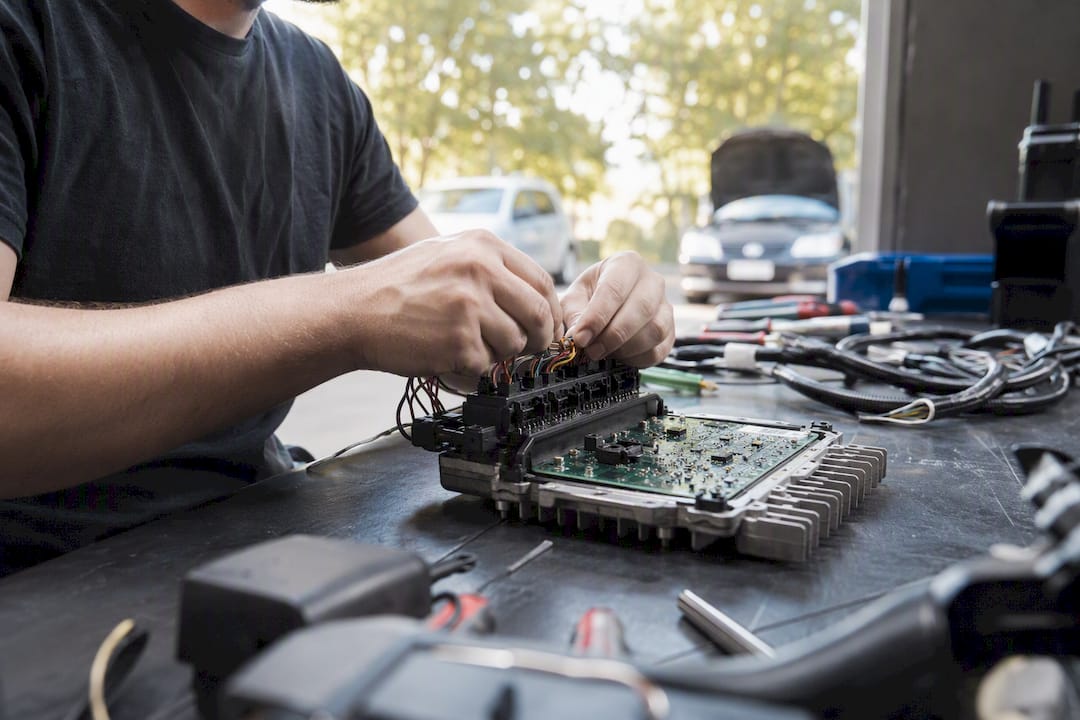
Pedal sensitivity and torque-delivery response are different. Pedal sensitivity changes the relationship between pedal movement and requested torque; response time depends on actuator, combustion, turbo and drivetrain behavior.
Understanding this path changes how you diagnose complaints. “It feels laggy off idle” could mean:
- Pedal/driver request may be conservative, filtered or limited at low pedal input depending on ECU.
- Throttle or other actuators may have control or mechanical delays that need diagnosis before calibration.
- A torque, thermal, gearbox or traction limit may be clipping the requested output.
- Physical turbo spool or drivetrain response may be mistaken for ECU-request lag.
Bosch, Continental and other ECU families can use very different implementations and map naming. Do not assume a common torque path without verifying the exact software.
How Do Transient Enrichment Tables Affect Throttle Feel?
Transient fueling strategies differ by engine and ECU. Some platforms use dedicated acceleration enrichment; others rely on model-based fueling, wall-film compensation, lambda control or other transient logic.
Where a dedicated transient-fuel strategy exists, tune it only after confirming the base fuel/air model and sensor data are correct.
- Capture the transient lambda/fueling behavior at representative RPM/load points where the ECU exposes useful data.
- Change transient fueling only when logs show a repeatable fueling error attributable to that strategy.
- Shape transient corrections from measured behavior rather than applying a generic RPM taper.
- Validate the change across the operating region where the complaint occurs.
Use measured lambda/AFR together with torque response, drivability and relevant fuel-system data; subjective feel alone is not sufficient validation.
Avoid uniform transient changes across the entire operating range unless the ECU strategy and logs justify them.
Throttle Response Tuning Guide: DBW and Actuator Control
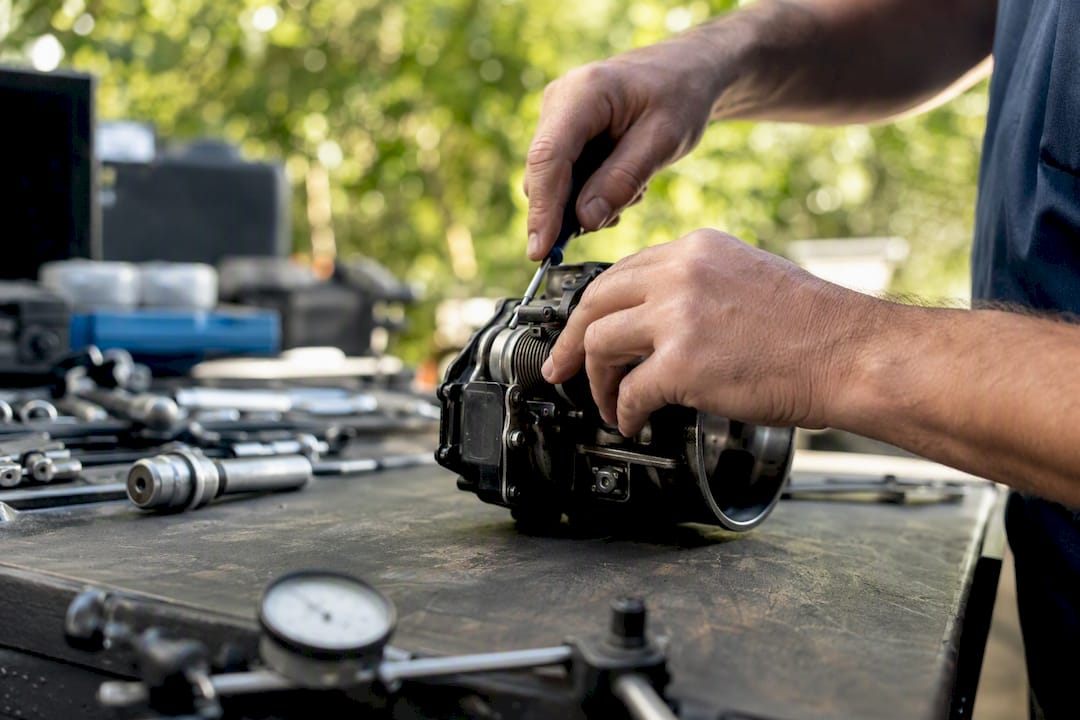
DBW actuator compensation can matter on some systems, but spring, friction and PID tables are not universal tuning targets across production ECUs.
PWM-envelope and actuator-system-identification procedures are valid only on ECUs or standalone controllers where the calibration interface exposes those controls.
| Question | Cosa verificare |
|---|---|
| Is the actuator mechanically healthy? | Throttle body, pedal sensors, wiring, supply voltage and learned/adaptation state where applicable. |
| Does the ECU expose tunable actuator compensation? | Do not assume spring/friction/PID tables exist in every production ECU definition. |
| Is there command tracking error? | Compare requested and actual actuator position using the diagnostic channels available. |
| Is calibration change justified? | Only modify actuator-control parameters when the platform documentation and measured response support it. |
Where actuator compensation is directly tunable, follow the controller manufacturer’s documented procedure and validate stability across voltage and temperature.
Turbo Lag, Drivetrain Limiters, and Where Software Can’t Help
A throttle response tuning guide should differentiate pedal/request delay, throttle-actuator delay, combustion response, turbo spool and gearbox torque intervention before editing the calibration.
Boost-control strategy can influence how quickly a turbocharged engine reaches requested load, but any change must stay within compressor, turbine, exhaust-temperature and knock/fuel limits.
- Boost/load request can influence spool, but higher low-RPM targets are not universally beneficial or safe.
- Wastegate/turbo actuator control can influence spool where the ECU exposes those maps and hardware supports the target.
- Anti-lag and temporary overboost are separate strategies with application-specific thermal and durability consequences.
Before editing driver request or transient fueling, identify active torque, thermal, gearbox and smoke/air limits from logs where those strategies exist.
Throttle Response Tuning Guide: Logging and Validation
Objective validation should compare the channels that represent driver input, ECU request, actuator command and delivered response on the actual platform.
- Log the available driver input, requested load/torque, actuator command, delivered load/torque, lambda/fueling and boost channels relevant to the platform.
- Compare request versus delivered response and identify clipping, lag or oscillation where those signals are available.
- Validate at representative low, part and higher load under safe/legal conditions; do not require a fixed launch or WOT test on every vehicle.
- Compare matched before/after lambda or fueling data only where the transient strategy was modified.
There is no universal minimum channel list. Use the signals available and meaningful for the ECU, engine and complaint.
Throttle Response Tuning Guide: Diagnostic and Calibration Sequence
In a throttle response tuning guide, a fixed edit order is not appropriate across every ECU. Use a diagnostic sequence: establish baseline → identify bottleneck → edit the relevant strategy → validate → repeat only if evidence supports it.
- Diagnose: record DTCs, mechanical condition, fuel/boost system health and ECU/TCU IDs.
- Baseline: log the driver input, request, actuator and delivered-response signals available on the platform.
- Identify the bottleneck: pedal map, torque limiter, actuator control, transient fueling, boost response, gearbox or hardware.
- Edit only the relevant strategy using verified definitions and preserve the source file.
- Apply the checksum/signature/integrity process required by the ECU and write tool.
- Validate progressively and compare matched before/after data before making another change.
Back up the original file before every edit, apply checksum correction properly on any table you modify, and keep a labeled recovery file on hand in case a road test reveals a problem. This order matches the staged approach ECU RMP recommends for safe throttle response work.
How TuningBot Supports Throttle-Response Calibration Workflows
TuningBot can provide calibration files for supported ECU/TCU workflows where pedal, torque-request, transient or related response changes are technically available for the exact software version.
Before ordering, check Copertura dei servizi ECU, rivedi il Listino Prezzi Pubblico and browse Servizi di modifica.
For related technical context, use the verified Guida alla rimappatura della mappa carburante, Torque Curve Guide e Checksum Correction Guide.
Submit a supported source file through Rimappa il tuo file only after confirming the ECU and requested calibration objective are covered.
This article stays on technical throttle-response intent so transactional ECU-tuning keywords remain concentrated on TuningBot’s commercial pages.
Balancing Sharpness and Drivability: An Editorial View
Sharper pedal or transient behavior is not automatically better. Daily-use, towing and traction-limited vehicles often benefit from progressive torque delivery.
— TuningBot Team Tecnico
Using This Throttle Response Tuning Guide in a Workshop
Use this guide to identify whether the complaint comes from pedal mapping, torque control, actuator behavior, boost response, gearbox intervention or hardware before editing the ECU.
If calibration is outsourced, verify the exact ECU in Copertura dei servizi ECU and submit the supported source file through Rimappa il tuo file.
The workshop remains responsible for vehicle condition, programming and final validation.
Sources and Further Reading
- HP Academy — Throttle response guidance — external educational reference retained unchanged.
- Tuners Guild — Driver Wish Map discussion — external technical-community reference retained unchanged.
- TuningBot — Fuel Map Tuning Guide — verified internal calibration reference.
- TuningBot — How Remap Affects Torque Curve — verified internal torque-response reference.
- TuningBot — ECU File Checksum Correction — verified internal file-integrity reference.
FAQ
What Is the First Thing to Check Before Throttle Response Tuning?
Start with vehicle condition, DTCs and baseline logs. Then identify whether the complaint is pedal mapping, torque limiting, actuator control, turbo response, gearbox intervention or a mechanical issue.
Why Doesn’t Raising the Driver Wish Map Increase Power?
Driver request is only one stage in many torque-based ECUs. Downstream torque, thermal, gearbox, traction or airflow limits can cap the request, and some ECUs do not use the same driver-wish architecture at all.
Should I Tune Transient Enrichment Before or After Base Fuel?
Only tune a dedicated transient-enrichment strategy if that ECU actually uses one and the base fuel/air model is already correct. There is no universal transient-first or transient-second rule across all ECUs.
Is Throttle Lag the Same as Turbo Lag?
No. Pedal/request delay, throttle-actuator response, combustion response and turbo spool are different phenomena. Software can influence some of them, but it cannot remove physical turbine inertia.
Can TuningBot Calibrate Transient and Driver Wish Tables Directly?
TuningBot can process supported ECU files where those strategies exist and are available in the exact software. Confirm ECU coverage and the requested objective before ordering.