

 EnglishEN
 ItalianoIT
 DeutschDE
 PortuguêsPT
 FrançaisFR
 РусскийRU
Antilag tuning changes how a turbocharged engine manages airflow, ignition and fuel during selected operating conditions to reduce the delay in boost response. The result depends on the engine, turbocharger, hardware and ECU strategy. A useful assessment starts with those details, rather than a universal ignition angle, fuel addition or activation timer.
Antilag tuning starts with the system architecture
Off-throttle anti-lag, launch control and a shift-cut strategy are different functions, even when they share some control features. Exhaust pops alone do not establish that a system is maintaining useful turbocharger speed. Define the intended operating state and measurable response before changing the calibration.
On a spark-ignition engine, late combustion can transfer more energy into the exhaust. How much combustion continues downstream depends on air availability, fuel delivery and operating conditions. It is inaccurate to describe every ALS event as combustion moving entirely out of the cylinders.
Air may be controlled through the electronic throttle, a bypass arrangement or dedicated exhaust-side plumbing. These are not interchangeable implementations. A software feature cannot be assumed to provide the airflow or hardware capability of a different system.
Check activation, shutdown and interaction with other controls
The MoTeC checklist linked below is an example for its documented M1 implementation, not a common parameter list for all ECUs. It describes arming, temperature and time shutdowns, along with ignition, throttle, boost and fuel controls. Its ignition-cut table also participates in enabling and disabling the function.
For the actual software package, document the states that permit activation, the conditions that end it and what happens when an input is missing or implausible. Do not assume that a clutch switch or gear signal is mandatory on every implementation, or that every ECU provides the same sensor-based shutdowns.
Check the interaction with idle control, rev limits, torque requests and other active modes. An ALS-related limit may affect operation outside the expected activation window. A table name alone does not establish its complete behavior; use the documentation for the installed firmware.
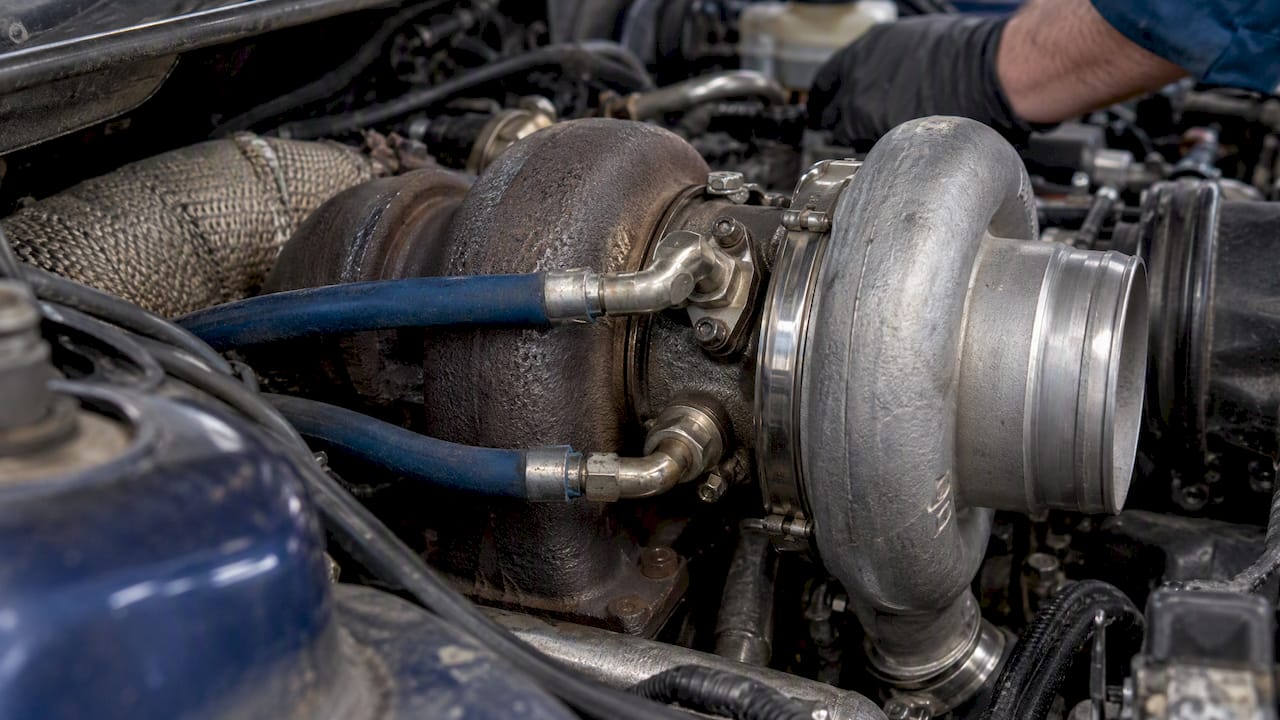
Assess the installed hardware and thermal limits
Identify the turbocharger, manifold, exhaust, catalyst where fitted, cooling layout and lubrication requirements. ALS can impose additional thermal and mechanical loading. No generic temperature threshold or short activation period proves that a particular assembly is suitable.
Garrett explains that appropriate water cooling helps control heat soak into the center housing after shutdown on turbochargers designed to use it. Follow the installation requirements for the exact unit. Its example housing angles and plumbing arrangements must not become universal rules for all turbochargers.
Cooling does not prevent every failure mode or make unrestricted ALS operation acceptable. Turbo shaft speed, exhaust temperature and boost are different measurements: acceptable boost alone does not prove that shaft speed or component temperatures remain within their limits.
Build a log that explains what the ECU actually did
Record the calibration version, fuel, hardware configuration and test conditions. Useful channels may include ALS state, activation reason, engine speed, pedal and throttle positions, ignition timing, cut activity, fuel command, lambda, manifold pressure and relevant temperatures. Include oil pressure and turbo speed when appropriate sensors are fitted.
Distinguish measured values from modeled channels. An exhaust-temperature sensor has a location and response time; its reading is not automatically the hottest component temperature. Missing or slow channels limit the conclusions that can be drawn from a short event.
Interpret lambda alongside cut activity and combustion state. An oxygen-rich exhaust reading during interrupted combustion is not automatically evidence that ordinary steady-state fuel correction is needed. Avoid changing fuel solely to force an ALS log toward a familiar cruise or full-load target.
Validate transitions before extending operation
Use a controlled test plan with application-specific acceptance and stop criteria. Establish normal operation first, then verify that the requested state activates and exits as documented. Check input plausibility and protection logic through supported test methods; deliberately overheating hardware is not a suitable shutdown test.
Compare response under matched conditions and inspect for thermal accumulation or abnormal behavior. A clean first log does not establish durability, and louder exhaust output is not a performance metric. Retain the original calibration and a documented restoration method without assuming that every read is a full recovery backup.
The concepts in our spark advance guide y fuel map guide provide background, not ready-made ALS settings.
Keep technical validation separate from file-service terms
Confirm support for the exact controller and software before ordering. ECU brand coverage alone does not establish that ALS is available on every application. A delivered file also does not demonstrate that the vehicle has undergone thermal, emissions or durability testing.
Use the current Lista de precios de TuningBot y coverage updates for the stated service scope. Do not assume that checksum correction, a particular delivery time, engineer review or unlimited revisions is included unless the order terms specify it.
Preguntas más frecuentes
Is anti-lag the same as launch control?
No. Off-throttle anti-lag and launch control target different operating states. They may share some control features, but their activation logic and calibration must be identified separately.
Does every ECU use the same anti-lag settings?
No. Available controls, arming logic, sensor inputs and shutdown behavior depend on the ECU software and installed hardware.
Does water cooling make anti-lag harmless to a turbo?
No. Correct cooling addresses part of the thermal management requirement. It does not eliminate additional loading or establish the suitability of a particular ALS strategy.