

 EnglishEN
 ItalianoIT
 EspañolES
 PortuguêsPT
 FrançaisFR
 РусскийRU
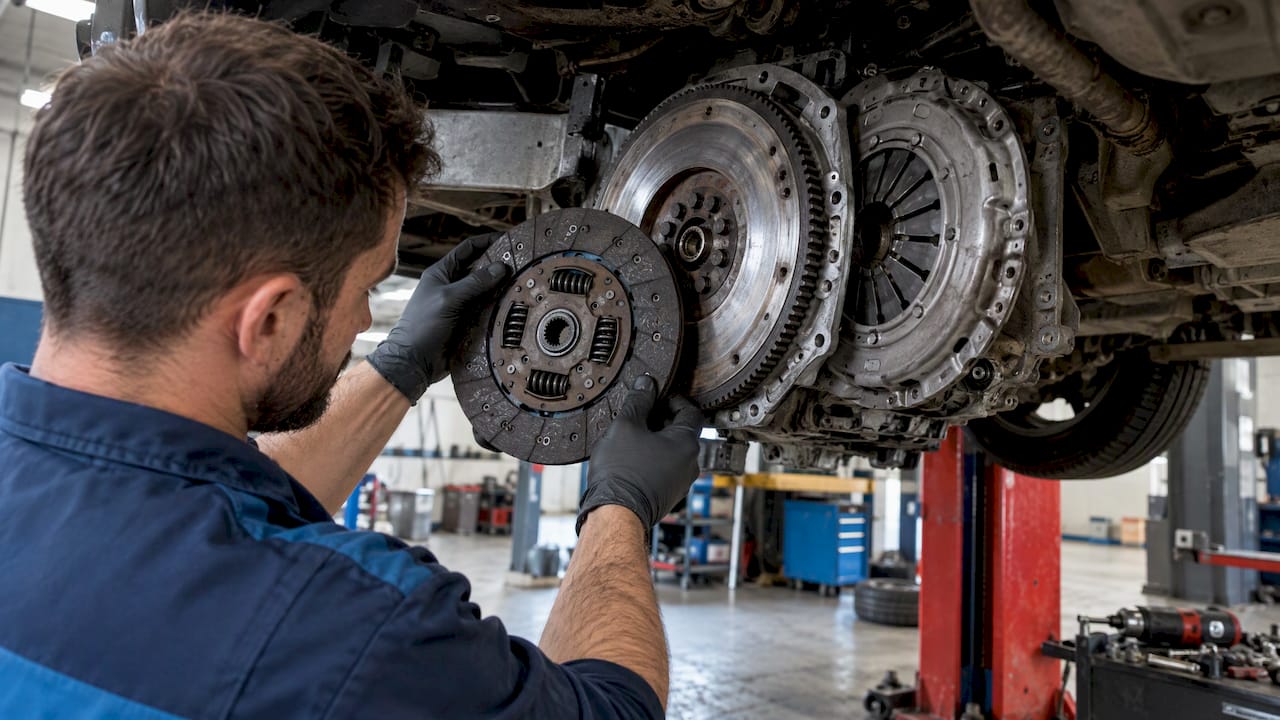
Remap clutch slip describes a loss of torque transfer noticed after an engine calibration change. Additional engine torque can expose limited clutch capacity or contribute to overheating, but timing alone does not identify the fault. Diagnosis must separate unintended clutch slip from wheelspin, normal transmission behavior and other causes of poor acceleration.
Remap clutch slip: establish what is actually slipping
With a manual transmission in a fixed gear and the clutch fully engaged, engine speed should maintain the expected relationship to transmission output speed. A rise in engine speed without the corresponding acceleration can indicate slip, but the interpretation requires reliable speed signals and operating context.
Wheelspin, a gear change, torque-converter unlocking or commanded slip in a dual-clutch transmission can also change the observed speed relationship. Road conditions alone do not rule out wheelspin. Diagnostic data should distinguish engine speed, relevant shaft speeds, gear state and vehicle or wheel speeds where available.
There is no universal test involving full throttle in fourth or fifth gear at a prescribed road speed. High-load, low-speed testing can stress the drivetrain, and repeated slip generates heat. A competent workshop should choose a controlled diagnostic method suited to the vehicle and stop a loaded test once abnormal slip is established.
Separate increased demand from a mechanical fault
A remap can increase torque beyond what the installed clutch can currently transfer. That does not prove the clutch was healthy beforehand, nor does it prove the calibration is the only cause. Existing wear, contamination, release-system problems or incorrect parts can reduce capacity.
ZF’s clutch-slipping guidance identifies several mechanical causes, including problems with release operation, friction surfaces, installation and overheating. The SACHS slipping-clutch resource provides further background.
| Finding | Possible significance | What it does not establish |
|---|---|---|
| Slip appears after a remap | Torque demand or operating behavior may have changed. | That wear or another fault was absent before the change. |
| Slip becomes worse when hot | Thermal conditions affect the problem. | A unique diagnosis of contamination, pressure loss or worn friction material. |
| Slip follows clutch replacement | Parts, assembly and release operation need checking. | That additional running-in will necessarily cure it. |
| Slip improves with reduced torque | Lower demand has changed the operating condition. | That the clutch is mechanically sound or repaired. |
Inspect the clutch and its operating system
Record the mileage, installed parts, repair history, calibration history and the conditions in which the symptom appears. Inspect for leaks, contamination and release-system faults using the manufacturer’s procedure. Pedal free play and adjustment rules differ between cable, hydraulic and self-adjusting systems.
When dismantling is justified, assess friction material, pressure plate, release components and flywheel condition. Dual-mass flywheel movement and wear must be judged against the relevant manufacturer’s limits. Neither automatic replacement nor a generic allowable free-play figure is appropriate for every unit.
Die Eaton clutch failure analysis guide concerns commercial-vehicle clutch applications. It is useful as additional failure-analysis reading, but its application-specific procedures and limits should not be transferred to an unrelated passenger car.
Decide what calibration can and cannot change
Reducing excessive torque demand or reshaping delivery can reduce the load applied to a clutch. On a conventional manual clutch, an ECU calibration does not directly increase the mechanical clamping force. Software cannot restore damaged friction surfaces, remove oil contamination or correct a release mechanism that prevents full engagement.
Disabling torque monitoring is not a repair. Where a controller uses modeled torque for protection or transmission coordination, misleading that model can create additional problems. Review the requested and delivered torque together with the actual drivetrain configuration.
Stage labels are not standardized capacity specifications. A claim that every Stage 1 file works with a standard clutch, or every Stage 2 file requires a particular upgrade, overlooks the engine, torque curve, clutch condition and operating use. The torque-curve guide explains why delivery across the operating range matters.
Treat dual-clutch transmissions as a separate diagnosis
For a DSG or another dual-clutch transmission, assess the appropriate clutch-speed, temperature, command and adaptation information. Wet and dry systems have different actuation and thermal behavior. A displayed pressure or torque value may be commanded or modeled rather than independently measured.
Do not prescribe a pressure increase or adaptation reset for every slip complaint. Confirm mechanical condition, correct fluid and level where applicable, hydraulic or actuator operation, software compatibility and any required learning procedure. A shift schedule change is not equivalent to repairing a clutch-control fault.
Match the repair and calibration to the intended use
If replacement is needed, select compatible components using the supplier’s application data and stated rating conditions. A single advertised torque number does not capture repeated launches, thermal load, vehicle mass or the shape of the torque delivery. Follow the specific installation and running-in instructions rather than inventing a universal distance or safety margin.
Stop repeated loaded testing when slip is present. Continuing to generate slip can increase heat and damage. If drive becomes unreliable, a burning smell is persistent or the vehicle cannot be operated safely, arrange recovery and inspection; “drive gently” is not a universal assurance that continued use is safe.
After the repair or calibration revision, verify the affected operating conditions and retain the diagnostic findings. Separate evidence that slip has stopped in the tested conditions from a guarantee of future capacity under every use.
Häufig gestellte Fragen
Does clutch slip after a remap prove the remap is the only cause?
No. Increased torque may expose limited capacity or contribute to damage, but wear, contamination, release faults and installation issues also require investigation.
Can software repair a slipping manual clutch?
No. Reducing torque demand may reduce slip in some conditions, but it does not repair friction material, contamination or a release-system fault.
Is it safe to keep driving with clutch slip?
There is no universal assurance. Stop repeated loaded testing; if drive is unreliable or safe operation is in doubt, arrange recovery and inspection.
Weiterführende Informationen
These additional articles discuss symptoms, particular vehicles and maintenance. Their examples do not establish universal test procedures or clutch ratings.