

 EnglishEN
 ItalianoIT
 EspañolES
 PortuguêsPT
 FrançaisFR
 РусскийRU
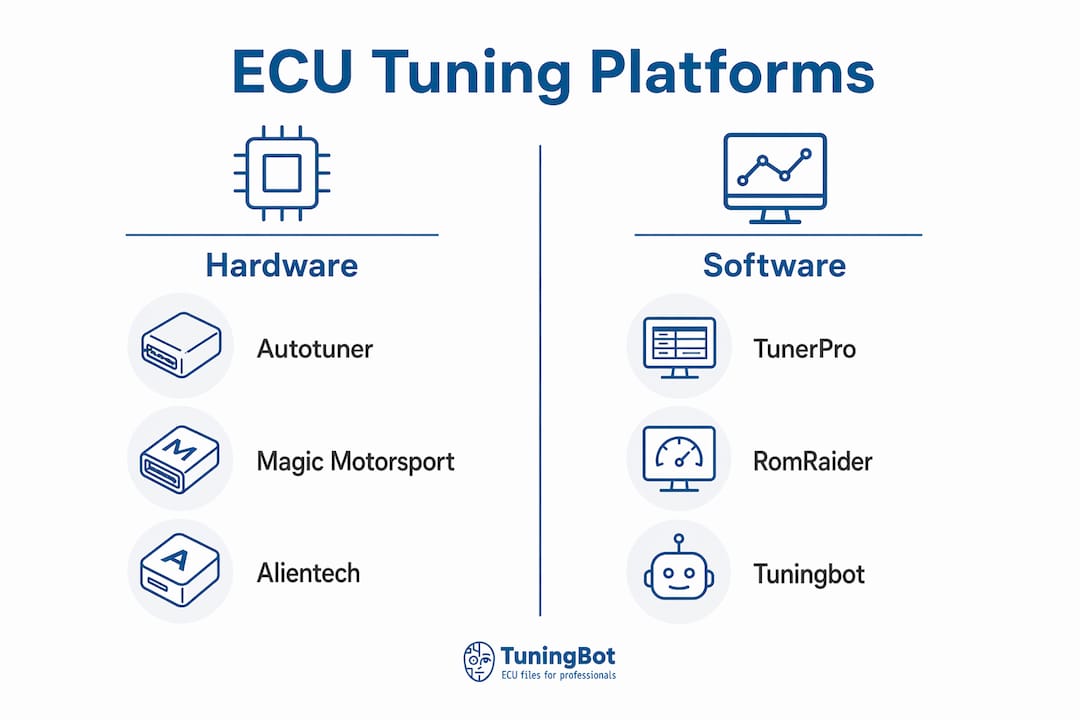
Alternativen zu Alientech tuningcom Dazu gehören professionelle ECU- und TCU-Flashing-Plattformen wie AutoTuner und Magic Motorsport FLEX sowie Bearbeitungsprogramme wie TunerPro und RomRaider. Diese Produkte erfüllen nicht alle dieselbe Funktion: Flash-Tools lesen und schreiben Steuergeräte, Bearbeitungssoftware verändert Kalibrierungsdaten, und TuningBot stellt kalibrierte Dateien für Werkstätten bereit, die bereits über kompatible Hardware verfügen.
Was sind die besten Alternativen zu Alientech Tuning?
Die am ehesten vergleichbaren professionellen Hardware-Alternativen sind AutoTuner und Magic Motorsport FLEX. Der genaue Umfang der Unterstützung für OBD, Bench, Boot und Service-mode variiert je nach ECU und Softwareversion und muss daher in der aktuellen Protokolldatenbank des jeweiligen Herstellers überprüft werden.
TunerPro und RomRaider gehören zu einer anderen Kategorie. Es handelt sich dabei um Tools zur Bearbeitung von Kennfeldern und zur Protokollierung, nicht um universelle ECU-Lese-/Schreibgeräte. Ihr Nutzen hängt von den Definitionen, kompatiblen Schnittstellen und der Fähigkeit des Technikers ab, Kennfelder zu validieren.
Keine einzelne Plattform deckt alle ECU-, TCU- und security-Generationen ab. Professionelle Werkstätten setzen in der Regel mehrere Werkzeuge ein, um Lücken in der Abdeckung zu schließen und Wiederherstellungsmöglichkeiten aufrechtzuerhalten.
| Plattform | Kategorie | Typische Rolle | Hauptstärke | Hauptbeschränkung |
|---|---|---|---|---|
| AutoTuner | Professionelle Flasishing-Plattform | ECU/TCU – Lesen und Schreiben | Geführter Arbeitsablauf und breite Abdeckung | Die Deckung muss gemäß ECU überprüft werden. |
| Magic Motorsport FLEX | Professionelle Flasishing-Plattform | OBD, Bench, Boot und Service-Arbeiten, wo unterstützt | Breites Protokollspektrum | Pakete und Protokolle variieren |
| TunerPro | Redakteur/Protokollant | Binäres Editieren über XDF-Definitionen | Flexibel und kostengünstig | Kein universeller Hardware-Zugriff |
| RomRaider | Open-Source-Editor / -Logger | Definitionsbasiertes tuning auf unterstützten Plattformen | Starke Gemeinschaft für eine ausgewählte Marke | Kein Universalflesher |
| TuningBot | Online-Dateidienst | Kalibrierung von Dateien, die mit vorhandener Hardware gelesen wurden | Öffentliche Preisgestaltung, keine Prepaid-Guthaben, Entwickler-Support | Ersetzt kein Flashtool |
Wie man zwischen Alientech Tuningcom Alternativen wählt
Bei der Auswahl von Alternativen zum Alientech tuningcom gilt es, jede Plattform auf den tatsächlichen Fahrzeugmix der Werkstatt, die ECU- und TCU-Familien, die erforderlichen Zugriffsmethoden, die Fähigkeiten der Techniker und die betrieblichen Anforderungen des model abzustimmen. Aktuelle Angaben zur Protokollabdeckung aus realen Einsätzen sind aussagekräftiger als allgemeine Marketingvergleiche.

Marken- und Protokollabdeckung von ECU. Dies hängt von Ihrem täglichen Fahrzeugmix ab. Eine Werkstatt, die vorwiegend europäische Dieselfahrzeuge wartet, benötigt eine umfassende Abdeckung von Bosch und Continental in den Bereichen OBD-, Prüfstand- und Boot-Protokolle. Eine Werkstatt, die sich auf japanische Importfahrzeuge spezialisiert hat, legt möglicherweise den Schwerpunkt auf die Unterstützung von Denso und Keihin. Die Fahrzeugabdeckung von Alientech, insbesondere bei älteren Modellen, ist nach wie vor ein Maßstab, an dem sich viele Alternativen messen.
Workflow und Bearbeitungsgranularität. Definitionsgesteuerte Plattformen wie TunerPro eignen sich für Techniker, die Transparenz auf Parameterebene und Kontrolle über die Kalibrierung wünschen. Geführte Software-Suiten, die wiederholbare „Dump-and-Flash“-Zyklen ausführen, eignen sich für Werkstätten, die Durchsatz und Konsistenz gegenüber einer umfassenden Bearbeitung der Kennfelder priorisieren.
Master- vs. slave-Werkzeugkonfigurationen. Dies ist eine strukturelle Geschäftsentscheidung. Master-Tools bieten einer Werkstatt vollständige Kalibrierungsunabhängigkeit, erfordern jedoch qualifizierte Techniker, die Dateien erstellen und validieren können. Slave-Tools sind auf einen Anbieter von master-Dateien angewiesen, was zwar die Anforderungen an das interne Fachwissen verringert, jedoch Kosten pro Datei sowie Abhängigkeiten von externen Anbietern mit sich bringt.
Die Kostenstruktur muss anhand der aktuellen Bedingungen des Herstellers oder Händlers überprüft werden. Hardware, Master-/Slave-Status, Protokolle, Abonnements, Zubehör, Schulungen und Support tragen alle zu den Gesamtbetriebskosten bei.
Technischer Support und Schulung. Wenn ein Lesevorgang mitten im Job fehlschlägt, ist die Reaktionszeit des Werkzeugherstellers entscheidend. Die Support-Infrastruktur von Alientech wird häufig als Stärke genannt. Jede Alternative, für die Sie sich entscheiden, sollte dokumentierte Schulungsressourcen und einen zugänglichen technischen Support für Ihre Region bieten.
Pro-Tipp: Bevor Sie sich für eine neue Plattform entscheiden, sollten Sie Ihre Fahrzeugaufträge der letzten 90 Tage nach ECU-Marke und -Protokoll aufschlüsseln. Anhand dieser Daten können Sie genau erkennen, welche Lücken Sie schließen möchten, und vermeiden so den Kauf eines Tools, das Funktionen dupliziert, über die Sie bereits verfügen.
Ausführlicher Vergleich: Funktionen, Protokolle und Preise models
Der aussagekräftigste Vergleich der Alternativen zu Alientech tuningcom unterscheidet zwischen Protokollabdeckung, Arbeitsablauf, Lizenzierung, Support und Wiederherstellungsoptionen.
Markenabdeckung und Tiefe der Protokollbeschreibung bei ECU
AutoTuner deckt eine breite Palette europäischer und asiatischer ECU-Modelle ab und unterstützt sowohl OBD- als auch Prüfstandsprogrammierung in einem Gerät. Dank seines frühen Vorsprungs bei den OBD-Protokollen von BMW und Mercedes konnte es nach seiner Markteinführung im Jahr 2019 schnell eine starke Anwenderbasis aufbauen. Magic Motorsport erweitert das Angebot um die Unterstützung von „Boot-mod“, was für ECU-Geräte, bei denen der OBD-Zugriff gesperrt oder nicht verfügbar ist, von entscheidender Bedeutung ist. Damit ist es die umfassendere Hardware-Option für Werkstätten, die beschädigte oder geschützte Geräte reparieren.
TunerPro und RomRaider enthalten keine Hardware. Ihre Abdeckung hängt vollständig von der Qualität und Verfügbarkeit der von der Community gepflegten Definitionsdateien ab. Die XML-basierten Definitionen von RomRaider sind für Subaru ECU und verwandte Plattformen gut ausgearbeitet. Das XDF-Ökosystem von TunerPro ist umfassender, variiert jedoch erheblich je nach ECU-Familie, sodass die Abdeckung für weniger verbreitete Geräte lückenhaft sein kann.
Workflow-Komplexität und Bearbeitungsgranularität
Sowohl AutoTuner als auch Magic Motorsport folgen einem geführten „Lesen-modify-Schreiben“-Workflow, der den Prozess strukturiert hält und Bedienungsfehler reduziert. TunerPro und RomRaider stellen über ihre Definitions-Ebenen die Rohdaten der ECU-Kennfelder bereit und ermöglichen erfahrenen Kalibrierern so den direkten Zugriff auf Kraftstoff-, Zünd-, Drehmoment- und boost-Tabellen. Diese Detailgenauigkeit ist für individuelle Kalibrierungsarbeiten von großem Wert, erfordert jedoch ein höheres Maß an Fachwissen und mehr Zeitaufwand pro Datei.
Für die Bearbeitung von Geschäften ECU-Programmierung für mehrere Fahrzeuge, Die zentralisierte Verwaltung von ECU-Identifikationen und -Revisionen reduziert Fehler bei der Dateiverarbeitung und sorgt für eine übersichtliche Kalibrierungshistorie.
Geschwindigkeit und Betrieb model
Die Lese- und Schreibgeschwindigkeit hängt vom Protokoll, der Verbindung (Modus), der Dateigröße und dem Fahrzeugnetzwerk ab. Die Zuverlässigkeit des Arbeitsablaufs und die Unterstützung bei der Wiederherstellung sind wichtiger als eine einzelne Angabe zur Spitzengeschwindigkeit.
Preis- und Lizenzierungsstruktur
| Plattform | Kosten: model zur Überprüfung | Fragen vor dem Kauf |
|---|---|---|
| AutoTuner | Hardware, Master/Slave-Konfiguration, Zubehör und aktuelle Servicebedingungen | Welche Protokolle sind enthalten? Werden Aktualisierungen oder Onlinedienste separat berechnet? |
| Magic Motorsport FLEX | Hardware-Paket, Module, Protokolle, Abonnements und Zubehör | Welche OBD/Bench/Boot-Protokolle sind aktiv? |
| TunerPro | Software plus Definitionen und separate Hardware | Sind verifizierte XDF-Dateien verfügbar? |
| RomRaider | Open-Source-Software plus kompatible Hardware und Definitionen | Wird genau diese ECU-ID unterstützt? |
Die Wahl zwischen Abonnement und nutzungsbasierter Bezahlung models wirkt sich auf die langfristigen Betriebskosten aus, was beim Kauf nicht immer auf den ersten Blick erkennbar ist. In einer stark ausgelasteten Werkstatt, in der wöchentlich Dutzende von Dateien bearbeitet werden, summieren sich die Gebühren pro API schneller als bei einem Pauschalabonnement. Betriebe mit geringerem Arbeitsaufkommen ziehen möglicherweise die Flexibilität vor, nur für das zu bezahlen, was sie tatsächlich nutzen.
Integration mit Diagnose- und Werkstattwerkzeugen
Sowohl AutoTuner als auch Magic Motorsport lassen sich nahtlos in gängige Werkstatt-Diagnoseumgebungen integrieren. TunerPro unterstützt neben der Bearbeitung von Kennfeldern auch die Live-Anzeige von Datenprotokollen, was für iterative Kalibrierungen am Fahrzeug nützlich ist. RomRaider vereint die Protokollierung und die Bearbeitung von Kennfeldern in einer einzigen Benutzeroberfläche, wodurch der Wechsel zwischen verschiedenen Anwendungen während einer tuning-Sitzung reduziert wird.
Wie TuningBot Alientech, AutoTuner und FLEX ergänzt
Viele Werkstätten setzen TuningBot zusammen mit Alternativen zu Alientech tuningcom wie AutoTuner und Magic Motorsport FLEX ein. Das Flash-Tool liest und schreibt die ECU oder TCU, während TuningBot zwischen diesen Vorgängen die Kalibrierung der stage übernimmt.
Vor der Bestellung können Werkstätten prüfen ECU und TCU Serviceabdeckung, überprüfen Sie öffentliche Preisliste und durchsuchen die verfügbaren ECU-Dienste.
Die Datei „original“ kann dann über Datei tunen ohne Prepaid-Guthaben zu kaufen. Die Werkstatt behält die Kontrolle über Diagnose, Programmierung und Validierung, während TuningBot von Ingenieuren kalibrierte Dateien und technischen Support bereitstellt.
Mit diesem model kann eine Multi-Tool-Werkstatt einen einzigen Dateianbieter für verschiedene Hardwareplattformen nutzen, anstatt für jedes Werkzeug eine eigene Kalibrierungsbeziehung pflegen zu müssen.
Wichtige Erkenntnisse
Keine der wichtigsten Alternativen zum Alientech tuningcom deckt alle ECU-, TCU- und security-Generationen sowie alle Kalibrierungsabläufe ab. Professionelle Werkstätten setzen häufig eine Kombination aus sich ergänzenden Werkzeugen ein.
| Punkt | Einzelheiten |
|---|---|
| Äpfel mit Äpfeln vergleichen | AutoTuner und FLEX sind Flash-Tools; TunerPro und RomRaider sind Editoren/Logger; TuningBot ist ein Dateidienst. |
| Die Deckung muss überprüft werden. | Überprüfen Sie die genaue ECU-, TCU- und Softwareversion sowie die Zugriffsmethode. |
| Multifunktionswerkstätten sind weit verbreitet | Komplementäre Werkzeuge reduzieren Abdeckungslücken und bieten Wiederherstellungsoptionen. |
| Master vs. Slave ändert den Arbeitsablauf | Master unterstützt unabhängiges Dateiarbeiten; Slave ist von einem gekoppelten Master-Provider abhängig. |
| Die Gesamtkosten gehen über den Hardwarepreis hinaus. | Dazu gehören Protokolle, Zubehör, Abonnements, Updates, Schulungen und Support. |
| TuningBot ergänzt die Hardware | Es liefert kalibrierte Dateien, ersetzt jedoch keine Lese-/Schreibgeräte. |
FAQ
Was sind die wichtigsten Alternativen zu Alientech Tuningcom?
Zu den besten professionellen Alternativen zum Alientech tuningcom zählen AutoTuner und Magic Motorsport FLEX. TunerPro und RomRaider sind eher Bearbeitungs- und Protokollierungsanwendungen als direkte Ersatzlösungen für Flash-Tools.
Erfordert AutoTuner ein jährliches Abonnement?
Kommerzielle Bedingungen können sich ändern und je nach Region variieren. Überprüfen Sie die aktuellen offiziellen Bedingungen von AutoTuner, anstatt sich auf eine pauschale Aussage zu Jahresabonnements oder API-Gebühren zu verlassen.
Was ist der Unterschied zwischen den Werkzeugen master, slave und tuning?
Ein Master-Tool bietet normalerweise Zugriff auf unverschlüsselte Dateien und unterstützt eine unabhängige Kalibrierung. Ein Slave-Tool ist an einen bestimmten Master-Anbieter gebunden und tauscht innerhalb dieser Beziehung verschlüsselte Dateien aus.
Können TunerPro oder RomRaider ein tuning-Hardware-Tool ersetzen?
Nein. Sie bearbeiten und protokollieren Anwendungen. Kompatible Hardware, ein korrektes Protokoll und zuverlässige Definitionen sind nach wie vor erforderlich.
Wie lässt sich TuningBot in eine Werkstatt integrieren, die bereits über tuning-Hardware verfügt?
TuningBot stellt kalibrierte ECU- und TCU-Dateien für Werkstätten bereit, die Fahrzeuge bereits mit Tools wie KESS3, AutoTuner oder FLEX auslesen und programmieren.