

 ItalianoIT
 DeutschDE
 EspañolES
 PortuguêsPT
 FrançaisFR
 РусскийRU
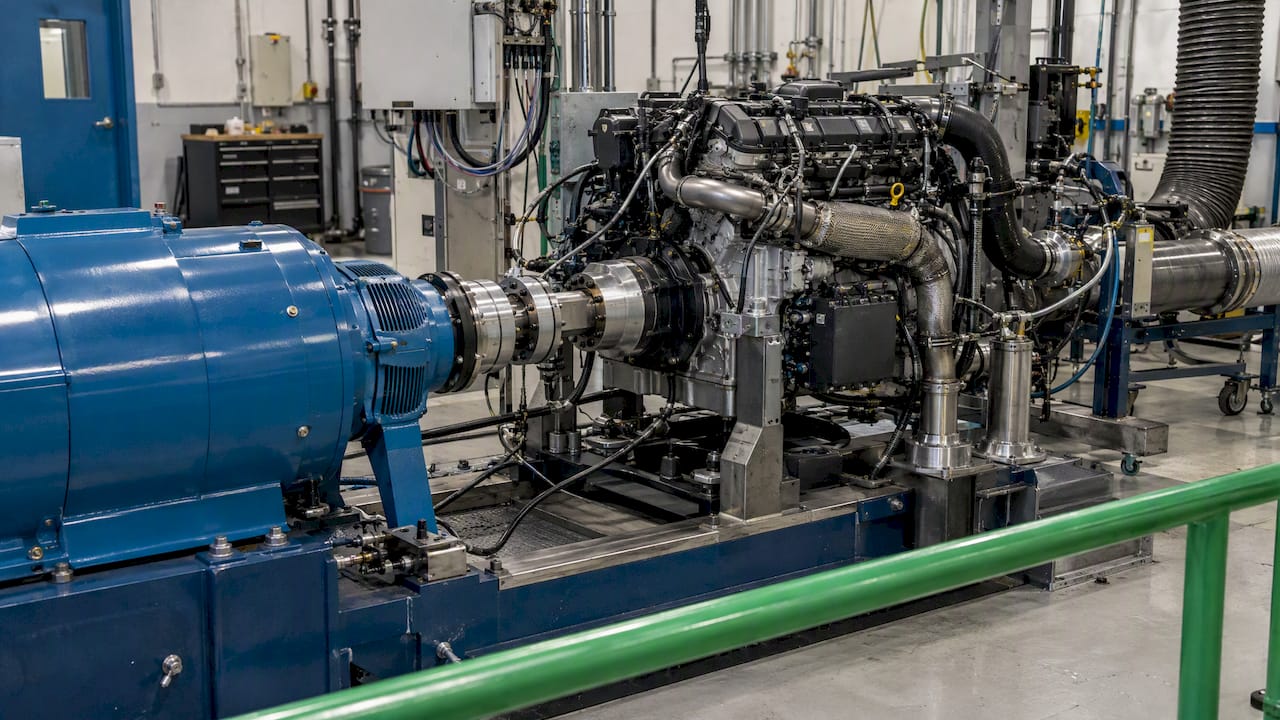
Torque monitoring off describes changing or disabling an ECU’s torque-supervision function. It is different from increasing a normal torque limit, and it is not a diagnosis for every power cut after a remap. Before considering any change, identify the function that intervened and establish whether it is responding to a real fault, an inconsistent model or an unsupported calibration.
Torque monitoring off versus torque management
Torque management coordinates requests from the driver, transmission and other vehicle functions. Normal limits can restrict output for component protection or operating conditions. Torque monitoring supervises the plausibility of the resulting behavior and can form part of the system’s functional-safety measures.
The Bosch ME7 architecture paper explains torque-oriented coordination in that system. It should not be treated as a map-address guide for later ECUs or proof that every controller has identical monitoring logic.
The E-Gas monitoring concept archived by NHTSA distinguishes control, function monitoring and controller monitoring. In torque-based supervision, permissible and actual torque quantities are calculated through defined monitoring paths. The applicable implementation and fault reactions still depend on the project and software.
Identify the intervention before assigning a cause
Loss of power at high load does not provide a reliable probability that the torque monitor is involved. Boost regulation, fuel pressure, thermal protection, traction control, transmission requests and electrical faults can produce similar symptoms. Read the reporting module, complete code description, status and freeze-frame data.
Record the operating conditions and whether the behavior existed before the modification. Where available, compare permitted torque, intervention status, throttle command, airflow, fueling and pressure channels on the same time base. Check channel units and definitions; similarly named channels may represent indicated, effective or gearbox-input torque.
An ECU’s “actual torque” channel is commonly model-derived. Agreement between two calculated channels is useful evidence about the software, but not independent proof of shaft torque. A model or scaling error may affect several channels together.
This explanation of why engine diagnostics matter gives workshop context. The diagnostic procedure for the identified ECU determines which tests and measurements establish the cause.
Check model consistency and hardware condition
Review the software identity and calibration history first. A file built for another software revision can create problems unrelated to monitoring thresholds. Preserve the ECU identification alongside the read method and file history.
Then distinguish normal requested-torque limits from monitor thresholds, actuator limits and model conversions. A remaining stock limiter does not automatically create a monitor fault. Equally, increasing a limiter cannot correct inaccurate injector data, a leaking intake, an actuator fault or an unsuitable torque model.
Hardware changes may require recalibration of the relationship between air charge, fuel, ignition efficiency and torque. Confirm those relationships using suitable measurements and the platform’s definitions. Stage labels do not establish how large the change is or whether monitoring should be altered.
Understand the torque paths and transmission signals
On spark-ignition engines, air-charge changes generally provide a slower torque response than ignition intervention; some operating strategies also use cylinder or fuel intervention. These are control concepts, not a universal actuator list for diesel and petrol engines.
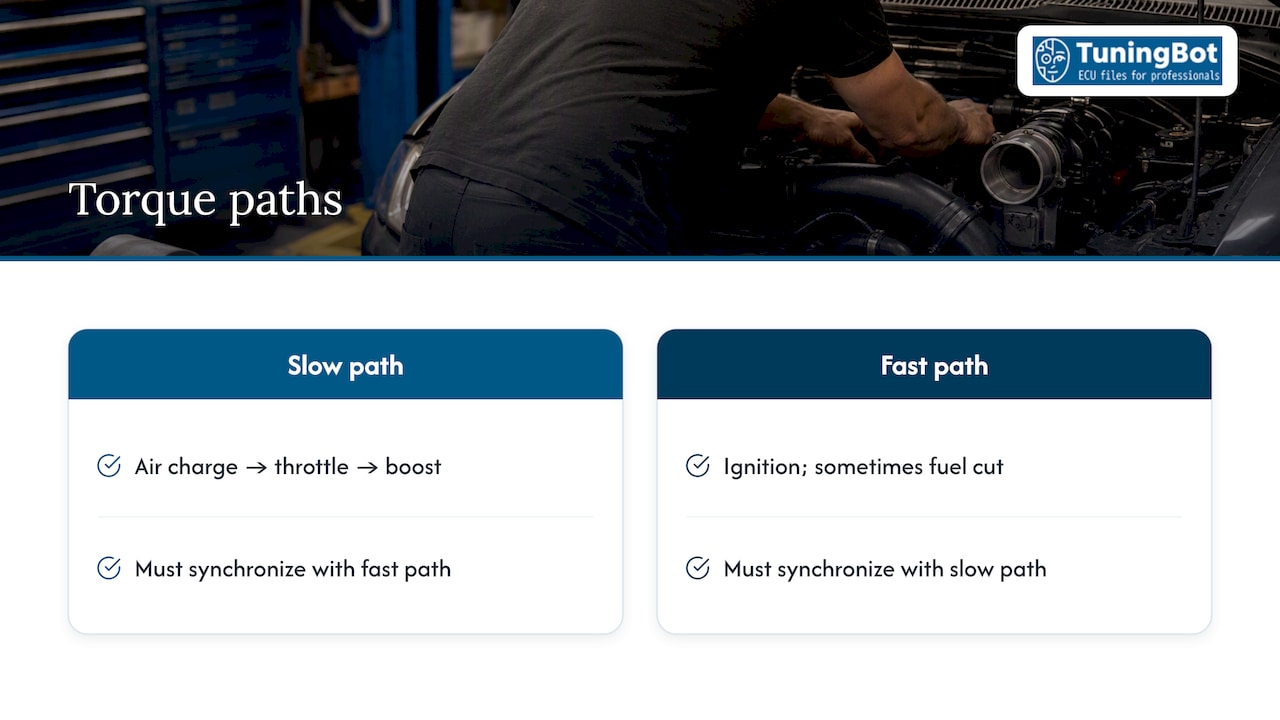
The research paper on torque management with variable cam timing provides additional modeling context. Camshaft position and charge dynamics are examples of why commanded output cannot be inferred from a single map value.
Torque information shared with the transmission also matters. Deliberately understating torque to avoid a limit can make clutch or shift control inconsistent with the engine’s output. Review the 6HP torque-signal guide for one transmission family and the MED17 torque-structure guide for related ECU concepts.
Define what a proposed change actually affects
Suppressing a fault code, changing a tolerance, altering an intervention and disabling a monitor are different operations. A service label such as TMoff does not disclose which paths are affected. Establish the proposed scope before judging its consequences.
A monitor may detect unintended torque or another unsafe condition. Disabling it can remove detection or response even when the dashboard remains clear. Other protections should not be assumed unchanged without checking the actual modification. A competition label alone does not establish a complete alternative safety strategy.
First assess whether correcting the calibration model, sensor data or underlying hardware resolves the disagreement while retaining appropriate supervision. Any remaining change needs a documented engineering basis for that particular control system.
Verify integrity, behavior and remaining limitations
Follow the supported programming procedure and confirm checksum handling for the actual memory regions. A signature check is not the same as a checksum. The retained Bimmerpost community homepage is general discussion context, not documentation of a particular ECU’s protected areas.
Preserve baseline diagnostic evidence. After the work, assess starting, idle, pedal release, transitions, relevant transmission interactions and the operating conditions that originally caused the fault. Use controlled testing suited to the vehicle; absence of a code or one successful acceleration does not validate a disabled safety function.
Record supported verification results and any test limitations. A read-back comparison is meaningful only when the read format and changing data are understood. Do not promise that every controller can be verified with an identical byte-for-byte procedure.
Functional safety and emissions compliance are separate questions. The EPA and EU references below concern emissions-related requirements; they do not establish that every torque monitor is an emissions monitor, or that removing one is automatically permitted. Confirm the function and applicable requirements for the actual vehicle.
Coverage announcements and the current service information do not replace identification and diagnosis. This guide makes no general promise that disabling monitoring adds power, eliminates limp mode or preserves all other protections.
Frequently asked questions
Is torque monitoring the same as a torque limiter?
No. A normal limiter constrains requested or permitted output. Monitoring supervises plausibility and can form part of the ECU’s safety measures.
Does a power cut after a remap prove a monitor fault?
No. Fuel, airflow, actuator, thermal and transmission-related causes can produce similar symptoms. Use the exact code and supporting diagnostic data.
Is actual torque in an ECU log a direct measurement?
Often it is a model-derived value. Check the channel definition before treating it as measured shaft torque or comparing it with dynamometer data.
Does disabling torque monitoring add power?
It does not directly create additional airflow or engine output. It can change intervention behavior while also removing a layer of supervision.
Does an empty fault list prove that a monitoring change is safe?
No. Diagnostic reporting, functional behavior and safety validation are separate. A cleared or suppressed fault cannot establish that the underlying problem is resolved.
Sources and further reading
Related TuningBot reading
- How a Professional Tuner Reads ECU Data – Pro Guide
- EDC17 Stage 1 Tuning Guide: 7 Critical Calibration Checks
- Bosch ECU: How It Works, Models and Tuning
- Big Turbo Remap Stage 3: The Complete Tuner’s Guide
- ECU Tuning Reliability — Why 100% Guarantees Don’t Exist
- Common ECU Tuning Mistakes Workshops Must Avoid
- TuningBot Solutions Upgrade: New Supported ECU Coverage
- How Remap Affects Torque Curve: 5 Proven Changes
- Diesel Torque Optimization : 7 Critical Calibration Checks