

 EnglishEN
 ItalianoIT
 DeutschDE
 PortuguêsPT
 FrançaisFR
 РусскийRU
El servicio remap, respaldado por ingenieros reales, es el proceso profesional de personalización de la calibración de la ECU mediante diagnósticos especializados, tuning específico para cada vehículo y un servicio técnico de posventa continuo, con el fin de ofrecer mejoras de rendimiento seguras y cuantificables. Para los talleres de automoción y los profesionales de los tuners, comprender por qué es importante contar con el apoyo real de ingenieros en un servicio remap marca la diferencia entre obtener resultados fiables y sufrir costosas averías en el motor. Los archivos genéricos disponibles en el mercado procedentes de fuentes no verificadas conllevan graves riesgos. Plataformas como TuningBot y los especialistas certificados por el IMI (Instituto de la Industria del Motor) demuestran que la calibración de la ECU remapping respaldada por ingenieros es el estándar profesional, no una mejora opcional.
Tabla de contenido
- Por qué la asistencia de ingenieros reales en un servicio remap comienza con el diagnóstico
- El modelo genérico remap frente al servicio respaldado por ingenieros: ¿en qué se diferencian realmente?
- ¿Qué ofrece el servicio de asistencia técnica continua tras el remap?
- Ventajas financieras y operativas para talleres
- Puntos clave
- La parte de esta conversación que la mayoría de los artículos omiten
- Lleva el servicio remap de tu taller al nivel profesional
- PREGUNTAS FRECUENTES
- Recomendado
Por qué la asistencia de ingenieros reales en un servicio remap comienza con el diagnóstico
Los diagnósticos previos a la puesta a punto son la base de cualquier servicio profesional del remap. Sin ellos, estarías calibrando una ECU en un motor que podría estar ya dañado. Numerosos problemas tras el remap rastrear directamente fallas preexistentes que un servicio genérico nunca detectó.
Un verdadero ingeniero utiliza herramientas de lectura de datos en tiempo real de la ECU para identificar fugas en el boost, inyectores desgastados, acumulación de carbonilla en las válvulas de admisión y sensores deteriorados del degr antes de modificar ni un solo parámetro. Herramientas como Alientech KESS3, AutoTuner y PCMFlash proporcionan los datos brutos. El ingeniero los interpreta. Ese paso de interpretación es lo que distingue un resultado calibrado de una apuesta a ciegas.
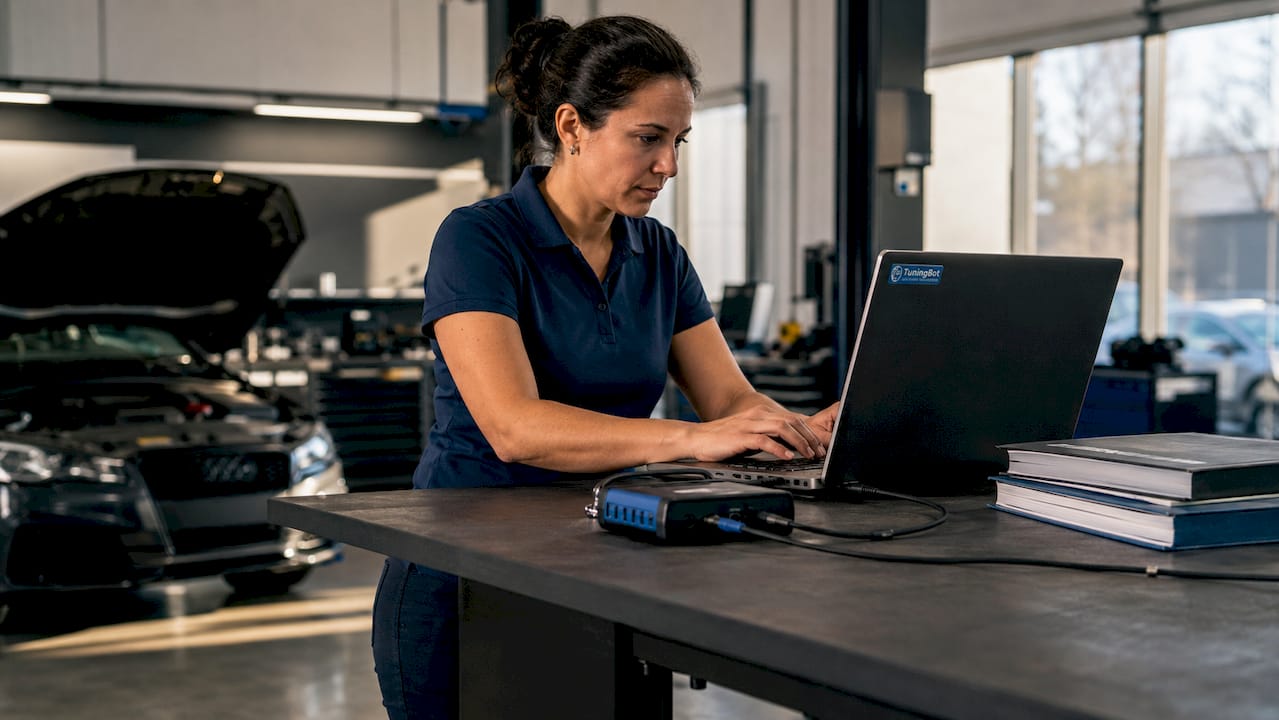
Pensemos en una situación habitual: un 2.0 TDI con una válvula EGR parcialmente obstruida y un sensor MAP defectuoso. Si se carga un archivo genérico remap en esa ECU, se establecerán unos valores objetivo boost que el motor no puede alcanzar físicamente. El resultado es un funcionamiento irregular, humo excesivo y un desgaste acelerado del turbocompresor. Un ingeniero detecta ambos fallos durante la revisión de estado previa a la puesta a punto, los resuelve primero y, a continuación, calibra el archivo según el estado real del vehículo.
Especialistas calificados por IMI diagnósticos de pre-ajuste de estrés y divulgación honesta de riesgos como pasos innegociables. Ese estándar profesional protege tanto al motor como la responsabilidad del taller.
Consejo profesional: Antes de enviar cualquier archivo de la ECU para su calibración, realiza un escaneo completo de códigos de avería (DTC) y un registro de datos en tiempo real tanto al ralentí como bajo carga. Marca cualquier código de avería relacionado con el ajuste de combustible, la presión boost o la temperatura de escape. Envía esos datos junto con el archivo de la ECU para que el ingeniero encargado de la calibración tenga una visión completa de la situación.
Flujo de trabajo numerado para diagnósticos previos a la afinación en un entorno profesional:
- Leer y borrar todos los DTC almacenados, luego volver a verificar después de un ciclo de conducción para confirmar fallas activas.
- Registra los parámetros de los datos en tiempo real, incluyendo las lecturas del MAF, la presión del boost, la presión del conducto de combustible y la temperatura del líquido refrigerante.
- Inspeccionar componentes físicos: tuberías del intercooler, estado del filtro de aire y caudales de retorno de los inyectores.
- Verificar el historial de servicio y confirmar la especificación de combustible correcta para el vehículo.
- Documente todos los hallazgos y compártalos con el ingeniero de calibración antes de que comience la generación del archivo.
El modelo genérico remap frente al servicio respaldado por ingenieros: ¿en qué se diferencian realmente?
La diferencia entre una lima remap genérica y una lima calibrada por profesionales no radica únicamente en la calidad, sino en el nivel de riesgo que conlleva cada una.
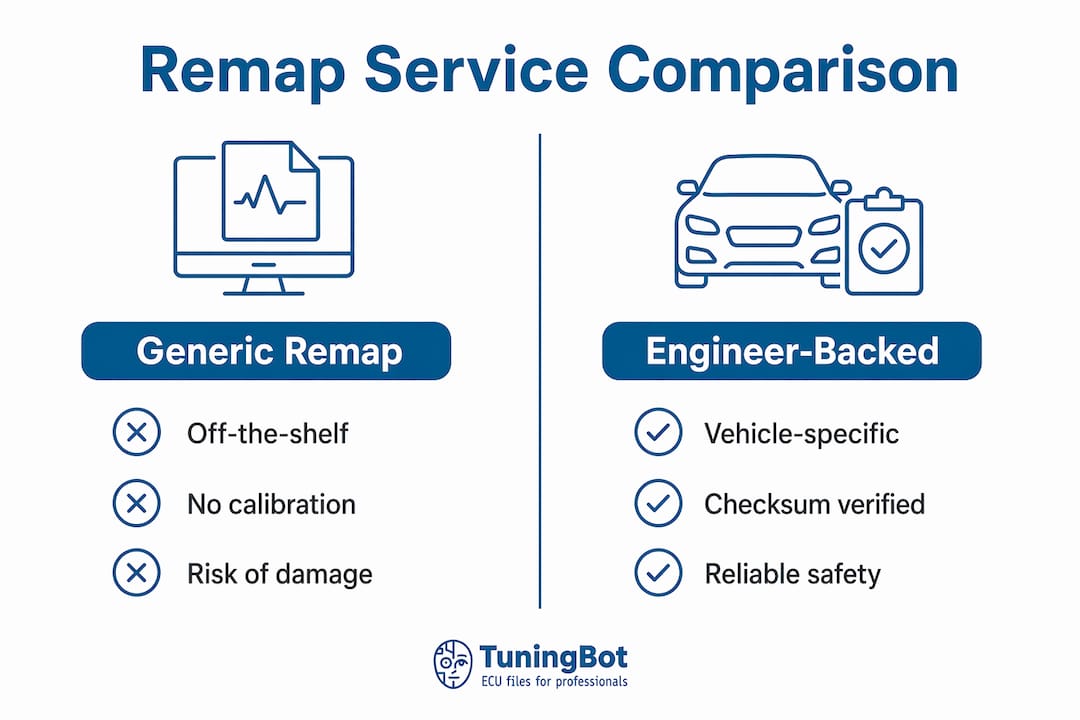
Mapas genéricos prefabricados pueden provocar daños en el turbocompresor, desgaste de los inyectores y fallos en el sistema de gestión del motor. Están diseñadas para un vehículo medio teórico, no para la unidad concreta que se encuentra en el elevador de tu taller. Un remap respaldado por ingenieros tiene en cuenta el kilometraje, la calidad del combustible, las modificaciones del hardware y los datos en tiempo real recopilados durante el diagnóstico.
| Característica | Archivo de reasignación genérico | Remapeo respaldado por ingenieros |
|---|---|---|
| Calibración específica del vehículo | No | Sí |
| Diagnósticos preliminares incluidos | No | Sí |
| Corrección de suma de verificación verificada | Raramente | Siempre |
| Márgenes de seguridad aplicados | Desconocido | Confirmado |
| Cuidados posteriores y soporte de revisión | Nada | Incluido |
| Límites del turbo, del inyector y del tiempo | No validado | Validado por vehículo |
La corrección de la suma de verificación es un paso técnico que muchos talleres pasan por alto hasta que algo sale mal. Un ingeniero experimentado realiza Corrección checksum para verificar la integridad de remap file integr y evitar errores de la ECU durante la programación. Sin ello, un archivo binario modificado puede activar las rutinas de autoprotección de la ECU, dañar la memoria flash o, simplemente, no poder escribirse. Se trata de un problema que se puede solucionar en un taller con las herramientas adecuadas. Para un cliente que haya comprado un archivo barato por Internet, esto puede suponer que la ECU quede inservible.
Calidad del software del motor tuning y los conocimientos sobre tuner influyen de manera decisiva en la seguridad y la eficacia del resultado. Un buen software se prueba incorporando márgenes de seguridad. Un software deficiente provoca un funcionamiento irregular, humo excesivo y daños en los componentes. La función del ingeniero consiste en aplicar correctamente ese software a un vehículo concreto, no solo en cargar un archivo y cobrar por ello.
Consejo profesional: Solicita siempre a tu proveedor de calibración un archivo verificado según la norma checksum. Si el proveedor no puedes confirmar que se haya realizado la corrección checksum, considera el archivo como no verificado y no lo instales en el vehículo de un cliente.
¿Qué ofrece el servicio de asistencia técnica continua tras el remap?
El mantenimiento posterior a la programación remap es donde muchos servicios fallan a sus clientes. La puesta a punto no termina cuando se actualiza el archivo. El comportamiento del motor cambia en condiciones reales de conducción, y un servicio profesional tiene eso en cuenta.
El servicio posventa y la asistencia técnica continua evitan que los problemas menores se conviertan en averías graves tras el remap. Los profesionales no solo proporcionan archivos tuning, sino también una orientación continua que protege el buen estado del motor a largo plazo. Esa orientación incluye la monitorización de anomalías, el ajuste de los parámetros si el vehículo responde de forma inesperada y el restablecimiento del mapa original del fabricante (OEM) si es necesario.
Entre los principales resultados del servicio de asistencia posterior de un servicio remap real, respaldado por ingenieros, se incluyen:
- Registro de datos posterior a remap: Una sesión de seguimiento de datos en tiempo real confirma que el motor alcanza el objetivo boost, que los ajustes de combustible se mantienen estables y que las temperaturas de los gases de escape se mantienen dentro de los límites de seguridad.
- Capacidad de revisión Si un cliente informa de tirones, humo o códigos de avería tras la intervención remap, el técnico puede recuperar el archivo, diagnosticar la causa y volver a calibrar sin tener que empezar desde cero.
- Almacenamiento de archivos OEM: El archivo de la ECU original se almacena de forma independiente, de modo que el vehículo pueda volver a la configuración de fábrica para reclamaciones de garantía, inspecciones técnicas o reventa.
- Educación al cliente: El taller puede explicarle al propietario del vehículo qué cambió, qué monitorear y cuándo regresar para una revisión. Esa transparencia genera confianza a largo plazo.
- Orientación sobre el cumplimiento de emisiones: En el caso de los talleres que operan en regiones con normativas estrictas en materia de emisiones, el ingeniero asesora sobre qué modificaciones se ajustan a los límites legales.
El servicio posventa es fundamental para detectar problemas inesperados y garantizar que los vehículos sigan circulando de forma segura tras el remapping. Los talleres que ofrecen programas de servicio posventa estructurados registran menos reclamaciones de garantía y mayores índices de fidelización de clientes en comparación con aquellos que tratan el remap como una transacción puntual.
Ventajas financieras y operativas para talleres
Los argumentos comerciales a favor de ofrecer servicios remap con asistencia de ingenieros son claros. Las cifras lo respaldan y las ventajas operativas se van acumulando con el tiempo.
La programación profesional de la ECU de Stage 1 (remapping) puede aumentar el par de los motores turbodiésel entre 20 y 35% y la potencia de los motores de gasolina entre 15 y 30%, siempre que la realicen expertos. Los motores diésel pueden mejorar el ahorro de combustible entre un 10 y un 15%, lo que se traduce en un ahorro anual de más de 500 libras en combustible para un vehículo que recorre 20 000 millas al año. Estas cifras ofrecen a los talleres una propuesta de valor concreta que presentar a los clientes.
Servicios profesionales de remapping Por lo general, una puesta a punto de nivel 1 cuesta entre 200 y 500 libras, una tarifa única que incluye la mano de obra, la corrección checksum y el servicio posventa. El coste se justifica por los beneficios permanentes y reversibles que se obtienen cuando el vehículo se mantiene adecuadamente. Para un taller, ese precio supone un servicio de alto margen con un bajo coste de recambios y una fuerte demanda por parte de los clientes.
| Métrica | Servicio de Remapeo Genérico | Remapeo con Soporte de Ingeniero |
|---|---|---|
| Precio típico del Stage 1 | £50–£150 | £200–£500 |
| Riesgo de responsabilidad | Alto | Bajo |
| Tasa de devolución de clientes | Bajo | Alto |
| Tasa de devolución de llamada de error | Alto | Bajo |
| Impacto de la reputación del taller | Riesgo negativo | Diferenciador positivo |
Un remap defectuoso procedente de un servicio sin garantía de calidad puede provocar desgaste del embrague, daños en el sistema de escape y problemas de fiabilidad. Los servicios profesionales aplican márgenes de seguridad para proteger los componentes del motor, a pesar de las mejoras en el rendimiento. Para un taller, un remap defectuoso que dañe el motor de un cliente puede suponer un coste mayor en términos de reputación y responsabilidad por la reparación que lo que costarían los honorarios de un año de servicio profesional.
Etapa 1: Rendimiento del tuning y fiabilidad a largo plazo dependen en gran medida de una calibración realizada por expertos y de la configuración del taller. Un entorno de taller adecuado, con las herramientas de programación adecuadas, un banco de pruebas calibrado o un protocolo de pruebas en carretera, y un proceso estructurado de registro de datos, permite obtener resultados consistentes. La consistencia es lo que forja la reputación de un taller en cuanto a servicios profesionales de remap.
Talleres que invierten en Técnicas profesionales para la ECU remapping Se posicionan como especialistas técnicos más que como proveedores de servicios de conveniencia. Ese posicionamiento les permite aplicar precios más elevados, fomentar una mayor fidelidad de los clientes y lograr un crecimiento impulsado por las recomendaciones.
Puntos clave
Los servicios remap, prestados con el apoyo de ingenieros, ofrecen mejoras fiables en el rendimiento, ya que combinan diagnósticos previos al ajuste, calibración específica para cada vehículo, verificación checksum y un servicio posventa estructurado en un único proceso profesional.
| Punto | Detalles |
|---|---|
| Diagnósticos antes de la calibración | La detección de fallos previa a la puesta a punto evita daños en el motor y garantiza que el remap actúe sobre un sistema de transmisión en buen estado. |
| La corrección de la suma de verificación es innegociable | La integridad verificada del archivo evita los errores de actualización de la ECU y protege contra el bloqueo de las unidades de control. |
| El servicio posventa aumenta la fiabilidad del remap | La supervisión y la capacidad de revisión posteriores a remap permiten detectar anomalías antes de que se conviertan en fallos. |
| Los modelos remap, respaldados por ingenieros, justifican un precio más elevado | Los ajustes de la etapa 1, que cuestan entre £200 y £500, ofrecen un retorno de la inversión medible a través del ahorro de combustible y la reducción de devoluciones por fallos. |
| Los archivos genéricos conllevan un riesgo inaceptable | Los mapas preempaquetados causan daños al turbocompresor, desgaste de los inyectores y fallos de gestión sin validación específica del vehículo. |
La parte de esta conversación que la mayoría de los artículos omiten
He revisado un número considerable de remap file que llegaron a los talleres sin documentación alguna, sin verificación checksum y sin registro alguno de los parámetros que se modificaron realmente. Los clientes que trajeron esos vehículos habían pagado por un “remap” y recibieron una actualización de software. No son lo mismo.
El sector tiene un problema de terminología. El término “remap” se aplica a todo, desde una auténtica «modificación» de la ECU calibrada por ingenieros hasta un simple cambio de archivo binario genérico que lleva 90 segundos. Los talleres que no distinguen entre ambos conceptos en su publicidad están perjudicando a sus clientes y asumiendo una responsabilidad legal.
Lo que siempre me parece cierto es lo siguiente: los talleres con mejor reputación en ECU tuning son aquellos que consideran el diagnóstico como un trabajo facturable, y no como una revisión previa gratuita. Cuando el diagnóstico tiene valor en tu servicio model, lo realizas como es debido. Cuando no son más que un trámite que hay que marcar antes del trabajo “de verdad”, se omiten.
El enfoque personalizado remapping, que equilibra la inyección de combustible, el tiempo de encendido y el turbo boost en función de datos de diagnóstico actualizados, no es un servicio adicional de pago. Es el estándar básico para cualquier servicio que se considere profesional. Los talleres que plantean el apoyo de los ingenieros como algo habitual, y no como una mejora opcional, se ganan la confianza de los clientes, lo que permite que el negocio se mantenga a pesar de los cambios del mercado.
Perseguir cifras de potencia espectaculares sin seguir las normas de ingeniería es lo que lleva a los talleres a encontrarse con turbos averiados en sus elevadores y clientes enfadados en la sala de espera. Los profesionales que perduran en este sector son aquellos que dan prioridad a la precisión en la calibración frente a las promesas publicitarias.
— Equipo Técnico de TuningBot
Lleva el servicio remap de tu taller al nivel profesional
TuningBot provides the calibration infrastructure that workshops need to deliver genuine engineer-supported remap services at scale. Every file processed through TuningBot’s platform includes professional calibration by experienced engineers and full technical support, with checksum correction available as a service. No prepaid credits. No registration barriers. Upload your ECU file and receive a verified, vehicle-specific calibration file ready to flash.
TuningBot es compatible con las principales marcas de ECU, incluidas Bosch, Continental, Delphi, Marelli y Denso, con compatibilidad en herramientas como Alientech KESS3, AutoTuner, Magic Motorsport y PCMFlash. Guía profesional de la ECU remapping abarca todo el proceso, desde el diagnóstico hasta el seguimiento posterior. Para los talleres que deseen implantar un servicio remap estructurado y respaldado por ingenieros, TuningBot ofrece taller tuning: flujo de trabajo proporciona el marco operativo para hacerlo de manera consistente y rentable. Sube tu archivo ECU y reciba un archivo de calibración verificado y específico para el vehículo listo para flashear.
PREGUNTAS FRECUENTES
¿En qué consiste realmente la asistencia técnica de un ingeniero en un servicio remap?
La asistencia de un ingeniero de verdad consiste en que un especialista cualificado en calibración revise los datos de la ECU de tu vehículo, aplica los cambios de parámetros específicos para ese vehículo, verifica la integridad y ofrezca asesoramiento posventa. Se diferencia de los intercambios automáticos de archivos o de las cargas de mapas genéricos.
¿Cómo previenen los diagnósticos previos al tuning el daño del motor?
Los diagnósticos previos a la puesta a punto identifican fallos preexistentes, como fugas en el sistema boost, inyectores desgastados y averías en los sensores, antes de que comience la calibración. Poner a punto un motor con fallos mecánicos sin resolver agrava dichos fallos y acelera el deterioro de los componentes.
¿Es seguro el procedimiento remapping cuando lo realiza un ingeniero cualificado?
Una calibración realizada por expertos, combinada con un diagnóstico riguroso, es el único método fiable para garantizar la seguridad y la fiabilidad del motor remapping. La creencia generalizada de que el remapping daña de por sí los motores se refiere a archivos genéricos no verificados, no a ajustes calibrados por profesionales.
¿Cuáles son las ventajas reales de los servicios remap para los vehículos diésel?
Los motores diésel remap del Stage 1 pueden aumentar el par motor entre un 20 y un 35% y mejorar el ahorro de combustible entre un 10 y un 15%. Para un vehículo que recorre 20 000 millas al año, esto se traduce en un ahorro anual de combustible cuantificable que los clientes pueden calcular antes de contratar el servicio.
¿Por qué es importante la corrección checksum en el remapping profesional?
La corrección de el checksum verifica que el archivo binario modificado de la ECU esté estructuralmente intacto y sea compatible con el firmware de la ECU de destino. Sin ella, al flashear un archivo modificado se corre el riesgo de que se produzcan errores en la ECU, fallos en la escritura o daños permanentes en la unidad de control.