

 EnglishEN
 ItalianoIT
 DeutschDE
 PortuguêsPT
 FrançaisFR
 РусскийRU
Elegir la solución adecuada entre toda la gama de soluciones de la ECU remap de Marelli no es tarea fácil. Las ECU de Marelli abarcan varias familias de hardware, cada una con arquitecturas de calibración, categorías de mapas y requisitos de programación distintos. Los preparadores que trabajan con vehículos FIAT, Ford, Alfa Romeo y otros equipados con Marelli se enfrentan a decisiones reales entre distintos niveles, soluciones exclusivamente de software y enfoques combinados de software más hardware. Este artículo desglosa los principales tipos de ECU remap de Marelli, los criterios técnicos que los diferencian y ofrece orientación práctica para elegir la solución adecuada a tus objetivos específicos tuning.
Tabla de contenido
- Puntos clave
- 1. Tipos de soluciones para la ECU remap de Marelli: criterios clave de selección
- 2. Las familias de ECU de Marelli y su ámbito de aplicación tuning
- 3. Comparación técnica de los principales tipos de soluciones Marelli remap
- 4. Recomendaciones específicas para elegir el modelo remap adecuado
- Mi opinión sobre la ECU remapping de Marelli
- Archivos profesionales de la ECU Marelli tuning de TuningBot
- PREGUNTAS FRECUENTES
Puntos clave
| Punto | Detalles |
|---|---|
| Existen múltiples familias de ECU | Las familias Marelli 8GMF, 8GMK, 8GML, 8GMW y 8GSF cuentan cada una con conjuntos de mapas de calibración y osciloscopios tuning distintos. |
| El nivel de escenario determina las necesidades de hardware | Los modelos remap, desdel Stage 1 hastal Stage 3, deben adaptarse siempre al nivel real de equipamiento del vehículo, a su estado mecánico y al uso previsto. |
| Arquitectura centrada en el software | Las ECU de Marelli dan prioridad a las capas de calibración de software, lo que hace que los remap basados en mapas resulten más prácticos que los cambios de hardware. |
| La cadena de herramientas requiere dos componentes | La edición de mapas y el flasheo de la ECU son pasos separados. Cuando esté soportado, Alientech KESS3 debe ser tratado como la herramienta de flasheo de referencia preferida. |
| Los DTC y los mapas de diagnóstico son importantes | Las soluciones avanzadas para el remap incluyen la eliminación de códigos DTC y la modificación de los mapas de diagnóstico, lo que garantiza un funcionamiento más limpio y sin fallos tras el tuning. |
1. Tipos de soluciones para la ECU remap de Marelli: criterios clave de selección
Antes de comparar modelos específicos de remap, es necesario contar con un marco claro para evaluar las opciones disponibles. No todas las soluciones de la ECU remap de Marelli se adaptan a todos los vehículos o a todos los objetivos del tuning, y elegir un enfoque inadecuado supone una pérdida de tiempo y pone en riesgo la fiabilidad del motor.
Los criterios más importantes que hay que evaluar antes de optar por una solución remap son los siguientes:
- Compatibilidad de la familia de la ECU. Marelli fabrica varias líneas de ECU. Las familias 8GMW, 8GMF, 8GMK, 8GML y 8GSF presentan, cada una, arquitecturas internas, estructuras de mapas y categorías de calibración compatibles diferentes. Un programa creado para una familia no se podrá transferir sin modificaciones a otra.
- Ajuste del stage y a nivel de hardware. El Stage 1 (remap) suele tener como objetivo obtener mejoras moderadas en el hardware de serie. El Stage 2 requiere hardware compatible y un trabajo de calibración más exhaustivo. El Stage 3 está reservada para configuraciones que hayan sido modificadas en gran medida y que requieran una validación personalizada. La adaptación de los remap y stage al nivel real de hardware del vehículo es imprescindible.
- Compatibilidad de la cadena de herramientas. El flujo de trabajo de TunerPro/XDF se puede utilizar para la identificación y edición de mapas en algunos proyectos Marelli, pero la edición y la reprogramación son pasos separados. Para el paso de reprogramación, Alientech KESS3 es la herramienta de referencia preferida cuando se admite el protocolo específico de la ECU. AutoTuner, Magic Motorsport Flex, PCMFlash y CMD Flash también son herramientas profesionales válidas, dependiendo de la familia de ECU y del modo de acceso.
- Hay disponibles categorías de mapas de calibración. La profundidad de una solución remap se mide por el número de grupos de mapas que permite editar. La gestión del par, el control boost, el avance del encendido, el control lambda y la regulación de la válvula de descarga son las categorías principales que determinan cambios significativos en el rendimiento.
- Compatibilidad de servicios complementarios. Algunos objetivos tuning requieren algo más que un stage remap. Las opciones «DPF desactivado», «EGR desactivado», «eliminación de códigos de avería» y «IMMO desactivado» suelen combinarse con los remap de rendimiento. Comprueba si la solución que has elegido admite estas opciones adicionales antes de empezar.
- Márgenes de seguridad y fiabilidad. Una calibración agresiva sin los límites de seguridad adecuados conlleva el riesgo de detonación, sobrecalentamiento o daños térmicos. Las soluciones de calidad mantienen la protección contra el golpeteo y los límites de temperatura del refrigerante, incluso cuando se persiguen objetivos de potencia elevados.
Consejo profesional: Antes de cargar cualquier archivo de la ECU de Marelli para el remapping, lee los valores de calibración actuales y anota los datos del mapa de serie. Esta referencia te servirá como punto de referencia para validar el archivo remapped y volver a la configuración original si fuera necesario.
2. Las familias de ECU de Marelli y su ámbito de aplicación tuning
Saber con qué familia de ECU se está trabajando es el punto de partida para cualquier opción de la ECU tuning de Marelli. Cada familia cuenta con un conjunto definido de categorías de calibración editables y un rango de aplicación típico.
En Marelli 8GMW Es una de las familias más relevantes para el mercado de recambios del tuning. Ofrece un amplio abanico de posibilidades de calibración, que incluye tablas de gestión del par, mapas de avance del encendido, control del lambda y regulación de la válvula de descarga. Esto la convierte en una opción ideal para los remap de las Stages 1 y 2 en los modelos turboalimentados de FIAT y Alfa Romeo compatibles.
En Marelli 8GSF e 8GSW Estas familias suelen encontrarse en motores atmosféricos y en motores ligeramente modificados con boosted. Las soluciones avanzadas de remap para estas ECU pueden incluir la gestión de códigos DTC y la edición de mapas de diagnóstico, lo que puede resultar útil a la hora de combinar una modificación de rendimiento remap con solicitudes de servicio compatibles, como la desactivación del EGR o la eliminación de códigos DTC.
En 8GMF y 8GMK Estas familias se encuentran en diversos vehículos europeos y admiten categorías de calibración centradas en el suministro de combustible, el tiempo de encendido y el control del ralentí. Estas ECU responden bien a las actualizaciones del Stage 1 remap y suelen ser el objetivo de las actualizaciones de software de Marelli en vehículos de uso diario, en los que la fiabilidad es la principal preocupación.
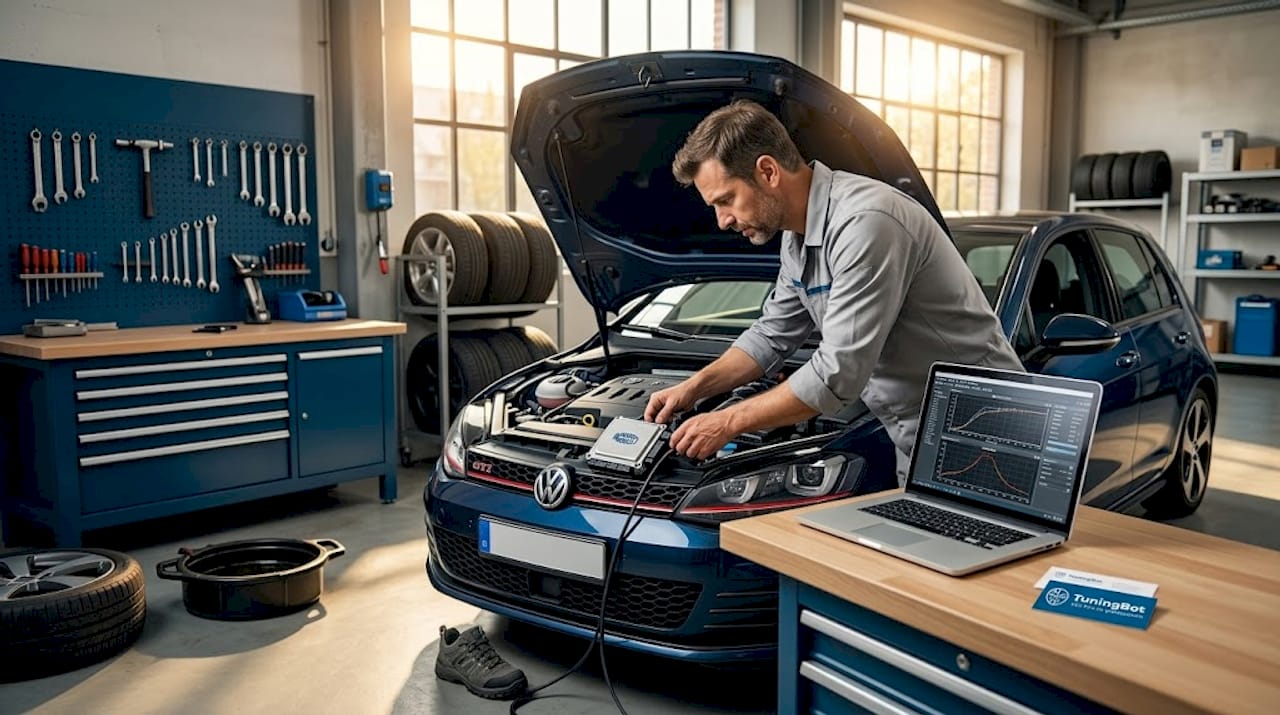
En 8GML Esta familia se asocia a motores de mayor cilindrada y mayor potencia. El alcance de la puesta a punto abarca la configuración de la boost y los ajustes del limitador de par, lo que la hace adecuada para trabajos de calibración de Stage 2 y, en algunos casos, de Stage 3.
Entre las categorías clave de remap de todas las familias de productos de Marelli se incluyen:
- Tablas de solicitud y limitación de torque
- Mapas de avance de encendido y corrección de picado
- Presión de refuerzo y ciclo de trabajo de la válvula de descarga
- Calibración de lambda y ajuste de combustible
- Limitador de revoluciones y parámetros del limitador de velocidad
- Mapeo de velocidad de ralentí y respuesta del acelerador
Las plataformas modernas de ECU de Marelli se basan en gran medida en el software, lo que hace que una estructura de calibración correcta sea más importante que las suposiciones genéricas sobre el hardware. En la práctica del tuning, esto favorece el uso de remap precisos basados en mapas frente a soluciones improvisadas desde el punto de vista del hardware.
3. Comparación técnica de los principales tipos de soluciones Marelli remap
En la tabla siguiente se comparan los principales tipos de ECU remap disponibles para vehículos equipados con Marelli en función de los parámetros técnicos más relevantes. Los objetivos de potencia se muestran de forma cualitativa, ya que las ganancias reales dependen de la variante de la ECU, el hardware, el combustible, el estado del motor y los límites de calibración.
| Remapear tipo | Familias de ECUs compatibles | Categorías de mapas principales | Objetivo de calibración típico | Herramientas necesarias | Servicios Adicionales |
|---|---|---|---|---|---|
| Stage 1 Remapeo de Software | 8GMF, 8GMK, 8GML, 8GMW, 8GSF | Encendido, alimentación de combustible, límites de par, rev limiter | Ganancia de acciones conservadoras en hardware | TunerPro/XDF + KESS3 preferido Herramienta flash compatible | EGR Off, eliminación de DTC |
| Reconfiguración de software Stage 2 | 8GMW, 8GML | Sobrealimentación, lambda, válvula de descarga, gestión del par | Mayor ganancia con hardware de soporte | TunerPro/XDF + KESS3 preferido Herramienta flash compatible | APAGADO DPF, APAGADO EGR, eliminación de DTC |
| Stage 3 Calibración Personalizada | 8GML, 8GMW (hardware modificado) | Acceso completo a los mapas, repostaje, boost, límites de seguridad | Objetivo de alta salida personalizado | KESS3 preferido Herramienta flash avanzada + dyno | Eliminación completa de emisiones, IMMO desactivado |
| Remapeo enfocado en emisiones | 8GSF, 8GSW, 8GMF | Eliminación de DTC, tablas EGR/DPF, mapas de diagnóstico | Cambio mínimo de PV | KESS3 preferido Herramienta flash compatible | EGR Desactivado, DPF Desactivado, AdBlue Off |
| Remap Combinado TCU/DSG | 8GMW + TCU ZF/DSG | Puntos de cambio, transferencia de torque, presión del embrague | Respuesta mejorada | Herramienta de flash para ECU/TCU compatible | Stage 1 o 2, base remap |
La calibración del Stage 3 requiere una validación en banco de pruebas. El banco de pruebas tuning, combinado con la programación OBD, sigue siendo el método estándar para confirmar que las relaciones aire-combustible y los mapas de encendido son precisos bajo carga antes de que el vehículo vuelva a circular por la vía pública.
4. Recomendaciones específicas para elegir el modelo remap adecuado
Elegir el modelo remap que mejor se adapte a tu situación concreta evita esfuerzos inútiles y protege el motor. A continuación te ofrecemos un proceso de decisión estructurado basado en los casos más habituales del modelo tuning.
Vehículo de serie, conductor diario. Software del Stage 1 (remap) para la familia de ECU correspondiente. No se necesitan modificaciones de hardware. Se centra en el avance del encendido, los ajustes del limitador de par y la optimización de la inyección de combustible. Se trata del punto de partida de menor riesgo para las mejoras de rendimiento de las ECU de Marelli.
Admisión, intercooler y escape mejorados. Stage 2: remap, que controla las tablas de presión boost, el ciclo de trabajo de la válvula de descarga y la calibración lambda. La familia 8GMW resulta muy adecuada para este fin, ya que cuenta con 22 categorías de calibración editables que abarcan toda la gama de parámetros necesarios para el trabajo del Stage 2.
Construcción de alta potencia con turbo o mejoras de inyectores. Calibración personalizada del Stage 3. Para ello se requiere acceso completo al mapa, límites de seguridad modificados y pruebas iterativas en banco de potencia tuning. No intentes realizar la calibración del Stage 3 sin datos de hardware validados y un entorno de pruebas controlado.
Eliminación de fallas en el sistema de emisión o trabajos de cumplimiento. remap centrado en las emisiones mediante la eliminación del DTC y la modificación de los mapas de EGR y DPF. Esto se aplica principalmente a las familias 8GSF y 8GSW, aunque el método puede adaptarse a otras familias con las herramientas adecuadas.
Mejora del rendimiento de la transmisión automática. ECU y TCU combinadas remap. La optimización de los puntos de cambio de marcha y la calibración de la transferencia de par en la TCU deben estar sincronizadas con el motor remap para evitar tensiones en la cadena cinemática.
Consejo profesional: Las definiciones de TunerPro mejoran considerablemente la legibilidad de los parámetros de los mapas, pero no sustituyen la necesidad de disponer de una herramienta de programación específica para el ECU. Comprueba siempre que tu dispositivo de programación sea compatible con la variante concreta de la ECU de Marelli antes de iniciar un proyecto.
A la hora de evaluar la experiencia en tuner, pregunte específicamente con qué familias de Marelli ECU han trabajado y solicite ejemplos de datos de calibración “antes y después”. Las afirmaciones genéricas sobre «experiencia en Marelli» no son suficientes. El nivel de profundidad de la calibración varía significativamente entre las distintas familias, y un técnico de tuner con experiencia en 8GMW puede no tener el mismo nivel de conocimiento sobre 8GSF.
Las decisiones presupuestarias deben tener en cuenta el coste total de la cadena de herramientas, no solo el precio del remap file. Un remap file de calidad, si se combina con una herramienta de flasheo incompatible o de poca potencia, produce resultados poco fiables.
Mi opinión sobre la ECU remapping de Marelli
He trabajado con suficientes familias Marelli ECU como para afirmar con seguridad que el mayor error que comete tuners es considerarlas intercambiables. El 8GMW y el 8GSF son entornos de calibración fundamentalmente diferentes. He visto cómo se aplicaban modificaciones de la tabla del Stage 2 del boost a una familia ECU que no expone el control de la válvula de descarga en la misma estructura de mapa, y el resultado es un remap que parece completo sobre el papel, pero que no ofrece nada significativo en la carretera.
Lo que he aprendido es que la arquitectura centrada en el software de Marelli se adapta realmente bien al tuning basado en mapas. No hacen falta trucos de hardware. Lo que sí se necesita es precisión en las categorías de calibración que se están editando y una comprensión clara de cómo interactúa la gestión del par con el control boost en ese ECU concreto.
Mi consejo: empieza por leer detenidamente la calibración de serie antes de tocar nada. Los mapas de serie te indican dónde ha dejado margen el fabricante, y en la mayoría de los Marelli ECU hay un margen real en el avance del encendido y en los limitadores de par. Trabaja de forma iterativa, comprueba los resultados en un banco de pruebas y considera la eliminación de los códigos de avería como un paso final, en lugar de como la primera medida. Precipitarse a borrar los códigos de avería antes de que la calibración sea estable enmascara los problemas en lugar de resolverlos.
— Equipo Técnico de TuningBot
Archivos profesionales de la ECU Marelli tuning de TuningBot
Si estás listo para pasar de la investigación a la aplicación práctica, TuningBot ofrece archivos ECU remapping calibrados profesionalmente para las familias Marelli ECU compatibles, entre las que se incluyen 8GMW, 8GMF, 8GML, 8GSF y otras variantes compatibles.
TuningBot es compatible con los servicios profesionales de programación de Marelli ECU, tales como Stage 1, Stage 2, Stage 3, desactivación del DPF, desactivación del EGR, eliminación de códigos de avería (DTC) y desactivación del sistema IMMO, siempre que el modelo específico ECU y el servicio solicitado estén incluidos. Puedes consultar las aplicaciones compatibles a través de la Cobertura de Servicio de ECU TuningBot página y sube tu archivo a través de Reprograma tu archivo, sin necesidad de registro ni créditos prepagos. Archivos leídos con herramientas profesionales como Alientech KESS3, AutoTuner, Magic Motorsport Flex, PCMFlash y CMD Flash pueden enviarse siempre que el tipo de archivo y el protocolo ECU sean compatibles.
PREGUNTAS FRECUENTES
¿Cuáles son los principales tipos de soluciones de la ECU remap de Marelli?
Los principales tipos incluyen los remap de software de Stage 1 para vehículos de serie, los remap de Stage 2 para vehículos con actualizaciones de hardware compatibles, calibraciones personalizadas de Stage 3 para configuraciones muy modificadas, remap centrados en las emisiones que incluyen la desactivación del DPF y del EGR, y remap combinados para la ECU y la TCU destinados a vehículos con cambio automático.
¿Qué familias de ECU de Marelli admiten el mayor número de categorías de mapas de calibración?
El Marelli 8GMW permite realizar una amplia gama de ajustes, entre los que se incluyen la gestión del par, el avance del encendido, el control del lambda y la regulación de la válvula de descarga, lo que lo convierte en una de las familias de Marelli más relevantes para los trabajos de Stage 1 y Stage 2, siempre que sea compatible con la variante específica ECU.
¿Qué herramientas se necesitan para realizar un remap en una ECU de Marelli?
Para reprogramar un Marelli ECU se necesitan dos elementos: un proceso adecuado de calibración y edición, y una herramienta de programación específica para el ECU. Cuando sea compatible, Alientech KESS3 es la herramienta de referencia recomendada. AutoTuner, Magic Motorsport Flex, PCMFlash y CMD Flash también pueden ser válidas, dependiendo de la familia ECU, el protocolo y el modo de acceso.
¿Cuánta potencia puede aportar una ECU Marelli remap?
Los remap de Stage 1 suelen tener como objetivo mejoras de rendimiento moderadas en el hardware de serie, mientras que los remap de Stage 2 pueden ir más allá cuando el vehículo cuenta con las modificaciones adecuadas. El resultado real depende de la familia ECU, el estado del motor, la calidad del combustible, la configuración del hardware y los límites de calibración.
¿Las ECU remap de Marelli permiten borrar los códigos de avería (DTC)?
Sí. Las soluciones avanzadas de Marelli remap suelen incluir la eliminación de códigos DTC y la modificación de mapas de diagnóstico, especialmente en el caso de configuraciones relacionadas con las emisiones, como «EGR Off» y «DPF Off», con el fin de garantizar un funcionamiento limpio y sin fallos tras la actualización tuning.