

 ItalianoIT
 DeutschDE
 EspañolES
 PortuguêsPT
 FrançaisFR
 РусскийRU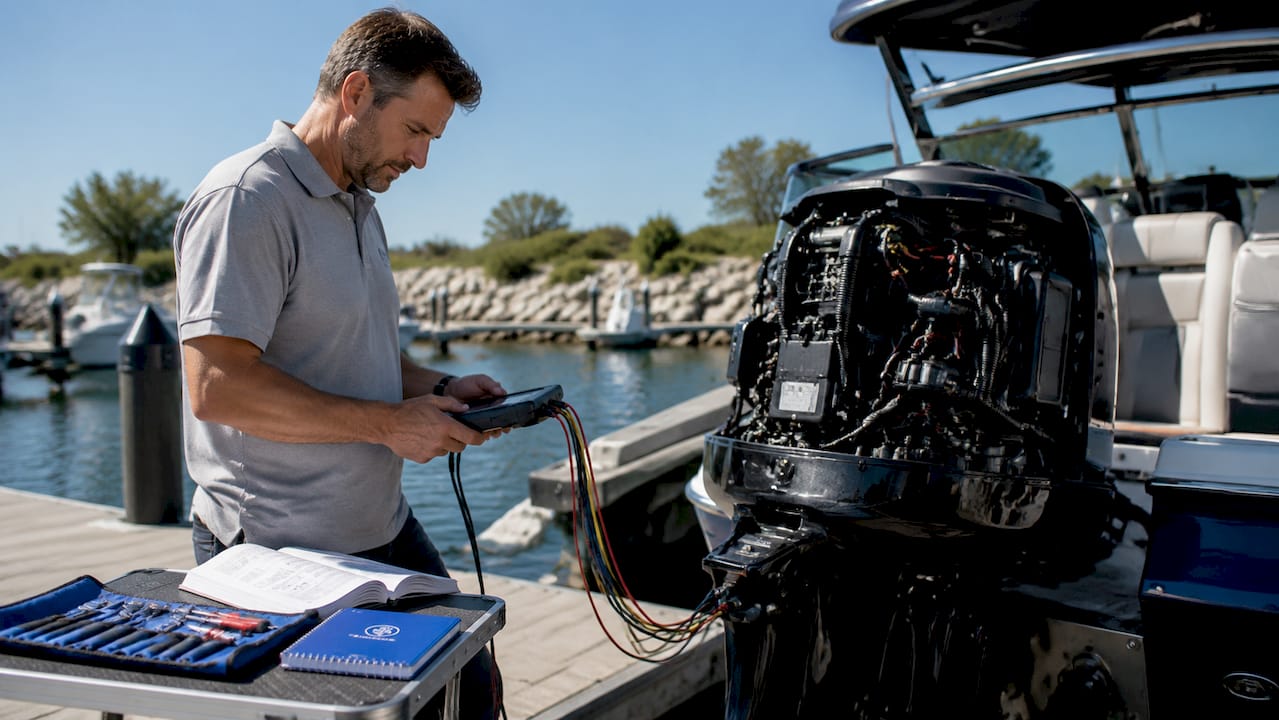
Marine ECU tuning is the process of recalibrating engine control unit software to extract performance that factory settings deliberately leave on the table. The best examples of marine ECU tuning come from validated professional reflashes by specialists like Nizpro, Rogue Customs Marine, and Performance Tech Marine, each delivering measurable gains in horsepower, torque, and fuel economy without touching mechanical hardware. These tunes work because OEM calibrations are written conservatively to accommodate emissions regulations, variable fuel quality, and broad operating conditions. A professional remap removes that conservatism and replaces it with calibration built for your specific engine and use case.
Table of Contents
- 1. Examples of marine ECU tuning from top professional services
- 2. DIY kits vs. professional flashing: what the cost difference actually means
- 3. What actually changes inside a marine ECU tune
- 4. Warranty and maintenance after marine ECU tuning
- Key takeaways
- My take on choosing the right marine ECU tuning approach
- TuningBot’s professional ECU tuning resources for marine applications
- FAQ
1. Examples of marine ECU tuning from top professional services
Professional marine ECU tunes represent the most reliable category of boat engine tuning examples available today. Unlike generic automotive piggyback modules, marine-specific tunes undergo hundreds of hours of water and dyno testing to handle the continuous load demands unique to marine environments. That validation gap is why a tune built for a road car cannot simply be adapted for an outboard.
The Nizpro tune for the Yamaha 5.6L XTO V8 is one of the most cited marine engine tuning examples in the industry. It lifts output from the factory-rated 425 hp to approximately 482 hp by recalibrating fuel maps and ignition timing across the full RPM range. No boost hardware, no injector swaps. The mechanical envelope stays intact.
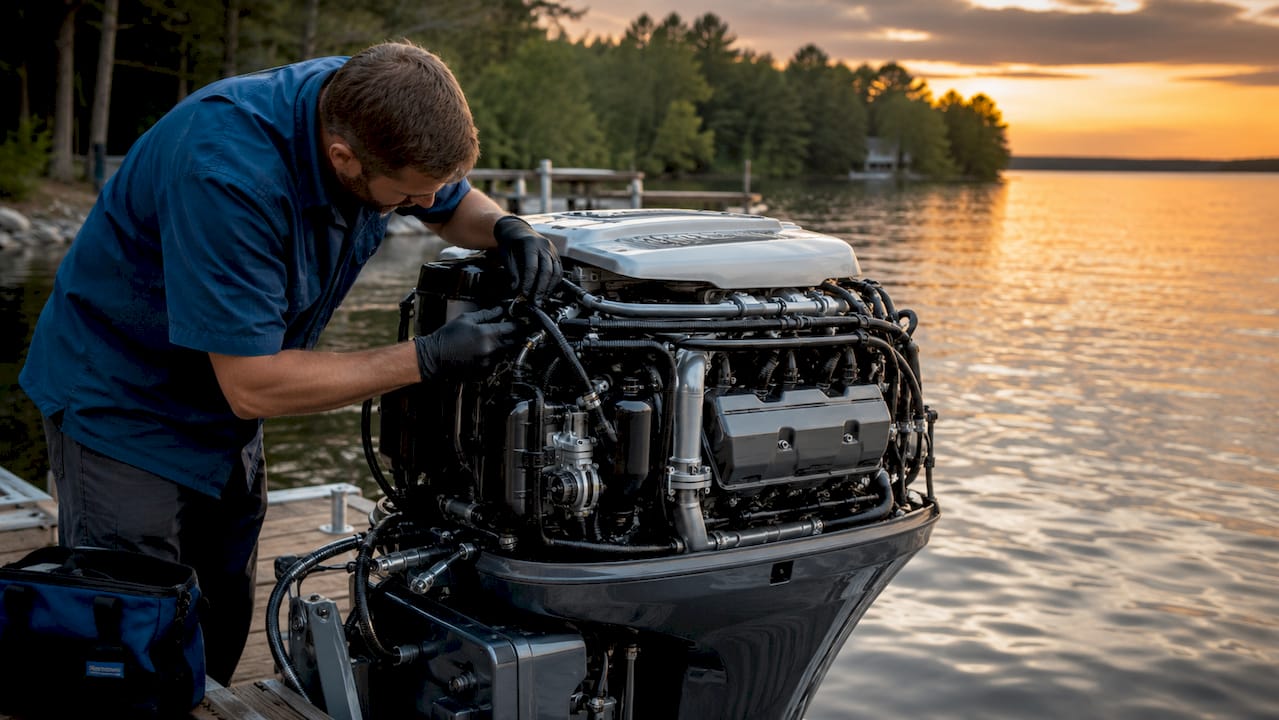
Rogue Customs Marine offers a parallel service for Yamaha outboards ranging from 50 hp to 350 hp. Their catalog includes both in-person ECU flashes and DIY kits with full support, giving boat owners a choice between hands-on involvement and full-service delivery. Performance Tech Marine focuses on documented, repeatable results with published dyno data, which makes their tunes easier to evaluate before purchase.
Pro Tip: Always request published dyno sheets from any professional tuning service before committing. A reputable tuner will have water-tested data, not just estimated figures.
Typical gains across professional marine tunes run 10–50% in power output and 15–20% in fuel economy. Those numbers depend on engine model, baseline calibration, and operating conditions. The fuel economy gain is often the more compelling figure for offshore boat owners who run long distances at cruise RPM.
2. DIY kits vs. professional flashing: what the cost difference actually means
The cost gap between DIY and professional marine ECU tuning is real and reflects genuine differences in risk, complexity, and support. DIY kits from services like Rogue Customs Marine are priced at approximately $1,699 USD including shipping, while professional flashing services run around $1,595 AUD for bench work. A standalone professional tune can be found closer to $949 USD depending on the engine model and service provider.
| Factor | DIY kit | Professional flash |
|---|---|---|
| Cost range | ~$949–$1,699 USD | ~$1,595 AUD and up |
| ECU access | Owner handles disassembly | Tuner manages all access |
| Support level | Remote guidance included | Full in-person service |
| Skill required | Advanced technical ability | Minimal owner involvement |
| Risk level | Higher if ECU access is difficult | Lower with experienced tuner |
The Yamaha XTO V8 is a specific case where DIY tuning carries real risk. Accessing the XTO ECU requires removing multiple engine components, and an error during reassembly can cause water ingress or electrical faults. Tampa Marine Tuning addresses this by shipping the required cables for remote flashing, which reduces the need for full disassembly.
Key factors to evaluate before choosing a path:
- Engine model complexity: Some ECUs are bench-accessible; others require significant teardown.
- Warranty status: A dealer-approved tune changes the risk calculation entirely.
- Technical background: ECU programming without marine experience increases the chance of a corrupted file write.
- Post-tune support: DIY kits vary widely in the quality of follow-up technical assistance.
Pro Tip: If your engine is still under factory warranty, contact your dealer before purchasing any tuning kit. Get any warranty-safe confirmation in writing before the flash is performed.
3. What actually changes inside a marine ECU tune
Marine ECU tuning modifies software parameters, not physical components. Understanding what changes helps you evaluate any tune before you buy it.
Fuel maps are the core of any calibration. They define how much fuel the injectors deliver at each RPM and load combination. Factory maps are written with wide tolerances to account for pump fuel variability across global markets. A professional tune tightens those tolerances for a specific fuel grade, which improves combustion efficiency and reduces waste.
Ignition timing controls when the spark fires relative to piston position. Advancing timing increases torque output but requires higher octane fuel to avoid detonation. Professional marine tunes match timing curves to the fuel grade specified in the tune documentation. Running lower octane fuel after a timing advance is one of the fastest ways to damage a marine engine.
Throttle response curves determine how the ECU translates pedal or lever input into throttle plate movement. Sharpening this curve makes the engine feel more responsive at partial throttle, which matters for boat handling at speed. On some platforms, rev limiters can also be raised to expand the usable RPM range.
The numbered sequence of changes in a professional tune typically follows this order:
- Baseline ECU file read and backup
- Fuel map recalibration for target fuel grade
- Ignition timing curve adjustment
- Throttle response curve modification
- Rev limiter adjustment where applicable
- Checksum correction and file verification
- Flash write and post-tune water test
No boost pressure changes occur in a professional marine ECU tune. The mechanical safety envelope stays intact, which is what separates a calibration from a hardware modification.
4. Warranty and maintenance after marine ECU tuning
Warranty risk is the most misunderstood aspect of marine performance tuning. Aftermarket remaps that alter emissions parameters or push output beyond factory specs can void dealer support and factory warranties. The safest path is a tune that has been reviewed and approved by your dealer, with written confirmation on file.
Maintenance compliance becomes more critical after tuning, not less. Key requirements include:
- Fuel octane compliance: Recommended octane ranges from 89 to 98 depending on the tune and region. Running below the specified grade after a timing advance risks detonation.
- Service intervals: Strict maintenance schedules must be followed after tuning. A missed oil change on a tuned engine carries more consequence than on a stock unit.
- Engine health baseline: Tuning a worn engine accelerates degradation. Compression tests and injector checks before tuning are standard practice among professional tuners.
- Coolant and impeller condition: Marine engines run harder under a performance tune. Cooling system integrity is non-negotiable.
- Documentation: Keep records of the tune file version, flash date, and any dealer correspondence. This protects you if a warranty claim arises.
The factory calibration exists partly to protect the engine from operator error. A professional tune removes some of that buffer, which means the operator takes on more responsibility for maintenance discipline.
Key takeaways
Professional marine ECU tuning delivers real, measurable gains when the tune is validated, the engine is healthy, and maintenance compliance is maintained after the flash.
| Point | Details |
|---|---|
| Validated tunes outperform generic modules | Marine-specific tunes like Nizpro undergo hundreds of hours of water and dyno testing. |
| Power gains are engine-dependent | Professional tunes typically deliver 10–50% power increases and 15–20% fuel economy gains. |
| DIY carries higher risk on complex ECUs | The Yamaha XTO V8 requires significant disassembly, making professional flashing the safer choice. |
| Warranty protection requires written confirmation | Get dealer-approved written confirmation before any ECU flash to protect factory warranty coverage. |
| Maintenance discipline is non-negotiable | Fuel octane compliance and service intervals must be followed strictly after tuning to avoid engine damage. |
My take on choosing the right marine ECU tuning approach
The most common mistake I see boat owners make is treating marine ECU tuning like an automotive Stage 1 tune. They find a cheap reflash online, skip the dyno validation question, and then wonder why the engine runs rough at wide-open throttle. Marine loads are sustained in a way that road loads rarely are. A tune that holds up for 30 seconds on a drag strip will not necessarily hold up for four hours at 5,200 RPM offshore.
My recommendation is always to start with a validated tune from a named service with published water-test data. Nizpro’s Yamaha XTO tune is the clearest example of what this looks like done correctly. The horsepower figure is documented, the fuel map changes are specific, and the tune has been run on real boats in real conditions. That traceability matters when something goes wrong, and it also matters when you are trying to explain a warranty claim to a dealer.
For boat owners who want to use a professional ECU programming workflow as a reference, understanding the steps from file read to post-flash verification helps you ask better questions of any tuner you hire. The more specific your questions, the faster you identify whether a service is legitimate.
DIY kits are not inherently bad. They are the wrong tool for complex ECU access situations and for owners who have not done this before. If you have the technical background and a straightforward ECU location, a supported DIY kit from a reputable service is a reasonable path. If you are working on a Yamaha XTO or any engine where ECU access requires significant teardown, pay for the professional flash.
— TuningBot Technical Team
TuningBot’s professional ECU tuning resources for marine applications
TuningBot supports professional tuners and workshops working across a wide range of ECU platforms, including those used in marine applications. Whether you need a validated remap file calibration or a full ECU tuning file for a specific engine model, the platform delivers professionally calibrated files with real engineer support and no prepaid credits required.
TuningBot supports major ECU brands including Bosch, Denso, Marelli and Delphi, with compatibility for tools like Alientech KESS3, AutoTuner and Magic Motorsport. For workshops handling marine engine tuning alongside automotive work, the ECU Service Coverage page helps verify supported platforms, while Tune Your File provides the direct upload workflow for professionally calibrated files with engineer support and no prepaid credits required.
FAQ
What is marine ECU tuning?
Marine ECU tuning is the recalibration of engine control unit software to improve power, torque, and fuel economy without changing mechanical hardware. Factory calibrations are conservative by design; professional tunes remove that conservatism for a specific engine and fuel grade.
How much does a professional marine ECU tune cost?
Professional marine ECU tuning typically costs between $949 USD for a standalone tune and approximately $1,595 AUD for a full professional flashing service. DIY kits with remote support run around $1,699 USD including shipping.
Will marine ECU tuning void my warranty?
Aftermarket remaps that alter emissions parameters or exceed factory specs risk voiding dealer support and factory warranties. The safest approach is to get written confirmation from your dealer that the specific tune is warranty-safe before the flash is performed.
What engines are commonly tuned in marine ECU tuning examples?
Yamaha outboards from 50 hp to 350 hp are among the most commonly tuned marine engines, with the Yamaha 5.6L XTO V8 being a well-documented example. Services like Nizpro and Rogue Customs Marine publish specific tune data for these platforms.
Is DIY marine ECU tuning safe?
DIY marine ECU tuning is safe when the tuner has the technical background and the ECU is accessible without major disassembly. On complex engines like the Yamaha XTO V8, professional or remote flashing is the recommended approach to avoid damage during ECU access.