

 ItalianoIT
 DeutschDE
 EspañolES
 PortuguêsPT
 FrançaisFR
 РусскийRU
Stage 1 Tuning Guide: Benefits, Process and Safe ECU Remap
Table of Contents
- What is Stage 1 tuning and how does it work?
- Benefits of Stage 1 tuning for daily drivers
- Stage 1 vs Stage 2 and Stage 3 tuning
- What to know before getting a Stage 1 tune
- Key takeaways
- Why Stage 1 is where most tuning stories should end
- Get your Stage 1 remap file from TuningBot
- FAQ
Stage 1 tuning is defined as a software-only ECU optimization that increases engine output without any physical hardware modifications. The gain depends on the engine: 20–40 horsepower is typical on a common 1.4–2.0 turbo, while high-output engines measure far more (up to +126 hp in our dyno database). The industry standard term for this process is an ECU remap or ECU recalibration, and it represents the entry point into performance tuning for most vehicle owners. By rewriting the calibration tables inside the engine control unit, a tuner unlocks power and torque that the manufacturer deliberately suppressed for warranty, emissions, and market segmentation reasons. Tools like Alientech KESS3, AutoTuner, and Magic Motorsport are the standard instruments professionals use to read and write these files. For daily drivers and enthusiasts alike, Stage 1 performance tuning delivers measurable gains with minimal risk when the vehicle is in good mechanical condition.
What is Stage 1 tuning and how does it work?
Stage 1 tuning recalibrates ECU parameters including fuel injection maps, ignition timing advance, and turbo boost pressure targets. These three variables control how much air and fuel enter the combustion chamber, when that mixture ignites, and how much pressure the turbocharger forces into the intake. Factory calibrations are conservative by design. Manufacturers tune for the lowest-grade fuel sold in their target markets, account for production tolerances across thousands of units, and build in margins to protect warranty claims. A professional remap tightens all of those margins for a specific vehicle.
The process itself follows a structured sequence:
- Pre-tune diagnostics. The tuner connects to the OBD-II port and scans for stored fault codes. Any active DTCs must be resolved before calibration begins.
- ECU file read. Using a tool like Alientech KESS3 or CMD Flash, the technician reads the original binary file from the ECU. This is the baseline that gets modified.
- Calibration and checksum correction. The tuner adjusts fuel maps, timing tables, and boost targets within the file, then corrects the checksum so the ECU accepts the new data without triggering a fault.
- File flash. The modified file is written back to the ECU via the same OBD port or through a bench connection for ECUs that require it.
- Post-flash verification. A road test or dyno run confirms the calibration is stable and no new fault codes have appeared.
The entire process typically takes two to four hours in a professional workshop. ECU tuning pricing varies depending on the vehicle, ECU brand, and workflow complexity. ECUs from Bosch, Continental, Delphi, and Marelli each have different security protocols, which affects both the time required and the tooling needed.
Pro Tip: Always request a copy of both the original and the modified ECU file from your tuner. If the ECU ever needs to be returned to stock, having the original binary saves significant time and cost.
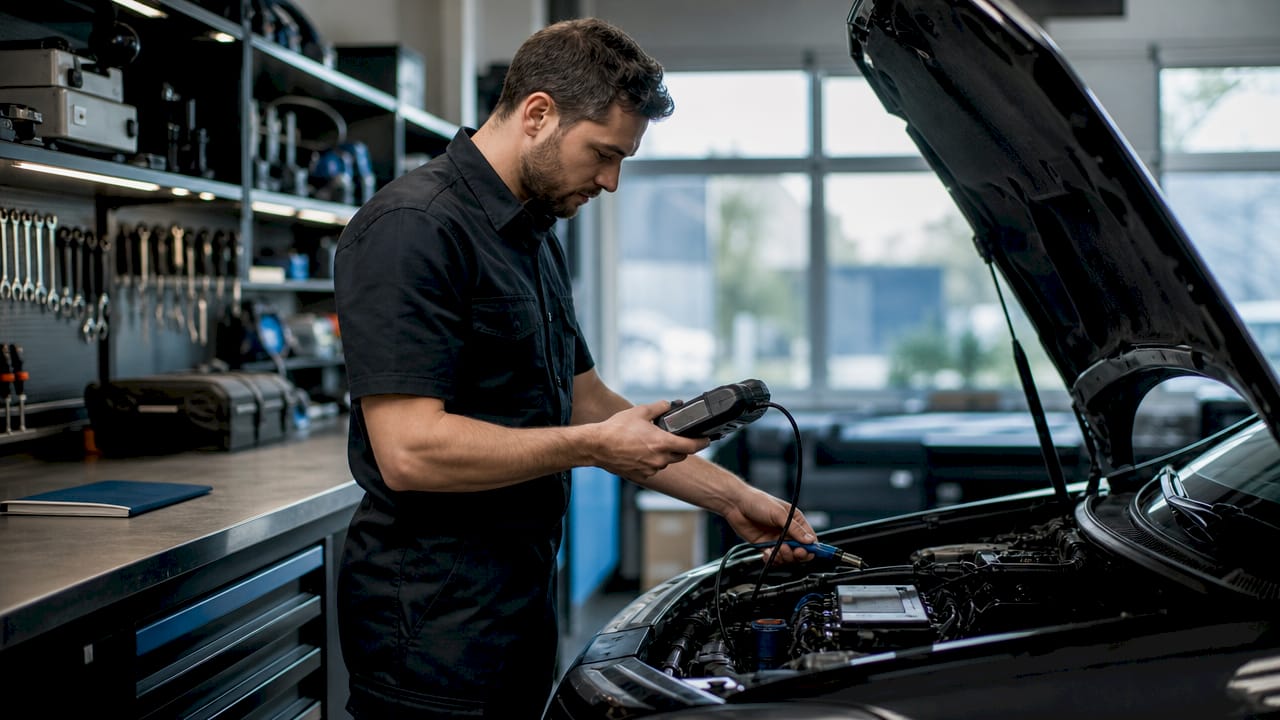
What are the real benefits of Stage 1 tuning for daily drivers?
The primary benefit of Stage 1 tuning is not maximum power. It is optimized drivability. Smoother throttle response, more linear power delivery, and reduced turbo lag are the changes most drivers notice first, often before they register the raw horsepower increase.
Key performance improvements include:
- Power and torque gains. The gain depends on the engine, its stock calibration and the fuel: 20 to 40 horsepower is typical on a 1.4–2.0 turbo, small on naturally aspirated engines, and over 100 horsepower on high-output turbo units. Turbocharged engines respond more dramatically than naturally aspirated units.
- Throttle response. Factory throttle maps often include deliberate delay to soften the driving experience. A Stage 1 remap sharpens that response without making the car twitchy.
- Fuel efficiency. Counterintuitively, a well-calibrated Stage 1 remap can improve fuel economy on motorway drives because the engine reaches its torque peak at lower RPM, reducing the need to downshift and rev hard during overtakes.
- Smoother power band. Torque delivery becomes more progressive, which reduces drivetrain stress during acceleration compared to the abrupt factory power curve on some turbocharged platforms.
A safe Stage 1 tuning workflow stays within manufacturer safety margins when performed on a mechanically healthy engine, which is why it is considered the most reliable entry point into performance calibration. The gains are real, the risk is low, and the hardware remains stock. For the majority of vehicle owners who drive daily and want a more engaging experience without workshop downtime, this balance is difficult to beat.
Stage 1 is the recommended stopping point for approximately 90% of owners because the returns from higher stages require proportionally larger hardware investments and maintenance commitments. That statistic reflects a practical reality: most drivers gain everything they need from software alone.

How does Stage 1 compare to Stage 2 and Stage 3 tuning?
Understanding what is Stage 2 tuning and what is Stage 3 tuning clarifies exactly where Stage 1 sits in the performance hierarchy. Each stage is defined by the hardware supporting the calibration, not just the power output.
| Tuning stage | Hardware required | Typical power gain | Maintenance impact | Best suited for |
|---|---|---|---|---|
| Stage 1 | Stock, no modifications | Engine-dependent: 20–40 hp typical, up to +126 hp measured | Minimal | Daily drivers, enthusiasts |
| Stage 2 | Upgraded intercooler, exhaust, intake | 40–80 hp | Moderate | Track days, performance builds |
| Stage 3 | Turbo upgrade, fueling, internals | 80–150+ hp | High | Dedicated performance builds |
Stage 2 tuning requires a stage 2 tuning requirements checklist before calibration begins. That checklist typically includes a high-flow intake, upgraded intercooler, and a performance exhaust. Without those components, the ECU calibration cannot safely command the higher boost and fueling targets that Stage 2 demands. A professional ECU remapping guide explains how calibration complexity increases as hardware requirements grow.
Stage 3 tuning involves internal engine modifications, upgraded fuel injectors, a larger turbocharger, and often a standalone or heavily modified ECU. The power gains are substantial, but so are the costs, the maintenance intervals, and the reliability trade-offs. What is Stage 3 tuning in practical terms? It is a dedicated performance build that accepts reduced daily usability in exchange for maximum output. For most vehicle owners, Stage 1 delivers the best ratio of gain to investment.
What should you know before getting a Stage 1 tune?
Vehicle condition determines whether a Stage 1 remap produces the expected gains or exposes problems. Stage 1 tuning can reveal hidden mechanical issues that factory conservative calibration previously masked. Weak ignition coils, a slipping clutch, or marginal fuel injectors may not trigger fault codes under stock power levels. Under a remapped calibration that commands higher boost and fueling, those components fail faster and more visibly.
Before booking a remap, verify the following:
- Engine oil. Fresh oil and clean filters are critical before tuning. Increased engine load under the new calibration accelerates wear on components that are already running in degraded lubricant.
- Spark plugs. Worn plugs cause misfires under higher cylinder pressure. Replace them to the manufacturer’s specification before the tune.
- Air filter. A restricted intake reduces the airflow the ECU calibration assumes is available, leading to a rich fuel mixture and reduced power.
- Coolant system. Overheating under increased load is a common failure point. Verify the thermostat, coolant level, and radiator condition.
- Clutch condition. On manual transmission vehicles, a clutch at 70% wear will not survive the additional torque a Stage 1 remap delivers.
Choosing a reputable tuner matters as much as vehicle preparation. Look for tuners who use recognized tools such as Alientech KESS3, AutoTuner, or Magic Motorsport, and who provide the original ECU file alongside the modified version. Platforms that offer safe tuning workflow documentation give you a clear reference for what the process should involve.
Pro Tip: Ask your tuner which ECU brand your vehicle runs before the appointment. Bosch MED17 and EDC17 ECUs, for example, have different read/write procedures than Continental SID or Delphi DCM units. A tuner who knows this immediately demonstrates genuine competence.
The most persistent myth about Stage 1 tuning is that it automatically damages engines. The evidence does not support that claim. Damage occurs when tuning is applied to poorly maintained vehicles or when calibration files exceed the hardware’s actual capability. A properly executed Stage 1 remap on a well-serviced engine operates within the same thermal and mechanical limits the manufacturer designed for.
Key takeaways
Stage 1 tuning is the most practical and cost-effective ECU calibration available, delivering gains through software alone (typically 20–40 horsepower on common turbo engines, more on high-output units) while maintaining factory reliability margins on stock hardware.
| Point | Details |
|---|---|
| Software-only process | No hardware modifications are required for Stage 1; only the ECU calibration file changes. |
| Typical power gain | Engine-dependent: 20–40 horsepower on common 1.4–2.0 turbo engines, up to +126 hp on high-output units, with proportional torque. |
| Drivability over peak power | Stage 1 prioritizes throttle response and linear power delivery, not maximum output figures. |
| Vehicle health is prerequisite | Fresh oil, clean filters, and no active fault codes are required before calibration begins. |
| Stage 2 and 3 require hardware | Moving beyond Stage 1 demands physical component upgrades and higher maintenance commitments. |
Why Stage 1 is where most tuning stories should end
I have reviewed hundreds of ECU files across Bosch, Delphi, and Continental platforms, and the pattern is consistent: the drivers who gain the most from tuning are the ones who stop at Stage 1. Not because ambition is wrong, but because Stage 1 is where the software catches up to what the hardware was already capable of delivering. Manufacturers leave that gap intentionally. A good Stage 1 remap closes it.
The misconception I encounter most often is that tuning is inherently aggressive or risky. That framing belongs to Stage 3 builds with upgraded turbos and forged internals. Stage 1 is the opposite. It is a calibration correction on a stock engine, and when the vehicle is properly maintained, the reliability record is strong. The car remapping process is well-documented, the tooling is mature, and the outcomes are predictable.
What Stage 1 also does, and this is underappreciated, is give you an honest picture of your engine’s condition. If something fails shortly after a Stage 1 remap, it was already failing. The remap accelerated a timeline, not a cause. That diagnostic value alone is worth something to any owner planning to keep a vehicle long-term.
If Stage 2 is in your future, Stage 1 is still the right first step. It tells you what the engine can do, where the weak points are, and whether the hardware investment of Stage 2 is justified. Skipping Stage 1 to go straight to Stage 2 is a calibration decision made without the baseline data you need.
— TuningBot Technical Team
Get your Stage 1 remap file from TuningBot
TuningBot provides professional ECU remapping files for Stage 1 calibrations across all major ECU brands, including Bosch, Continental, Delphi, Marelli, and Denso. Workshops and independent tuners upload stock ECU files directly to the platform and receive calibrated files without registration or prepaid credits.
The platform supports all major reading tools including Alientech KESS3, AutoTuner, Magic Motorsport, CMD, and PCMFlash. Every file is produced by qualified engineers with full technical support available throughout the process. Whether you are tuning a single vehicle or processing files at workshop volume, TuningBot’s Tune Your File workflow delivers consistent, OEM-grade calibration quality. Check supported ECU families, brands and service availability through the ECU Service Coverage page.
FAQ
What is Stage 1 tuning in simple terms?
Stage 1 tuning is a software modification to a vehicle’s ECU that adjusts fuel maps, ignition timing, and boost pressure to increase power and improve throttle response without changing any hardware components.
How much power does a Stage 1 tune add?
It depends on the engine, its stock calibration, fuel and condition: a Stage 1 remap typically adds 20 to 40 horsepower on common 1.4–2.0 turbo engines and up to +126 hp on high-output units, with a proportional torque increase; naturally aspirated engines gain far less. The measured figures are in our dyno database.
Does Stage 1 tuning damage the engine?
Stage 1 tuning does not damage a healthy engine. It operates within manufacturer safety margins, but it can accelerate failure in components that were already worn or marginal before the tune.
What is the difference between Stage 1 and Stage 2 tuning?
Stage 1 requires no hardware changes and works on a stock vehicle. Stage 2 requires physical upgrades such as an upgraded intercooler, high-flow intake, and performance exhaust before the ECU calibration can safely target higher power levels.
How long does a Stage 1 remap take?
A professional Stage 1 remap takes two to four hours, covering pre-tune diagnostics, ECU file read, calibration, flashing, and post-flash verification on a dyno or road test.