

 ItalianoIT
 DeutschDE
 EspañolES
 PortuguêsPT
 FrançaisFR
 РусскийRU
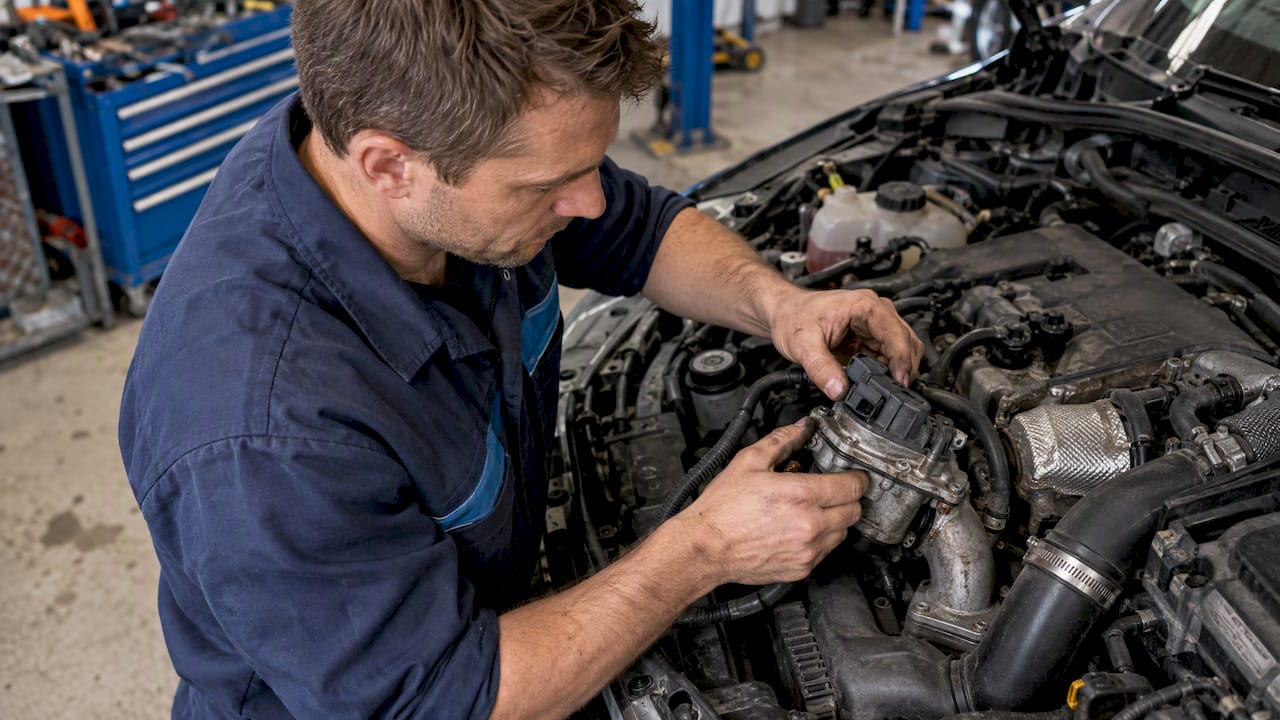
EGR off tuning changes the control of exhaust gas recirculation, but a software label does not describe the complete mechanical or emissions outcome. A closed valve command is not proof of zero flow, and removing an EGR fault code does not repair a leaking cooler or sticking valve. This guide examines those distinctions and the evidence needed to assess the system.
EGR off tuning: distinguish commands, flow and hardware
An EGR system can include a valve, cooler, bypass arrangement and other air-path controls. High-pressure and low-pressure circuits have different layouts; some engines use more than one circuit. Identify the installed design before interpreting the effect of a software change.
A calibration may alter flow targets, actuator commands or diagnostic behavior. These are separate functions. A valve-position signal describes the monitored mechanism, not necessarily the mass of exhaust passing through it. Leakage, deposits or a disconnected linkage can make the distinction important.
Physical blanking or removal changes the hardware configuration. Leaving the assembly fitted does not establish that it seals correctly, and software cannot stop a coolant leak through damaged hardware. Neither approach should be presented as a universal repair procedure.
Diagnose the fault before choosing the intervention
Save the original fault codes, status and freeze-frame information. Identify the engine, ECU hardware and software, then record the symptom and conditions in which it occurs. Compare requested operation with available position and air-path data using the manufacturer’s diagnostic procedure.
Check the relevant electrical or vacuum supply, connectors, valve movement and cooler condition. An airflow plausibility fault can involve sensors, leaks, restrictions or related actuators as well as the EGR valve itself. Confirm the failed component rather than treating the DTC name as a parts order.
A loaded DPF, suspected backpressure problem or coolant loss calls for diagnosis of that condition. It does not automatically call for EGR removal. Cleaning, component repair or replacement may be appropriate depending on the damage and manufacturer guidance.
Evaluate combustion and aftertreatment as a system
EGR changes the mixture entering the cylinder and can affect combustion, engine-out pollutants and efficiency. The magnitude and direction of individual effects depend on operating point and control strategy. Do not promise a fixed fuel saving, temperature reduction or power increase from disabling it.
The linked experimental EGR and SCR study examines a particular diesel-engine configuration and selected speed/load points. Its analysis of diesel and AdBlue consumption illustrates a system trade-off, not a guarantee for other engines or proof that deleting EGR preserves emissions performance.
Airflow, boost, injection and aftertreatment interactions need assessment where relevant. That does not mean every application requires the same fueling and timing edits, or that DPF and SCR functions should be altered as part of a standard package.
Use logs without overstating what they prove
Where available, capture EGR request and feedback, air mass, manifold pressure, temperatures and relevant aftertreatment status. Record units, operating conditions and whether a channel is measured or modeled. Compare equivalent loads and temperatures rather than unrelated idle snapshots.
DPF soot-load estimates are not direct measurements of every deposit in the filter. Regeneration history, differential-pressure behavior, sensor condition and operating pattern can all matter. A rising displayed load alone does not isolate the cause or justify further calibration changes.
A clean scan, lack of visible smoke and stable idle are useful observations, but they do not quantify NOx or establish emissions compliance. Use appropriate measurements for the claim being made. For additional diagnostic context, see the EGR technical guide.
Define file integrity and programming requirements
Confirm the exact software identification and supported read/write method. Retain the original read and coding where available, and document what the read contains. A calibration read or virtual reference file is not necessarily a complete recovery backup.
Use the programming tool’s prescribed power and connection requirements and establish who handles any required checksum correction. A valid checksum does not prove that the strategy is correct, the hardware is healthy or recovery is guaranteed.
The ECU remapping guide covers general workflow considerations. The DTC database can assist with code identification; diagnosis still depends on the specific vehicle and fault context.
Keep technical function separate from regulatory status
In the United States, the Clean Air Act includes prohibitions concerning removal or disabling of emissions-related elements and the sale or installation of defeat devices. Software can be relevant as well as hardware. Leaving components physically installed does not, by itself, establish compliance.
EPA’s 2020 tampering policy describes nonbinding, case-specific enforcement discretion, including documented grounds that emissions are not adversely affected. It is not blanket approval of an EGR-off file. Customer consent or an off-road label alone does not settle the applicable requirements.
The 2019 presentation and historical enforcement material below provide background rather than a technical installation procedure. Requirements depend on the vehicle category, modification and jurisdiction; a regional policy document should not be treated as worldwide authorization.
Report the actual work and validation
Document the diagnosed fault, hardware condition, software version and tests performed. Repeat the relevant operating conditions after repair or other supported work. New faults, coolant loss, abnormal smoke or unstable response require investigation rather than routine suppression of more codes.
For service availability and commercial terms, consult the current TuningBot price list. Checksum correction, engineer review, turnaround and follow-up work should reflect the actual order scope. File delivery is not evidence of vehicle-level emissions testing.
Frequently asked questions
Does commanding the EGR valve closed prove that no exhaust flows?
No. Position feedback and a closed command do not establish perfect sealing or directly measure recirculated mass flow.
Does a blocked DPF mean the EGR must be removed?
No. The filter, pressure measurement, regeneration history and underlying fault need diagnosis. EGR removal is not a universal response to DPF loading.
Can software repair an EGR cooler coolant leak?
No. A damaged cooler or other mechanical leak requires an appropriate physical repair.
Does an EGR-off file guarantee lower fuel consumption?
No. Fuel use and emissions depend on the engine, operating conditions, hardware and control strategy.
Sources and further reading
- HELLA: EGR operation and diagnostic checks
- Experimental Study on NOx Reduction of Diesel Engine by EGR Coupled with SCR
- Oxford research archive: Evaluation of EGR techniques on a HSDI diesel engine using first law analysis
- EPA NEPIS: historical enforcement material
- EPA: 2019 heavy-duty diesel tampering presentation
- EPA: 2020 vehicle and engine tampering policy
- EPA Clean Air Northeast: tampering and defeat devices
- CARB: enforcement policy
- 42 U.S.C. § 7522: prohibited acts