

 ItalianoIT
 DeutschDE
 EspañolES
 PortuguêsPT
 FrançaisFR
 РусскийRU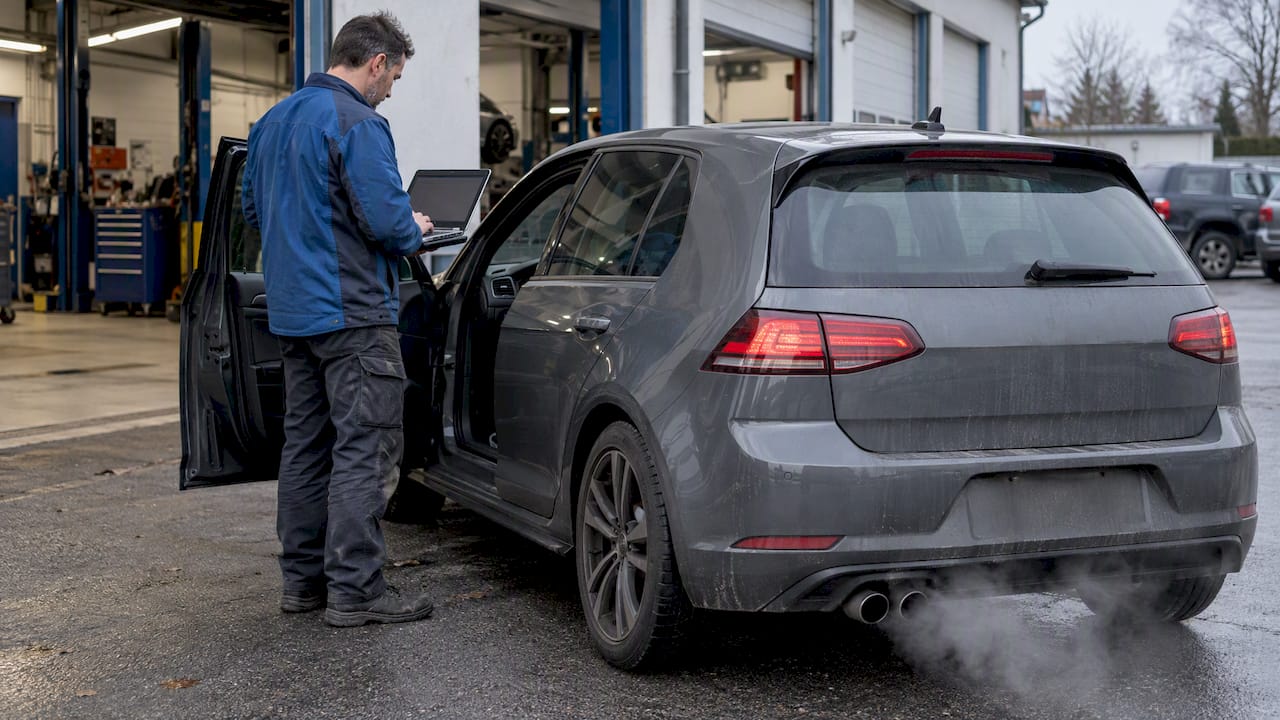
Cold start delete is an informal tuning term, not a standardized ECU function. It may describe changes to catalyst-heating behavior, elevated idle or other startup strategies. Those functions interact with combustion stability, but removing catalyst heating is not the same as removing all fuel compensation needed to start a cold engine.
Cold start delete does not describe one universal switch
Define the complaint and requested behavior first: elevated idle, exhaust noise, poor starting or unstable combustion are different issues. Establish the engine type, fuel, software version, catalyst configuration and existing modifications before interpreting maps.
This discussion mainly concerns spark-ignition engines. A gasoline catalyst-heating strategy should not be copied conceptually onto a diesel ECU such as EDC17. Diesel starting and aftertreatment control involve different combustion and thermal-management considerations.
A documented parameter may affect one part of startup behavior without disabling the entire sequence. Map labels such as cold start or catalyst heating are not proof of a universal master switch. Changes must be understood within the actual controller software.
Separate mixture preparation from catalyst heating
Cold surfaces and fuel properties affect mixture formation. Required compensation depends on injection arrangement, temperature and fuel; there is no universal enrichment percentage. Catalyst heating has a different objective: bringing the catalyst into effective operation sooner.
Some spark-ignition strategies combine elevated airflow or idle with retarded ignition to increase heat delivered to the exhaust. Injection scheduling, valve timing, secondary air or other hardware may participate where fitted. Their availability and control sequence are application-specific.
The MIT study on reducing cold-start hydrocarbons in port-injected engines investigates interactions between hardware and control strategies. It is not a validation of a delete on every production engine. For introductory discussion, see the community explanation of cold-start enrichment.
Fuel composition also matters. An ethanol blend, different injector arrangement or changed catalyst location can alter startup behavior. Identify the installed combination rather than prescribing one correction for all turbocharged or flex-fuel vehicles.
Build a comparable baseline before changing anything
Record ambient, coolant and intake temperatures, soak duration, fuel information and the current diagnostic state. Capture cranking and idle behavior under defined conditions. Two consecutive starts are not two equivalent cold-start tests if the first start warmed the engine and exhaust.
Useful channels may include engine speed, requested and actual lambda, ignition timing, relevant injection data, fuel pressure, air measurement, misfire counters and active startup mode. Availability, units and sampling rate depend on the ECU and diagnostic tool.
Check the hardware baseline first. Intake leaks, injector problems, ignition faults, fuel-pressure errors or implausible temperature readings can produce symptoms that a calibration edit would merely disguise. Define measurable acceptance criteria before comparing modified behavior.
Do not use oxygen-sensor switching as a catalyst thermometer
Identify the sensor type and location before interpreting its output. A switching sensor and a wideband lambda sensor have different signal behavior. Wideband feedback should not be judged by expecting the same rich/lean voltage switching as a conventional narrowband sensor.
Sensor heating, signal validity and ECU operating mode influence when feedback becomes useful. Fuel trims may be inactive, restricted or not representative during some startup phases. A displayed value should be interpreted with its status and operating context.
Closed-loop entry is not a direct measurement of catalyst light-off. Nor does the onset of upstream oxygen-sensor activity prove that the catalyst is effectively converting pollutants. Emissions measurement and appropriate catalyst assessment are separate from a basic scan-tool log.
Investigate new smoke, smell or misfire
A visible plume can be condensed water, but appearance alone cannot reliably distinguish condensation, excess fuel, oil or coolant. Do not dismiss new smoke as harmless fuel vapor or assume that a brief misfire is an acceptable consequence of a quieter start.
Compare the new symptom with the recorded baseline, scan for faults and investigate the relevant mechanical and control conditions. Do not automatically add enrichment, shorten a heating timer or suppress a DTC without establishing the cause.
If the change produces unacceptable behavior, stop the evaluation and use the documented recovery or restoration procedure where appropriate. A clean scan and a quieter exhaust do not prove that cold-start emissions or catalyst performance were preserved.
Validate the requested behavior and its limits
Repeat testing under properly conditioned, comparable starts, including the temperatures and fuel conditions relevant to the application. The required test coverage cannot be reduced to a universal number of starts or a fixed observation window. Warm-start performance also deserves separate assessment where the affected strategy overlaps it.
Reducing the duration of catalyst heating does not automatically make an adjustment compliant or mechanically appropriate. Likewise, a removed catalyst or track-use label does not establish that every other cold-start function can be discarded or that regulatory requirements no longer apply.
Noise, drivability and emissions are separate outcomes. Define which has actually been measured. Hardware approaches such as valved exhaust noise-control setups are a separate subject; their suitability and effect on startup noise depend on the installed system.
Keep file delivery separate from vehicle validation
Record the exact ECU software, supported read and write method, original settings and the intended scope. Retain the original read where available, without assuming that it is a complete recovery backup. Establish any required checksum handling before programming.
The current TuningBot price list defines the listed services. Do not assume that checksum correction, vehicle logging, laboratory testing or a guaranteed rollback is included in every file request. A remote file edit is not evidence that the vehicle underwent controlled cold-start tests.
For related combustion concepts, review spark advance and ignition timing. The purpose of this guide is to interpret the strategy and assess results, without inventing map addresses, universal settings or compatibility claims.
Frequently asked questions
Does cold start delete remove every startup enrichment function?
Not necessarily. The term is informal and may refer to catalyst heating, idle behavior or selected parameters. Fuel compensation needed for starting must be distinguished from those functions.
Does oxygen-sensor switching prove catalyst light-off?
No. Sensor operation and closed-loop entry do not directly establish catalyst conversion efficiency or light-off.
Are two consecutive starts a sufficient cold-start validation?
Not by themselves. The engine and exhaust may still be warm from the first start. Define soak conditions and test coverage appropriate to the application.
Is smoke after a cold-start change always harmless condensation?
No. Condensation is one possibility, but fuel, oil or coolant-related problems require investigation. New smoke or misfire should be compared with the baseline and diagnosed.